Gas Chromatography Oil and Gas: Dedicated Lab Guide
Committing capital to an unconfigured instrument frame that demands months of bench-side modifications strains operational budgets. Wellheads, transmission pipelines, and refineries cannot risk baseline drift or contested settlement figures.
Rather than settling for bare-bones platforms that burden internal chemists with trial-and-error plumbing, testing facilities require factory-configured systems that generate audit-ready data from day one. This guide provides an actionable technical framework for evaluating and selecting analytical systems in gas chromatography oil and gas operations.
Key Takeaways
- Turnkey Over Generic: Application-dedicated analyzers arrive pre-configured for specific test standards, eliminating months of in-house method development and trial-and-error plumbing.
- Financial and Compliance Stakes: Strict standard compliance (ASTM, ISO, GPA) prevents costly settlement disputes in pipeline custody transfer and protects refinery assets from unseen contamination.
- Targeted Detection and Sampling: Selecting the proper detector (FID for hydrocarbons, TCD for permanent gases) paired with matrix-appropriate sampling hardware ensures reliable repeatability.
- Carrier Gas Economics: Choosing systems compatible with hydrogen or nitrogen protects operational budgets against ongoing helium supply shortages and price volatility.
- Lower Total Cost of Ownership: Factory-calibrated parameters simplify technician training, reduce setup errors, and deliver immediate audit-compliant data.
Practical Demands of Hydrocarbon Testing
Petroleum streams are volatile, multi-component mixtures with fractions boiling off across broad temperature spreads. Geological origin dictates distinct analytical demands. Liquids-rich associated gas from the Permian Basin presents very different composition challenges than the dry gas of the Marcellus (which frequently runs above 95 percent methane) or the heavy bitumen extracted from the Western Canadian Sedimentary Basin (WCSB).
Relying exclusively on bulk physical measurements (such as kinematic viscosity, density, or distillation cuts) is an operational gamble. Those legacy methods cannot identify trace oxygenates in finished fuel blends, nor will they alert maintenance crews when cooling fluids begin leaking into heavy lubricants.
Gas chromatography delivers the molecular speciation required to identify and quantify individual hydrocarbons, permanent gases, and chemical additives across the petroleum value chain:
Upstream Exploration and Reservoir Evaluation
During exploration and active drilling, gas chromatography analyzes hydrocarbons evolved from sedimentary rock formations to determine thermal maturity. High-resolution separation of C8 through C37 alkanes distinguishes viable oil layers from water zones, while real-time detection of C1 through nC5 hydrocarbons in mud gas identifies thin-bedded reservoirs and fingerprinting calculates production contributions across commingled reservoirs.
Midstream Pipeline Custody Transfer
Midstream Pipeline Custody Transfer: Major North American transmission corridors (such as deliveries trading through Henry Hub or moving along the TC Energy NGTL system and Enbridge pipeline networks) involve massive financial transfers where billing statements depend on accurate calorific calculations.
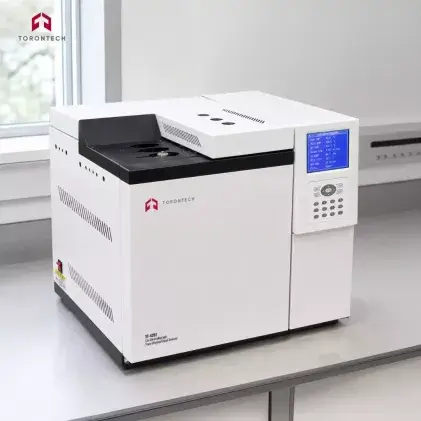
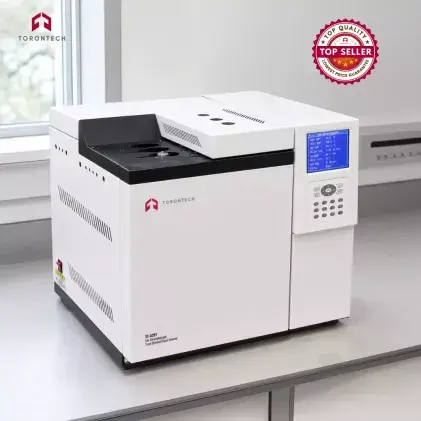
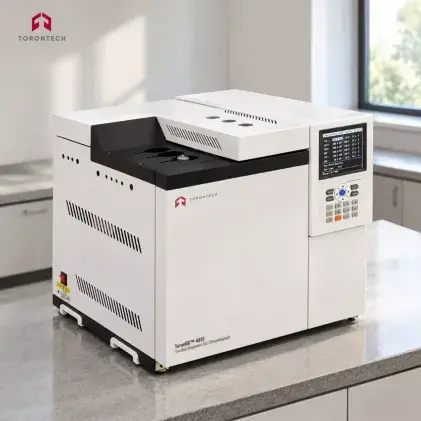
If calculated BTU values shift by even a fraction of a percent due to baseline drift, settlement discrepancies quickly mount into costly commercial disputes. Transmission operators rely on dedicated analyzers, such as our TT-1945 Natural Gas Analyzer, to determine methane, ethane, propane, C4+ hydrocarbons, CO2, and N2 under ASTM D1945 and ISO 6974.
For gathering systems and processing plant inlets carrying moderately sour streams, the system also separates hydrogen sulfide down to its 500 ppm detection limit alongside primary hydrocarbon fractions.
Downstream Refining and Asset Protection
Determining feedstock boiling point distribution via simulated distillation (SimDis, such as ASTM D2887 or high-temperature ASTM D7169) dictates catalytic cracker yields, while finished fuel blending requires exact molecular verification under strict ASTM, ISO, and GPA standards.
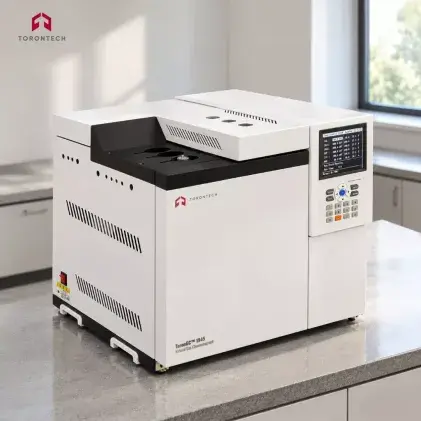
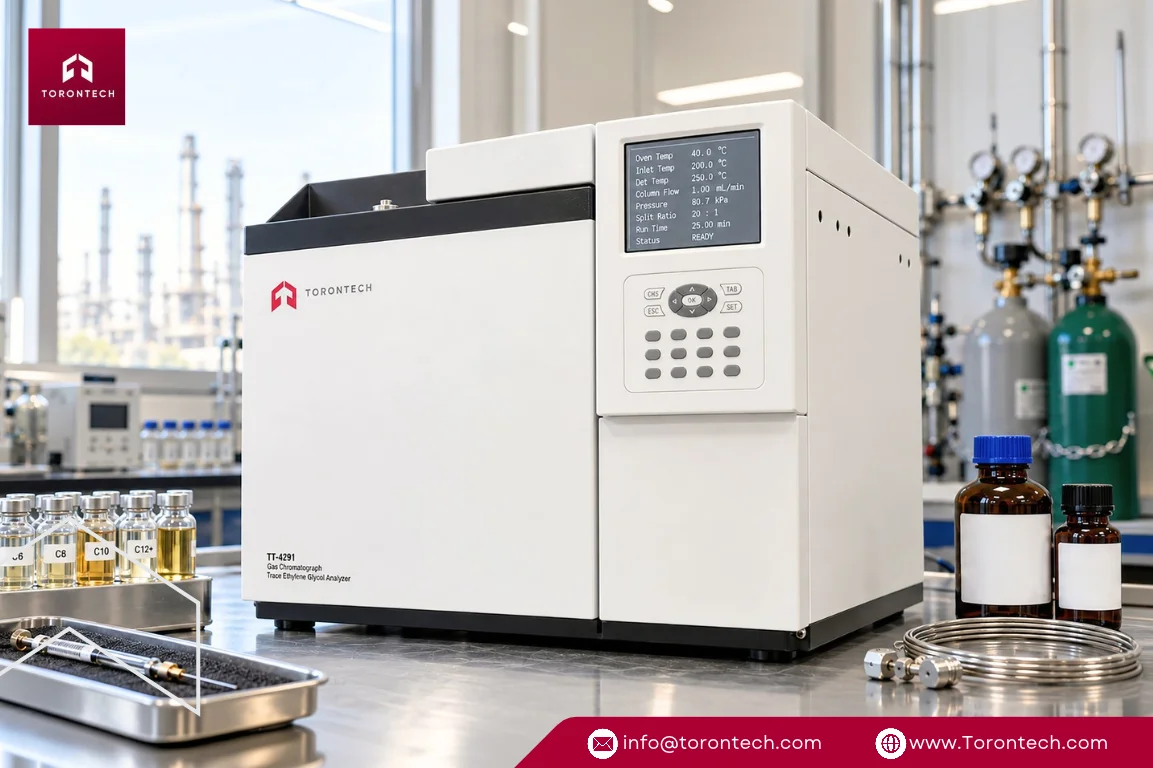
In plant reliability programs, an analyzer like our TT-4291 detects ethylene glycol in used engine lubricants over an expected range of 5 to 200 mass ppm under ASTM D4291, flagging coolant leaks before moving mechanical assemblies fail.
Gas Chromatograph Selection Criteria
To avoid costly post-delivery modifications and keep testing benches running with dependable consistency, we recommend evaluating prospective instruments against these technical pillars:
Turnkey Analyzers vs. Generic Platforms
The primary strategic decision during procurement is choosing between an unconfigured instrument frame and an application-dedicated, turnkey analyzer.
An unconfigured unit arrives as an empty platform. Your analytical chemists must route internal lines, test columns through trial and error, adjust valve timings, and execute repetitive validation sequences. In our assessment, treating skilled chemists as unpaid hardware assemblers delays operational productivity by two to four months.
Conversely, a dedicated analyzer arrives with the target column, detector, carrier gas configuration, temperature oven program, and calibration standards pre-installed at the factory.
Across our specialized lineup, including the TT-5134 Detailed Hydrocarbon Analyzer for petroleum naphthas (ASTM D5134), this pre-engineered architecture completely bypasses trial-and-error method development. Bench technicians produce audit-compliant results almost immediately after hookup without requiring specialized chromatography engineering backgrounds.
Procurement studies show that establishing structured purchasing strategies (uniting managing directors, laboratory heads, and procurement teams) helps facilities optimize supplier selection and control spending. Investing in purpose-built, pre-tested platforms eliminates hidden engineering costs, ensuring acquisition budgets match real-world installation expenses.
Detector Selection and Compound Matching
Matching target chemical components to detector physics is critical for dependable quantification:
Universal Baseline Quantitation (FID and TCD)
The Flame Ionization Detector (FID) remains the premier choice for hydrocarbon speciation, delivering an exceptionally wide linear response range alongside reliable quantitative data for organic carbon structures.
For permanent gases (including nitrogen, oxygen, carbon dioxide, and hydrogen), the Thermal Conductivity Detector (TCD) serves as the universal detection standard where an FID exhibits zero response. Combining FID and TCD hardware provides a complete baseline across hydrocarbon and non-hydrocarbon components alike in mud gas logging and pipeline gas profiling.
High-Voltage Grid Reliability (Transformer Oil DGA)
In electric utility networks monitored across North American transmission operators (such as ERCOT, PJM, MISO, Hydro-Québec, or the AESO), transformer condition monitoring pairs ASTM D3612 with IEEE C57.104 diagnostic criteria to identify incipient thermal and electrical faults.
Systems like our TT-3612 TOGA Analyzer are specifically engineered to detect hydrogen, methane, ethylene, acetylene, and other dissolved fault gases in transformer insulating oil according to ASTM D3612 and IEC 60567.
Advanced Structural and Field Speciation (VUV, MS, and QEPAS)
For advanced testing, mass spectrometry (MS) provides structural identification. Vacuum Ultraviolet (VUV) spectroscopy deconvolutes co-eluting peaks and differentiates hydrocarbon isomers, often removing the need for labor-intensive sample pre-fractionation in gas oil analysis.
For localized field monitoring, quartz-enhanced photoacoustic spectroscopy (QEPAS) sensors offer direct detection of light alkanes without sample transport delays.
Sample Introduction Systems
Sample introduction hardware must be selected according to the physical phase of the petroleum matrix, whether handling pressurized vapors, liquid fuels, or heavy lubricants.
Pressurized Hydrocarbons and Gases
Major North American fractionation and storage terminals (such as Mont Belvieu in Texas, Conway in Kansas, or Edmonton and Sarnia in Canada) process vast daily volumes of propane and butane streams. Under ASTM D2163 and GPA 2186, preventing sample boiling prior to separation is mandatory to avoid composition distortion.
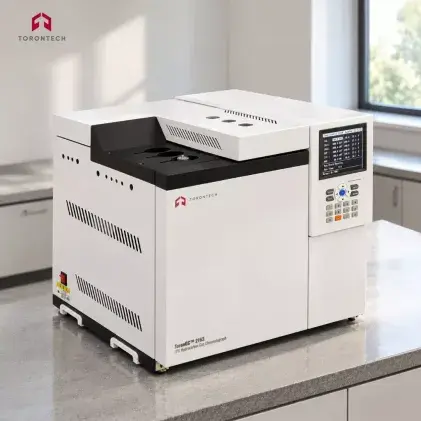
We offer the TT-2163 LPG Hydrocarbon Analyzer, pre-configured specifically for quality control in liquefied petroleum gas, providing dedicated analysis of propane, butane, and other hydrocarbon species. For natural gas streams, heated gas sampling assemblies ensure that heavier hydrocarbon fractions (C6+) never drop out or condense along internal conduit surfaces.
Distillates, Finished Fuels, and Biofuels
In the United States, oxygenate blending is governed by ASTM D4814 fuel specifications and Clean Air Act waivers that cap alcohol and ether concentrations, while the Renewable Fuel Standard drives overall blending volumes. Testing for ethanol, MTBE, ETBE, and TAME in motor gasoline requires dedicated separation conditions to prevent co-elution with hydrocarbon baselines. Our TT-4815 Gasoline Oxygenates GC arrives pre-configured for ASTM D4815 and EN 13132, providing laboratory teams with immediate, standards-compliant oxygenate quantification.
Regulatory frameworks like the Canadian Clean Fuel Regulations (CFR) and regional low-carbon fuel standards (such as California's LCFS) require rigorous verification of alternative fuels to secure commercial tax credits.
Our TT-Biodiesel GC Plus is configured specifically for biodiesel quality testing according to EN 14103 and ASTM D6584, quantifying FAME content, free glycerol, and total glycerol. Across all methods, selecting the proper stationary phase (whether gas-solid packed columns for permanent gases or gas-liquid open tubular capillary columns for complex boiling point curves) establishes dependable retention times.
Carrier Gas Economics and Supply Flexibility
Helium supply constraints and pricing volatility have turned single-gas configurations into an ongoing financial strain. In our view, carrier gas flexibility should be considered standard equipment engineering.
Hydrogen provides high chromatographic efficiency and significantly shorter run times across capillary methods. Because hydrogen is flammable, modern instruments must feature integrated safety controls, including automatic leak sensors inside the column oven paired with emergency shut-off valves.
Nitrogen serves as an economical carrier alternative for workflows where ultra-trace sensitivity is not required, such as general crude oil characterization or biomarker screening. Regardless of the primary gas chosen, modern electronic pneumatic control assemblies that automatically scale back flow rates during non-operational hours reduce recurring cylinder expenses significantly over the lifespan of the equipment.
Advanced Separation and Data Integration
Beyond 225°C, resolving overlapping hydrocarbon species becomes difficult on standard one-dimensional columns. Advanced testing facilities frequently turn to comprehensive two-dimensional gas chromatography (GCxGC).
By coupling two columns with different separation mechanisms through thermal or flow modulation, GCxGC resolves hundreds of co-eluting peaks in complex middle distillates, heavy gas oils, bitumen, and environmental oil spill samples. This method delivers clear group-type identification of aromatics, BTEX, sulfur, and nitrogen compounds without tedious manual pre-separation.
On routine production benches, data software must eliminate manual calculation errors. The chromatography workstation should automatically calculate gross and net BTU values, specific gravity, and compressibility factors per GPA 2172 and ISO 6976 directly on the final analytical report.
Secure audit trails, tamper-evident raw data storage, and multi-level user permissions ensure full compliance with ISO 17025 accreditation standards. Open-architecture data outputs route records directly into corporate laboratory information management systems (LIMS) without requiring proprietary licensing fees, supported by clear vendor troubleshooting documentation for reliable long-term operation.
Application and Hardware Configuration Matrix
The table below connects primary industry testing protocols to their factory-configured Torontech hardware solutions:
| Petroleum Application | Governing Standard Methods | Recommended Torontech Model & Configuration | Key Analytical Output |
|---|---|---|---|
| Natural Gas Composition | ASTM D1945, ISO 6974 | Pre-configured natural gas analyzer (TT-1945) | Quantifies methane, ethane, propane, C4+, CO2, and N2 for heating value and compressibility. |
| LPG Hydrocarbon Purity | ASTM D2163, GPA 2186 | Pre-configured LPG hydrocarbon analyzer (TT-2163) | Quantifies individual propane, butane, and other hydrocarbon species. |
| Naphtha Profiling (DHA) | ASTM D5134 | Pre-configured naphtha DHA analyzer (TT-5134) | Detailed characterization of naphtha composition for reformer feed assessment. |
| Gasoline Oxygenates | ASTM D4815, EN 13132 | Pre-configured gasoline oxygenates analyzer (TT-4815) | Resolves MTBE, ETBE, TAME, ethanol, and other oxygenate blending components. |
| Transformer Oil Gases (TOGA/DGA) | ASTM D3612, IEC 60567 | Dedicated transformer oil gas analyzer (TT-3612) | Detects dissolved fault gases (H2, CH4, C2H4, C2H2, and others) for early condition monitoring. |
| Trace Ethylene Glycol in Oil | ASTM D4291 | Dedicated trace ethylene glycol analyzer (TT-4291) | Flags coolant leakage in used engine oils for machinery condition monitoring. |
| Biodiesel Purity & Glycerol | ASTM D6584, EN 14103 | Dedicated biodiesel analyzer (TT-Biodiesel GC Plus) | Quantifies FAME content, free glycerol, total glycerol, and residual methanol in biodiesel. |
Cost-Effective GC Solutions from Torontech
Outfitting your testing bench should never mean accepting inflated acquisition costs, proprietary consumable locks, or prolonged commissioning delays. Based in North America with facilities across the United States and Canada, Torontech has served industrial laboratories for over twenty years, pairing innovative technologies with genuinely cost-effective solutions.
Instead of generic instrument frames, we provide application-dedicated platforms pre-configured to governing ASTM, ISO, EN, IEC, and GPA standards. Each system arrives with the required columns, detectors, and method parameters in place, ensuring immediate, audit-compliant operation across petroleum, gas, and lubricant testing.
Technical Consultation and Procurement
Review our complete selection of Gas Chromatography Systems or consult with our North American technical specialists. Let us show you how our innovative technologies and cost-effective solutions can lower your operating cost-per-sample while protecting your data integrity.
References (Click to expand)
- Blomberg, J., Schoenmakers, P., & Brinkman, U. (2002). Gas chromatographic methods for oil analysis. Journal of Chromatography A, 972(2), 137–173.
- Boswell, H., Carrillo, K. T., & Górecki, T. (2020). Evaluation of the Performance of Cryogen-Free Thermal Modulation-Based Comprehensive Two-Dimensional Gas Chromatography-Time-of-Flight Mass Spectrometry (GCxGC-TOFMS) for the Qualitative Analysis of a Complex Bitumen Sample. Separations, 7(1), 13.
- Corrêa, A. M., Sousa, J. M., Leal, K. Z., & Bernardes, M. C. (2023). Comprehensive Two-Dimensional Gas Chromatography in Petroleum Derived Samples: A Review on Advances in Source and Weathering Studies of Spilled Oil. Critical Reviews in Analytical Chemistry, 54(8), 3409–3427.
- Kanaujia, P. K. (2018). Gas Chromatography: Petroleum and Petrochemical Applications. In Encyclopedia of Analytical Science (3rd ed.). Elsevier.
- Kaplitz, A. S., & Schug, K. (2023). Gas chromatography—vacuum ultraviolet spectroscopy in petroleum and fuel analysis. Analytical Science Advances, 4(7-8), 220–231.
- Kaufman, R., Ahmed, A. S., & Hempkins, W. B. (2018). A New Technique for the Analysis of Commingled Oils and Its Application to Production Allocation Calculations. In Proceedings of the Indonesian Petroleum Association, 247–268.
- Lelević, A., Geantet, C., Moreaud, M., Lorentz, C., & Souchon, V. (2021). Quantitative Analysis of Hydrocarbons in Gas Oils by Two-Dimensional Comprehensive Gas Chromatography with Vacuum Ultraviolet Detection. Energy & Fuels, 35(19), 15509–15521.
- Lelević, A. (2025). Spectral Pixel-Based Analysis and Clustering Workflow for the Exploration of the Composition of Gas Oil Samples by Comprehensive Two-Dimensional Gas Chromatography Vacuum Ultraviolet Spectroscopy. Journal of Separation Science, 48(1).
- Li, B., Zhang, X., & Zhao, Y. (2026). Research and Application of High-Resolution Rapid Gas Chromatography Analysis System. Journal of Physics: Conference Series, 3233, 012025.
- Luo, P., Harrist, J., Menduni, G., Mesdour, R., Stmichel, N., & Sampaolo, A. (2022). Simultaneous Detection of Methane, Ethane, and Propane by QEPAS Sensors for On-Site Hydrocarbon Characterization and Production Monitoring. ACS Omega, 7(4), 3395–3406.
- Machado, M. E. (2019). Comprehensive two-dimensional gas chromatography for the analysis of nitrogen-containing compounds in fossil fuels: A review. Talanta, 198, 263–276.
- McNair, H., & Miller, J. M. (2019). Basic Gas Chromatography (3rd ed.). John Wiley & Sons.
- Panleng, C. (2017). Purchasing Strategy for Refurbished Gas Chromatography Instruments (Master's thesis, Chulalongkorn University).
- Pollo, B. J., Alexandrino, G. L., Augusto, F., & Hantao, L. (2018). The impact of comprehensive two-dimensional gas chromatography on oil & gas analysis: Recent advances and applications in petroleum industry. TrAC Trends in Analytical Chemistry, 105, 202–217.
- Sudol, P. E., Pierce, K., Prebihalo, S., Skogerboe, K., Wright, B., & Synovec, R. (2020). Development of gas chromatographic pattern recognition and classification tools for compliance and forensic analyses of fuels: A review. Analytica Chimica Acta, 1132, 157–186.
- Taylor, C., & Bowden, S. (2023). What about nitrogen? Using nitrogen as a carrier gas during the analysis of petroleum biomarkers by gas chromatography mass spectrometry. Journal of Chromatography A, 1697, 463989.
- Von Mühlen, C., Zini, C., Caramão, E., & Marriott, P. (2006). Applications of comprehensive two-dimensional gas chromatography to the characterization of petrochemical and related samples. Journal of Chromatography A, 1105(1-2), 39–50.
- Zhou, Y. (2019). Application of Gas Chromatography to Identify Oil and Water. IOP Conference Series: Earth and Environmental Science, 252, 022037.