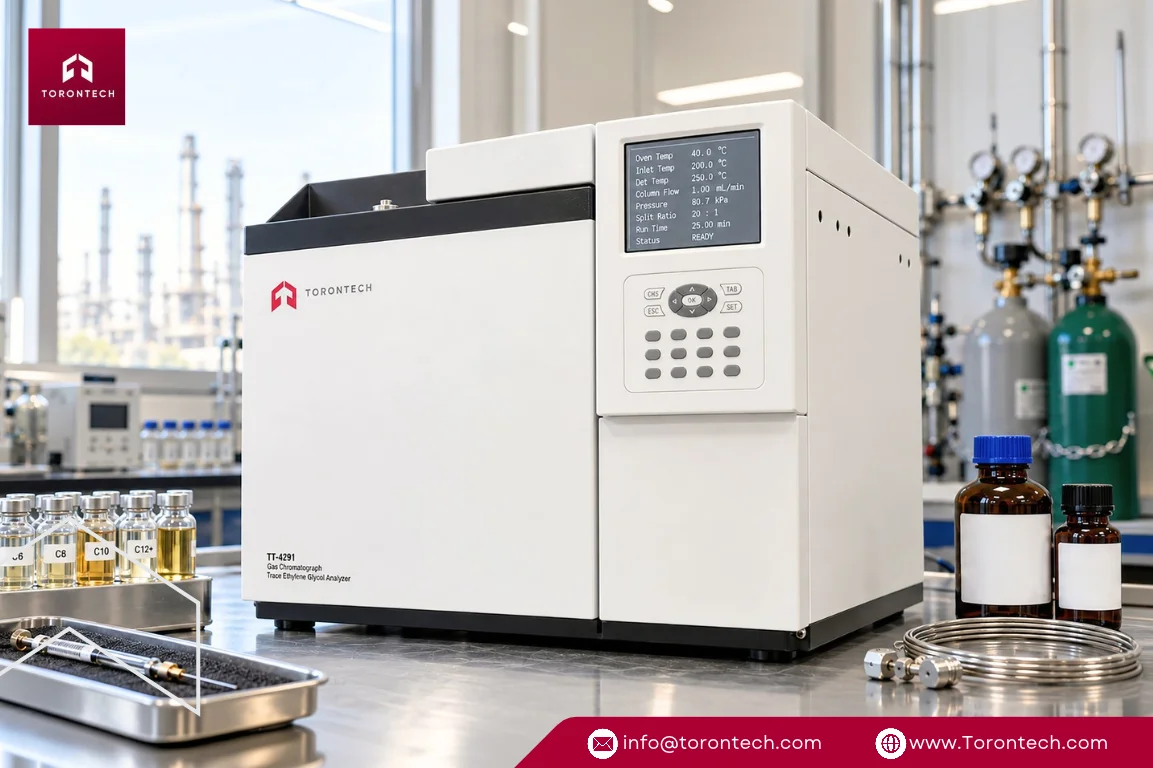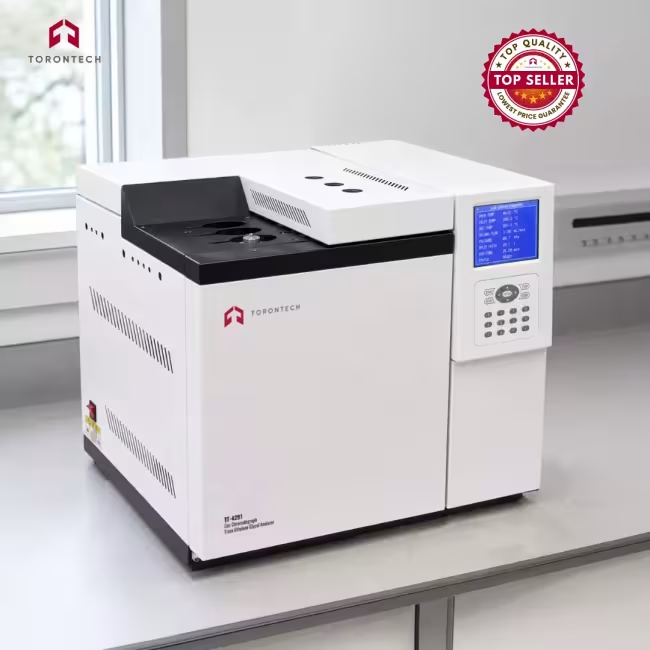
Gas Chromatograph Trace Ethylene Glycol Analyzer
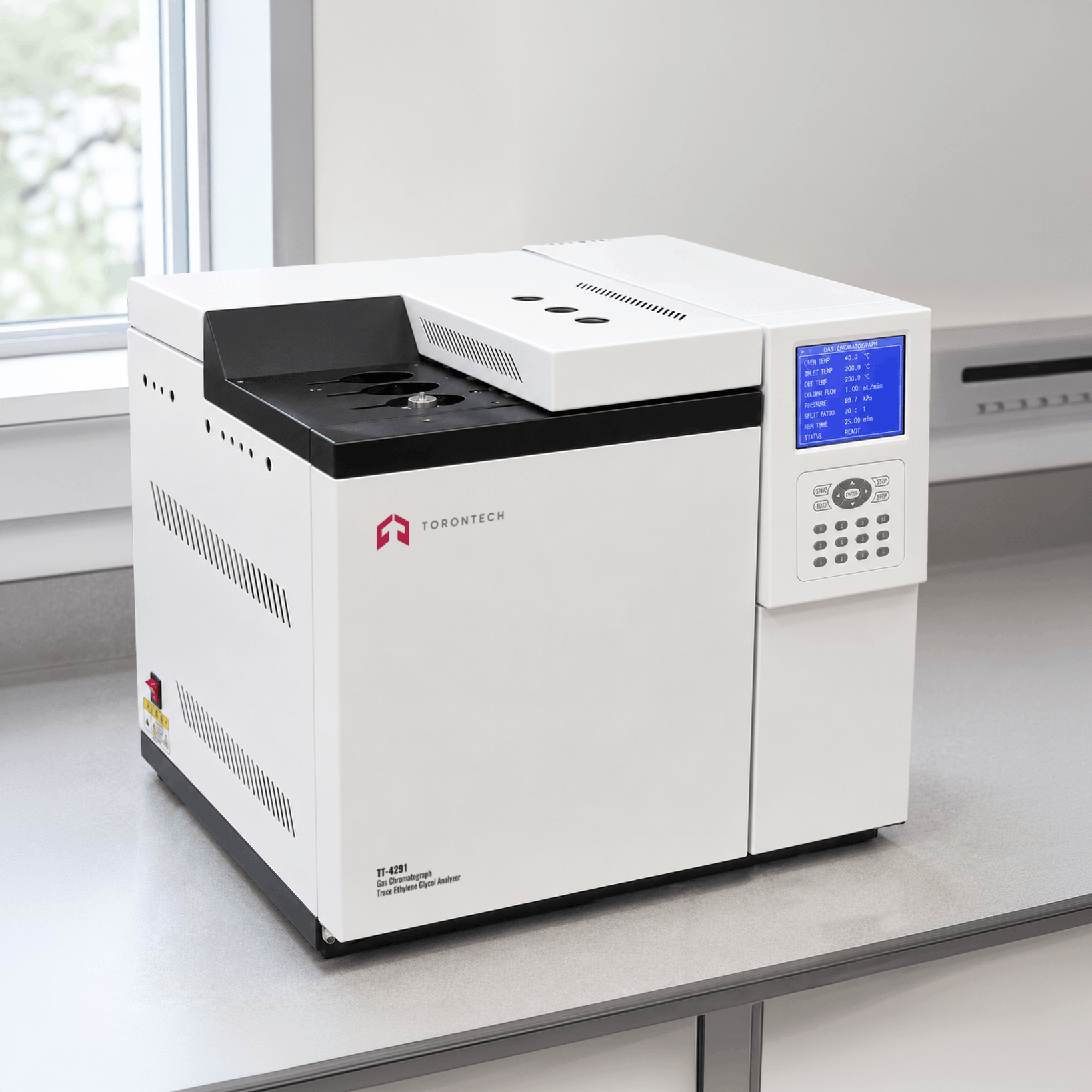
Gas Chromatograph Trace Ethylene Glycol Analyzer - TT-4291
Gas Chromatograph Trace Ethylene Glycol Analyzer TT-4291 complies with ASTM D4291 Standard Test Method for Trace Ethylene Glycol in Used Engine Oil. It is utilized for measuring ethylene glycol contamination in used engine oil, with expected concentrations ranging from 5 to 200 mass ppm.
The oil sample is extracted with water, and the analysis is conducted on the water extract. A consistent volume of the extract is injected into a gas chromatograph using on-column injection, and the eluting compounds are detected by a flame ionization detector. The peak area corresponding to ethylene glycol is determined and compared with areas obtained from the injection of freshly prepared known standards.
The primary application of the GC for Trace Ethylene Glycol in Used Engine Oil TT-4291 is to detect trace amounts of ethylene glycol in used engine oil, in compliance with the ASTM D4291 standard. Ethylene glycol is the primary component of most engine coolants, so its presence in the oil is a definitive indicator of an internal coolant leak (e.g., a failed head gasket, a cracked cylinder head, or a faulty oil cooler). This test is a critical diagnostic tool used in predictive maintenance programs to identify serious engine problems before they lead to catastrophic failure.
Key Industries
- Third-Party Testing Laboratories (In-Service Oil Analysis): This is the core industry for this instrument. Commercial labs analyze thousands of used oil samples from various sectors, and testing for glycol contamination is a standard and essential part of their engine condition monitoring services.
- Automotive and Heavy Equipment (Fleet Maintenance): Large fleet operators (trucking, construction, mining, transit) rely on in-service oil analysis to monitor the health of their high-value engines. Detecting a coolant leak early with this test allows them to schedule repairs proactively, preventing major breakdowns and costly downtime.
- Power Generation: Power plants that use large reciprocating engines for backup or primary power generation use this test as part of their maintenance programs. A coolant leak can severely damage these critical engines, and this analysis is used to ensure their reliability and prevent unexpected failures.
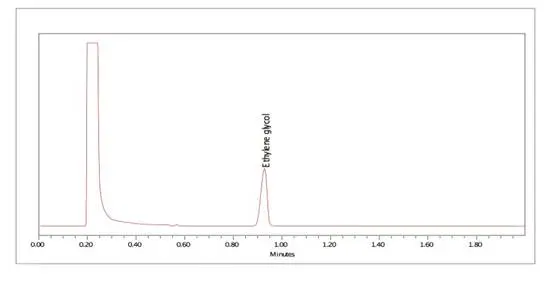
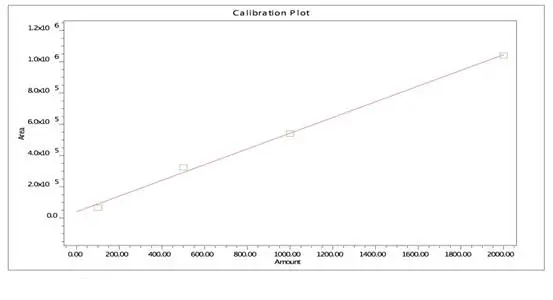
Standard Calibration
Prepare glycol standards over the quantification range of 0.01% to 0.2% w/w in motor oil
Temperature information:
1. Temperature Range: Ambient +5°C to 400°C, Increment: 0.1°C
2. Accuracy: ≤±0.1°C
3. Programmed Heating:
- Constant Temperature Time between Five Steps: 0 to 999 minutes, Increment: 0.1 minute
- Temperature Increment: 0.1°C
- Heating Rate:
- Maximum 40°C/min below 200°C
- Maximum 20°C/min above 200°C
Technical Specification
| Parameter | Details |
| Dimension | 555mm*525mm*485mm |
| Input Power | AC220V±7%, 50Hz, 2Kw |
| Net weight | About 52kg |