Scrap Tire Recycling System - ToronSTR™

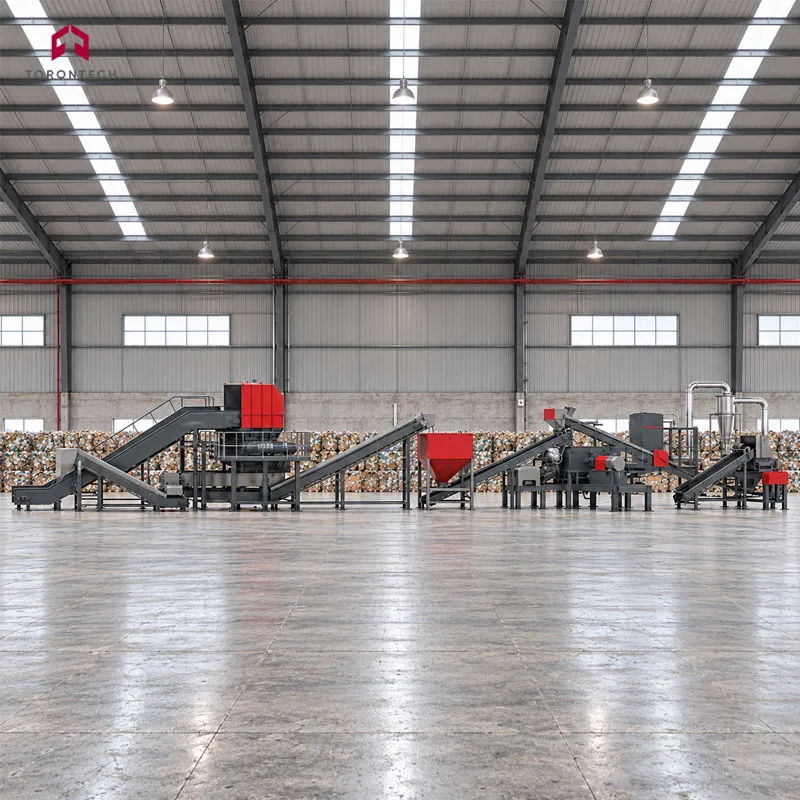
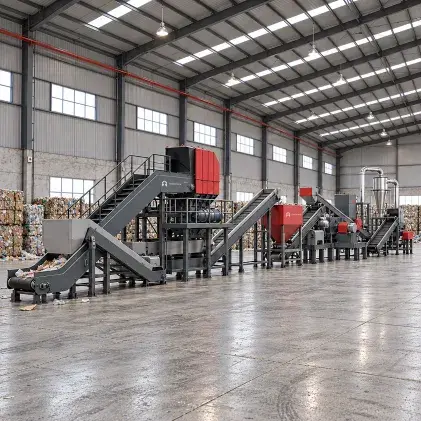
Scrap Tire Recycling System processes scrap car and truck tires into clean rubber powder and granules, separating out steel and fiber reinforcement along the way. Tire recyclers, rubber powder manufacturers, and end-of-life tire (ELT) processors use it to convert whole tires into a marketable output without manual sorting between stages. Torontech built the line around a dual shaft shredder, a rubber cracker mill, and a set of screening and separation stages that run as one continuous process.

Whole tires first pass through a hydraulic tire wire drawing stage that removes the bead wire from the sidewall and carcass, protecting downstream cutting equipment from the heaviest steel reinforcement. A metal chain conveyor then feeds the tires into the dual shaft shredder, which reduces them to rubber blocks of a set size, checked by a disc screen before moving forward. The rubber cracker mill grinds these blocks down further, separating fine steel wire in the process.

A reciprocating screen sorts the ground rubber by particle size, with oversized material recirculated back through the cracker mill and undersized material passing through as finished product. Magnetic separators pull residual steel from the rubber stream at multiple points in the line, and a buffer silo stages material between processing stages so the line runs continuously rather than in batches. The finished output is rubber granules and rubber powder, along with separated steel wire recovered for resale as scrap.

Scrap Tire Recycling System

Applications

Scrap Tire Recycling System

The Scrap Tire Recycling System serves operations that need to convert scrap tires into a sellable rubber product rather than sending them to landfill or tire-derived fuel.

  • Crumb Rubber Manufacturing: produces rubber powder and granules sized for molded products, rubberized asphalt, and manufacturing feedstock
  • Sports and Playground Surfacing: supplies rubber granules used in synthetic turf infill and playground safety surfacing
  • Scrap Steel Recovery: recovers bead and belt steel wire separated from the tire carcass for resale as scrap metal
  • End-of-Life Tire (ELT) Processing Facilities: converts whole car and truck tires collected through ELT programs into processed rubber output
  • Rubberized Asphalt Production: supplies ground rubber for asphalt modification applications
  • Automotive and Industrial Rubber Products: supplies recycled rubber compound feedstock for molded and extruded rubber goods

Theory and Method

The dual shaft shredder reduces whole tires through a low-speed, high-torque shearing action. Two counter-rotating shafts with interlocking cutting discs pull the tire inward and tear it apart between the shafts rather than slicing it with a single edge. This handles the mixed rubber, steel, and fabric construction of a tire without the jamming a high-speed single-blade cutter would experience against embedded belt steel.

The rubber cracker mill performs a second, finer size-reduction stage using intermeshing corrugated rollers that grip and tear the rubber blocks apart under pressure. As the rubber tears rather than cuts, embedded steel wire separates from the surrounding rubber matrix and is pulled free by the magnetic separators positioned along the line, rather than being cut into smaller fragments that would be harder to remove.

The reciprocating screen classifies the ground material by shaking it across a mesh deck, letting particles smaller than the mesh opening pass through as finished product while retaining oversized pieces for another pass through the cracker mill. Combined with magnetic separation for steel and fiber separation for textile, this staged reduction and screening approach produces a rubber powder with the steel and fiber content removed, matching the classification approach used in ASTM D5603.

Key Features

The Scrap Tire Recycling System combines wire removal, shredding, grinding, and separation into one continuous line built to run without manual sorting between stages.

  • High-Efficiency Separation: multiple magnetic separation points remove steel wire from the rubber stream throughout the line, not only at the final stage
  • Fine Rubber Powdering: the rubber cracker mill and reciprocating screen combination produces fine, consistently sized rubber powder from shredded tire blocks
  • Hydraulic Tire Wire Drawing: removes bead wire from the sidewall and carcass before shredding, protecting the shredder from the heaviest steel reinforcement
  • dual shaft shredder: shears whole tires into rubber blocks of a controlled size without jamming on embedded steel or fabric
  • Reciprocating Screen Classification: sorts ground rubber by particle size and recirculates oversized material automatically
  • Buffer Silo Staging: holds material between processing stages, keeping the line running continuously rather than in batches
  • Disc Screen: checks rubber block size after primary shredding before material moves to the cracker mill

Technical Specifications

ComponentDescription
Wire RemovalHydraulic tire wire drawing machine
Feeding MethodMetal chain conveyor
Primary Reductiondual shaft shredder
Size Check (Stage 1)Disc screen
Secondary ReductionRubber cracker mill
Particle ClassificationReciprocating screen
Metal RecoveryMagnetic separator (multiple points)
Material StagingBuffer silo
Finished OutputRubber granules and rubber powder; separated steel wire

Scrap Tire Recycling System | Available Products