GC for Analysis of Dissolved Gases in Transformer Oil (TOGA)
GC for Analysis of Dissolved Gases in Transformer Oil (TOGA) - TT-3612
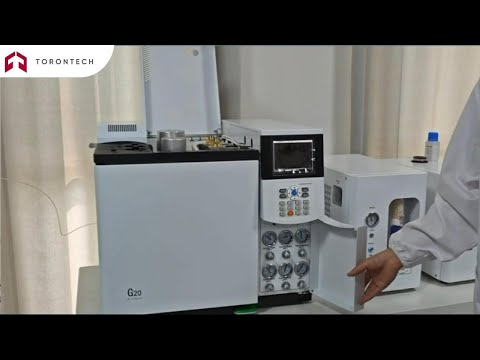
TT-3612 is a dedicated gas chromatograph for dissolved gas analysis (DGA) of electrical insulating transformer oil, designed to conform to the ASTM D3612 standard test method. The system quantifies nine fault-relevant marker gases — hydrogen (H₂), oxygen (O₂), nitrogen (N₂), carbon monoxide (CO), carbon dioxide (CO₂), methane (CH₄), ethane (C₂H₆), ethylene (C₂H₄), and acetylene (C₂H₂) — delivering a complete chemical picture of the oil's condition in a single 7-minute analysis cycle. The instrument handles oils with a viscosity of 20 cSt or less at 40°C, covering the full range of mineral insulating oils used in power and distribution transformers.
The TT-3612 uses a dual-detector configuration that pairs a thermal conductivity detector (TCD) with a flame ionization detector (FID) and methanizer. The TCD handles permanent gases (H₂, O₂, N₂), while the FID with methanizer quantifies combustible hydrocarbons and trace CO and CO₂ at sub-ppm sensitivity. A transformer-oil-specific anti-pollution composite column extends column service life under repeated oil sample exposure, reducing maintenance intervals compared to standard analytical columns.
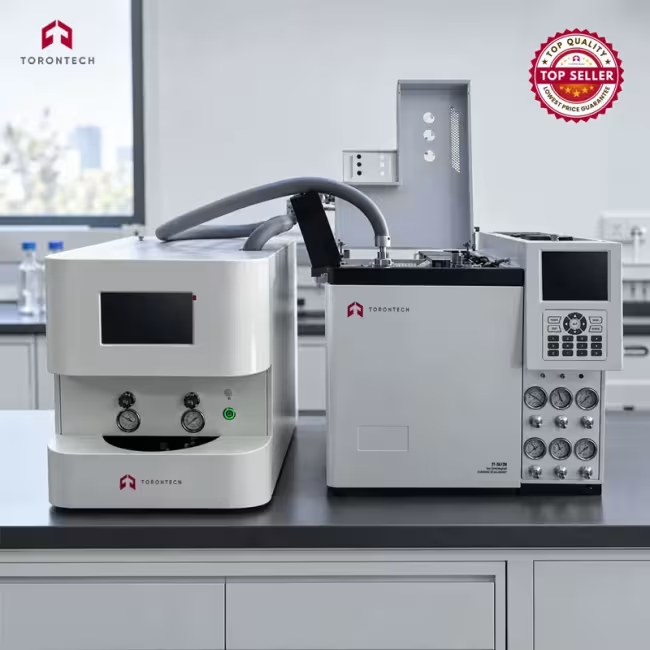
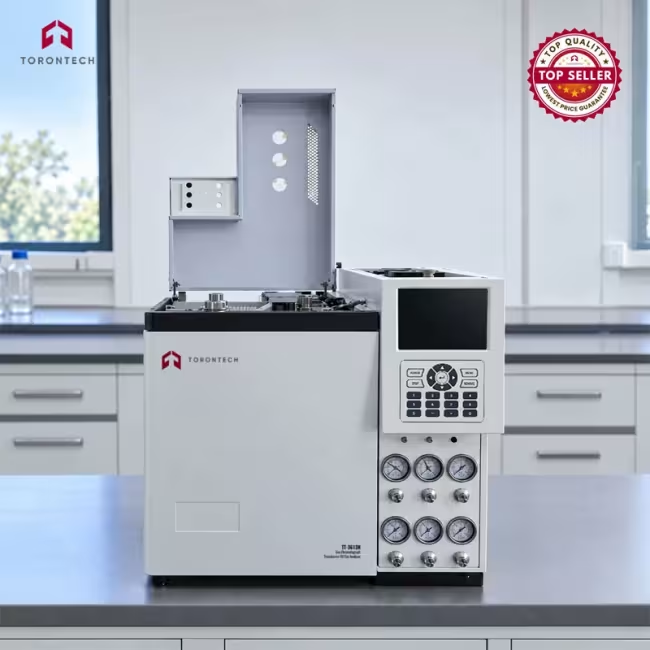
Remote laboratory integration is supported through a 10/100M Ethernet interface that connects the GC to a local area network for remote data acquisition, parameter programming, and instrument diagnostics. A 7-inch capacitive touchscreen provides the local operator interface, with on-board self-diagnosis, fault location display, and power-outage data retention that preserves all run parameters and results after unexpected shutdowns. The TT-3612H configuration bundles the base GC with an automated Headspace Sampler, enabling unattended sample extraction per ASTM D3612 Method C and increasing throughput for laboratories processing multiple oil samples per shift.
GC for Analysis of Dissolved Gases in Transformer Oil (TOGA) - TT-3612 Applications
The TT-3612 supports condition assessment and fault characterization programs for oil-filled electrical apparatus. Quantifying dissolved fault gases per ASTM D3612 allows operators to identify and trend incipient thermal and electrical abnormalities — including overheating, partial discharge, and arcing — before they develop into failures.
The system serves the following industries and use cases:
- Electric Power Utilities: Core DGA instrument for fleet-wide monitoring of power and distribution transformers, supporting condition-based maintenance schedules and grid reliability programs.
- Independent Testing Laboratories: High-throughput gas analysis for service laboratories offering transformer health assessments and oil diagnostic services to utility and industrial clients.
- Heavy Industrial Facilities: DGA monitoring for large oil-filled transformers at refineries, data centers, steel mills, and manufacturing plants where unplanned transformer outages directly halt production.
- Renewable Energy Operators: Health monitoring for substation and collector transformers at wind and solar installations, where equipment reliability affects generation uptime and project returns.
- Electrical Equipment Manufacturers: Quality assurance testing of transformer insulating oils and factory acceptance testing of oil-filled apparatus prior to commissioning.
- Research and Standards Organizations: Reference analysis for DGA method development and inter-laboratory round-robin studies requiring traceable, repeatable chromatographic data.
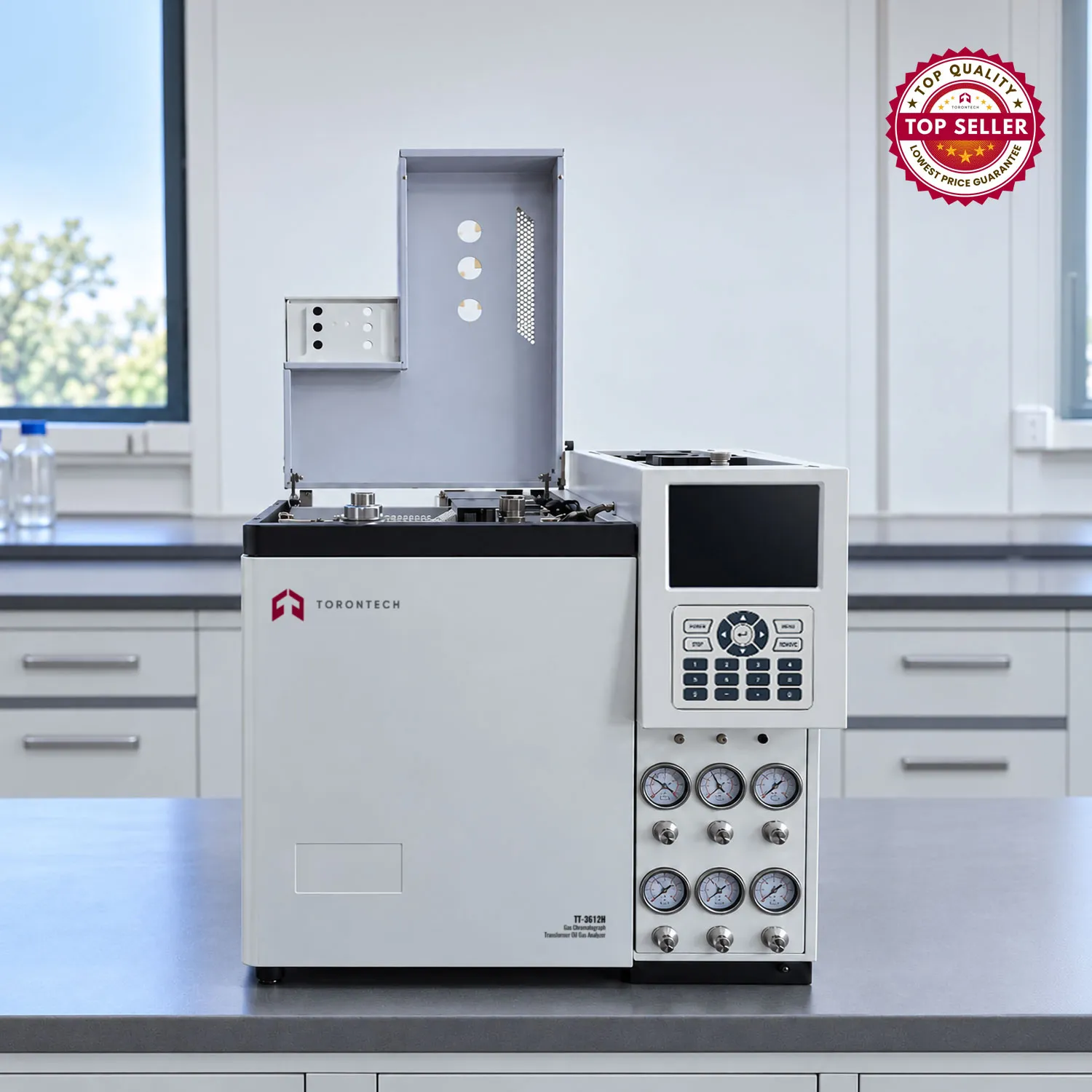
TT-3612
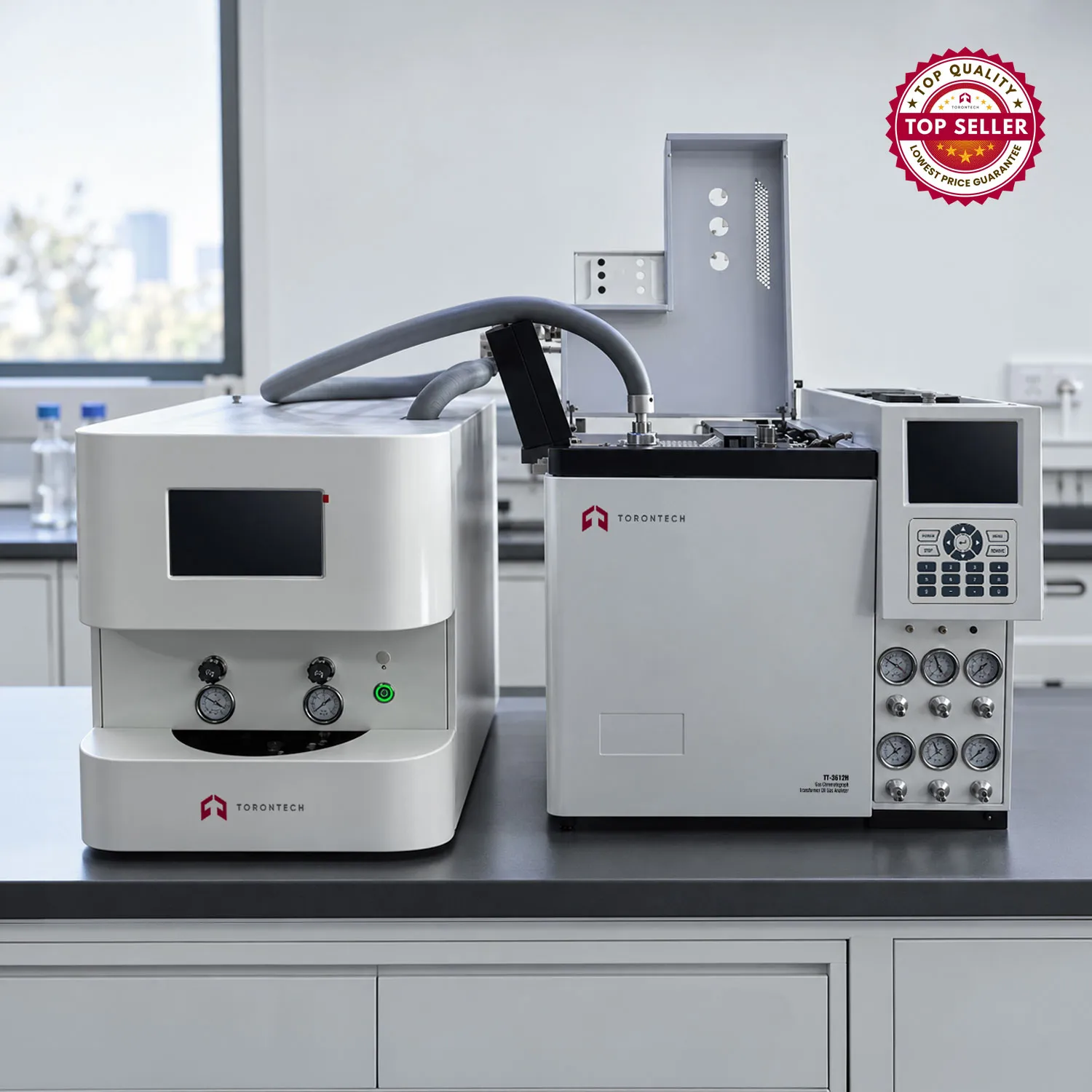
TT-3612H
Standards
The TT-3612 is designed to align with the following internationally recognized standard:
- ASTM D3612 - Standard Test Method for Analysis of Gases Dissolved in Electrical Insulating Oil by Gas Chromatography
The instrument supports all three extraction procedures described in ASTM D3612. The TT-3612H configuration, which includes the automated Headspace Sampler, is specifically suited to Method C, the headspace equilibrium extraction procedure that automates gas liberation from the oil matrix and improves sample throughput compared to manual vacuum-stripping methods.
GC for Analysis of Dissolved Gases in Transformer Oil (TOGA) - TT-3612 Key Features
The TT-3612 combines analytical precision with laboratory-ready operational features for routine DGA testing environments. Key design characteristics include:
- Dual TCD/FID Detector Configuration: Covers all nine ASTM D3612 target gases in one run — TCD for permanent gases and FID with methanizer for hydrocarbons, CO, and CO₂ — eliminating the need for sequential detector switching or separate injections.
- Anti-Pollution Composite Column Technology: Transformer-oil-specific column packing resists contamination from trace oil carryover, extending column service life significantly compared to standard chromatographic columns used in general-purpose GC systems.
- 7-Minute Analysis Cycle: Fast oven cooling through the double rear-door design reduces total turnaround time per sample, supporting high-volume DGA workflows without compromising chromatographic resolution.
- 20-Step Programmed Heating: Accommodates the full boiling-point range of ASTM D3612 target analytes in a single temperature-programmed run, with 0.1°C increment control for method reproducibility.
- Ethernet Network Integration: 10/100M Ethernet interface connects the GC to a laboratory network for remote data collection, parameter programming, and instrument diagnostics without requiring a direct operator connection to the unit.
- 7-Inch Capacitive Touchscreen: Intuitive local interface for parameter entry, real-time status monitoring, FID ignition control, TCD bridge flow switching, and fault location display — no separate control PC required for routine operation.
- Power-Outage Data Retention: On-board non-volatile memory preserves all set parameters and in-progress run data after an unexpected power loss, allowing the operator to restore and complete the run without re-entering method conditions.
- Carrier-Gas-Loss Protection: The system automatically halts column heating if carrier gas supply is interrupted, protecting the column packing and TCD filament from thermal damage during gas supply failures.
- Automatic FID Ignition with Hydrogen Protection: Programmable ignition scheduling and automatic hydrogen cut-off on flame-out eliminate manual re-ignition steps and protect against hydrogen accumulation during detector shutdown.
- Pre-Aged Factory Configuration: Each unit undergoes a rigorous aging test before shipment with all ASTM D3612 method parameters pre-loaded, so the instrument is operational with a simple start-up sequence on delivery.
- Headspace Sampler Option (TT-3612H): The TT-3612H configuration includes an automated Headspace Sampler that handles sealed-vial gas equilibration and injection per ASTM D3612 Method C, enabling fully automated sample-to-result workflows without manual gas extraction.
Theory and Method
Gas chromatography measures dissolved gas content in transformer oil by first extracting the gases from the liquid phase and then separating, identifying, and quantifying each gas component. Under thermal and electrical stress, transformer insulating oil and cellulose paper insulation decompose and generate characteristic gaseous byproducts. These decomposition products — hydrogen, light hydrocarbons, CO, CO₂, and trace acetylene — dissolve into the oil matrix at concentrations that correlate with the nature and severity of the fault. The presence and ratio of specific gases serve as diagnostic fingerprints: acetylene indicates high-energy electrical arcing, ethylene points to high-temperature thermal degradation, and elevated CO combined with CO₂ signals cellulose paper deterioration.
Once extracted from the oil, the gas sample is injected onto a packed precolumn that separates the components by boiling point and molecular size, directing them onto downstream analytical columns. The gas stream splits between two detector paths. The TCD measures permanent gases by detecting changes in thermal conductivity relative to a carrier gas reference — hydrogen, oxygen, and nitrogen produce distinct conductivity signals that the detector converts to concentration values. Combustible hydrocarbons, CO, and CO₂ pass through a nickel-catalyst methanizer, which converts them to methane before reaching the FID; the FID then measures the ion current generated when each hydrocarbon fragment combusts in a hydrogen-air flame, with sensitivity down to sub-picogram levels.
Column temperature programming in the TT-3612 supports up to 20 programmed heating steps, allowing the oven to ramp from near-ambient conditions through 450°C at rates between 1 and 80°C per minute. This range accommodates both the light permanent gases and the heavier C₂ hydrocarbons within a single injection, eliminating the need for separate isothermal runs. The intelligent double-rear-door oven design allows the column chamber to cool from 350°C to 50°C in approximately 7 minutes, keeping total cycle time short in high-throughput laboratory environments.
GC for Analysis of Dissolved Gases in Transformer Oil (TOGA) - TT-3612 Technical Specifications
General Performance
| Parameter | Specification |
|---|---|
| Applicable Standard | ASTM D3612 |
| Oil Sample Viscosity Limit | 20 cSt (100 SUS) or less at 40°C |
| Target Gases | H₂, O₂, N₂, CO, CO₂, CH₄, C₂H₂, C₂H₄, C₂H₆ |
| Injection Volume | 1 mL |
| Minimum Detectable Concentration | Reported in μL/L |
| Analysis Cycle Time | 7 minutes |
| Ambient Operating Temperature | 0°C to 40°C (32°F to 104°F) |
| Communication Interface | 10/100M Ethernet |
| Display | 7-inch LCD, capacitive touchscreen |
Temperature Control
| Zone | Range | Accuracy |
|---|---|---|
| Column Oven | Ambient +5°C to 450°C | ±0.1°C |
| Injector | Ambient +5°C to 450°C | ±0.1°C |
| Detector | Ambient +5°C to 450°C | ±0.1°C |
| Number of Controlled Zones | 7 paths | — |
Column Oven
| Parameter | Specification |
|---|---|
| Internal Volume | 260 × 270 × 230 mm |
| Programmed Heating Steps | Up to 20 steps |
| Heating Rate Range | 1 to 80°C/min (0.1°C increment) |
| Step Retention Time | 0 to 655 minutes (1-minute increment) |
| Cooling Time | 350°C to 50°C in approximately 7 minutes |
| Cooling Design | Intelligent double rear-door with low-noise fan |
FID Detector
| Parameter | Specification |
|---|---|
| Maximum Operating Temperature | 450°C |
| Minimum Detection Limit | <5 pg C/s (n-Hexadecane) |
| Linear Dynamic Range (LDR) | 10⁷ (±10%) |
| Data Acquisition Frequency | 100 Hz |
| Ignition | Automatic, with hydrogen cut-off on flame-out |
| Column Compatibility | Packed and capillary columns |
TCD Detector
| Parameter | Specification |
|---|---|
| Maximum Operating Temperature | 400°C |
| Minimum Detection Limit | <800 pg propane/mL (Helium carrier) |
| Linear Dynamic Range (LDR) | 10⁵ (±10%) |
| Data Acquisition Frequency | 100 Hz |
| Column Compatibility | Packed and capillary columns |
Physical and Electrical
| Parameter | Specification |
|---|---|
| Dimensions (W × D × H) | 586 × 500 × 530 mm |
| Weight | 46 kg |
| Voltage | 220V ± 50Hz (110V is also available) |
| Power Consumption | ≤2.5 kW |
Configuration Options
| Configuration | Description |
|---|---|
| TT-3612 | Base GC unit — manual or syringe injection |
| TT-3612H | Base GC unit + automated Headspace Sampler (ASTM D3612 Method C) |