Gas Chromatography vs HPLC: Key Differences and Uses
Purchasing the wrong analytical instrument drains capital and creates painful testing bottlenecks.
While both platforms deliver reliable trace detection, deciding on GC vs HPLC comes down to whether your target molecules can vaporize without breaking down under heat. Matching your sample to the right separation mechanism protects your operational budget and eliminates compliance headaches.
Here is a direct breakdown of technical mechanics, operational expenses, and application benchmarks to help you select the ideal platform for your laboratory.
Key Takeaways
- Core Selection Rule: Gas chromatography requires volatile, thermally stable compounds below 400°C, while liquid chromatography handles heat-sensitive, high-mass, or liquid-soluble samples without vaporization.
- Separation Efficiency: Capillary GC columns generate higher theoretical plate counts (exceeding 100,000 plates) to resolve complex isomer mixtures in a single analytical cycle, whereas HPLC provides adaptable solvent selectivity for polar compounds and biomacromolecules.
- Operating Expenses: Gas chromatography running expenses center on carrier gas supply, whereas liquid chromatography budgets must continuously absorb high-grade solvent purchasing and certified hazardous waste disposal fees.
- Dual-Platform Workflows: Quality control operations frequently utilize both systems in tandem, using HPLC for active compound purity and GC for volatile residual solvents or fuel profiling.
- Turnkey Advantage: Choosing factory pre-configured analyzers verified for specific ASTM, ISO, or FDA 21 CFR Part 11 standards eliminates weeks of costly method development.
Core Differences Between HPLC and GC
Beneath the stainless-steel covers and digital interfaces, both systems share the same operational foundation: a moving fluid carries a multi-component mixture across a stationary phase, separating individual substances according to their physical or chemical affinities.
The fundamental distinction lies in the physical state of that carrier fluid, along with the thermal energy or mechanical pressure required to run the test.
The Vapor-Phase Separation Mechanism (Gas Chromatography)
Gas chromatography employs an unreactive carrier gas (typically Helium, Nitrogen, or Hydrogen) to transport vaporized analytes through a narrow capillary column housed within a high-temperature oven reaching 350°C to 450°C. Target compounds must vaporize cleanly without thermal breakdown. If an analyte degrades under high heat, GC cannot analyze it directly.
The High-Pressure Liquid Mechanism (HPLC)
Liquid chromatography pushes a liquid solvent mixture (such as Acetonitrile, Methanol, or aqueous buffers) through a densely packed column under high mechanical pressure, typically between 50 and 350 bar (exceeding 1,000 bar in UHPLC systems). B
Because analytes remain dissolved in liquid throughout the run, HPLC operates at ambient or moderate temperatures (typically 20°C to 60°C) without requiring vaporization. While routine analytical methods run between 50 and 350 bar, systems like the Torontech TT-HPLC provide extended pressure capability up to 62 MPa (620 bar).
Fluid delivery is handled by its P-series pumps, configured as P1 isocratic, P2 binary, or P4 quaternary channels, featuring alloy steel cams with high-frequency heat treatment for pulse-free delivery across a 0.001 to 10.000 mL/min flow range.
Gas Chromatography vs HPLC: Specification Comparison
To give laboratory directors and procurement specialists a clear overview when evaluating HPLC or GC, the table below compares both platforms across critical operational criteria:
| Operational Parameter | Gas Chromatography (GC) | High-Performance Liquid Chromatography (HPLC) |
|---|---|---|
| Mobile Carrier Fluid | Inert gas stream (Helium, Nitrogen, or Hydrogen) | High-pressure liquid solvents (Water, Methanol, Acetonitrile, buffers) |
| Sample Volatility | Readily vaporized, thermally stable below 400°C | Dissolved in liquid; non-volatile or heat-sensitive |
| Molecular Mass Profile | Light compounds (typically under 800 Da) | Broad range (under 100 Da to over 1,000,000 Da for large proteins) |
| Column Architecture | Narrow, extended capillary coils (15 m to 100 m; inner diameter 0.10 to 0.53 mm) | Short, packed stainless steel tubes (50 mm to 250 mm; inner diameter 2.1 to 4.6 mm) |
| Separation Efficiency | High theoretical plate count (100,000 to over 300,000 plates) | Moderate theoretical plate count (5,000 to 25,000 plates) |
| Temperature Profile | Programmed high-heat thermal cycles (40°C to 450°C) | Ambient or mildly heated thermal bath (20°C to 60°C) |
| Operating Pressure | Moderate gas pressure (10 to 60 psi / 0.7 to 4 bar) | High mechanical pressure (typically 50 to 350 bar; up to 62 MPa / 620 bar on systems like TT-HPLC, exceeding 1,000 bar in UHPLC) |
| Standard Detectors | Ionization, thermal conductivity, and mass filters (FID, TCD, ECD, FPD, NPD, MS) | Optical absorbance, refractive, and mass detectors (UV-Vis, DAD/PDA, RID, FLD, ELSD, MS) |
| Typical Detection Limits | Detector-dependent: ppm with TCD; low ppb with FID and ECD; sub-ppb with MS | Detector-dependent: low ppb to ppm with UV-Vis or DAD; sub-ppb with FLD or MS |
| Liquid Chemical Waste | Negligible during operational analysis | Large volumes of spent organic solvents requiring disposal |
Technical Nuances: Evaluating HPLC vs GC
Selecting the right instrumentation requires looking beyond basic product specifications and examining practical sample handling requirements.
1. Volatility, Thermal Stability, and Derivatization
The first screening criterion for GC vs HPLC centers on a simple question: Can the target compound convert to a gas without decomposing?
If your target compounds boil below 350°C to 400°C and stay structurally stable under heat, GC provides sharp peak resolution and efficient run times. However, we often find that testing facilities view the boundary between GC and HPLC too rigidly.
Across analytical chemistry, many polar, non-volatile, or heat-sensitive compounds (including amino acids, organic acids, sterols, and simple sugars) can be modified via chemical derivatization (silylation, acylation, or alkylation). Attaching functional groups like trimethylsilyl (TMS) lowers boiling points and increases volatility. While derivatization adds an extra sample preparation stage, the resulting separation efficiency on a capillary GC column frequently justifies the additional step.
Conversely, high-mass synthetic polymers, monoclonal antibodies, therapeutic proteins, and large biomacromolecules that cannot be vaporized or derivatized require HPLC separation.
2. Solvent and Matrix Compatibility
The solvent containing your sample influences preparatory workload just as heavily as the analyte itself.
Capillary GC columns and glass split/splitless liners perform poorly with direct water injections. A single microliter of liquid water expands to more than 1,400 microliters of vapor inside a hot inlet port (and anyone who has had an unexpected inlet backflash knows the headache we mean).
This rapid expansion risks liner contamination and damages non-polar stationary phases. Consequently, aqueous samples require liquid-liquid extraction, solid-phase extraction, or headspace techniques prior to GC analysis.
In contrast, reversed-phase HPLC uses water as a primary component of the mobile phase. Environmental runoffs, beverage formulations, and biological fluids can often be filtered to remove particulates and injected directly into the system. Automated injection modules, such as the Torontech TT-HPLC autosampler with its patented integrated constant-pressure needle and high-precision syringe pump, ensure liquid samples are introduced with strict volumetric reproducibility and exact injection volumes.
3. Separation Efficiency and Detection
Capillary GC columns utilize extended, open-tubular designs (frequently 30 to 60 meters long) that generate low flow resistance for the carrier gas. This configuration provides high separation efficiency, regularly yielding 100,000 to 250,000 theoretical plates. Because molecules diffuse significantly faster through gases than through liquids, mass transfer occurs quickly.
In our view, GC remains the superior choice for resolving crowded mixtures containing dozens of similar isomers (such as petrochemical streams or fatty acid methyl esters) in a single run. Here, speed refers to resolving capacity across complex matrices rather than raw stopwatch time for simple assays, where liquid chromatography often completes routine potency checks in minutes.
However, application-dedicated gas analyzers represent a deliberate exception to these high capillary plate counts. For permanent and fixed gas separation under ASTM D1945, the Torontech TT-1945 utilizes a 6-valve, 2-column packed setup with a TCD. Packed columns operate with lower theoretical plate counts than capillary coils, but they deliver the unique phase selectivity required to baseline-resolve fixed gases without requiring cryogenic oven cooling.
For liquid systems, maintaining repeatable separation relies on tight temperature management and versatile detection. Our TT-HPLC column oven uses a fuzzy PID algorithm with fan-assisted circulation and multi-layer insulation to keep column temperatures uniform.
Paired with either a high-throughput UV-Vis detector using reference subtraction algorithms or a Diode Array Detector (DAD) capturing multiple wavelengths simultaneously, liquid chromatography provides dependable identification for compounds that cannot be run through a flame or gas stream.
HPLC or GC: Practical Applications
Analytical facilities must align their instrument choices with recognized testing methods and regulatory reporting requirements across North America.
Gas Chromatography Applications
Pipeline Custody Transfer and Fuel Gases
Natural gas characterization demands split-second hydrocarbon separation into methane, ethane, propane, butane, and inert gases per ASTM D1945 and ISO 6974. Across major energy corridors like the Permian Basin, the US Gulf Coast, and the Western Canadian Sedimentary Basin, purpose-built systems like the Torontech TT-1945 arrive pre-configured with the appropriate column, detector, and temperature program for natural gas custody verification.
For this pipeline method, the TT-1945 configuration specifies lower detection limits of 100 ppm for most components, 400 ppm for propane, and 500 ppm for hydrogen sulfide, matching standard contractual reporting ranges. For liquefied petroleum gases, the Torontech TT-2163 separates propane, butane, and unsaturated fractions per ASTM D2163 and GPA 2186.
Further downstream in refining operations, our TT-5134 handles Detailed Hydrocarbon Analysis (DHA) of naphthas per ASTM D5134, while the Torontech TT-4815 quantifies gasoline oxygenates (MTBE, ETBE, ethanol) per ASTM D4815 and EN 13132.
Asset Reliability and Lubricant Testing
High-voltage electrical grid transformers require continuous fluid condition monitoring. Performing Dissolved Gas Analysis (DGA) per ASTM D3612 and IEC 60567 quantifies trace fault gases (Hydrogen, Methane, Ethylene, Acetylene) in insulating fluids.
For utility operators following IEEE C57.104 diagnostic guidelines and NERC reliability criteria, dedicated systems like the TT-3612 TOGA Analyzer provide the sensitivity required to monitor substation assets before internal faults develop.
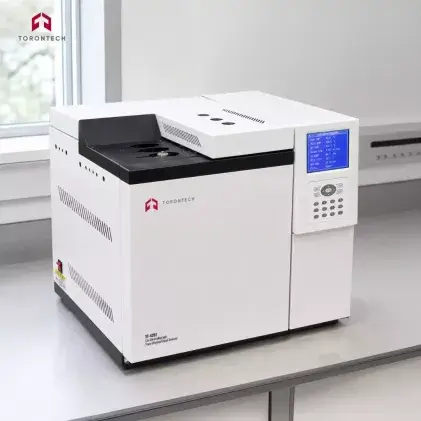
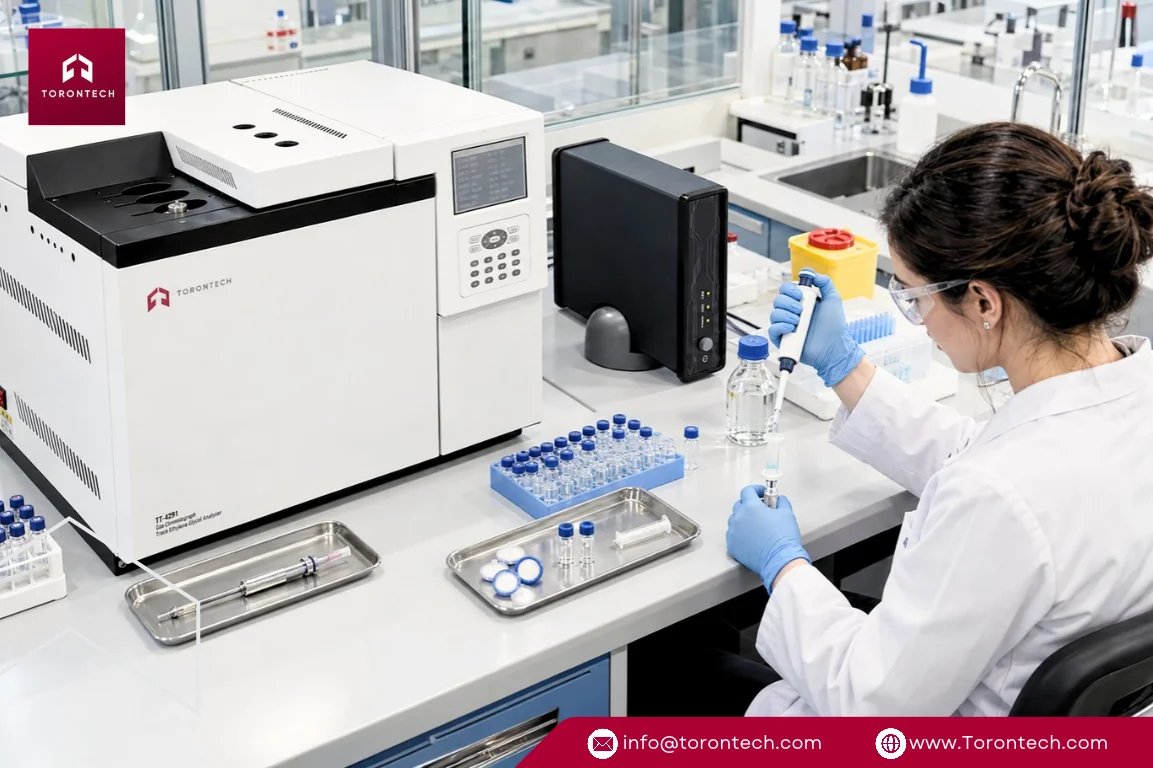
In heavy transport and industrial machinery, tracking trace ethylene glycol coolant leaks in crankcase oils per ASTM D4291 using targeted configurations like the Torontech TT-4291 identifies internal cooling leaks before engine seizure occurs.
Biofuels and Environmental Screening
Commercial biodiesel producers must verify fuel purity by measuring free and total glycerin along with fatty acid methyl esters (FAME) per ASTM D6584 and EN 14103. This testing supports mandatory compliance filings under the US EPA Renewable Fuel Standard (RFS) and the Canadian Clean Fuel Regulations (CFR), utilizing specialized analyzers like the TT-Biodiesel GC Plus.
For environmental screening, gas chromatography remains the benchmark platform for soil and groundwater volatile organic compounds (VOCs), BTEX fractions, and industrial stack emissions.
Liquid Chromatography Applications
Pharmaceutical Assays and Biotherapeutics
Pharmaceutical manufacturing relies on liquid chromatography for active pharmaceutical ingredient (API) potency assays, tablet dissolution profiling, and degradation monitoring. In facilities undergoing FDA current Good Manufacturing Practice (cGMP) audits in the United States or Health Canada GUI-0001 inspections, software reliability is critical.
The Torontech TT-HPLC platform complies with FDA 21 CFR Part 11 standards, incorporating a database mode and ensuring data traceability. For biotherapeutic development, HPLC handles temperature-sensitive monoclonal antibodies, recombinant proteins, and therapeutic peptides that would decompose inside a GC oven.
Environmental Toxins, Food Assays, and Polymers
Liquid chromatography provides reliable quantification for waterborne chemical hazards that resist vaporization. A proven application is the content determination of 9 phenolic compounds in environmental testing using the Torontech TT-HPLC system.
In consumer goods and materials manufacturing, HPLC separates nutritional vitamins, sugars, food additives, and heat-labile mycotoxins, while size-exclusion chromatography modes characterize synthetic plastics, synthetic rubbers, and bulky industrial polymers.
The Dual-Platform Approach: Integrating Both Systems
In our experience, treating GC vs HPLC as a mutually exclusive choice can compromise testing versatility. High-throughput quality control facilities frequently operate both platforms alongside each other.
Consider a pharmaceutical production facility: technicians use HPLC to determine the potency and degradation rate of non-volatile active drug molecules, while relying on Gas Chromatography to satisfy pharmacopeia standards (such as USP <467> and ICH Q3C) for trace volatile residual solvents left behind during manufacturing.
Technical Focus: GC and HPLC in Petroleum Analysis
Petroleum characterization illustrates the complementary nature of these two platforms. Gas chromatography and high-performance liquid chromatography divide analytical duties across petroleum mixtures: GC isolates the volatile fractions, while HPLC specializes in nonvolatile, heavy, and polar components. Operating together, they cover the entire span of petroleum matrices, from light refinery gases to heavy vacuum residues.
Volatility Ranges and Core Strengths
GC serves as the primary technique for analyzing volatile and semi-volatile petroleum fractions, resolving compounds with boiling points extending up to and above 400°C. Refineries rely on it for evaluating gas streams, establishing boiling point distributions, and running product release checks.
However, conventional GC cannot process nonvolatile petroleum fractions boiling above roughly 400°C, and high-temperature GC pushes that boundary only to approximately 500°C before heavy hydrocarbons begin to crack and degrade thermally. HPLC bridges this gap by characterizing nonvolatile vacuum residues, heavy distillates, asphaltenes, and polar groups that gas chromatography cannot reach.
Liquid chromatography methods have gained substantial adoption in petroleum testing because of improvements in automation, precision, and run-to-run reproducibility.
| Analytical Attribute | Gas Chromatography (GC) | High-Performance Liquid Chromatography (HPLC) |
|---|---|---|
| Target Sample Fraction | Volatile, GC-amenable compounds | Nonvolatile, heavy, polar fractions |
| Boiling Point Range | Up to ~400°C (HT-GC×GC extends to nC60) | Low to high boiling; no volatility requirement |
| Primary Method Strength | High peak capacity, standardized methods | Separates nonvolatiles, resins, asphaltenes |
| Common Detectors | FID, MS, SCD, VUV | ELSD, DAD, MS (FT-ICR, Orbitrap) |
| Operational Limitation | Cannot reach nonvolatile bottom fractions | Extended runtimes, column reproducibility variables |
Group-Type Separation and SARA Analysis
HPLC is the established method for SARA (saturates, aromatics, resins, asphaltenes) fractionation, splitting whole crudes into distinct chemical families: aliphatics, ring-classified aromatics, polar species, and asphaltenes.
Modern multi-column HPLC systems equipped with dual detectors reach detection limits down to 0.05% by weight, achieving ~99.5% recovery across 35-minute analytical cycles. Laboratories routinely employ GC-MS downstream to verify the purity of these HPLC-separated saturate and aromatic fractions, ensuring zero cross-contamination occurs between eluted cuts.
For volatile petroleum fractions, comprehensive two-dimensional gas chromatography (GC×GC) provides group-type separation with far greater resolving capacity than conventional single-column GC, identifying hundreds of individual compounds within a single run.
Hyphenated and Combined Methods
Neither instrument delivers a complete petroleum profile on its own, prompting analytical teams to combine both methodologies into hyphenated workflows.
For complex motor oil formulations, HPLC prefractionation coupled with GC×GC separates the unresolved complex mixture (UCM) that standard GC cannot resolve, enabling quantitative group classification into alkanes, cycloalkanes, alkenes, and aromatics. On-line HPLC-GC coupling merges initial liquid-phase separation with the uniform carbon response of GC-FID, improving detection sensitivity by over two orders of magnitude during mineral oil hydrocarbon screening.
For heavier petroleum cuts, high-temperature GC×GC (HT-GC×GC) extends quantitative hydrocarbon analysis to vacuum gas oils up to nC60, delivering analytical data comparable to standard liquid chromatography and mass spectrometry protocols. In petroleomics, HPLC acts as an upfront fractionation step before crude oil enters ultra-high-resolution Fourier-transform ion cyclotron resonance mass spectrometry (FT-ICR MS).
These hybrid workflows address individual technique boundaries. GC×GC cannot completely isolate certain hydrocarbon groups without prior HPLC cleanup, while historical HPLC SARA protocols experienced reproducibility challenges from manual deasphalting and packing variations.
Furthermore, high-resolution mass spectrometers struggle with light fragments below 200 Da, a blind spot that liquid techniques like aromatic-selective size exclusion chromatography are engineered to resolve. Pairing HPLC for bulk fraction grouping with GC×GC for detailed compound speciation provides a complete analytical view.
Operating Costs and Procurement Considerations
Evaluating analytical hardware based solely on initial purchase quotes often obscures the true cost of ownership over years of testing.
1. Carrier Gas Selection and Helium Volatility
Carrier gas logistics represent a primary ongoing operating expense in GC operations. Across North America, the gradual depletion and transfer of the US Federal Helium Reserve in Amarillo, Texas, has contributed to periodic supply allocations and unpredictable pricing for commercial testing laboratories from California to Ontario.
We consider complete dependence on cylinder helium an unnecessary operational risk. Converting to Hydrogen or Nitrogen provides greater supply predictability. Hydrogen enables higher linear flow velocities and excellent plate counts at a fraction of the operating cost, particularly when generated on-site using dedicated water-electrolysis generators.
2. Solvent Purchasing and Waste Management
While GC units consume gas and produce minimal liquid effluent during analytical runs, an HPLC system requires a continuous supply of high-purity solvents (Acetonitrile, Methanol, purified water) and specialized buffer salts.
A single HPLC instrument running routine QC protocols can consume hundreds of liters of organic solvents annually. In our assessment, financial evaluations frequently overlook this ongoing expense: testing facilities must budget for both high-grade solvent purchasing and fees for certified hazardous chemical collection (and anyone managing quarterly disposal budgets will confirm the financial drain).
3. Pre-Configured Turnkey Analyzers vs. Generic Systems
Procuring an unconfigured, general-purpose instrument to reduce upfront capital expense often results in hidden integration costs. Turning a basic unit into an operational platform that satisfies specific ASTM, ISO, IEC, or EN test methods requires weeks of engineering time spent configuring plumbing, choosing columns, and troubleshooting calibrations.
For commercial testing laboratories and industrial plants operating in competitive regional markets like the US Gulf Coast, the Midwest, or Ontario's refining corridor, technical staffing constraints make long setup cycles especially costly. We believe purchasing pre-configured analyzers delivers superior return on investment.
When a platform arrives pre-configured with the appropriate column, detector, and temperature program for a target standard (such as the Torontech series of dedicated GC analyzers for ASTM D3612 or ASTM D1945), your facility bypasses extensive method development and begins running compliant samples immediately.
Cost-Effective GC and HPLC Systems from Torontech
Choosing between gas chromatography vs HPLC hinges on your sample's volatility, thermal stability, and reporting requirements. For large, heat-sensitive pharmaceuticals, biopolymers, and food additives, HPLC is the appropriate platform. However, for hydrocarbon processing, transformer insulating oil diagnostics, alternative fuels, and volatile compound analysis, Gas Chromatography offers sharper resolution, shorter run times, and minimal liquid chemical waste.
At Torontech, we provide cost-effective solutions and innovative technologies engineered to satisfy ASTM, ISO, IEC, EN, and FDA regulations without inflated capital costs.
Torontech Gas Chromatography Systems
For energy and fuel testing laboratories, our dedicated Torontech Gas Chromatography (GC) systems eliminate method configuration delays. The series includes the TT-3612 (Transformer Oil DGA), TT-1945 (Natural Gas), TT-2163 (LPG), TT-5134 (Naphtha DHA), TT-4815 (Gasoline Oxygenates), TT-Biodiesel GC Plus, and TT-4291 (Engine Coolant in Lube Oil). Each platform arrives pre-configured with the appropriate column, detector, and temperature program for its target standard.
Torontech TT-HPLC Platforms
For non-volatile compound separation, drug potency testing, and environmental monitoring, the Torontech TT-HPLC system delivers modular flexibility. The platform features P-series pumps rated to 62 MPa (620 bar), available in P1 isocratic, P2 binary, or P4 quaternary configurations with retention time repeatability under 0.2%.
Combined with an autosampler utilizing a patented constant-pressure needle, a fan-circulated column oven with fuzzy PID control, and UV-Vis or Diode Array Detectors (DAD), it provides dependable separation within an FDA 21 CFR Part 11 compliant database environment.
Configure Your System
Whether expanding testing capacity, establishing a dedicated petroleum laboratory, or replacing legacy instrumentation, Torontech's technical specialists can help you identify a reliable platform for your testing parameters.
Explore Torontech’s analytical chromatography instrumentation or contact our engineering team today to discuss your testing requirements and receive an equipment quotation.
References (Click to expand)
- Akhlaq, M. (1993). Rapid group-type analysis of crude oils using high-performance liquid chromatography and gas chromatography. Journal of Chromatography A, 644, 253-258.
- Atwah, I., Alsaif, M., Usman, M., & Abualreesh, M. (2025). Accelerating Saturate, Aromatic, Resin, Asphaltene (SARA) Analysis for High-Fidelity Petroleum Profiling via μSARA-HPLC. ACS Omega, 10, 27806 - 27818.
- Bhagat, S. D. (2009). APPLICATION OF CHROMATOGRAPHY IN PETROLEUM FIELD.
- Corrêa, A. M., Sousa, J. M., Leal, K. Z., & Bernardes, M. C. (2023). Comprehensive Two-Dimensional Gas Chromatography in Petroleum Derived Samples: A Review on Advances in Source and Weathering Studies of Spilled Oil. Critical Reviews in Analytical Chemistry, 54, 3409 - 3427.
- Domiati, A. S., Aldawood, A. M., Alshammari, M. M., & Panda, S. K. (2025). Aromatic-Selective Size Exclusion Chromatography (ASSEC) of Petroleum Using Traditional Normal Phase Columns: A Sustainable Solution for Petroleum Characterization. Journal of Separation Science, 48(6), e70203.
- Dutriez, T., Courtiade, M., Thiébaut, D., Dulot, H., & Hennion, M. (2010). Improved hydrocarbons analysis of heavy petroleum fractions by high temperature comprehensive two-dimensional gas chromatography. Fuel, 89, 2338-2345.
- Han, Y., Zhang, Y., Xu, C., & Hsu, C. S. (2018). Molecular characterization of sulfur-containing compounds in petroleum. Fuel.
- Heshka, N. (2021). Applications of High Performance Liquid Chromatography in the Petroleomic Analysis of Crude Oil: A Mini-Review. Energy & Fuels.
- Kanaujia, P. K. (2018). Gas Chromatography—Petroleum and Petrochemical Applications.
- Kaplitz, A. S., & Schug, K. (2023). Gas chromatography—vacuum ultraviolet spectroscopy in petroleum and fuel analysis. Analytical Science Advances, 4, 220 - 231.
- Mao, D., Lookman, R., Vanermen, G., & Diels, L. (2009). Resolving the unresolved complex mixture in motor oils using high-performance liquid chromatography followed by comprehensive two-dimensional gas chromatography. Fuel, 88, 312-318.
- Mao, D., Diels, L., Lookman, R., & Vanermen, G. (2008). High-performance liquid chromatography fractionation using a silver-modified column followed by two-dimensional comprehensive gas chromatography for detailed group-type characterization of oils and oil pollutions. Journal of Chromatography A, 1179(1), 33-40.
- Pollo, B. J., Alexandrino, G. L., Augusto, F., & Hantao, L. (2018). The impact of comprehensive two-dimensional gas chromatography on oil & gas analysis: Recent advances and applications in petroleum industry. TrAC Trends in Analytical Chemistry.
- Vempatapu, B., Kumar, J., Upreti, B., & Kanaujia, P. K. (2024). Application of High-Performance Liquid Chromatography in Petroleum Analysis: Challenges and Opportunities. TrAC Trends in Analytical Chemistry.
- Wu, Y.-W., Li, B., Liu, L.-L., & Ouyang, J. (2021). Research Progress of Analysis of Mineral Oil Hydrocarbons using On-line High Performance Liquid Chromatography Coupled with Gas Chromatography. Chinese Journal of Analytical Chemistry, 49, 341-349.