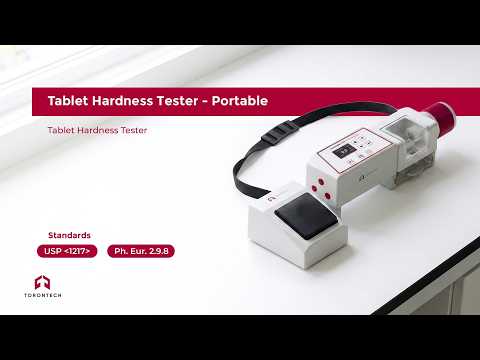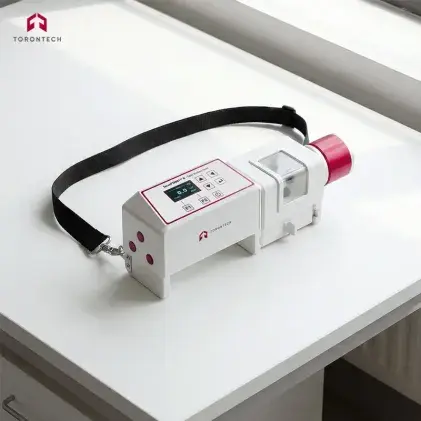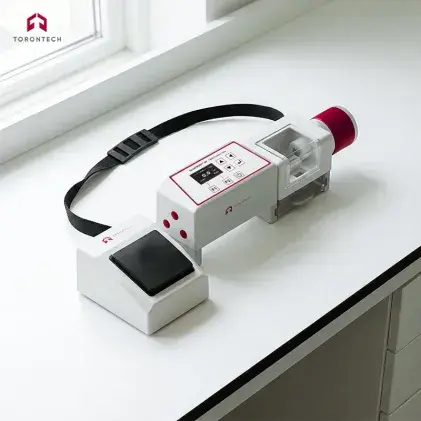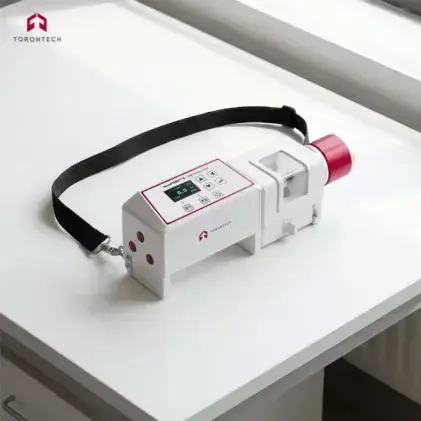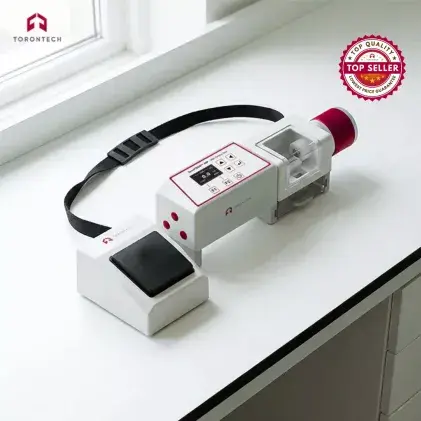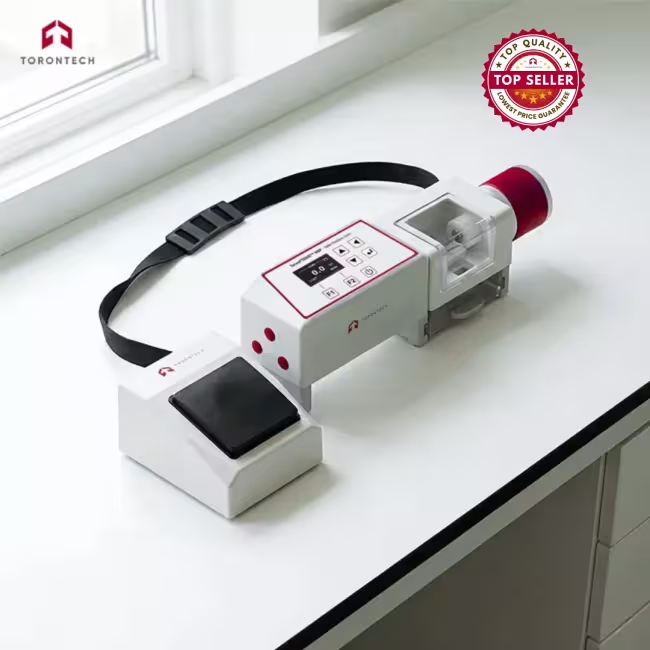
Tablet Hardness Tester - Portable
Our Tablet Hardness Testers are engineered to provide precise, consistent, and reliable tablet strength measurements for both laboratory and production environments. Designed to meet USP <1217> standards, these testers ensure high accuracy, resolution, and dependable performance across a range of tablet formulations. Each model features multiple measurement units, automatic unit conversion, and detailed calibration verification or built-in calibration features to simplify quality control processes. Compact and user-friendly, they include front-panel labeling, carrying options, and clear reporting functions for seamless operation and complete traceability. Ideal for pharmaceutical research, manufacturing, and quality assurance, these testers combine precision, efficiency, and convenience to support robust tablet analysis and reliable production outcomes.
The portable tablet hardness tester supports tablet quality control across development, manufacturing, and release testing. Its portability makes it useful wherever tablets are produced or checked.
Pharmaceutical Quality Control
Confirm that finished tablets meet crushing-strength specifications before release. Consistent hardness data supports compliance with USP and Ph. Eur. requirements.
Formulation and Product Development
Evaluate how binder levels, compression force, and excipient choices affect tablet strength. Reliable hardness readings guide formulation decisions during R&D.
In-Process Production Checks
Test tablets directly at the press during a run. Early detection of hardness drift helps operators correct compression settings before a batch goes out of specification.
Stability and Incoming Inspection
Track hardness over a stability study, and verify the quality of tablets received from contract manufacturers or suppliers.
1. Crushing-Strength Measurement
The tester applies a controlled diametral load to each tablet and records the force required to fracture it, the accepted measure of tablet hardness under USP <1217>.
2. Multiple Units With Automatic Conversion
Results are available in Newton (N), Kilopond (kP), and Strong-Cobb (SC), with automatic conversion so teams can report in their preferred unit.
3. Calibration Verification
Built-in calibration verification or onboard calibration confirms measurement accuracy, which supports traceable quality control and audit readiness.
4. Portable, Compact Design
A small footprint, front-panel labeling, and carrying options let operators move the tester between the laboratory and the production area with ease.
5. Clear Reporting Functions
The unit records and reports results clearly, providing the documentation needed for batch records and complete traceability.
6. Broad Tablet Compatibility
Adjustable holding accommodates round, oval, caplet, and other tablet shapes, supporting consistent testing across formulations.
Tablet hardness, formally called crushing strength, describes the force needed to break a tablet under a controlled load. Pharmaceutical laboratories measure it because hardness affects how a tablet survives handling and how it disintegrates and releases its active ingredient.
The Diametral Compression Method
The tester holds a single tablet between two jaws: one fixed and one that moves. The moving jaw advances and applies an increasing compressive force across the diameter of the tablet. The instrument tracks this force continuously as it rises.
Recording the Result
At the moment the tablet fractures, the applied force reaches its peak. The tester captures that peak value, which is the crushing strength of the tablet. Standards such as USP <1217> and Ph. Eur. 2.9.8 define how this test is performed so that results stay comparable between instruments and laboratories. Because the measurement is direct and repeatable, hardness data gives a clear, objective indicator of tablet quality during development and production.