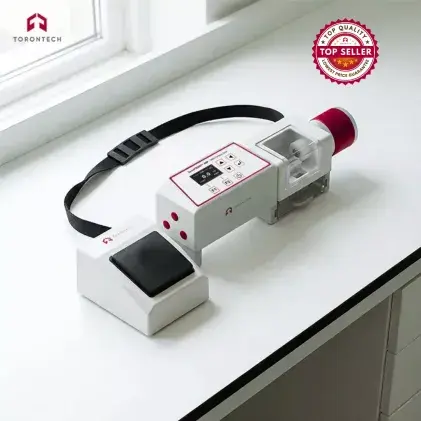
The Importance of Tablet Hardness Testing in Pharmaceutical Industry
Ensuring tablet quality and integrity is important in the pharmaceutical industry. Tablet hardness tester measure the mechanical strength of tablets, maintaining consistent quality. This instrument, available in manual and digital models, provides accurate measurements of hardness, thickness, diameter, and weight, ensuring tablets can withstand packaging and handling without breaking.
Meeting pharmacopoeial standards like USP and Ph. Eur., tablet hardness testers help in quality control and production environments. Tablet Hardness Tester helps optimize formulations during R&D and ensures that each batch meets specified acceptance criteria before reaching the market. In this blog post, we will explain the significance, features, methods, and applications of the device in the pharmaceutical sector.
What is a Tablet Hardness Tester?
A tablet hardness tester is a device used to measure the force required to break a tablet, ensuring it can withstand handling, packaging, and transportation without compromising its integrity. These testers come in various forms, including manual tablet hardness testers and digital tablet hardness testers, each suited to different testing environments and needs.
Related article: Tablet Hardness Tester: The Complete Guide
A. Types of Hardness Testers for Tablets
Tablet hardness testers are primarily categorized into manual and digital models. What is the difference between both types?
- Manual Tablet Hardness Tester: These testers require manual operation to apply force and measure the tablet's hardness. This type is typically used for simpler, less frequent testing needs.
- Digital Tablet Hardness Tester: These advanced testers offer automated force applications and digital readouts, providing precise and consistent measurements. This type is ideal for high-throughput environments and detailed analysis.
B. Uses of Tablet Hardness Testers
Tablet hardness testers are used extensively in pharmaceutical manufacturing to ensure that tablets can withstand packaging, transportation, and handling without breaking apart. These devices help in maintaining consistent tablet quality, which is crucial for efficacy and patient safety.
This instrument ensures that every tablet batch in the pharmaceutical industry meets stringent quality standards by measuring parameters such as hardness, thickness, diameter, and weight.
Key Features of Tablet Hardness Testers
The tablet hardness tester is equipped with several essential features that ensure accurate and reliable measurements of tablet quality. These features make the instrument indispensable in pharmaceutical manufacturing.
A. Measurement Parameters
Modern tablet hardness testers measure several critical parameters such as:
- Hardness: The primary measure of the force required to break a tablet.
- Thickness: Ensures uniformity and consistency in tablet size.
- Diameter: Measures the width of the tablet, crucial for uniform dosing.
Weight: Ensures each tablet contains the correct dosage of active ingredients.
Related article: Tablet Hardnes: How to Measure, Calculate & Control It
B. Technological Advancements
Advancements in technology have significantly improved the functionality and ease of use of the instrument. These are some features that we can find in modern or digital tablet hardness testers:
- Touchscreen Controls: Intuitive interfaces that simplify operation and reduce user error.
- Automated Data Processing: Enhances accuracy by automatically recording and processing measurement data.
- Digital Models: Offer higher precision and additional features compared to manual testers, such as automated testing sequences and advanced data management capabilities.
C. Compliance
Tablet hardness testers must comply with pharmacopoeial standards, ensuring they meet regulatory requirements. At least, this device must comply with 2 standards:
- USP Standards: Compliance with USP (United States Pharmacopeia) standards, specifically tablet hardness test USP, ensures the device meets industry-accepted testing criteria.
- Ph. Eur. Standards: Adherence to European Pharmacopoeia standards (Ph. Eur.) is crucial for products intended for the European market.
Recent advancements in tablet hardness tester calibration methods, such as the use of a special static standard dynamometer, have significantly improved accuracy and efficiency in pharmaceutical quality control (Wang et al., 2021). These innovations help maintain compliance with both USP and Ph. Eur. standards, enhancing the reliability of hardness testing devices.
These key features make tablet hardness testers important tools for maintaining high standards in pharmaceutical manufacturing, ensuring that tablets are of consistent quality and strength.
How to Choose the Right Tablet Hardness Tester
Selecting the correct instrument for your laboratory depends largely on your daily testing volume, data compliance requirements, and where the machine will live—be it a quiet R&D bench or a busy production floor.
While budget is always a factor, the hidden cost of labor and data transcription errors often makes automated systems cheaper in the long run. Here is how to match the equipment to your specific operation.
Manual Testers: The Entry-Level Standard
These units are best suited for R&D labs or small-batch manufacturing where technicians test only a few samples per day. The operator places the tablet, initiates the break, and records the value.
- Pros: Lower upfront capital/price; simple to operate; easy to move.
- Cons: High labor requirement; prone to human error in data recording; rarely compliant with 21 CFR Part 11 (data integrity).
- Best For: University labs, formulation development, and spot-checking.
Semi-Automated Systems: The QC Workhorse
In this category, the machine handles the breaking mechanics and data recording, but the operator must still feed the tablets. Many of these models now print reports directly, removing handwriting errors.
- Pros: improved consistency; digital data storage; faster than manual options.
- Cons: Still requires an operator to be present for the entire cycle.
- Best For: Mid-sized Quality Control (QC) labs.
Fully Automated Systems: High-Volume Efficiency
These systems feature tablet magazines or vibratory feeders. A technician can load a batch of 20, 50, or 100 tablets, press "Start," and walk away to perform other tasks.
- Pros: "Lights-out" operation; direct integration with LIMS (Laboratory Information Management Systems); highest data integrity; tests multiple parameters (weight, thickness, diameter, hardness) at once.
- Cons: Higher initial investment.
- Best For: High-volume production facilities and commercial manufacturing.
Quick Selection Guide
| Feature | Manual Tester | Semi-Automated | Fully Automated |
|---|---|---|---|
| Throughput | < 50 tests / day | 50–200 tests / day | 200+ tests / day |
| Operator Time | 100% Hands-on | 50% Hands-on | < 10% (Load & Go) |
| Data Integrity | Low (Manual Log) | Medium (Printout) | High (21 CFR Part 11) |
| USP <1217> | Compliant | Compliant | Compliant |
| Ideal Setting | R&D / University | QC Lab | Commercial Production |
What Benefits of Using Tablet Hardness Testers?
In pharmaceutical manufacturing, Tablet hardness testers provide a multitude of benefits, guaranteeing the production of tablets that adhere to the highest quality standards and meet regulatory requirements. Let’s explore the advantages that industries can gain by utilizing these devices!
A. Quality Control
Ensuring consistent tablet quality involves measuring key parameters such as hardness, thickness, diameter, and weight. Tablet hardness testers help maintain uniformity in each batch, crucial for the efficacy and safety of the tablets.
Regular testing detects and corrects inconsistencies early in the production process, ensuring only tablets meeting strict quality standards reach the market.
B. Regulatory Compliance
Meeting regulatory standards set by pharmacopeias such as USP and Ph. Eur. is essential. These standards define the required hardness and structural integrity of tablets to ensure they can withstand handling, packaging, and transportation.
Compliance with established standards is paramount for product approval and market acceptance, as it helps mitigate the risks of costly recalls and ensures the safety of the product.
C. Pharmaceutical Quality Assurance
Hardness and friability tests for tablets are key aspects of pharmaceutical quality assurance. These tests verify that tablets possess the necessary mechanical strength and durability. Guarantee each tablet meets specified acceptance criteria enhances overall product reliability, reduces waste, and improves patient safety.
Tablet hardness tester machines maintain high-quality standards and boost operational efficiency. Automated digital tablet hardness testers streamline the testing process, reduce human error, and provide precise data for analysis.
Applications in the Pharmaceutical Industry
Tablet hardness testers play a crucial role in various stages of pharmaceutical production, ensuring product quality and regulatory compliance.
A. Research and Development (R&D)
Tablet hardness testers are used to refine formulations and ensure the right balance of ingredients for desired tablet properties. Hardness and friability tests for tablets are essential during the development phase to create robust and reliable products.
B. Production
During production, hardness tester machines for tablets ensure each batch meets specified hardness criteria. Both manual and digital tablet hardness testers monitor consistency and quality throughout the manufacturing process, preventing defective products from reaching the market.
C. Quality Control Labs
In quality control labs, tablet hardness tester machines are used for regular testing to ensure compliance with pharmacopoeial standards. These tests verify that tablets maintain their integrity during handling, packaging, and transportation, meeting regulatory requirements.
D. Packaging and Transportation
Ensuring tablets can withstand packaging and transportation without breaking is critical. Hardness testers assess the durability of tablets, helping to prevent damage during these processes.
E. Stability Testing
These devices are also used in stability testing to ensure that tablets retain their strength and integrity over time under various environmental conditions. This is crucial for determining the shelf life of the product.
Utilizing tablet hardness testers at various stages of production ensures high-quality products, regulatory compliance, and improved patient safety in the pharmaceutical industry.
Critical Parameters & Methodologies: Understanding USP <1217>
To guarantee your product meets clinical standards, you need to measure more than just how much force breaks the pill. Modern pharmaceutical protocols focus on Tablet Breaking Force and the specific mechanics used to apply that pressure.
The Shift from "Hardness" to "Breaking Force"
While the industry still uses the term "hardness tester" casually, USP General Chapter <1217> classifies this measurement as Tablet Breaking Force. This distinction matters because "hardness" technically refers to resistance to surface indentation (like checking steel), whereas pharma testing measures the force required to fracture the dosage form across its diameter.
Constant Speed vs. Constant Force
The mechanics of the machine jaw play a massive role in the repeatability of your results. There are two primary methods:
- Constant Speed (Preferred): The jaw moves toward the tablet at a fixed rate (usually 1 mm/sec). This is the method recommended by USP <1217> because it minimizes variables caused by different tablet formulations.
- Constant Force: The machine increases the pressure (load) at a linear rate until the tablet fractures. This can sometimes yield different results for softer tablets compared to the constant speed method.
The "4-in-1" Testing Approach
Efficiency on the production line often means measuring multiple attributes simultaneously. Modern automated testers frequently inspect four key physical parameters in a single run:
- Weight: Ensures the dosage amount is consistent (linked to content uniformity).
- Thickness: Crucial for packaging; if a tablet is too thick, it may jam blister-packing machines.
- Diameter/Length: Confirms the tooling stations on the tablet press are calibrated correctly.
- Breaking Force: Verifies the tablet is strong enough to survive shipping but soft enough to dissolve in the patient’s stomach.
By consolidating these tests into one station, Torontech systems reduce the bench space needed and cut the time QC technicians spend moving samples between different instruments.
Cost-Effective Solutions from Torontech
After reading this blog post, we know that Tablet hardness testers are important tools in the pharmaceutical industry to ensure the quality, integrity, and regulatory compliance of tablets. These devices provide precise measurements of hardness, thickness, diameter, and weight, helping to maintain consistency across batches. From research and development to production and quality control, tablet hardness testers play a critical role at every stage.
Investing in high-quality tablet hardness testers in the pharmaceutical industry will enhance product reliability, reduce waste, and improve patient safety. For more information on selecting the right tablet hardness tester for your needs, contact us today and explore our range of high-quality hardness testers that are designed to meet stringent pharmaceutical requirements.
Reference:
- Zhao, G., Liu, X., Xie, H., Xu, Y., & Alghurbani, S. (2022). The design of the tablet hardness tester. Proceedings of the 2022 7th International Conference on Multimedia and Image Processing. doi.org/10.1145/3517077.3517112
- Zhenyu, W., Xiang, R., Feng, H., & Luo, D. (2021). Research on the counter-force calibration method of tablet hardness tester. Measurement: Sensors. doi.org/10.1016/j.measen.2021.100233
- Goodhart, F., Draper, J., Dancz, D., & Ninger, F. (1973). Evaluation of tablet breaking strength testers. Journal of pharmaceutical sciences, 62 2, 297-304. doi.org/10.1002/jps.2600620226
- Malladi, J., Sidik, K., Wu, S., McCann, R., Dougherty, J., Parab, P., & Carragher, T. (2017). Novel platens to measure the hardness of a pentagonal shaped tablet. Pharmaceutical Development and Technology, 22, 246 - 255. doi.org/10.1080/10837450.2016.1219370
- De Man, A., Uyttersprot, J., Chavez, P., Vandenbroucke, F., Bovart, F., & De Beer, T. (2023). The application of Near-Infrared Spatially Resolved Spectroscopy in scope of achieving continuous real-time quality monitoring and control of tablets with challenging dimensions. International journal of pharmaceutics, 123064. doi.org/10.1016/j.ijpharm.2023.123064
- Zhenyu Wang, Xiang Ren, Haiying Feng, Dejun Luo. (2021). Research on the counter-force calibration method of tablet hardness tester. Measurement: Sensors: Volume 18.