How to Choose FTIR Detectors: Pyroelectric vs MCT
Matching the wrong sensor to your FTIR optical bench quickly drains equipment budgets and leads to persistent baseline noise. Selecting the right detector requires balancing spectral range, sensitivity, and measurement speed across thermal (DLATGS) and quantum (MCT) detector families.
Here is our direct comparison of pyroelectric (DLATGS) vs. MCT performance, sampling interface compatibility, and 5-year operating costs to help you select the ideal spectrometer configuration.
Key Takeaways
- DLATGS for Routine Workloads: Delivers broad spectral reach (7,800 to 350 cm⁻¹) and high photometric linearity at ambient temperatures, making it the dependable, low-maintenance choice for standard ATR and transmission testing.
- MCT for Photon-Starved Applications: Provides 10 to 50 times higher sensitivity and microsecond response speeds, making it essential for infrared microscopy, trace gas tracking, and fast reaction kinetics.
- Throughput Dictates Performance: High-energy optical interfaces work best with DLATGS to avoid signal saturation, while low-light sampling paths require the detectivity of an MCT sensor.
- Operating Cost Differences: Uncooled DLATGS configurations run with near-zero consumable expense, whereas liquid-nitrogen-cooled MCT setups add an estimated $10,000 to $25,000+ in 5-year cryogenic and labor overhead.
Fundamentals of Thermal and Quantum Detection
To evaluate detector options effectively, it helps to examine how each sensor converts infrared light into a usable electronic signal.
Thermal Detectors (Pyroelectric / DLATGS)
Pyroelectric sensors operate through heat-induced surface polarization changes. When modulated infrared energy strikes a pyroelectric crystal (such as DTGS or DLATGS), that incoming radiation creates a minute temperature shift. This temperature change alters the electrical polarization across the crystal face, generating a measurable electrical signal.
Their response is independent of photon wavelength because it depends on absorbed energy rather than photon count. This characteristic provides a flat spectral response across a wide wavelength range, making thermal detectors well-suited as reference detectors for system calibrations.
Because pyroelectric elements respond specifically to the rate of temperature change over time rather than steady-state heat, they do not operate in direct-current (DC) mode and pair naturally with the modulated infrared beams generated by moving interferometer mirrors.
Quantum Detectors (Photoconductive / MCT)
Mercury Cadmium Telluride (HgCdTe, or MCT) operates on a semiconductor bandgap mechanism. Rather than relying on thermal transfer, an incoming infrared photon strikes the semiconductor material directly and promotes an electron across the bandgap into the conduction band.
This direct photon-to-electron interaction changes the material's electrical conductivity within a fraction of a microsecond. Because it bypasses the thermal transfer cycle entirely, an MCT detects low-intensity light beams with high electronic speed and picks up faint spectral signals that thermal sensors miss.
System Signal-to-Noise Ratio (SNR) Considerations
Signal-to-noise ratio in FTIR depends on optical throughput, detector noise equivalent power (NEP), spectral resolution, and measurement time, following the fundamental spectroscopic trading rule. When detector noise dominates, SNR increases proportionally with optical throughput.
Optimizing the detector operating point, including temperature, bias voltage, gain, and bandwidth, is essential to ensure that detection-module noise is dominated by the detector rather than the read-out electronics.
Pyroelectric (DLATGS and LiTaO3) Detectors
DLATGS (Deuterated L-Alanine Doped Triglycine Sulfate) is the standard sensor installed in the vast majority of analytical laboratory spectrometers. Doping the traditional DTGS crystal with L-alanine stabilizes its internal polarization, raises its Curie temperature threshold, and delivers a consistent, drift-free baseline with dependable detectivity.
DLATGS pyroelectric detectors approach within an order of magnitude of the theoretical sensitivity limit for uncooled thermal detectors, with specific detectivity (D*) values reported in the range of 2.6 to 3.4 x 10^8 cm Hz^(1/2)/W for microfilm devices.
Optimized DLATGS crystals grown with L-alanine achieve D* as high as 2 x 10^9 cm Hz^(1/2)/W at low modulation frequencies (3 Hz), with performance retained up to 40 °C. Additional crystal modifications, such as L-alanine/Cr3+ complexes, raise the effective operating temperature range even further, maintaining a high pyroelectric effect up to 100 °C.
Ambient Operation and Baseline Linearity
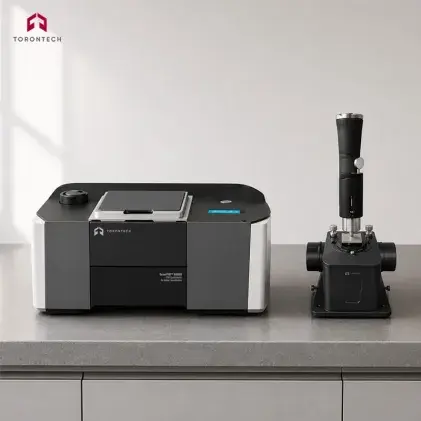
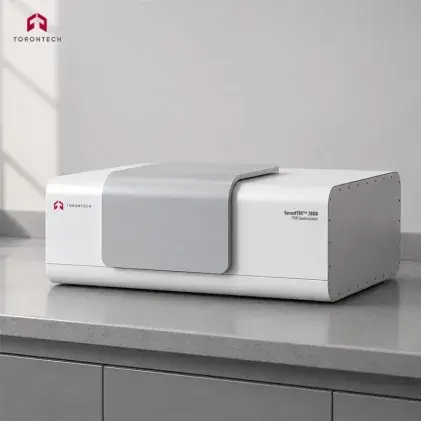
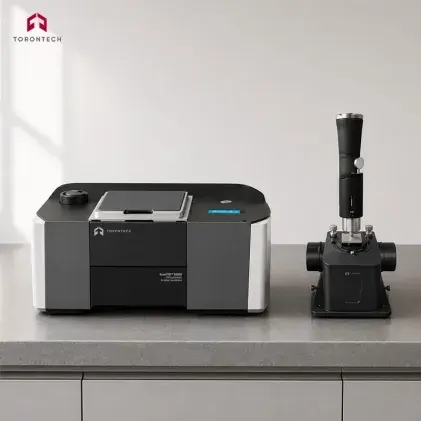
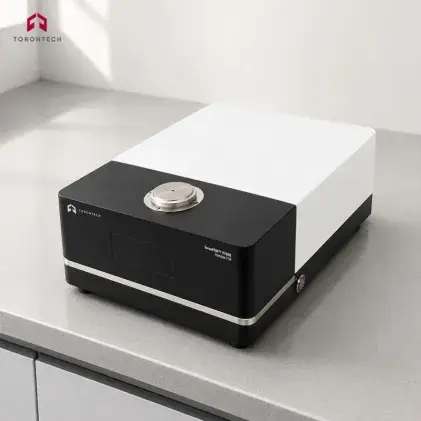
DLATGS operates at room temperature or with a built-in thermoelectric Peltier cooler, eliminating liquid nitrogen logistics and ensuring your spectrometer is ready for immediate sample analysis. Instruments like the ToronFTIR™ 7800 Benchtop Spectrometer provide broad spectral coverage from 7,800 down to 350 cm⁻¹, where uncooled thermal detection delivers wide near- and mid-infrared reach without requiring hardware swaps.
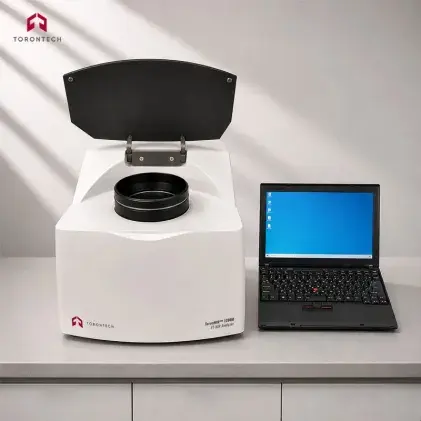
Because DLATGS handles strong optical beams with high photometric linearity, it resists saturation on routine transmission and Attenuated Total Reflectance (ATR) runs. This predictable linear response allows dedicated quality-control systems, such as the compact ToronFTIR™ R4000 (4,000 to 400 cm⁻¹), to classify base elastomers and flag compound additives with high repeatability.
Frequency Response and Thermal Behavior
Despite its operational convenience, DLATGS exhibits an inherent frequency-dependent response because its output is proportional to the rate of temperature change, and the moving mirror modulates each wavelength at a different frequency. This frequency dependence can introduce variations exceeding 20% in measured spectra depending on mirror speed, requiring transfer function corrections for accurate quantitative work.
Furthermore, DLATGS exhibits a positive temperature coefficient exceeding +2.5% per degree Celsius, meaning illumination spot area and irradiance geometry can affect quantitative accuracy.
However, in variable-temperature diffuse reflectance FTIR (DRIFTS), pyroelectric detectors show less dependence on sample temperature than photoconductive MCT detectors because unmodulated infrared emission from heated sample cups affects semiconductor sensors far more severely.
Solid-State Sensors for Remote Facilities
For field-portable and transportable FTIR spectrometers where mechanical durability is paramount, uncooled pyroelectric and thin lithium tantalate (LiTaO3) detectors provide a dependable alternative. LiTaO3 elements provide wide wavelength coverage extending into the terahertz range, operate in the kHz frequency regime, and maintain linearity over four decades of optical flux.
These solid-state thermal principles are particularly relevant for facilities located in remote regions, such as heavy machinery fleets across Northern Ontario, mining sites in Quebec or Nevada, and oilfield operations in Western Canada. In these environments, transporting liquid nitrogen is often impractical.
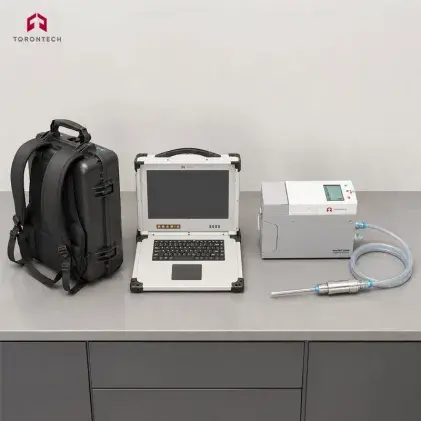
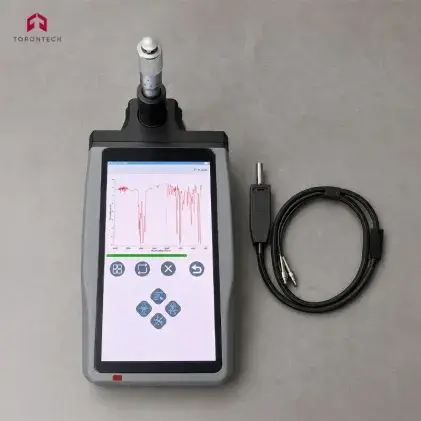
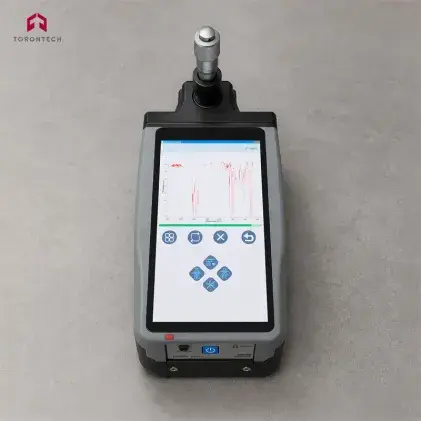
Transportable spectrometers like the ToronFTIR™ P7800 (7,800 to 350 cm⁻¹) and single-operator field units like the ToronFTIR™ H7800A Handheld FTIR (7,800 to 650 cm⁻¹) provide laboratory-grade material verification on site without relying on cryogenic supply chains.
Quantum (MCT) and Multi-Technique Screening
When testing protocols demand high sensitivity, fast spectral acquisition, or microscopic spatial resolution, MCT detectors represent the industry standard.
In direct spectroscopic benchmarking, a research-grade FTIR equipped with a liquid-nitrogen-cooled detector achieved noise levels approximately 5 times better than a routine FTIR equipped with a room-temperature pyroelectric detector. MCT photon detectors feature electronic bandwidths in the MHz to GHz range, making their frequency response far less susceptible to modulation artifacts at typical mirror speeds.
Furthermore, advanced MCT avalanche photodiodes (APDs) demonstrate sub-photon sensitivity in short-wave bands, representing a fundamentally higher sensitivity class than thermal sensors.
Quantum Sensitivity and Low-Light Performance
An MCT sensor provides a signal-to-noise ratio 10 to 50 times cleaner than a standard DLATGS sensor when optical energy drops to minimal levels. For energy-attenuating accessories, such as infrared microscopes, grazing-angle reflectance units, and long-path gas chambers, an MCT pulls distinct spectral peaks directly out of baseline noise.
For bright sources such as synchrotron radiation, matching the detector optical étendue to that of the source using cooled apertures and cold reimaging optics improves detectivity by more than an order of magnitude across the 6 to 20 µm region.
MCT configurations are typically selected based on their low-wavenumber cutoff. Narrow-Band MCT (Type A, cutoff ~750 to 700 cm⁻¹) delivers the highest detectivity for infrared microscopy and trace gas testing. Mid-Band MCT (Type B, cutoff ~600 to 550 cm⁻¹) balances sensitivity with access to the organic fingerprint region. Wide-Band MCT (Type C, cutoff ~450 to 400 cm⁻¹) provides broader optical coverage at the expense of peak detectivity.
Semiconductor Cooling vs. Liquid Nitrogen Infrastructure
While traditional high-sensitivity MCT sensors require daily liquid nitrogen replenishment down to 77 K inside vacuum dewars, modern instrumentation bridges this gap through solid-state engineering. Torontech FTIR spectrometers provide a factory-optional semiconductor-cooled (thermoelectrically cooled) MCT detector.
A multi-stage solid-state Peltier cooler holds the active element at cold operational temperatures without liquid nitrogen deliveries, vacuum dewars, or daily manual filling routines. This setup preserves the high acquisition speed and low-light sensitivity of quantum detection while matching the turn-key convenience of thermal sensors.
When deploying quantum sensors, optical flux management remains an important operational factor. Because quantum elements have high detectivity, unattenuated high-energy optical beams can induce detector saturation. Introducing optical attenuation screens or aperture stops ensures consistent photometric linearity and prevents baseline distortion during high-throughput testing.
Chemical Imaging and Dual-Engine Field Screening
Focal plane array (FPA) detectors enable the concurrent collection of thousands of infrared spectra over large sample areas, dramatically increasing data collection rates compared to single-element detectors. For trace-material detection, FPA-based ATR imaging has detected ibuprofen at concentrations as low as 0.075 wt%, compared to 0.35 wt% for a single-element MCT detector.
For field security, border interdiction, and hazardous material response protocols, such as those evaluated by customs agencies including US Customs and Border Protection (CBP) or the Canada Border Services Agency (CBSA), non-destructive testing through translucent packaging is critical. The ToronFTIR™ H7800M Dual FTIR-Raman Handheld combines a 7,800 to 550 cm⁻¹ infrared channel with a 4,000 to 170 cm⁻¹ Raman optical engine, resolving ambiguous chemical threats by pairing complementary vibrational data in a single mobile device.
Detector Comparison: DLATGS vs. MCT
From an optical engineering perspective, no single detector type excels across all dimensions. Each configuration is built for distinct light levels, speeds, and workflows:
| Feature / Specification | DLATGS (Pyroelectric) | Semiconductor-Cooled MCT | Liquid Nitrogen MCT (Cryogenic) |
|---|---|---|---|
| Detection Mechanism | Thermal (Temperature-induced surface charge) | Photoconductive (Photon-electron transition) | Photoconductive (Photon-electron transition) |
| Cooling Method | Ambient / Thermoelectric Peltier | Multi-stage solid-state semiconductor cooling | Liquid Nitrogen (LN2, 77 K) in vacuum dewar |
| Specific Detectivity (D)* | ~2.6 to 3.4 x 10^8 cm·Hz^(1/2)/W | ~1 to 5 x 10^9 cm·Hz^(1/2)/W | ~1 to 3 x 10^(10) cm·Hz^(1/2)/W |
| Response Speed | Milliseconds (Standard mirror sweeps) | Microseconds (High-speed scanning) | Microseconds to Nanoseconds (MHz–GHz bandwidth) |
| Spectral Reach | Broad: 7,800 to 350 cm⁻¹ (Down to Far-IR) | Configuration-dependent: Down to 750, 600, or 450 cm⁻¹ | Cutoff-dependent: Down to 750, 600, or 400 cm⁻¹ |
| Beam Saturation Risk | Highly linear; handles strong, direct beams | Sensitive to saturation; requires beam attenuation | Non-linear under high flux; requires beam attenuation |
| Consumables & Upkeep | Zero (No cryogens or dewar maintenance) | Zero (No cryogens or dewar maintenance) | Regular liquid nitrogen refills and dewar pump-down |
| Primary Sweet Spot | Standard QA/QC, ATR solids/liquids, bulk polymers | Process gas monitoring, low-light QC, fast screening | Research micro-sampling, trace gas, rapid kinetics |
FTIR Detector Selection Framework
To streamline your selection process, we recommend evaluating your facility requirements through this four-step decision framework:
Step 1: Evaluate Optical Energy Throughput
Optical throughput dictates whether high quantum sensitivity is genuinely beneficial or counterproductive. Evaluating your optical energy budget generally falls into three distinct throughput tiers:
- Above 15% Throughput (DLATGS Territory): High-energy techniques like single-reflection diamond ATR, multi-bounce ATR, standard liquid transmission cells, and pressed KBr pellets on platforms like the ToronFTIR™ 7800 or R4000 deliver ample light. DLATGS provides clean spectra while avoiding the non-linear saturation that occurs when intense beams hit quantum sensors.
- 5% to 15% Throughput (The Evaluation Zone): Techniques such as diffuse reflectance (DRIFTS) and specialized gas cells operate in a middle band. DLATGS remains effective here through routine scan averaging, whereas MCT is chosen if rapid scanning or ultra-trace quantification is required.
- Below 5% Throughput (MCT Territory): For severely photon-starved paths, including microscopic pinholes under 50 microns and grazing-angle monolayer reflection, MCT detectivity is required to pull faint absorption bands above baseline noise.
Step 2: Define Target Spectral Boundaries
The required wavenumber window determines whether a broad thermal sensor or a bandgap-limited quantum sensor is appropriate. If your analytical scope involves inorganic fillers, minerals, heavy-metal compounds, or polymer additives requiring access below 600 cm⁻¹ down to 350 cm⁻¹, DLATGS provides complete coverage across the entire span in a single sweep.
If your testing focuses strictly on organic functional groups above 700 cm⁻¹, a Narrow-Band MCT delivers maximum sensitivity across that targeted region.
Step 3: Assess Reaction Rates and Spatial Needs
Kinetic timeframes and spatial resolution determine sensor responsiveness. For standard analytical procedures running sample scans between 10 and 60 seconds, DLATGS delivers dependable, repeatable spectra.
For time-resolved reactions such as sub-second gas combustion or fast polymer curing, MCT provides the microsecond response speeds required to capture transient events. If your objective is high-speed spatial mapping of heterogeneous trace materials, an FPA detector provides parallel data acquisition with detection limits roughly 5 times better than point MCT scanning.
Step 4: Audit Facility Infrastructure and Mobility
Facility logistics and physical deployment dictate whether cryogenic systems are practical. For turn-key operations requiring automated, 24/7 instrument availability without cryogen management, DLATGS is the logical choice.
When mobility across regional facilities, manufacturing bays, or remote field hubs is required, uncooled portable platforms like the transportable ToronFTIR™ P7800 or handheld ToronFTIR™ H7800A provide reliable operation without cryogen logistics. For stationary research facilities with established liquid nitrogen supply lines and trace ppm/ppb detection mandates, an MCT justifies the operational investment.
Sampling Accessory Compatibility
An FTIR spectrometer depends heavily on the sampling module attached to its optical compartment. Matching your accessory to the proper sensor ensures you avoid both signal starvation and detector saturation.
High-Throughput Interfaces
Single-reflection diamond ATR accessories, multi-bounce horizontal ATR (HATR) troughs, and standard liquid transmission cells transmit 15% to 90% of available beam energy. For these interfaces, DLATGS is the primary recommendation. On platforms like the ToronFTIR™ 7800, DLATGS delivers high photometric linearity and avoids the peak-ratio distortion that occurs when bright beams strike an unattenuated MCT sensor.
Low-Energy and Surface Reflection
Diffuse Reflectance (DRIFTS) and Specular or Grazing Angle reflectance accessories operate under tighter energy budgets, transmitting from under 5% up to 15% of incident light. Specular and grazing-angle characterization of ultra-thin monolayer films on metallic or semiconductor substrates falls below the 5% threshold, making an MCT necessary to pull faint absorption bands above baseline noise.
By contrast, DRIFTS represents a deliberate exception where DLATGS is frequently preferred despite moderate-to-low throughput. Signal quality on routine powders is easily recovered through standard scan averaging. More importantly, the pyroelectric crystal is far less disturbed by unmodulated thermal emission from heated sample chambers than a photoconductive MCT sensor, making DLATGS the more stable choice for variable-temperature diffuse reflectance experiments.
Specialized Optical Configurations
Long-path gas cells (5m to 10m+) and FTIR microscope interfaces impose unique optical demands. For percentage-level and high-ppm industrial gas mixtures, DLATGS handles long-path cells effectively.
For sub-ppm environmental emissions tracking on systems like the ToronFTIR™ G12000, high-speed MCT detection is preferred. For microscopic apertures under 50 microns, beam attenuation is severe, making an MCT or multi-channel FPA essential for acquiring clean spectra.
Regulatory Compliance and Standard Methods
Compliance with standard test methods and North American regulatory mandates often dictates whether a pyroelectric (DLATGS) vs. MCT sensor is required:
ASTM E2412 and EN 14078: In-Service Lubricants and Biofuel Blends
In-service oil condition monitoring under ASTM E2412 tracks soot buildup, oxidation, nitration, anti-wear depletion, and fuel dilution across heavy transportation, mining fleets, and power generation equipment. Simultaneously, fuel blending terminals across the US Midwest and Western Canada measure biodiesel fatty acid methyl ester (FAME) content in commercial diesel blends under EN 14078 and EPA Renewable Fuel Standard (RFS) regulations.
For these high-throughput applications, DLATGS is the recommended sensor configuration. High light transmission through standard transmission flow cells or diamond ATR plates delivers a clean signal-to-noise ratio. The MainFTOS Suite software workstation supports optional specialized quantitative modules configurable for ASTM E2412 and EN 14078, leveraging the detector's baseline linearity for reliable trend tracking across large sample batches without cryogen upkeep.
USP <197>, FDA cGMP, and Ph. Eur. 2.2.24: Pharmaceutical Verification
Regulated pharmaceutical manufacturing facilities across major corridors, including New Jersey, Massachusetts, Ontario, and Quebec, require rigorous identification and confirmation testing of active pharmaceutical ingredients (APIs), excipients, and intermediate raw materials.
Compendial standards and FDA 21 CFR Part 11 validation protocols strongly favor DLATGS detection. These methods require repeatable peak shapes and broad spectral coverage extending down to 400 cm⁻¹. DLATGS provides stable, audit-ready performance without cryogenic drift, ensuring consistent library verification across routine quality assurance shifts.
US EPA Method 320, ASTM D6348, and ECCC: Industrial Emissions
Continuous monitoring of vapor-phase organic and inorganic emissions is mandated for chemical plants along the US Gulf Coast and refining operations in the Alberta Industrial Heartland under US EPA Method 320, 40 CFR Part 60/63, and Environment and Climate Change Canada (ECCC) guidelines.
Because these streams contain complex, overlapping volatile organic compounds (VOCs) at parts-per-million or parts-per-billion concentrations in hot, corrosive flue gas, MCT detection is the standard choice. Extractive analyzers like the ToronFTIR™ G12000 utilize high-speed optical configurations to resolve multi-gas spectra across 50 or more compounds simultaneously in real time.
ASTM D5477 and ISO 4650: Polymer and Elastomer Characterization
Polymer resin producers and automotive parts manufacturers throughout the Great Lakes manufacturing corridor rely on ASTM D5477 for identifying layered packaging films and microscopic inclusions, alongside ISO 4650 for the infrared spectrometric identification of rubber and elastomeric compounds.
For bulk polymer, resin, and elastomer verification, DLATGS sensors on platforms like the ToronFTIR™ R4000 deliver rapid identification without saturation. However, when quality teams must isolate microscopic defects, gels, or contaminant particles under 50 microns, microscope accessories equipped with MCT or multi-channel FPA sensors are necessary to focus sufficient optical energy on the inclusion.
5-Year Total Cost of Ownership (TCO)
The initial hardware price represents only a portion of your overall equipment investment. Evaluating operating expenses across a 5-year lifecycle clarifies the true financial balance between DLATGS and MCT configurations.
DLATGS: Low-Maintenance Turn-Key Operation
A standard DLATGS configuration operates with near-zero consumable overhead. Because it runs at room temperature or with solid-state Peltier stabilization, it requires no cryogenic infrastructure, uses no liquid nitrogen, and involves minimal maintenance beyond standard source and laser lifecycle upkeep. For high-volume industrial QA/QC facilities, this simplicity delivers the lowest total cost of ownership.
Cryogenic MCT: Factoring in the Liquid Nitrogen Overhead
When evaluating traditional quantum detection, cooling architecture dictates your ongoing budget. For laboratories utilizing liquid-nitrogen-cooled MCT detectors, operational expenses accumulate across several distinct categories:
- Cryogenic Deliveries: Recurring liquid nitrogen orders typically range from 1,500 to 3,500 dollars annually (7,500 to 17,500 dollars over 5 years).
- Technician Labor: Daily manual filling and system stabilization require approximately 15 to 30 minutes per operating shift, totaling 300 to 600 hours of staff time over 5 years.
- Infrastructure and Servicing: Facilities must budget for oxygen depletion safety sensors, cryogenic protective gear, and periodic vacuum dewar pump-down servicing (adding 2,000 to 5,000 dollars).
Together, operating a cryogenic MCT adds an estimated 10,000 to 25,000 dollars or more in overhead across a 5-year operating window.
Semiconductor-Cooled MCT: Quantum Speed with Zero Consumables
Opting for a semiconductor-cooled MCT detector changes the financial model entirely. While solid-state thermoelectric cooling carries a higher initial hardware price than a baseline DLATGS sensor, it operates with essentially the same near-zero consumable overhead.
It completely bypasses liquid nitrogen supply contracts, oxygen monitoring requirements, and daily manual refills. Laboratories secure the fast acquisition speeds and high detectivity needed for low-light testing without taking on recurring cryogenic expenses.
Regional Logistics and Strategic Justification
Regional logistics across North America also influence this financial assessment. For facilities located outside major metropolitan delivery routes, such as manufacturing plants in the rural US Midwest or processing sites in northern Canadian provinces, hazardous material freight surcharges and winter shipping delays can significantly increase liquid nitrogen expenses.
Ultimately, investing in an MCT detector remains economically sound when your facility analyzes micro-samples, tracks fast kinetic reactions, or measures trace emissions where thermal sensors cannot deliver the necessary detectivity.
Torontech FTIR Spectrometer Solutions
Selecting the appropriate spectrometer ensures your facility achieves the uptime, data quality, and sample throughput your testing mandates. At Torontech, we supply a versatile portfolio of innovative, cost-effective FTIR spectrometers built for analytical testing laboratories, academic research institutions, and industrial production facilities across the United States, Canada, and global markets:
Stationary Laboratory and Dedicated Testing Platforms
For high-resolution material identification and pharmaceutical quality control, the ToronFTIR™ 7800 Benchtop Spectrometer provides broad spectral coverage (7,800 to 350 cm⁻¹) paired with extensive reference spectral libraries and pre-configured quantitative modules for ASTM E2412 and EN 14078.
When testing centers specifically on rubber and synthetic polymer identification, the compact ToronFTIR™ R4000 (4,000 to 400 cm⁻¹) delivers automated classification of base elastomers and compound additives.
Extractive Gas Analysis and Portable Field Systems
For environmental compliance and continuous emissions tracking, the portable ToronFTIR™ G12000 Gas Analyzer (600 to 4,500 cm⁻¹) provides simultaneous quantitative tracking of over 50 gas compounds in demanding, hot, and corrosive flue gas streams.
When testing must move beyond the central laboratory, the transportable ToronFTIR™ P7800 (7,800 to 350 cm⁻¹) and single-operator ToronFTIR™ H7800A Handheld FTIR (7,800 to 650 cm⁻¹) deliver dependable uncooled screening on receiving docks and remote field sites.
For hazardous material inspection, customs, and border security, the ToronFTIR™ H7800M combines FTIR (7,800 to 550 cm⁻¹) and Raman (4,000 to 170 cm⁻¹) optical engines in a single handheld unit for non-invasive container analysis.
Balance FTIR Accuracy and Budget with Torontech
When deciding between pyroelectric (DLATGS) vs. MCT detectors, the choice comes down to balancing optical light throughput and measurement speed against daily operating practicality.
DLATGS remains our primary recommendation for standard QA/QC, high-throughput ATR sampling, broad mid-to-far IR spectral coverage, and low total operating costs. MCT is the necessary choice for photon-starved micro-sampling, thin-film analysis, trace-level gas monitoring, and rapid chemical kinetics.
Configure Your FTIR Spectrometer with Torontech
Torontech supports industrial and testing laboratories across North America and globally with cost-effective solutions and innovative technologies, backed by responsive regional engineering support and practical application consulting. Whether your facility requires a dependable benchtop instrument for routine quality control or a specialized system for extractive emissions monitoring, our technical specialists can help you determine the optimal configuration.
Looking to upgrade your FTIR capabilities while keeping equipment and operating costs under control? Explore the Torontech FTIR Spectrometer Lineup or Contact Our Technical Specialists to review your testing requirements and receive a customized quotation.
References (Click to expand)
- Achtenberg, K., Mikołajczyk, J., & Bielecki, Z. (2022). Two-Channel Detecting Sensor with Signal Cross-Correlation for FTIR Instruments. Sensors (Basel, Switzerland), 22.
- Alomari, A. (2022). Microfabrication and characterization of deuterated L-alanine doped triglycine sulfate (DLATGS) detector for IR application. Journal of Materials Science: Materials in Electronics, 1-10.
- Baliga, S. B., Kunsch, J., Budden, M., Gebert, T., Mnich, J., Sotor, J., Sterczewski, L. A., Schossig, M., & Olsen, T. (2024). Uncooled IR and THz detection based on thin LiTaO3 pyroelectric detectors paves the way for growth in infrared spectroscopy. Proc. SPIE 12893, 128930H.
- Baliga, S. B., Kunsch, J., & Köhler, R. (2023). Improved Infrared Detector for Spectroscopy Applications by Sub-Pixel Binning. Optica Sensing Congress 2023 (AIS, FTS, HISE, Sensors, ES).
- Bye, K. L., Whipps, P., Keve, E. T., & Josey, M. (1976). Triglycine sulphate/selenate solid solutions for pyroelectric applications. Ferroelectrics, 11, 525-534.
- Chan, K., & Kazarian, S. (2006). Detection of trace materials with Fourier transform infrared spectroscopy using a multi-channel detector. The Analyst, 131(1), 126-131.
- Chazan, P., & Baliga, S. B. (2024). Advanced Pyroelectric Detectors for Spectroscopy. Optica Sensing Congress 2024 (AIS, LACSEA, Sensors, QSM).
- Dorling, K., & Baker, M. (2013). Rapid FTIR chemical imaging: highlighting FPA detectors. Trends in Biotechnology, 31(8), 437-438.
- Faye, M., Bordessoule, M., Kanouté, B., Brubach, J., Roy, P., & Manceron, L. (2016). Improved mid infrared detector for high spectral or spatial resolution and synchrotron radiation use. The Review of Scientific Instruments, 87(6), 063119.
- Gravrand, O., Wlassow, J., & Bonnefond, L. (2014). A calibration method for the measurement of IR detector spectral responses using a FTIR spectrometer equipped with a DTGS reference cell. Proc. SPIE 9249, 92490N.
- Johnston, C., & Aochi, Y. (2018). Fourier Transform Infrared and Raman Spectroscopy. SSSA Book Series.
- Lin, R., & White, R. L. (1994). Effect of Diffuse Reflectance Fourier Transform Infrared Spectroscopy Sample Temperature on Photoconducting Semiconductor and Pyroelectric Infrared Detectors. Analytical Chemistry, 66, 2976-2980.
- Lock, P. (1971). Doped Triglycine Sulfate for Pyroelectric Applications. Applied Physics Letters, 19, 390-391.
- Logan, J., Alsaad, Z., Sturtevant, C., Webster, P., Morath, C., Maestas, D., Rodriguez-Gonzalez, A., & Carrasco, R. (2025). Obtaining accurate spectral response measurements of a semiconductor-based photon detector with an FTIR: Properly correcting for the pyroelectric reference detector frequency response. Journal of Applied Physics.
- Miller, L., & Smith, R. J. (2005). Synchrotrons versus globars, point-detectors versus focal plane arrays: Selecting the best source and detector for specific infrared microspectroscopy and imaging applications. Vibrational Spectroscopy, 38, 237-240.
- Neumann, N. (1993). Modified triglycine sulphate for pyroelectric infrared detectors. Ferroelectrics, 142, 83-92.
- Owton, D., Baker, I., Maxey, C., Malik, A., Ash, J., Gordon, J., Mistry, R., & Hicks, M. (2023). Current infra-red developments within Leonardo. Proc. SPIE 12687, 1268706.
- Schwaighofer, A., Akhgar, C. K., & Lendl, B. (2021). Broadband laser-based mid-IR spectroscopy for analysis of proteins and monitoring of enzyme activity. Spectrochimica Acta. Part A, Molecular and Biomolecular Spectroscopy, 253, 119563.
- Subramanian, A., & Rodriguez-Saona, L. (2009). Fourier Transform Infrared (FTIR) Spectroscopy. Infrared Spectroscopy for Food Quality Analysis and Control, 145-178.
- Theocharous, E. (2008). Absolute linearity measurements on a gold-black-coated deuterated L-alanine-doped triglycine sulfate pyroelectric detector. Applied Optics, 47(21), 3731-3736.
- Whatmore, R., & Ward, S. J. (2023). Pyroelectric infrared detectors and materials—A critical perspective. Journal of Applied Physics.
- Zhang, Y., Shao, X., Zhang, Y.-N., Gu, Y., Chen, X.-Y., Li, X., Gong, H., & Fang, J. (2018). Correction of FTIR acquired photodetector response spectra from mid-infrared to visible bands using onsite measured instrument function. Infrared Physics & Technology.