Benchtop vs Portable FTIR: Equipment Selection Guide
Buying a stationary lab spectrometer for simple loading dock checks wastes capital, while using a compact scanner for complex chemical research creates instant operational friction.
Deciding on benchtop vs portable FTIR instrumentation comes down to matching optical precision, testing speed, and lifecycle costs to your daily workflow. This guide breaks down the core technical differences and peer-reviewed benchmarks to help you choose the right configuration for your facility.
Key Takeaways
- Benchtop Analytical Precision: Stationary systems deliver superior signal-to-noise ratios and broad spectral coverage (7,800 to 350 cm⁻¹), making them ideal for complex R&D, structural formulation, and confirmatory testing.
- Point-of-Need Velocity: Handheld analyzers clear raw materials directly at the receiving dock in under 10 seconds, eliminating laboratory transit bottlenecks for high-volume intake.
- Hardware Trade-offs: Miniaturized optical engines operate with higher baseline noise and standard resolution, yet reliably verify over 95% of routine industrial polymers, solvents, and chemical ingredients.
- Fleet Standardization: Mathematical calibration transfer techniques allow central laboratories to deploy verified master spectral libraries directly to field units.
- Hybrid Deployment ROI: Combining a central benchtop spectrometer for method development with mobile handheld scanners on the floor maximizes testing throughput while controlling equipment capital expenditure.
Overview of FTIR Form Factors
To evaluate these systems objectively, we categorize the available instrumentation by how each configuration balances optical performance with physical portability.
Stationary Benchtop Spectrometers
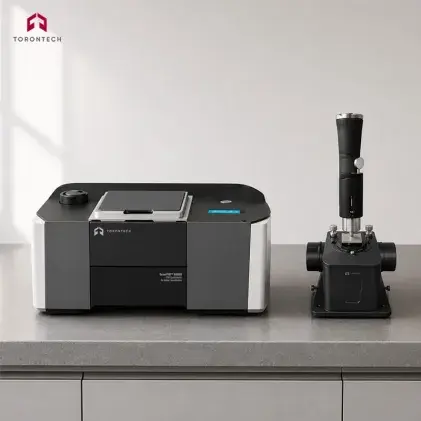
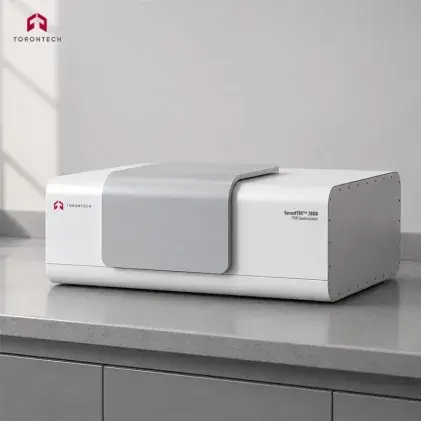
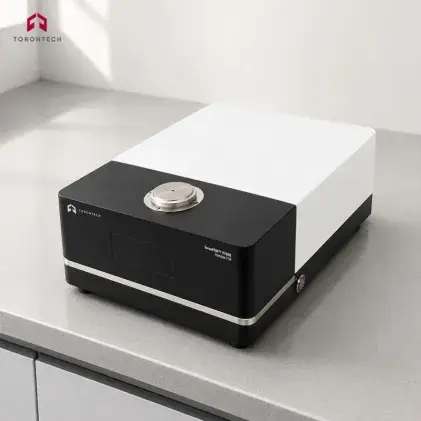
Stationary benchtop spectrometers serve as the primary analytical anchor in central quality control laboratories, institutional research facilities, and formulation centers.
Because these instruments are built for permanent laboratory installation, they accommodate larger interferometers, longer optical path lengths, and higher-grade beamsplitters and detectors that maximize optical throughput and baseline stability. They provide superior signal-to-noise ratios (SNR), fine spectral resolution, and broad spectral coverage extending from the mid-infrared into the far-infrared region.
These systems are best suited for deep compound characterization, pharmaceutical batch verification, and complex multi-component quantitative calculations. Our flagship ToronFTIR™ 7800 covers an extensive 7,800 to 350 cm⁻¹ optical span, supported by broad reference library integration for rigorous material identification.
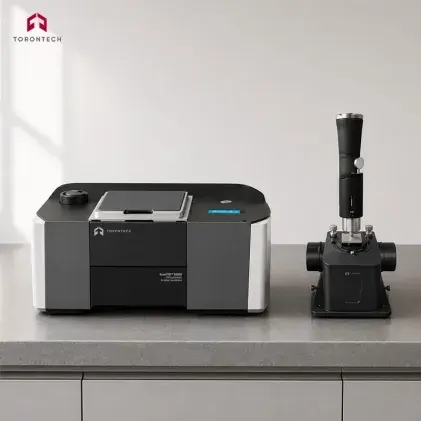
For facilities focused specifically on elastomers and polymer compounding, the compact ToronFTIR™ R4000 operates across 4,000 to 400 cm⁻¹ with specialized library matching that isolates base rubber polymers and flags additive packages.
Portable & Transportable Systems
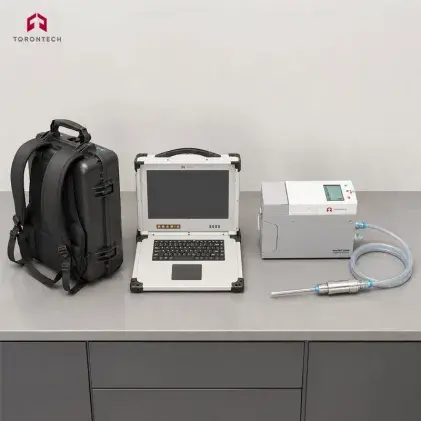
Portable FTIR configurations package laboratory-grade optical interferometers into reinforced, transportable enclosures. These systems eliminate the traditional trade-off between analytical sensitivity and physical mobility, allowing technical teams to conduct research-grade evaluations across multiple processing lines, temporary field laboratories, or distributed industrial sites.
These instruments are particularly practical for multi-facility quality audits, on-site machinery oil breakdown tracking, and continuous environmental monitoring. The ToronFTIR™ P7800 brings the complete 7,800 to 350 cm⁻¹ benchtop optical platform into a transportable format for mobile quality teams.
For continuous emissions compliance, the ToronFTIR™ G12000 operates across 600 to 4,500 cm⁻¹ as a portable extractive gas analyzer capable of measuring over 50 gas species simultaneously in hot, corrosive flue gas streams.
Handheld FTIR Scanners
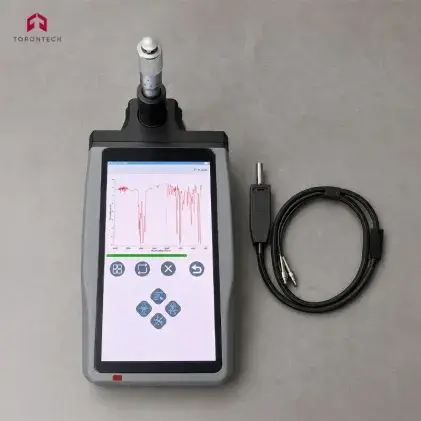
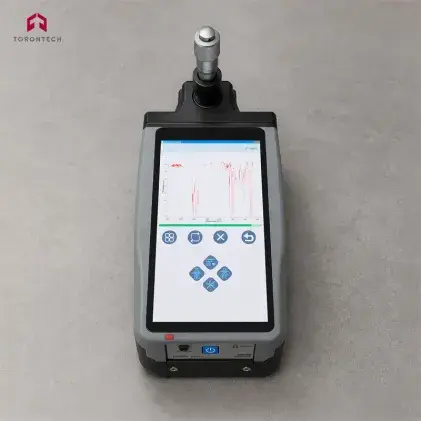
Handheld FTIR devices represent a major step forward in miniaturized optical engineering. These self-contained, lightweight instruments integrate internal rechargeable battery packs, high-contrast touchscreens, sealed diamond ATR interfaces, and automated spectral search engines into a single handheld chassis.
Related article: Transmission vs ATR FTIR: Choosing the Right Lab Setup
Designed for high-velocity inspection at the point of need, handheld units allow operators to verify raw materials directly inside drums, bulk containers, or field pipelines without preparing samples or transporting hazardous substances to a central lab. The ToronFTIR™ H7800A delivers single-technique FTIR verification across 7,800 to 650 cm⁻¹ with instant Pass/Fail notifications.
For security checkpoints and complex chemical screening, the ToronFTIR™ H7800M incorporates dual-spectroscopy hardware, combining a 7,800 to 550 cm⁻¹ FTIR engine with a 4,000 to 170 cm⁻¹ Raman spectrometer in one device.
Technical Specification Comparison
The table below outlines the mechanical and optical specifications across each platform, incorporating findings from recent comparative literature:
| Operational Metric | Stationary Benchtop Rig | Portable / Transportable Rig | Handheld Scanner |
|---|---|---|---|
| Model Examples | ToronFTIR™ 7800 / R4000 | ToronFTIR™ P7800 / G12000 | ToronFTIR™ H7800A / H7800M |
| Typical Infrared Span | 7,800 to 350 cm⁻¹ | 7,800 to 350 cm⁻¹ | 7,800 to 650 cm⁻¹ |
| Spectral Resolution | Ultra-fine laboratory resolution | High transportable resolution | Operational standard (4 to 8 cm⁻¹) |
| Signal-to-Noise Ratio (SNR) | Superior optical throughput | Lab-grade baseline | Lower; higher baseline noise |
| Physical Configuration | Stationary laboratory footprint | Transportable field enclosure | Compact single-hand unit |
| Electrical Supply | Continuous AC wall outlet | AC line / External DC connection | Rechargeable internal battery pack |
| Sample Interface | Modular (ATR, Transmission, Gas Cells) | Integrated or extractive interface | Permanent Diamond ATR / Specular tip |
| Sample Preparation | Variable (pellets, liquid cells, films) | Low (direct liquid/paste contact) | Negligible (direct surface contact) |
| Target Operator | Analytical chemists, lab technicians | Mobile QA specialists, field engineers | Warehouse personnel, floor technicians |
| Portability & Cost Profile | Lab-bound; higher initial capital | Field-portable; moderate capital | Highly mobile; affordable entry |
Key Evaluation Criteria: Benchtop vs Handheld FTIR
When evaluating handheld FTIR vs benchtop or benchtop FTIR vs handheld FTIR options, we suggest focusing on five practical operational criteria:
Executive Decision Guideline: If your primary operational risk is complex formulation errors, baseline spectral interference, or non-routine R&D investigations, prioritize a high-resolution benchtop system. If your primary daily bottleneck is raw material holding times on the loading dock or field inspection turnaround, a handheld analyzer provides immediate operational ROI.
Optical Performance and Spectral Range
Miniaturized infrared instruments achieve a compact footprint through different optical strategies: some maintain a true Michelson interferometer using a miniaturized MEMS scanning mirror, while other portable designs replace the moving interferometer with a MEMS Fabry–Pérot tunable filter or a linear variable optical filter paired with a pyroelectric detector module. Regardless of the specific architecture, smaller optical engines inherently trade baseline noise and spectral resolution for physical portability.
Related article: How to Choose FTIR Detectors: Pyroelectric vs MCT
Stationary benchtop spectrometers like the ToronFTIR™ 7800 cover the complete 7,800 to 350 cm⁻¹ range, providing the optical clarity required to resolve subtle peak shifts, quantify low-concentration components, and identify inorganic compounds in the far-infrared region. Direct optical comparisons confirm that benchtop multi-bounce ATR interfaces consistently yield the highest SNR.
By contrast, compact instruments like the ToronFTIR™ H7800A focus on the 7,800 to 650 cm⁻¹ mid-infrared fingerprint region. Although this range omits far-infrared lattice vibrations, it reliably identifies over 95% of routine industrial polymers, organic solvents, and active pharmaceutical ingredients (APIs), accepting slightly higher baseline noise in exchange for portability.
Testing Speed and Operational Workflow
The traditional laboratory workflow requires operators to draw material from an incoming container, log the transfer, transport the vial to the central lab, prepare the specimen, run the scan on a stationary benchtop system, and file a formal report. This sequence typically demands 30 minutes to several hours per lot. While essential for confirmatory testing and permanent records, it frequently creates processing delays at high-volume intake points.
Point-of-need inspection using a handheld scanner fundamentally alters this workflow. An operator walks directly to the loading bay, presses the diamond ATR interface of the ToronFTIR™ H7800A against the material inside the container, and obtains a verified identification match in under 10 seconds. Handheld devices are exceptionally well-suited as rapid pre-screening tools across supply chains.
Operators must recognize, however, that elevated optical noise in field environments can occasionally trigger false rejections through depressed similarity scores, or risk false acceptances that high-resolution benchtop analysis would detect.
Sampling Flexibility and Dual-Technique (FTIR + Raman) Options
Benchtop instruments provide wide sampling flexibility. Technicians can operate an ATR accessory for solid resin pellets, swap to a liquid transmission cell for chemical kinetics, or connect a gas cell for vapor testing. In specialized elastomer facilities, the ToronFTIR™ R4000 pairs this mechanical adaptability with dedicated rubber libraries that separate base polymers from curing agents and fillers.
While standard handheld units use a fixed diamond ATR crystal, recent optical engineering has introduced hybrid systems that expand field capabilities. The ToronFTIR™ H7800M Handheld FTIR and Raman Spectrometer integrates a 7,800 to 550 cm⁻¹ FTIR engine and a 4,000 to 170 cm⁻¹ Raman spectrometer within a single casing.
This configuration allows field technicians to test dark, carbon-filled elastomers using FTIR, then switch immediately to Raman to identify liquid chemicals directly through transparent glass or plastic packaging without opening the container. Studies also indicate that specialized multi-pass ATR interfaces on portable devices increase photon collection efficiency substantially, approaching benchtop utility for demanding in-situ measurements.
Calibration Transfer and Fleet Standardization
An analytical fleet operates most effectively when backed by established software and mathematical standardization protocols:
- Central Master Library Creation: High-resolution master spectra and baseline calibrations are generated on a central laboratory spectrometer, such as the ToronFTIR™ 7800.
- Chemometric Model Transfer: Using Piecewise Direct Standardization (PDS), verified master libraries can be mathematically transferred to portable and handheld field units. In pharmaceutical tablet identification, PDS standardization allowed transferred benchtop NIR databases to achieve 97.7% and 96.2% identification accuracy across mobile devices, which increased to 98.5% when supplemented with target-device spectra.
- Predictive Performance Verification: Research confirms that handheld sensor behavior can be anticipated directly from benchtop master datasets within 1 g kg⁻¹ of experimental values, provided that optical resolution and spectral span are mathematically standardized rather than simply truncated. Similar transfer models in fuel analysis have demonstrated 96.3% pairwise discrimination on handheld units, matching benchtop FT-IR accuracy.
- Simplified Point-of-Need Interface: While laboratory software provides deep chemometric toolsets like PLS regression and baseline manipulation, the interface on the ToronFTIR™ H7800A displays clear Pass/Fail indicators alongside a Hit Quality Index (HQI) score to prevent operator error on the production floor.
Compliance and Regulatory Standards
Regulated manufacturing and testing operations across the United States and Canada must maintain strict data governance across all analytical touchpoints:
- Pharmaceutical & Chemical Verification: In facilities operating under strict GMP frameworks, benchtop workstations paired with the ToronFTIR™ 7800 provide comprehensive record security, multi-level user permissions, and digital record archives. Automated qualification routines using certified reference standards confirm compliance with established USP <854> and EP 2.2.24 qualification criteria.
- Environmental & Petroleum Standards: In heavy industrial sectors, transportable units like the ToronFTIR™ P7800 support standard testing methods such as ASTM E2412 for in-service lubricant monitoring and EN 14078 for biodiesel blend verification. For air emissions compliance, mobile extractive gas systems like the ToronFTIR™ G12000 align with the technical criteria set by US EPA Method 320 and Environment and Climate Change Canada (ECCC) protocols for continuous stack gas monitoring.
Real-World Application Benchmarks
Empirical research and North American industrial practice illustrate how benchtop and mobile FTIR systems perform across specific operational sectors.
Energy, Petrochemicals, and Emissions
In major refining hubs along the US Gulf Coast and industrial installations across the Western Canadian energy sector, machinery reliability depends on tracking lubricant degradation. Transportable instruments like the ToronFTIR™ P7800 allow on-site quantification of oxidation, nitration, soot accumulation, and anti-wear additive depletion under ASTM E2412, avoiding the delays of off-site commercial lab testing.
For continuous air emissions monitoring under US EPA and Canadian provincial regulations, mobile extractive FTIR units like the ToronFTIR™ G12000 sample hot, corrosive flue gas streams directly, measuring over 50 individual gas species simultaneously to identify VOCs, sulfur dioxide, and nitrogen oxides.
Agriculture, Food Authenticity, and Bioprocesses
In agriculture and food processing, spectroscopic screening prevents adulteration and verifies commercial grade. Research in soil analysis shows that field-portable FTIR instruments utilizing diffuse reflectance record spectra comparable to benchtop systems, producing PLS calibrations for organic carbon, clay, and sand that match stationary laboratory measurements. In edible oil verification, benchtop and handheld ATR-MIR spectrometers both achieved regression coefficients exceeding R² > 0.9 in PLSR models, successfully separating authentic sacha inchi oil from adulterated mixtures.
When testing bulk agricultural commodities against USDA-FGIS and Canadian Grain Commission (CGC) grading standards, companion near-infrared analyzers like the ToronNIR™ 2600 provide fast compositional profiling for protein, moisture, fat, and starch. In botanical screening, benchtop FTIR-ATR achieved 100% accuracy in detecting black pepper adulterants compared to 91.3% for compact NIR units, underscoring the advantage of broad mid-infrared coverage for complex botanical matrices.
For liquid bioprocessing lines, portable dry-film FTIR systems benchmarked against benchtop spectrometers yielded equivalent calibration models for protein hydrolysates (R² = 0.94, RMSEP = 162 g mol⁻¹), proving the viability of portable FTIR in bioprocess monitoring.
Border Security, Forensics, and Clinical Diagnostics
Inspection authorities such as US Customs and Border Protection (CBP) and the Canada Border Services Agency (CBSA) require rapid, non-destructive identification of unknown synthetic narcotics, illicit substances, and hazardous compounds. Chemometric evaluations in forensic cocaine identification confirm that mixed-instrument calibration models combining benchtop and portable FT-MIR spectra provide reliable data exchange between central crime laboratories and field checkpoints.
Handheld systems like the ToronFTIR™ H7800M allow field personnel to scan dark powders using FTIR or identify materials directly through transparent containers using Raman.
In clinical diagnostics, portable FTIR systems equipped with specialized multi-pass ATR interfaces have successfully collected in-situ human skin spectra at rates approaching benchtop utility, while comparative studies in bone graft contamination showed that both handheld and benchtop spectrometers identified Staphylococcus epidermidis bacterial infection using principal component analysis.
Equipment Selection by Operational Use Case
The matrix below provides a clear mapping of industrial requirements to optimal FTIR configurations:
| Operational Use Case | Primary Performance Requirement | Recommended Torontech System |
|---|---|---|
| R&D & Resin Formulation | Maximum spectral resolution and wide optical range | ToronFTIR™ 7800 |
| Rubber & Elastomer Compounding | Base elastomer isolation and additive identification | ToronFTIR™ R4000 |
| Receiving Dock Material ID | High scan velocity and single-hand ease of use | ToronFTIR™ H7800A |
| Sealed Container Inspection | Non-destructive scanning through packaging | ToronFTIR™ H7800M |
| Lubricant & Fuel Auditing | ASTM E2412 compliance with field transportability | ToronFTIR™ P7800 |
| Stack Gas & Emissions Checks | Multi-component hot gas extractive analysis | ToronFTIR™ G12000 |
Central QA/QC and Formulation R&D (Scenario A)
Operational Profile: High-compliance laboratory environments, such as biopharmaceutical manufacturing centers in the New Jersey and Boston life sciences corridors or specialty chemical producers in Ontario. These facilities require complete structural identification of unknown materials, formulation development, and full regulatory compliance.
Recommended Configuration: High-Resolution Benchtop FTIR (ToronFTIR™ 7800 or ToronFTIR™ R4000), providing the deep spectral range and optical resolution needed for definitive material characterization.
High-Volume Receiving Docks and Material Intake (Scenario B)
Operational Profile: High-throughput manufacturing plants, such as automotive parts fabricators across the Midwest and Ontario automotive corridor or high-volume chemical distribution terminals in Chicago and Vancouver. These facilities handle hundreds of drums of resins, solvents, and excipients each week that require immediate verification before entering inventory.
Recommended Configuration: Handheld FTIR or Dual FTIR/Raman (ToronFTIR™ H7800A or ToronFTIR™ H7800M), enabling floor personnel to clear raw materials at the dock within seconds and prevent incorrect inventory from reaching processing lines.
Multi-Site Audits, Lubricants, and Emissions (Scenario C)
Operational Profile: Mobile engineering and field inspection teams servicing distributed energy infrastructure, manufacturing plants, and environmental test locations across North America. These operations require mobile equipment capable of testing machinery lubricant health under ASTM E2412, verifying fuel blend ratios under EN 14078, or measuring industrial exhaust gases under US EPA Method 320.
Recommended Configuration: Portable / Transportable FTIR (ToronFTIR™ P7800 or ToronFTIR™ G12000), delivering laboratory-grade analytical accuracy in a field-ready format.
Total Cost of Ownership (TCO) Analysis
When building a business case, evaluating benchtop vs portable FTIR solely on initial purchase price provides an incomplete view. We advise evaluating operational expenses (OpEx) alongside the initial capital investment (CapEx):
| Lifecycle Cost Element | Stationary Benchtop Rig (e.g., ToronFTIR™ 7800) | Handheld / Portable Scanner (e.g., ToronFTIR™ H7800A) |
|---|---|---|
| Initial Capital Investment (CapEx) | Moderate to High (varies with accessory options) | Predictable, all-inclusive unit cost |
| Environmental Maintenance | Regular desiccant renewal or dry purge upkeep for laboratory optical compartments | Sealed optical engine built to operate across ambient environmental conditions |
| Consumables & Optical Wear | Swappable crystal plates, transmission windows, periodic source renewal | High-durability monolithic diamond ATR tip resistant to mechanical abrasion |
| Electrical Infrastructure | Continuous AC electrical supply (zero battery replacement overhead) | Rechargeable operation and mobile charging infrastructure |
| Labor Expense Per Test | Higher per-test cost due to manual sampling, sample transit, and lab preparation | Low cost per test; a single technician can clear hundreds of containers per shift |
The Torontech Value Advantage
- Cost-Effective Engineering: Extended-life infrared sources minimize periodic maintenance expenses
- Industrial Reliability: Impact-resistant, sealed housings reduce out-of-warranty service requirements
The Hybrid Deployment Strategy
We often observe that high-efficiency manufacturing facilities avoid treating this as an "either/or" choice. Instead, they integrate both form factors into a unified testing infrastructure.
Strategic Operations Takeaway: By maintaining a central ToronFTIR™ 7800 benchtop in the main laboratory for method development and non-routine investigations, while equipping floor personnel with ToronFTIR™ H7800A handheld scanners at the receiving dock, facilities achieve an optimal balance of analytical depth and workflow speed.
This integrated deployment model delivers three measurable operational advantages:
- Elimination of Receiving Bottlenecks: Raw materials are cleared into production inventory in seconds rather than days, avoiding demurrage charges and staging congestion.
- Optimized Laboratory Throughput: Senior analytical personnel focus on high-value formulation research and regulatory investigations rather than repetitive incoming verification scans.
- Capital Allocation Efficiency: Organizations avoid the significant capital expense of constructing redundant, climate-controlled satellite labs across secondary warehouse locations.
Cost-Effective FTIR Systems from Torontech
Choosing the right spectroscopy setup should never force an operational compromise between high analytical precision and capital budget limits. At Torontech, we supply cost-effective solutions and innovative technologies engineered to support testing laboratories, manufacturing plants, and field inspection operations across the United States, Canada, and global markets.
To evaluate optical configurations, detector options, and sampling accessories, explore our complete FTIR Spectrometer Lineup. You can also Contact Torontech Today to consult with our engineering team about your target materials, testing standards, and operational budget to select an innovative, cost-effective FTIR configuration built for your facility.
References (Click to expand)
- Çebi, N., Bekiroğlu, H., Erarslan, A., & Rodriguez-Saona, L. (2023). Rapid Sensing: Hand-Held and Portable FTIR Applications for On-Site Food Quality Control from Farm to Fork. Molecules, 28.
- Duma, Z.-S., Sihvonen, T., Vartiainen, E., & Reinikainen, S. (2024). Portable spectroscopy, digital imaging colorimetry and multivariate statistical tools in contaminant identification: A case study of mint (Mentha) and basil (Ocimum basilicum). Heliyon, 10.
- Eliaerts, J., Meert, N., Dardenne, P., Durme, F. V., Baeten, V., Samyn, N., & Wael, K. (2020). Evaluation of a calibration transfer between a bench top and portable Mid-InfraRed spectrometer for cocaine classification and quantification. Talanta, 209, 120481.
- Hutengs, C., Ludwig, B., Jung, A., Eisele, A., & Vohland, M. (2018). Comparison of Portable and Bench-Top Spectrometers for Mid-Infrared Diffuse Reflectance Measurements of Soils. Sensors (Basel, Switzerland), 18.
- Kafle, B., Wubshet, S., Bakke, K. A. H., Böcker, U., O’Farrell, M., Dankel, K. R., Måge, I., Tschudi, J., Tzimorotas, D., Afseth, N. K., & Dunker, T. (2024). A portable dry film FTIR instrument for industrial food and bioprocess applications. Analytical Methods.
- Lindtner, R., Wurm, A., Kugel, K., Kühn, J. P., Putzer, D., Arora, R., Coraça-Huber, D., Zelger, P., Schirmer, M., Badzoka, J., Kappacher, C., Huck, C., & Pallua, J. (2023). Comparison of Mid-Infrared Handheld and Benchtop Spectrometers to Detect Staphylococcus epidermidis in Bone Grafts. Bioengineering, 10.
- Mayr, S., Beć, K., Grabska, J., Schneckenreiter, E., & Huck, C. (2021). Near-infrared spectroscopy in quality control of Piper nigrum: A comparison of performance of benchtop and handheld spectrometers. Talanta, 223 Pt 2, 121809.
- Mees, C., Kauffmann, J., Fernández Pierna, J. A., & Braekeleer, K. D. (2022). Benchtop NIR data standardization on handheld spectrometers to identify paracetamol tablets. Journal of Chemometrics, 36.
- Rentz, P., Mihailova, A., Heinzen, H., Bergaentzlé, M., Ruhland, E., Islam, M. D., Hamed, I., Vlachou, C., Kelly, S. D., Ennahar, S., & Werner, D. (2026). Rapid Detection of Black Pepper Adulteration with Endogenous and Exogenous Materials: Assessment of Benchtop and Handheld Infrared Spectrometers. Foods, 15.
- Sales, R. F., Barbosa-Patrício, L. C., Da Silva, N. C., Brito, L. R. E., Da Silva, M. E. F., & Pimentel, F. M. (2023). Gasoline discrimination using infrared spectroscopy and virtual samples based on measurement uncertainty. Spectrochimica Acta Part A: Molecular and Biomolecular Spectroscopy, 303, 123248.
- Salim, Y. S., Rashid, N. A., Halim, S. I. A., Chan, C., Ong, C. H., & Harun, M. (2021). Fourier transform infrared (FTIR) authentication and batch-to-batch consistency for different types of paints using benchtop and handheld FTIR spectrophotometers for oil and gas industry. Polymer Engineering & Science.
- Schoot, M., Alewijn, M., Weesepoel, Y., Mueller-Maatsch, J., Kapper, C., Postma, G., Buydens, L., & Jansen, J. (2022). Predicting the performance of handheld near-infrared photonic sensors from a master benchtop device. Analytica Chimica Acta, 1203, 339707.
- Williams, S., Chittock, J., Brown, K., Kay, L. J., Cork, M., & Danby, S. (2024). Real-Time In Vivo Human Skin Testing Using a Handheld Fourier Transform Infrared Spectrometer with a Three-Bounce Two-Pass Attenuated Total Reflection Interface. Applied Spectroscopy, 79, 404-412.