How to Choose Grips for Tensile Test: Complete Guide
Even the most expensive Universal Testing Machine is effectively a heavy paperweight if you pair it with the wrong fixtures.
To clarify the terminology immediately, the definition of grips for tensile testing refers simply to the clamps used to secure a specimen within a load frame. These are essentially the hands of the machine that transfer the pulling force. At Torontech, we see it too often.
Labs invest in great machines but cut corners here. The result is always the same: samples slipping, jaws breaking the wrong part of the specimen, and hours of wasted effort.
This guide cuts through the noise to help you select the right hardware and avoid ruining your data.
Key Takeaways
- Material Dictates the Grip: Use self-tightening wedge grips for rigid metals to ensure a secure lock and pneumatic grips for elastomers to maintain constant pressure as the sample thins.
- Troubleshoot with Technique: Most jaw breaks and slippage issues are caused by incorrect clamping pressure or sharp jaw edges rather than machine failure.
- Follow the Standards: Validating your data requires matching your fixtures to specific codes like ASTM D638 for plastics or ASTM E8 for metals.
- Torontech Solutions: We provide cost-effective and versatile universal testing machines that support a wide range of standard and specialized gripping options.
How to Choose Grips for Tensile Test Applications Without the Headache
Finding the correct fixture is honestly tougher than purchasing the frame itself. If you are wondering how to choose grips for tensile test tasks without losing your patience, we have some advice. Stop looking at just the max force rating. You must evaluate the Material, the Force, and the Geometry.
1. The Material and The Jaw Face
In our view, the interface where the metal teeth bite into your sample is where the test succeeds or fails. Recent studies confirm that improving grip performance involves selecting grips that match specimen properties and applying surface treatments to enhance friction (Ganapathy et al., 2018; Unger et al., 2019; Truong et al., 2021; Ng et al., 2005; Setyawan et al., 2022).
Rigid Materials
These demand significant clamping pressure. Think regarding applications like rebar, carbon fiber plates, or hard thermoplastics. For these high-strength materials, Wedge grips are the clear winners. We prefer them because they are self-tightening as the harder you pull, the tighter those wedges lock in.
Research indicates that for specialized applications like thermo-mechanical testing of boron steel, novel grip designs are essential to minimize thermal and strain gradients (Ganapathy et al., 2018).
Furthermore, using additional grips or surface modifications can significantly increase tensile strength measurements by preventing specimen slip, especially in non-ferrous materials (Setyawan et al., 2022).
Stretchy and Biological Materials
Watching materials like medical tubing, silicone seals, or tendons thin out as they stretch is tricky. If your grip doesn’t tighten simultaneously, you are in trouble. We are just going to say it. You should be using pneumatic grips or eccentric roller grips.
Soft biological materials particularly benefit from pneumatic grips lined with materials such as cardboard to reduce stress concentration and prevent premature failure (Ng et al., 2005). Air-powered clamps maintain constant pressure, which is ideal for accurate data.
Fragile Fibers and Textiles
For delicate samples like carbon fibers or textile reinforcements, Screw-action side-acting grips give you that fine-tuned manual control.
Studies show that for these delicate fibers, grips that optimize geometry, mass, and surface treatment—such as polymer coatings or bolted-clamping grips—enhance tensile response and reduce slippage (Unger et al., 2019; Truong et al., 2021).
2. Force Capacity vs. Reality
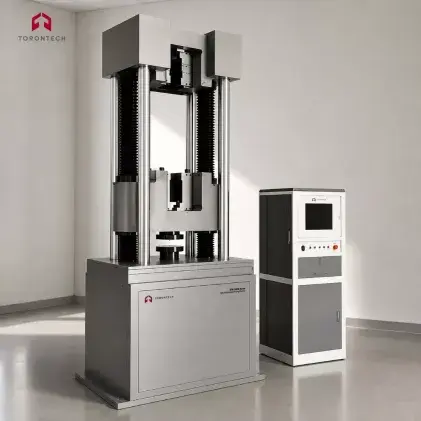
You must match the grip’s rating to what your machine can actually perform. For example, the massive hydraulic tests you would run on our sturdy TTM-3000 need hydraulic grips that can crush a steel pipe without flinching.
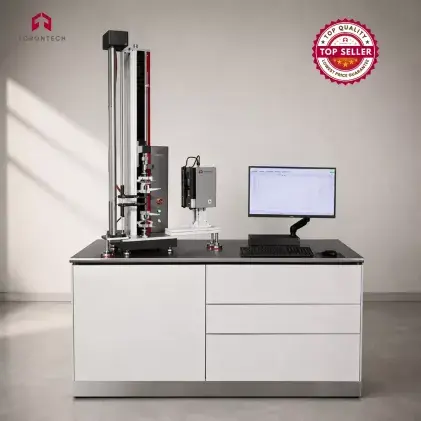
Our specific take: Don’t over-specify. If you are running a tiny, low-force test on a high-capacity machine, swap out the heavy iron for a lighter pneumatic fixture. We often see clients utilize the single-column Tensi-10 for these lighter tasks because it makes the daily workflow much smoother than wrestling with a heavy hydraulic clamp for a test that barely registers on the sensor.
Matching Grips to The Standards
We know reading through pages of ASTM codes is dry work. But ensuring your setup follows the regulations is the only way your data gets respected. Here is our quick reference:
- ASTM D638 / ISO 527: Self-Tightening Wedge Grips are standard for plastics. However, if you are running batches all day, we strongly advocate for Pneumatic Grips. They speed up the process and save your wrists from repetitive strain.
- ASTM E8 / ISO 6892: Heavy-Duty Wedge Grips are standard for metals. If you are testing high-strength steel, hydraulic grips are safer. Seriously, do not risk it with manual clamps on high-force metal.
- ASTM D882: Pneumatic Side-Action Grips are best for thin films. Use rubber faces. If you use serrated faces, you will almost certainly tear the film before the test begins.
ASTM D5034: Wave-Profile or Grab Grips are necessary for textiles to hold fabric weaves without cutting the threads, which is a frequent problem with flat faces.
Related article: Universal Tensile Testers: Selection & Specs Guide
Improving Grip on Tensile Testing: A Straightforward Troubleshooting Guide
One of the most frustrating calls our support team receives involves jaw breaks where the sample snaps right inside the clamp instead of in the center. It invalidates the test. Improving grip on tensile testing isn't always about spending more budget. Sometimes it is just about correcting your technique.
Dealing with Specimen Slippage
Most of the time, you aren't squeezing the specimen sufficiently. You will typically see the load curve flatten out unexpectedly, or find visible skid marks on the sample after the fact.
The Scenario: We frequently see textile labs testing high-gloss nylon straps get erratic data simply because they are using smooth jaws that cannot grip the slick surface.
The Solution: If you are using manual grips, tighten them further. Better yet, switch to Pneumatic Grips where the regulated air pressure handles the work for you. As noted by Setyawan et al. (2022), applying surface modifications can be critical to preventing slip in composite materials.
Fixing Jaw Breaks
This usually indicates you are crushing the structure of the sample.
The Scenario: This often happens when testing rigid acrylic bars. Aggressive serrated jaws create stress points that snap the brittle plastic before it reaches its yield point.
The Solution: If you are testing rigid plastics, remove the serrated faces and use filed or plain ones. Those sharp teeth often act as crack initiation points, causing the material to fail before it should.
Preventing Tearing at the Edge
If your sample is ripping at the side, your grips are likely too sharp.
The Scenario: Packaging facilities often face this issue when shrink wrap keeps ripping at the clamp line until they swap to rubber-faced grips with softer edges.
The Solution: You need to verify that your grips have properly rounded or radiused edges. Sharp corners are the enemy of good data as they create stress points that ruin the experiment.
Innovative Tech That Makes Sense Financially
While standard grips work for the majority of applications, there is that small percentage of unique items that need something special. This is where Torontech differentiates itself. We believe you shouldn't have to choose between high-end performance and staying within your budget.
Versatile Solutions
Not every sample is a perfect dog-bone shape. Whether you are testing irregular automotive parts, finished medical devices, or complex electronic assemblies, basic off-the-shelf grips often fail. At Torontech, our technology is flexible enough to adapt. We offer a diverse range of specialized gripping solutions designed to accommodate unique geometries, ensuring you aren't stuck trying to force a square peg into a round hole.
Related article: Choosing Electromechanical vs Hydraulic Tensile Testers
The Torontech Advantage
Our Universal Testing Machines are built to handle whatever you require, from the heavy-duty tasks to delicate precision work.
- For the brutal jobs, our Servo Hydraulic TT-MSH Series and the massive TTM-3000 are built for durability, handling metals and concrete while integrating seamlessly with heavy-duty wedge and hydraulic grips.
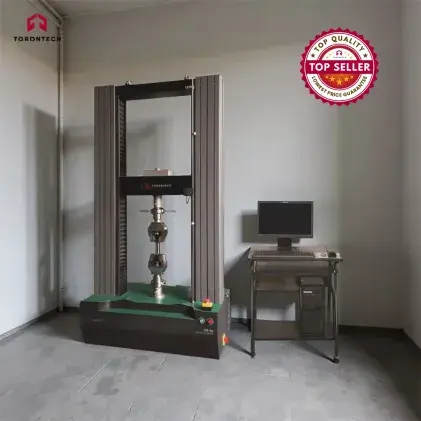
- On the other end of the spectrum, for the precise touch, the Electromechanical TTM-Series and the compact Single Column Tensi-10 possess the sensitivity you need for polymers and fabrics, supporting a long list of pneumatic and manual clamps.
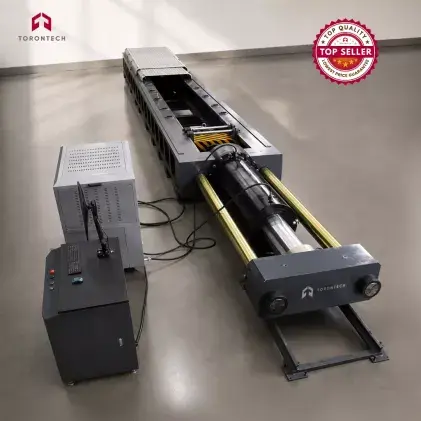
- And for those needing to test overhead conductors or long ropes, our TT-HTTM Series provides the horizontal configuration necessary to manage length without compromising safety.
Related article: Single Column vs Dual Column Tensile Tester: The Best Choice
Get Reliable Data with Torontech
Choosing the correct clamps and knowing how to fix them when they cause issues is the difference between guessing and actually knowing. Whether you are following ASTM rules or just trying to stop a sample from slipping, you need equipment that performs.
At Torontech, we believe in providing the right tools without the excessive markup. We offer solutions that are cost-effective but still packed with the modern technology you require.
If you are searching for dependable systems that support every kind of gripping solution, we are here to assist. Review our Universal Testing Machines and see how our innovative tech can resolve your quality control challenges.
References
- Ganapathy, M., Li, N., Lin, J., Abspoel, M., & Bhattacharjee, D. (2018). A Novel Grip Design for High-Accuracy Thermo-Mechanical Tensile Testing of Boron Steel under Hot Stamping Conditions. Experimental Mechanics, 58, 243-258.
- Ng, B., Chou, S., & Krishna, V. (2005). The Influence of Gripping Techniques on the Tensile Properties of Tendons. Proceedings of the Institution of Mechanical Engineers, Part H: Journal of Engineering in Medicine, 219, 349 - 354.
- Setyawan, D., Sulisetyono, A., & Aryawan, W. (2022). EFFECT OF ADDITIONAL GRIP ON TENSILE STRENGTH OF NON-FERROUS MATERIALS FOR SHIP.
- Truong, V., Lee, D., & Kim, D. (2021). Effects of different grips and surface treatments of textile on measured direct tensile response of textile reinforced cementitious composites.
- Unger, R., Schegner, P., Nocke, A., & Cherif, C. (2019). Technological Development of a Yarn Grip System for High-Speed Tensile Testing of High-Performance Fibers.