Single Column vs Dual Column Tensile Tester: The Best Choice
Quality control shouldn't be a headache. It should be the source of confidence behind every product you ship. Whether you are validating medical sutures or structural steel, the right equipment turns rigorous testing into a seamless part of your daily workflow.
At Torontech, we help labs find that perfect Universal Tensile Tester every day. The decision usually narrows down to one key choice: the single column vs. dual column tester.
Both machines are excellent at what they do, but they serve very different roles. We believe the "smartest" choice isn't just about raw power. It is about finding the machine that complements your specific materials and enhances your lab's efficiency.
Here is our perspective on the technical differences and how to select the cost-effective solution that supports your innovation goals.
Single Column vs. Dual Column Tensile Tester: The Core Difference
When evaluating a single column vs. dual column tester, the main differentiator is their structural build. However, in our experience, buyers often focus on force capacity numbers but overlook structural stiffness and operational fit, such as grips and travel. This is an oversight that can lead to questionable data.
Single Column UTM: The Cantilever Effect
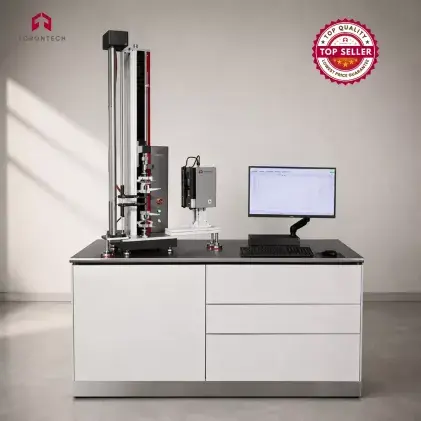
A single column universal testing machine, like our compact Tensi-10, features one vertical support post with the crosshead extending out from it. This is often described as a "cantilever" design.
According to recent research, these devices are typically suited for small-scale or lower-capacity testing due to their simpler structure and lower cost (Fahmi et al., 2024). Because the moving crosshead is supported from only one side, the frame creates a "C-shape."
- The Physics: If you apply too much force, that "C" wants to open up. This microscopic flexing means your sensors might record the frame moving rather than just the sample stretching.
- Best Applications: This open design is actually a benefit for high-elongation materials. We often recommend a single column tester for testing rubber or elastomers that stretch 600% or more, as the frame offers excellent vertical travel relative to its footprint. They are often used for routine quality control of smaller samples (Fahmi et al., 2024) and pair perfectly with lightweight pneumatic grips for rapid testing cycles.
Real-World Example: Consider a quality check on the seal strength of a medical blister pack. You are peeling the backing off the plastic. The force required is low, and the material is compliant. In this scenario, a single column universal testing machine like the Tensi-10 captures the peel data precisely without needing a massive footprint.
Related article: Choosing Electromechanical vs Hydraulic Tensile Testers
Dual Column UTM: The Closed-Loop Advantage
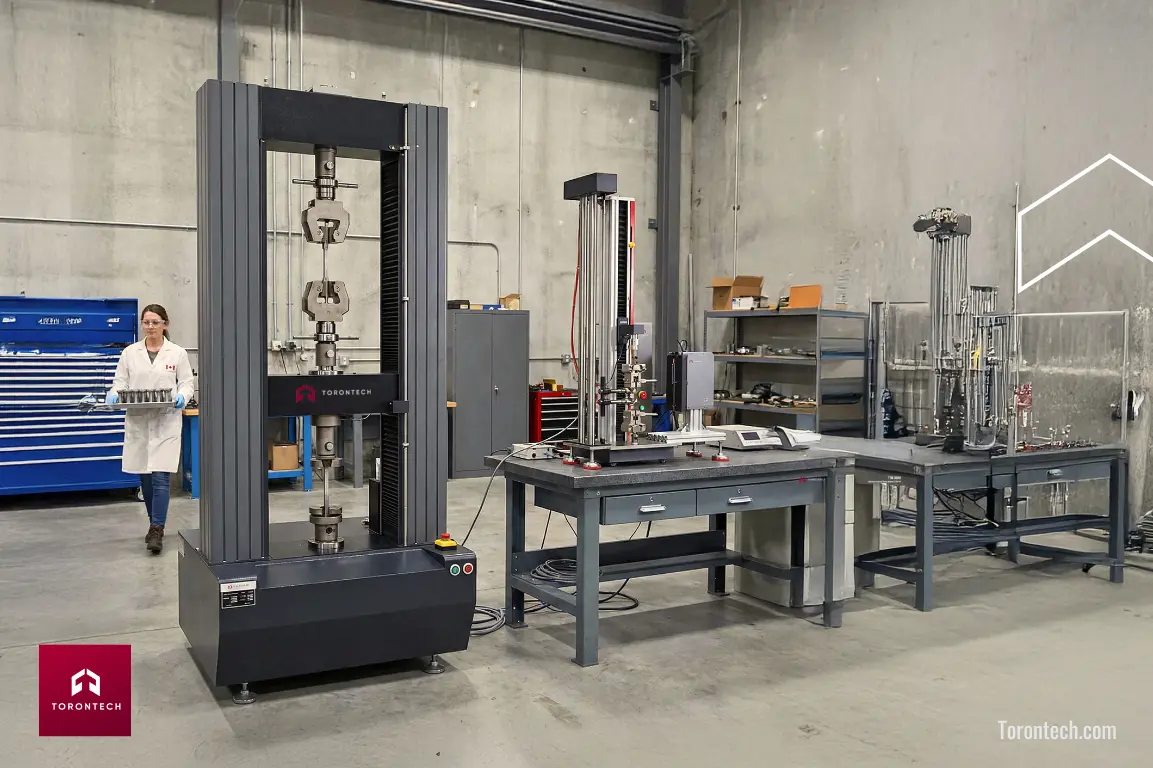
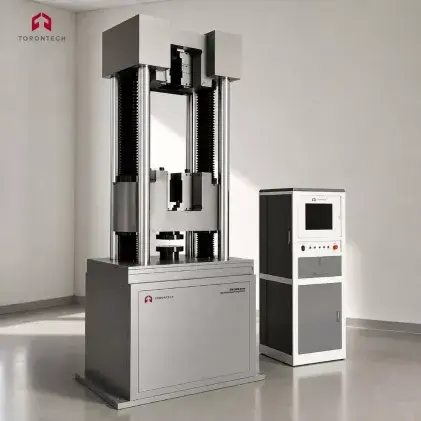
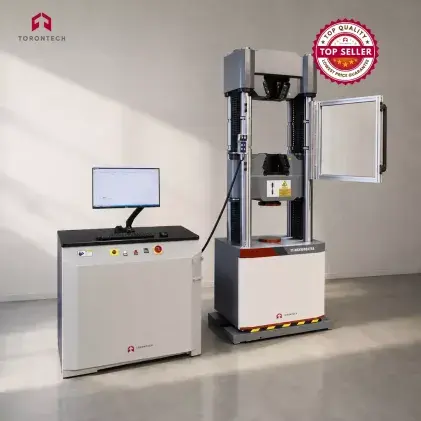
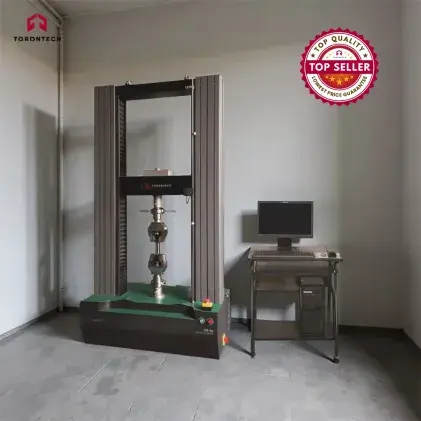
A dual column universal testing machine uses two vertical pillars to support the crosshead, creating a closed "box" or "H-frame" configuration. By anchoring the crosshead on both the left and right, we effectively eliminate the cantilever effect found in single column models.
- The Physics: These machines feature two vertical columns, providing greater stability and higher load capacity (Fahmi et al., 2024). Even under massive loads, the frame resists twisting or bowing. This improved precision and reduced frame deflection (Fahmi et al., 2024) are critical when using heavy industrial wedge grips or hydraulic jaws, which would be too heavy and torque-heavy for a single column frame.
- Best Applications: If you are testing rigid plastics or metals, we believe a dual column tester is mandatory. As noted in the literature, dual column testers are generally preferred for industrial or research applications requiring high accuracy and the ability to test tougher materials (Fahmi et al., 2024). We typically steer clients toward our TTM-Series (Electromechanical) for standard rigid materials, or the heavy-duty TT-MSH Series (Hydraulic) for high-capacity metal testing.
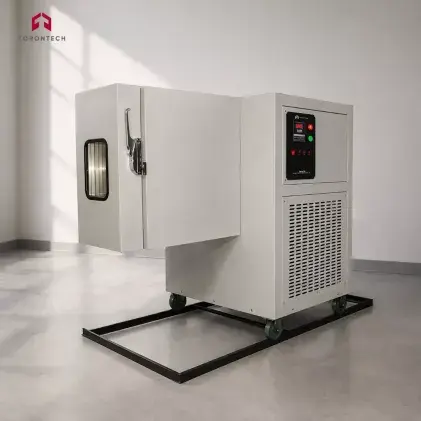
- Operational Note: Keep in mind that testing space is defined by the width between columns. If you need to use a bulky environmental chamber—like our ToronTTC Series for heat or cold testing—you will almost certainly need a floor-standing dual column model to fit the chamber.
Real-World Example: Imagine you are validating the yield strength of a steel rebar sample for a construction project. The force required to snap that bar could easily exceed 100kN. If you attempted this on a less rigid frame, the machine would flex significantly before the metal broke. You need the raw stability of the TT-MSH Series to ensure your Young's Modulus calculations are accurate.
Related article: How to Choose Grips for Tensile Test: Complete Guide
Single Column vs. Dual Column Tensile Tester Comparison
| Feature | Single Column (e.g., Tensi-10) | Dual Column (e.g., TTM-Series) |
|---|---|---|
| Max Force Capacity | Typically tops out at 10 kN | Starts at 10 kN and goes to 3000+ kN |
| Structural Stiffness | Lower (Acceptable for soft materials) | High (Required for rigid materials) |
| Footprint | Small, Benchtop | Large Benchtop or Floor Standing |
| Primary Fixtures | Pneumatic, Manual, Eccentric Roller | Wedge, Hydraulic, Bend Fixtures |
| Investment | Budget-friendly | Higher cost for higher capacity |
Matching Standards to Your Single or Dual Column Tensile Tester
One of the most practical ways to select the right frame is to check the testing standards you are required to follow. In fact, we always advise our clients: Don't just buy a machine; buy a solution to a standard.
Single Column Tester Applications (Ideal for Tensi-10):
- ASTM D412 / ISO 37: Vulcanized Rubber and Thermoplastic Elastomers (High stretch, lower force).
- ASTM D882: Tensile Properties of Thin Plastic Sheeting.
- ASTM D3330: Peel Adhesion of Pressure-Sensitive Tape.
- ASTM F88: Seal Strength of Flexible Barrier Materials.
Dual Column Tester Applications (Ideal for TTM-Series / TT-MSH):
- ASTM D638 / ISO 527: Tensile Properties of Plastics (We find rigid plastics often require the stiffness of a dual column).
- ASTM E8 / ISO 6892: Tension Testing of Metallic Materials (Requires heavy-duty holding power).
- ASTM C393: Flexural Properties of Sandwich Constructions.
At Torontech, our software suites come pre-loaded with libraries of these common ASTM and ISO methods. We believe your software should handle the hard work, ensuring you meet compliance requirements immediately whether you choose a single or dual column setup.
Avoid Over-Speccing with Torontech
Here is a reality check: A common error in procurement when comparing a single column vs. dual column tester is "over-speccing." This means buying a high-capacity dual column machine "just in case." While we appreciate planning for the future, we dislike seeing our clients waste funds on capacity they will never utilize.
We recommend analyzing your material roadmap. If 90% of your testing is under 10kN (e.g., medical packaging or soft plastics), a single column universal testing machine like our Tensi-10 handles your daily workload efficiently. However, if versatility and high-strength materials are central to your R&D, then the stability of a dual column frame like the TTM-Series is a necessary asset.
At Torontech, we fill the gap between affordability and advanced technology. We don't just supply equipment; we provide answers. Whether you need the compact efficiency of our single-column units or the heavy-duty power of our hydraulic series, our machines are built to satisfy strict North American and international standards.
We believe you shouldn't have to accept generic specs or overpriced brands. Equip your facility with technology that prioritizes precision and value.
Ready to upgrade your testing capabilities? Explore our full range of Universal Testing Machines here to find the perfect match for your materials, or contact us today and let our experts provide a quote on our most cost-effective and innovative testing solutions.
References
Fahmi, M., Imaduddin, F., U., Prabowo, A., & Santoso, B. (2024). Numerical stress analysis of various aluminum structures for a single-column small-scale tensile test machine purpose. AIP Conference Proceedings.