Universal Tensile Testers: Selection & Specs Guide
What is the single most critical instrument for validating product safety? In the world of material science, the Universal Testing Machine (UTM) stands out as the ultimate authority. Often called a Universal Tensile Tester, this equipment validates the integrity of everything from surgical implants to skyscraper beams.
Overall, UTMs are critical tools in engineering for ensuring material quality and performance through standardized mechanical testing (Snow & Cuddy, 2024; Sutisna, 2021; Saeed et al., 2019).
At Torontech, we view the UTM as the heartbeat of the modern laboratory. It turns a raw concept into a certified product ready for the global market. Whether you are a procurement officer investing in new capabilities or a lab manager striving for perfect data, this guide empowers you with the knowledge you need, from selecting the right hardware to mastering the testing procedure.
Key Takeaways
- A Universal Testing Machine is the primary tool for validating product safety by performing tensile, compression, and flexural tests on various materials.
- Critical sectors like aerospace, automotive, and medical device manufacturing rely on these machines to meet rigorous quality standards.
- Choosing between electromechanical and hydraulic systems depends on your specific need for precision versus raw high-force capacity.
- Data integrity starts with selecting the right hardware components, including rigid load frames, precise load cells, and appropriate grips.
- Strict adherence to standard testing procedures and ASTM guidelines is the only way to ensure your results are certified and trustworthy.
- Routine maintenance and annual calibration are essential strategies to extend equipment lifespan and maintain ISO compliance.
What Exactly is a Universal Testing Machine?
A Universal Testing Machine (UTM) is a versatile device used to test various mechanical properties of materials, such as tensile, compressive, and bending strength, by applying controlled loads to specimens (Patel, 2015; Sutisna, 2021; Saeed et al., 2019).
It earns the title "Universal" because of its sheer adaptability. You switch out the clamps, adjust the software settings, and suddenly you are testing anything from soft elastomers to hardened steel bars.
The Universal Testing Machine Working Principle
To operate this equipment effectively, you must understand the core mechanics. The universal testing machine working principle is fundamentally about the controlled application of force using hydraulic or motor-driven actuators.
The system uses a rigid loading frame to hold the specimen and a moving crosshead to apply stress.
As the crosshead moves, load cells measure the force, displacement sensors track the movement, and a data acquisition system records the parameters (Patel, 2015; Singh, 2022; Geasa, 2021; Abdullah, 2020). The software then synchronizes this data to generate a Stress-Strain Curve, which acts as the "fingerprint" of your material's strength.
We tell our clients constantly: don’t limit yourself to simple tension tests. A properly configured UTM is capable of delivering much more value than that.
What Stress Can It Apply?
While pulling samples until they break (tensile testing) is the standard application, a comprehensive setup from Torontech handles a broader scope:
- Tensile Testing: Stretching a material to measure its breaking point and elasticity (e.g., pulling a car seatbelt to ensure it won't snap in a crash).
- Compression Testing: Applying crushing force to determine load limits (e.g., crushing a cardboard shipping box to see how much weight it can stack).
- Flexural (Bend) Testing: Bending beams or plastics to measure stiffness (e.g., bending a smartphone casing to ensure it doesn't warp in your pocket).
- Shear Testing: Sliding layers apart to measure sliding resistance (e.g., testing the strength of a rivet holding two metal plates together).
- Peel & Adhesion Testing: Essential for packaging, glues, and consumer goods (e.g., measuring the exact force needed to peel a foil lid off a yogurt cup).
Who Relies on These Machines?
Before examining the mechanics, it helps to see where these systems fit in the global supply chain. While manufacturing facilities everywhere use them, we see the highest demand in these seven key sectors:
Aerospace & Automotive
Safety is non-negotiable here. Engineers use UTMs to test high-strength alloys and fasteners to guarantee they withstand extreme forces without failing. We find that fatigue testing is critical in this sector, specifically ensuring components can survive years of vibration and stress through rigorous standards like ASTM E8.
Electronics & Microelectronics
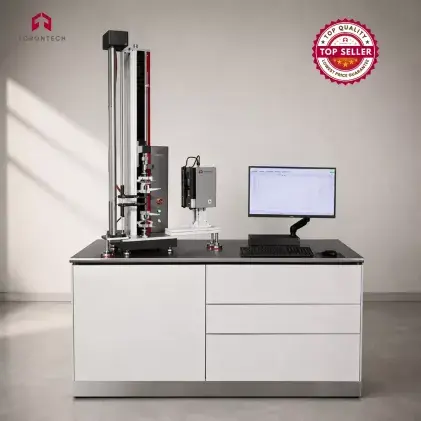
Devices are becoming microscopic, and testing them is increasingly delicate. We are seeing a surge in demand for low-force machines to verify if circuit boards will crack or if micro-chips are bonded securely. This is where a compact, high-precision unit like our Tensi-10 shines. It is perfect for delicate tasks like bending PCBs or peeling screens on foldable smartphones.
Medical & Biomechanics
This is where precision becomes a safety issue. If a syringe plunger sticks or a bone screw shears, it is not just a data error; it is a patient risk. Manufacturers require highly sensitive systems to test surgical sutures and implants, such as measuring the exact force required to snap a catheter.
Construction & Civil Engineering
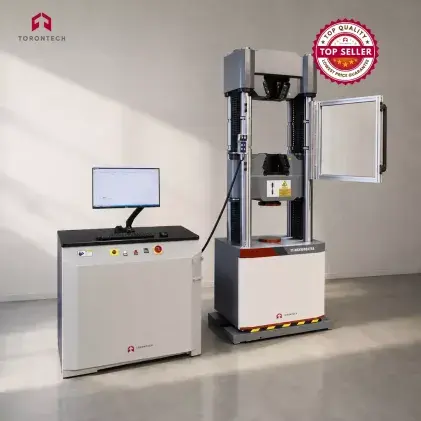
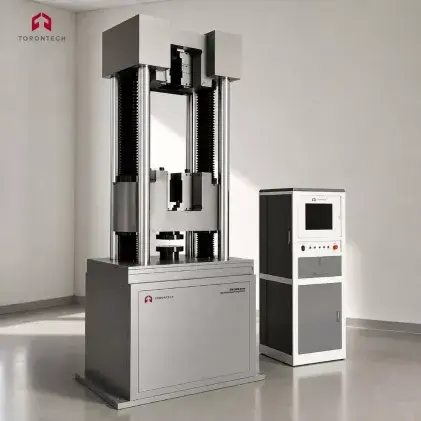
This is the sector for heavy-duty power. Labs here require massive hydraulic frames, like the TT-MSH Series, to crush concrete cylinders, pull thick steel rebar, and test asphalt to validate structural safety on infrastructure projects.
Energy (Oil, Gas & Wind)
From extensive pipelines to wind turbines, components must be exceptionally durable. We frequently supply machines to test pipeline welds for ductility or the composite sections of turbine blades to ensure they can handle wind loads.
Plastics, Rubber & Textiles
This category varies wildly. For rubber, the machine must stretch samples to extreme lengths, while for rigid plastics, it requires high stiffness. We often see clients verifying if yoga pants stretch without tearing or if plastic wrap is strong enough for palletizing.
Universities
Academic labs are where future scientists learn the basics. Recent advances have led to portable and low-cost designs specifically for educational and research use (Patel, 2015; Singh, 2022; Geasa, 2021; Saeed et al., 2019).
We usually recommend electromechanical models like the TTM-Series for schools because they are cleaner, quieter, and require less maintenance than hydraulic systems. This makes them ideal for teaching students the fundamentals of stress-strain analysis.
The Hardware: What’s Inside the System?
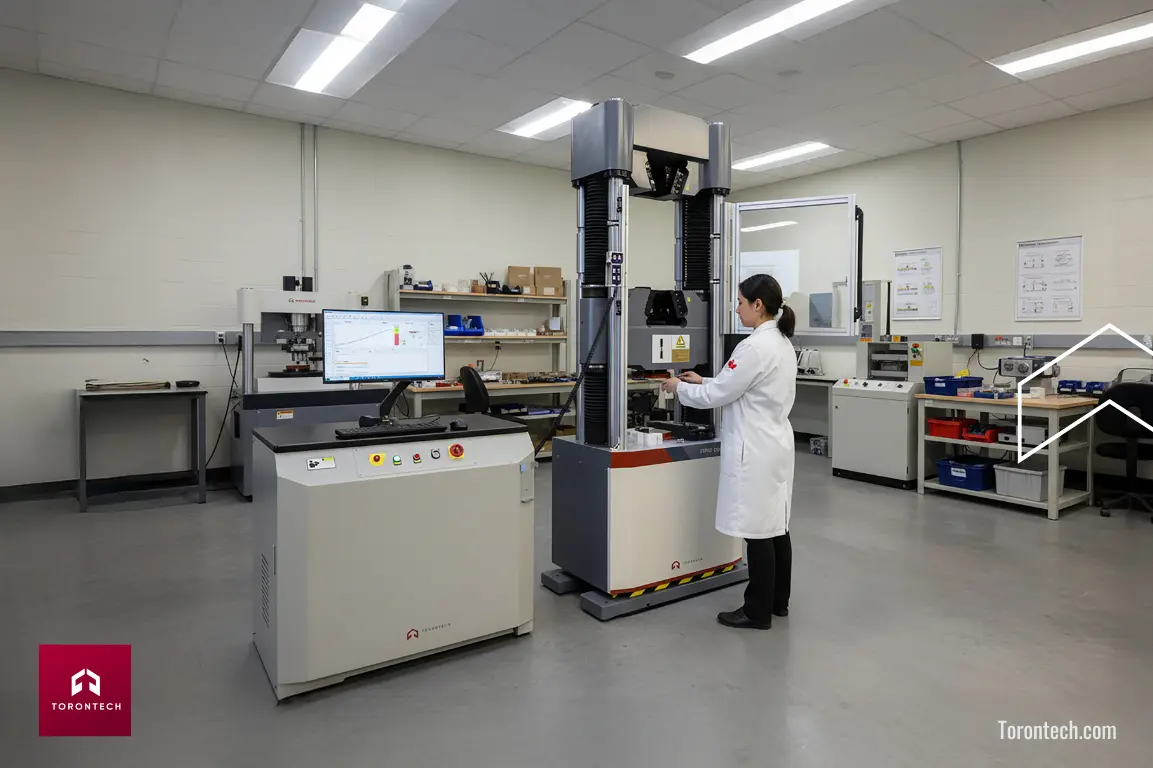
Understanding the components helps you select the right configuration without overspending. It is not just about the machine; it is about the integrity of the data it produces.
1. The Loading Frame (The Skeleton)
This is the main structure that absorbs the reaction force. Stiffness is everything here. If your frame bends even a fraction of a millimeter during a high-force test, that movement gets recorded as sample elongation, ruining your data.
- Single Column (e.g., Tensi-10): Compact and open-fronted. These are perfect for low-force materials (< 5kN) like threads, films, or paper where you need quick access to the sample.
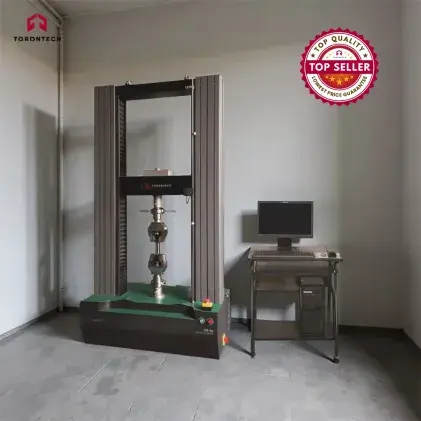
Dual Column (e.g., TTM-Series): These feature two heavy-duty pillars to eliminate frame deflection. We recommend this configuration for anything above 5kN or for testing rigid composites.
Read more: Single Column vs Dual Column Tensile Tester: The Best Choice
2. The Load Cell (The Heart)
This is the transducer that converts physical force into an electrical signal. Take our advice: never compromise on the load cell. A high-quality cell should be accurate down to 0.5% of the reading.
Insider Tip: Load cells are interchangeable. You can mount a delicate 100N cell on a massive 50kN frame to test fine wire. Using a massive cell for a tiny sample kills your resolution.
3. The Drive System (The Muscle)
This is what moves the crosshead.
- Electromechanical: Uses precision ball screws and servo motors. This provides constant speed regardless of the load, which is critical for plastic and medical testing.
Hydraulic: Uses a piston and oil pump. It is less precise at very low speeds but virtually indestructible at high loads.
Read more: Choosing Electromechanical vs Hydraulics Tensile Testers
4. Grips & Fixtures (The Hands)
The interface holding your specimen. The most frequent challenge we troubleshoot isn't machine failure; it is grip slippage.
- Wedge Grips: These tighten mechanically as the pull force increases. They are the industry standard for metals.
Pneumatic Grips: Using air pressure, these provide constant clamping force. We strongly recommend these for rubber and films to ensure the sample doesn't slip as it thins out (e.g., testing delicate latex gloves where manual clamps would cause the sample to tear prematurely).
Read more: How to Choose Grips for Tensile Test: Complete Guide
5. Extensometer (The Eyes)
The machine tracks crosshead movement, but that includes system compliance (slack). For true accuracy, an extensometer clips directly onto the sample to measure deformation (strain) with micron-level precision.
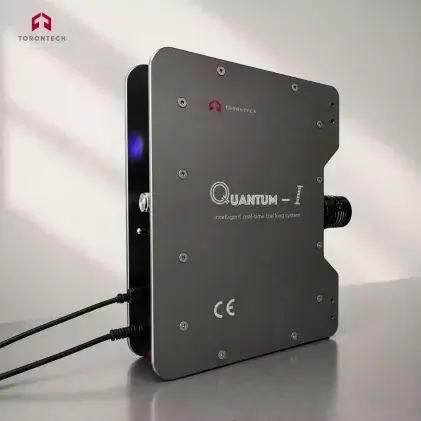
Modern Solution: For materials that are too fragile or hot to touch, we deploy our Quantum Series Video Extensometers, which use advanced optics to measure strain without physical contact.
The Big Decision: Hydraulic or Electromechanical?
The question we answer almost daily is: "Should I choose the Electromechanical or the Hydraulic model?"
It is the classic standoff: the clean, surgical precision of an Electromechanical system (like our TTM-Series) versus the raw, oil-driven muscle of a Hydraulic rig (like the TT-MSH).
Choosing incorrectly here is painful. You do not want a massive hydraulic press crushing a delicate medical tube, nor do you want a precision motor burning out trying to snap heavy steel rebar. There is a lot of nuance regarding oil maintenance, speed control, and long-term ownership costs, which is too much to cover in a single paragraph.
Standard UTM Machine Testing Procedure
Owning the machine is step one; using it correctly is step two. We have seen capable machines blamed for "inconsistent data" that was actually caused by user error.
Standard testing procedures involve securely mounting the specimen, applying load at a controlled rate, measuring force and deformation until failure or a specified endpoint, and analyzing the resulting stress-strain data according to relevant standards like ASTM or ISO (Sutisna, 2021; Saeed et al., 2019). Here is the professional workflow we recommend:
Step 1: Precision Sample Preparation
Your data is only as good as your sample. Cut your specimen to the exact dimensions specified in the standard (e.g., the "dog bone" shape for plastics).
Pro Tip: Use a calibrated micrometer to measure the width and thickness in three different places, then enter the average into the software. Guessing here invalidates the stress calculation.
Step 2: Setup & Pre-Load
Install the sample in the grips. Ensure it hangs perfectly vertical. Misalignment creates "bending moments" that skew results.
Critical Step: Apply a tiny "pre-load" (e.g., 2N) to remove any slack in the sample before starting the actual test. This ensures the data curve starts cleanly from zero.
Step 3: Parameter Input
Input the test speed (e.g., 50mm/min) and the "Gauge Length" (the distance between grips) into the software.
Safety Check: Set the software limits. If the machine travels too far or the load spikes unexpectedly, it should auto-stop to prevent damage. Note that modern advances now include automation and real-time load control to further prevent specimen damage (Patel, 2015; Singh, 2022).
Step 4: Execution
Close the safety shields and start the test. Watch the graph build on the screen in real-time.
What to watch: Look for anomalies. If the curve is "jittery," your grips might be slipping. If the curve is flatlining, your material might be yielding.
Step 5: Data Analysis & Reporting
Once the sample fails, the software calculates the key metrics automatically.
- Yield Strength: The point where the material stops being elastic (it won't snap back to shape).
- Ultimate Strength (UTS): The maximum stress the material withstood before failure.
- Elongation: The percentage of stretch.
- Modulus of Elasticity: The stiffness of the material (calculated from the slope of the initial curve).
Real-World Context: Think of testing a steel bolt. Yield Strength is the moment the bolt bends permanently and won't spring back; this is bad for construction. Ultimate Strength is the moment it actually snaps in two; this is catastrophic. Knowing the difference saves lives.
6. Maximizing Lifespan
A UTM is a long-term capital asset. To maximize the lifespan of a UTM, regular calibration, maintenance of mechanical and hydraulic parts, and careful operation within design limits are essential (Subadra et al., 2025; Abdullah, 2020).
- Daily: Clear debris and dust from the grip area.
- Monthly: Check limit switches and emergency stops to ensure safety.
- Quarterly: Lubricate the lead screws (for electromechanical models) to ensure smooth travel.
- Yearly Calibration: This is non-negotiable. View calibration as insurance, not a chore. Sensors drift over time, and annual verification ensures your certificates of analysis remain trustworthy.
- Upgrades: Timely upgrades or remanufacturing of components such as load cells, control systems, and hydraulic subsystems can significantly extend the machine's utility (Abdullah, 2020).
Expert UTM Solutions from Torontech
We have covered significant ground here, from understanding the basic mechanics of load cells and crossheads to mastering the nuances of a valid testing procedure. The Universal Testing Machine is the final judge of material quality, and choosing the right one is one of the most important decisions a laboratory manager will make.
Whether you require the raw, high-capacity power of a TT-MSH Hydraulic rig for civil engineering projects, or the fine-tuned, surgical control of a TTM-Series electric frame for medical devices, the goal is always the same: reliable, repeatable data.
Ready to configure your lab for success? At Torontech, we do more than just ship boxes; we partner with our clients globally to ensure they meet their specific testing standards efficiently. We are ready to help you identify exactly what you need without the confusion.
References:
- Abdullah, Z. (2020). Remanufacturing Aided Upgrading of Universal Testing Machine through Sustainability Assessment Modeling. Current Journal of Applied Science and Technology. doi.org/10.9734/cjast/2020/v39i2530887
- Geasa, M. (2021). Development of an Arduino based universal testing apparatus. Archives of Agriculture Sciences Journal. doi.org/10.21608/aasj.2021.226282
- Patel, S. (2015). Universal Testing Machine Motion Control System.
- Saeed, M., Mairaj, F., Ezzy, A., & Sufiyan, M. (2019). Fabrication of Automated Desktop Universal Tensile Testing Machine. 3, 184-187.
- Singh, M. (2022). Development of a portable Universal Testing Machine (UTM) compatible with 3D laser-confocal microscope for thin materials. Advances in Industrial and Manufacturing Engineering. doi.org/10.1016/j.aime.2022.100069
- Snow, T., & Cuddy, M. (2024). Materials Testing Machine: Design, Fabrication, and Assembly of a Benchtop Universal Materials Tester. ASEE-NE 2022 Proceedings. doi.org/10.18260/1-2--42190
- Subadra, S., Skaria, R., Hasselmann, A., Mayer, E., & Sheikhi, S. (2025). Monitoring the Calibration Status of a Universal Testing Machine Through the Implementation of Acoustic Methods: Development of Equipment and a Suitable Interface. NDT. doi.org/10.3390/ndt3010002
- Sutisna, N. (2021). Rancang Bangun Mesin Uji Universal Untuk Pengujian Tarik dan Tekuk Bertenaga Hidrolik. Journal of Mechanical Engineering and Mechatronics. doi.org/10.33021/jmem.v6i1.1481