Why Choose Laboratory Disc Mills for Prep
How can you consistently guarantee that your analytical testing matches the absolute highest standards of accuracy?
We believe the secret lies in high-precision sample preparation. When your incoming materials are processed with uniform accuracy, your final downstream data becomes incredibly reliable. That is why we consider disc mills to be the premier champions of the prep station.
This straightforward, practical guide compares these high-performance units directly to alternative options to help you choose the exact setup that makes your laboratory operations run seamlessly.
The Importance of Disc Mills in Sample Preparation
For commercial laboratories managing massive sample backlogs, we know that cycle times and analytical precision mean everything. This is particularly true across North America, where high-capacity contract testing facilities process hundreds of complex geological, agricultural, and industrial samples every single day. In our opinion, these mills resolve the most frustrating bottlenecks in your processing line:
Ensuring Data Integrity
High-end analytical procedures like XRF or XRD require completely homogenous samples. In our view, disc mills act as a vital safeguard because they eliminate spotty, uneven material distribution, ensuring your final assays reflect the true chemical composition of your source material.
For example, in representative analytical preparation for aflatoxin work, research demonstrates that the highest uniformity comes from disc milling combined with solvent addition and dispersion mixing.
Securing Operational Consistency
We know how easily manual inconsistencies can ruin your data. With straightforward gap adjustments and precise digital timers, our disc mills ensure that every run is executed under identical parameters, delivering highly consistent output you can completely rely on.
When processing municipal waste, studies have even shown the most reproducible thermal data comes from pairing a cutting mill with a vibratory disc mill rather than relying on either machine alone.
Optimizing Time and Resource Capital
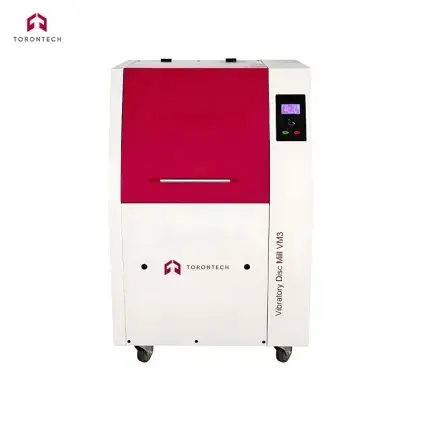
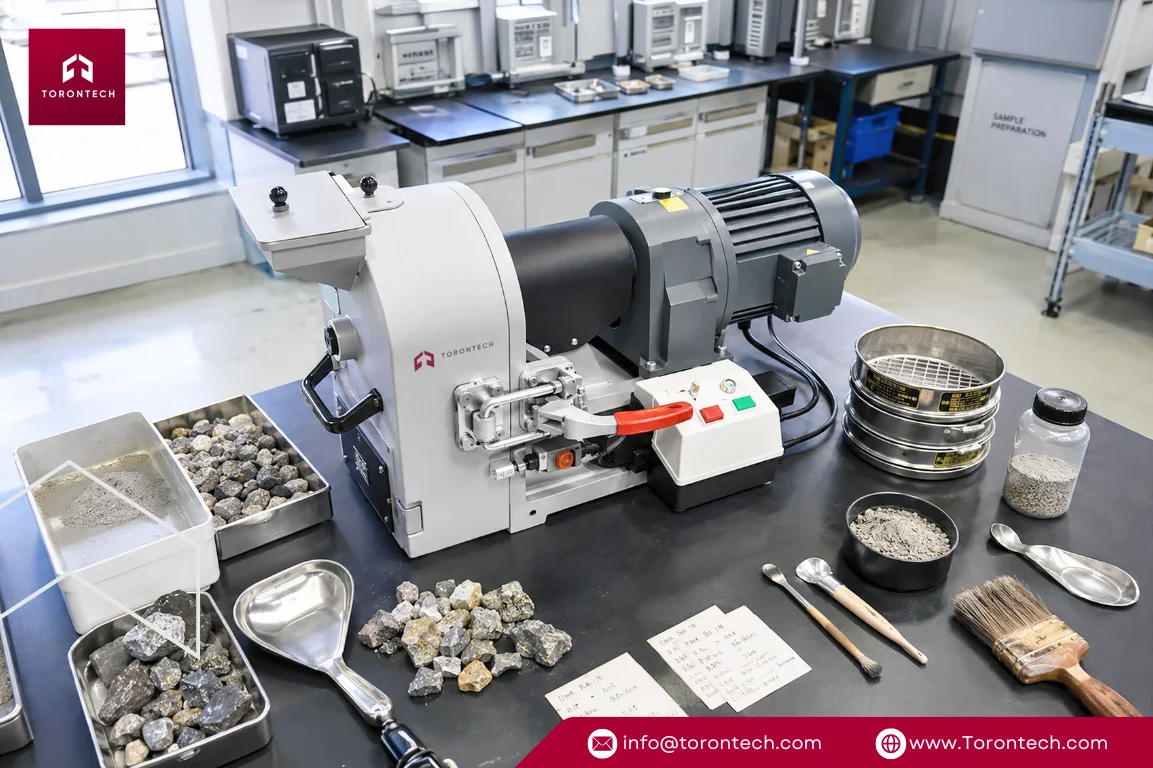
While slower milling methods require hours of processing time, high-frequency machines like our Vibratory Disc Mill VM3 operate between 700 and 1500 rpm to pulverize difficult ores into fine dust in just 60 to 180 seconds. Seriously, what facility manager would choose to delay their workflow with slower methods?
Read more: Rotatory Disc Mills vs Vibratory Disc Mills Compared
Key Industrial Applications and Performance Benefits
We regularly observe these units solving distinct, high-overhead challenges across several key sectors:
Mining and Metallurgy
Obtaining a highly uniform powder is the absolute key to precise XRF analysis of slag and ores. We consistently recommend disc mills for these operations because they handle hard, abrasive minerals in seconds without altering their chemical composition. In metals research, disc milling reduced Ti6Al4V powder size at an exceptionally fast pace, and vibratory disc milling handled larger powder quantities in shorter times than ball milling.
This high-velocity processing is a staple for geological labs mapping out copper and gold deposits in Nevada or across the mineral-rich expanses of the Canadian Shield. For this reason, facilities often rely on heavy-duty units like the Disc Mill DP100, running at 470 rpm to process <20mm feed down to <75μm.
Environmental Soil Analysis
Pulverizing soil, clay, and geological samples to detect trace heavy metals cleanly and efficiently. Laboratories must often achieve highly uniform particle sizes to comply with strict regulatory frameworks, such as the guidelines set by the Environmental Protection Agency (EPA) in the United States or the Canadian Council of Ministers of the Environment (CCME).
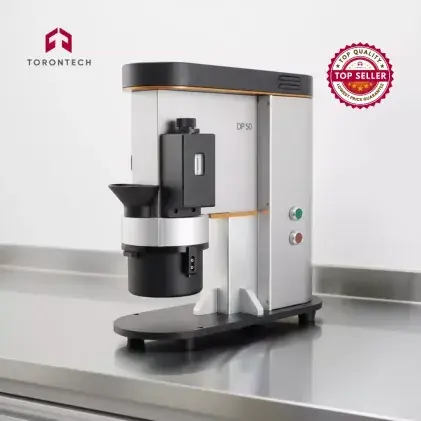
To meet these requirements, testing centers frequently deploy our Soil Mill DP50, which spins at 800 rpm to reduce <2mm dirt fragments down to <75 µm.
Glass and Ceramics
Ideal for crushing raw materials (such as quartz and feldspar) to verify purity and check quality before proceeding to full-scale manufacturing.
Construction Materials
Crushing cement clinker, brick, and asphalt to ensure structural components meet rigid building codes. Disc mills make it significantly easier to prepare consistent samples that align with North American testing protocols like ASTM (American Society for Testing and Materials) and CSA (Canadian Standards Association) requirements.
Equipment Comparison: Selecting the Right Milling Technology
While we know disc mills are exceptionally versatile, we also recognize they are not the only option on the market. In our view, evaluating these milling systems side-by-side is the most logical way to ensure you invest in the precise equipment class that matches your facility's daily workload. Academic investigations consistently show that mill performance changes based on feed properties, disc gap, disc speed, dosing rate, and blade geometry, meaning there is no single perfect disc mill for every possible sample.
| Equipment Type | Grinding Mechanism | Ideal Material Types | Typical Output Fineness |
|---|---|---|---|
| Disc Mill | Shearing & Compression | Hard, brittle, & abrasive (ores, glass, ceramics) | Analytical (< 20 – 75 µm) |
| Ball Mill | Impact & Attrition | Hard, medium-hard (ultrafine or wet grinding) | Ultrafine (< 1 – 10 µm) |
| Hammer Mill | High-Speed Impact | Fibrous, tough, & soft (coal, agricultural, plastics) | Coarse to medium (< 100 µm) |
| Jaw Crusher | Pressure/Compression | Hard, extremely hard (bulk rocks, concrete) | Primary crushed (< 2 mm) |
Disc Mill vs. Ball Mill
The physical mechanics are distinctly different. Disc mills use compression and shearing, whereas ball mills tumble heavy grinding media in a rotating chamber to fracture material. Disc mills tend to suit shear-sensitive or hard-to-impact materials significantly better than pure impact systems.
They are built primarily for speed, reducing hard, brittle materials to test-ready status in minutes. Ball mills are engineered for ultra-fine, wet, or continuous milling, which requires longer run times but yields exceptionally small particle sizes. For instance, our High Energy Ball Mill GT600 Multi/Dual operates between 60 and 2100 rpm, reducing <10 mm feed down to an incredible 100nm.
Our Verdict: We generally suggest a disc mill if you require quick prep for spectroscopic tests or applications needing strong homogenization. If your goal is continuous, sub-micron, or wet processing, we suggest evaluating our Laboratory Ball Mills.
Disc Mill vs. Hammer Mill
While disc mills rely on compression and shearing to pulverize hard, abrasive materials like minerals or glass, hammer mills use rapid, swinging beaters to shatter fibrous, elastic, or organic samples. For highly fibrous materials, our Hammer Mill CB1000 processes <5 mm feed down to a 0.2mm final fineness at speeds up to 10,000 rpm. We have written an in-depth comparison of disc mills and hammer mills that details these mechanical differences and energy-efficiency metrics.
Read more: Disc Mill vs Hammer Mill: Selecting Your Grinder
Our Verdict: In our opinion, if your facility processes tough, fibrous organic matter, a disc mill is likely to struggle. Instead, we highly suggest evaluating our heavy-duty Hammer Mill CB1000.
Jaw Crushers and Disc Mills in Sequence
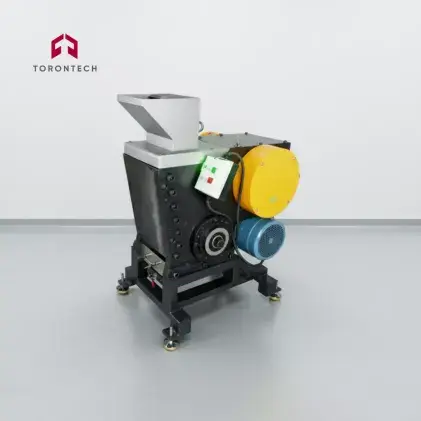
We often consult with procurement teams who believe they must choose one over the other, but they actually form an ideal operational sequence. We suggest deploying a primary reducer like our Jaw Crusher JC7 to smash massive <110mm feed material down to 95% <2mm at 740 rpm, and then utilizing a Disc Mill to complete the process, reducing those 2mm fragments to a highly uniform, analytical-grade powder.
Practical Selection Criteria for Your Configuration
Once you have determined that a disc mill is the appropriate machine for your laboratory, we believe the next step involves configuring the exact specifications that match your testing criteria. Choose a disc mill first by the sample’s breakage behavior, as shear and friction-dominant mechanisms outperform simple impact for specific solid resins, beans, and ore preparations.
Selecting the Optimal Grinding Set Material
We consider sample cross-contamination to be a primary source of analytical error. In our view, matching the plate material to your specific sample type is absolutely vital:
- Hardened Steel: Best suited for general, non-critical grinding where minor iron contamination is not an issue.
- Tungsten Carbide: Highly durable and exceptionally wear-resistant. We strongly recommend this for abrasive mining ores and slag.
- Agate or Zirconium Oxide: An absolute requirement for metal-free grinding. If your laboratory conducts trace-element analysis, we believe these materials are necessary to prevent the grinding plates from leaching trace contaminants into your samples.
Defining Target Particle Size Distribution
We suggest evaluating your starting material dimensions carefully and choosing by the target output, not merely by the mill type alone.
Studies on cereals and analytical foods indicate the main suitability criterion is whether the mill hits the required particle size distribution, since different mills produce varying shapes and functional properties. A smaller disc gap gives a finer product but raises energy demand, while higher angular speeds increase size reduction but draw more current.
Operational Safety, Maintenance, and Total Cost of Ownership
When acquiring capital equipment for an industrial laboratory, we believe your evaluation must extend beyond the performance specs. Operational safety, ease of maintenance, and long-term durability are critical factors that directly influence the total cost of ownership of the asset over its lifespan.
Laboratory Safety, Dust Abatement, and Temperature Control
We take operator safety exceptionally seriously, particularly when handling hazardous materials like silica or respirable heavy metals. Furthermore, we know that intense milling conditions can easily heat samples, potentially altering sensitive materials and biasing your analytical results.
In our view, maintaining a secure workspace is essential for staying aligned with occupational health guidelines set by OSHA in the United States and the CCOHS in Canada. We prioritize the integration of these critical safeguards:
- Safety Interlocks: Automated sensors immediately de-energize the motor if the grinding chamber is opened during operation.
- Dust-Tight Containment: Sealed grinding chambers prevent fine, hazardous dust from escaping into your laboratory air, protecting your team from inhalation hazards.
- Acoustic Insulation: High-speed grinding generates significant noise. We believe a quiet working environment is essential for operator focus, which is why we incorporate acoustic insulation into our high-capacity machines to keep sound levels well within occupational safety limits.
Ease of Maintenance and Long-Term Asset Value
In our view, a machine that is complex or time-consuming to clean will reduce your overall laboratory throughput and increase operational costs. To secure the highest return on your investment, we suggest looking for:
- Quick-Access Designs: Fast-action clamps and hinged doors allow operators to open, vacuum, and clean the chamber in seconds between runs to prevent sample carryover.
- High-Durability Components: Grinding sets constructed from premium materials (such as tungsten carbide) last far longer than standard steel, reducing replacement frequencies and minimizing downtime.
- Manufacturer Backing: Purchasing from an established supplier like Torontech ensures long-term access to technical support and replacement parts whenever you need them.
Torontech Laboratory Disc Mill Portfolio
As an established global supplier of high-precision laboratory equipment, we have configured Torontech’s Disc Mills to withstand the most demanding testing environments in the industry.
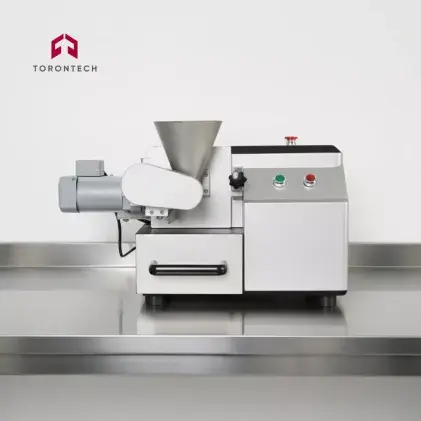
Soil Mill DP50
Engineered specifically for the environmental and agricultural sectors, we highly recommend the DP50 for processing soil samples. Utilizing an 800 rpm operational speed, it handles <2mm feed sizes seamlessly.
We believe its configuration is ideal for reducing soil to <75 µm powder without generating excessive heat that could degrade volatile elements, making it an excellent choice for commercial crop testing labs across the US Midwest and the Canadian Prairies.
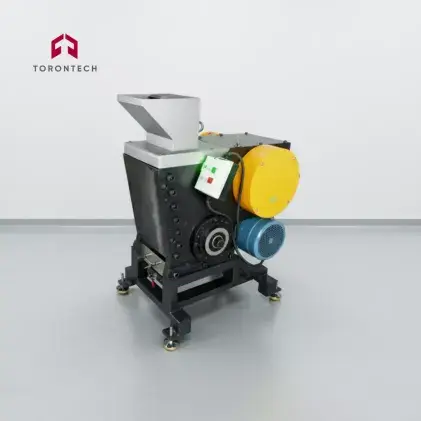
Disc Mill DP100
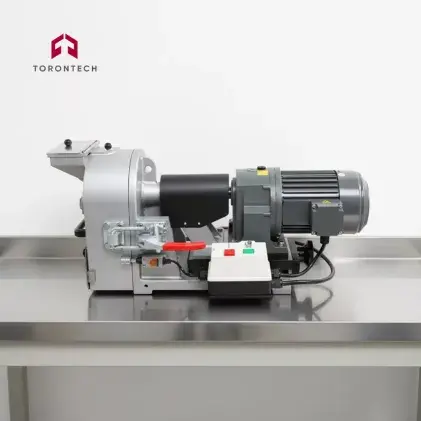
We view the DP100 as our industrial-grade workhorse. Engineered to process medium-hard to exceptionally hard, abrasive materials, it spins at 470 rpm to reduce <20mm feed to <75μm. It is widely utilized in mining facilities, metallurgical labs, and cement plants.
In our opinion, its precise gap adjustments and dependable safety features make it exceptionally reliable for high-throughput operations.
Vibratory Disc Mill VM3
When you require analytical fineness in a hurry, we believe the VM3 acts as an outstanding high-speed performer. Utilizing a high-frequency vibrating ring-and-puck configuration spinning between 700 and 1500 rpm, it reduces <15mm difficult ores to XRF-ready powders (<75μm) in seconds.
Our view is that its user-friendly interface and sound-insulated cabinet make it an excellent fit for fast-paced metallurgical testing environments.
Technical Specifications Comparison
To simplify your selection process, we have compiled this comparative overview of our premier models:
| Specification | Soil Mill DP50 | Disc Mill DP100 | Vibratory Disc Mill VM3 |
|---|---|---|---|
| Max Feed Size | < 2 mm | < 20 mm | < 15 mm |
| Final Fineness | < 75 µm (95%) | < 75 µm | < 75 µm |
| Operational Speed | 800 rpm | 470 rpm | 700 - 1500 rpm |
| Grinding Mechanism | Horizontal Disc | Vertical Disc | Vibratory Puck & Ring |
| Target Applications | Environmental, Soil, Agriculture | Mining, Cement, Heavy Industry | Rapid XRF Prep, Minerals, Ceramics |
Achieve Analytical Accuracy with Torontech Mills
We firmly believe that correct, consistent sample preparation provides the foundation for analytical results you can actually rely on. A highly practical way to select your equipment is to run a short benchmark test on your actual sample, comparing the throughput, energy draw, and reproducibility against your specific method requirements.
By selecting the appropriate mill and matching the grinding plates to your material, you can eliminate cross-contamination, accelerate your daily throughput, and secure highly accurate data.
Our Laboratory Milling/Grinding lineup is configured to deliver the exact performance you need to run your operations efficiently, supplying standalone Disc Mills, Ball Mills, and integrated jaw-to-disc preparation sequences.
References (Click to expand)
- Aranda, R. M., Astacio, R., Urban, P., Aranda, B., & Cuevas, F. G. (2024). Milling amorphous FeSiB ribbons with vibratory ball and disc mills. Powder Technology.
- Bassey, J., Odesola, I. F., & Olawuyi, J. A. (2022). A Comparative Technique for Performance Evaluation of Hammer Mill and Disk Mill in Yam Flour Processing. World Journal of Engineering and Technology.
- Becker, A., Hill, S., & Mitchell, J. (2001). Milling—A Further Parameter Affecting the Rapid Visco Analyser (RVA) Profile. Cereal Chemistry, 78, 166-172.
- Dan, A., Kotamarthy, L. V. G., & Ramachandran, R. (2022). Understanding the effects of process parameters and material properties on the breakage mechanisms and regimes of a milling process. Chemical Engineering Research and Design.
- Daniel, L., Clarke, B. R., & Parsons, D. (2019). Performance of Sample Preparation for Determination of Gold in Samples of Geological Origin. Geostandards and Geoanalytical Research, 43.
- Dikici, T., & Sutcu, M. (2017). Effects of disc milling parameters on the physical properties and microstructural characteristics of Ti6Al4V powders. Journal of Alloys and Compounds, 723, 395-400.
- Fernando, S., & Manthey, F. (2022). Effect of different mills on the physical and flow properties of selected black bean flour particle size fractions. Cereal Chemistry.
- Kamo, R., Takaya, Y., Okuyama, K., Iwamoto, M., Sekine, Y., & Tokoro, C. (2024). DEM-CFD study with a breakage model for elucidating the grinding mechanism in cutter-type disk mill. Powder Technology.
- Kruszelnicka, W., Opielak, M., Ambrose, K., Pukalskas, S., Tomporowski, A., & Walichnowska, P. (2022). Energy-Dependent Particle Size Distribution Models for Multi-Disc Mill. Materials, 15.
- Kruszelnicka, W., Hlosta, J., Diviš, J., & Gierz, Ł. (2021). Study of the Relationships Between Multi-Hole, Multi-Disc Mill Performance Parameters and Comminution Indicators. Sustainability, 13.
- Kulyk, S., Shcherbakova, O., Kobernyk, M., & Melnykov, O. (2025). Determination of the moisture content of cereals. Influence of the mill type on determination results. Measurements Infrastructure.
- Smidt, E., Meissl, K., & Tintner, J. (2008). The influence of waste sample preparation on reproducibility of thermal data. Thermochimica Acta, 468, 55-60.
- Stoloff, L., Campbell, A. D., Beckwith, A. C., Nesheim, S., Winbush, J., & Fordham, O. M. (1969). Sample preparation for aflatoxin assay: The nature of the problem and approaches to a solution. Journal of the American Oil Chemists’ Society, 46, 678-684.
- Xing-Zhi, C. (2012). Disc Mill Disc and Gold Ore Sample Preparation Processing Analysis.
- Zulbeari, N., Kristensen, L. U., Mende, S., & Holm, R. (2024). Temperature mapping of milling by dual centrifugation: A systematic investigation. International Journal of Pharmaceutics.