Disc Mill vs Hammer Mill: Selecting Your Grinder
Far too many operations treat sample grinding hardware as an afterthought, risking analytical failures on poorly prepared, uneven samples. When choosing a disc mill versus a hammer mill, the key differences often come down to balancing particle-size control, processing capacity, and energy consumption.
To satisfy rigorous ASTM or CSA guidelines, your facility needs a reliable setup that delivers consistent, uniform samples without wasting time. Our quick comparison table below outlines the ideal fit for your operations.
Quick-Reference Comparison Table
To give you an immediate, clear overview of the hammer mill versus disc mill comparison, here is how we break down their core specifications:
| What You Want to Know | Torontech Disc Mills (Soil Mill DP50, DP100, VM3) | Torontech Hammer Mill (CB1000) |
|---|---|---|
| Primary Grinding Mechanism | Friction, shearing, and intense compression forces | High-speed, aggressive dynamic impact |
| Maximum Feed Size | Up to 20 mm (depending on the variant) | Typically under 5 mm |
| Achievable Final Fineness | Ultra-fine particle reduction (under 75 µm) | Highly consistent fine grinding (~0.2 mm) |
| Thermal Influence on Samples | Moderate heat generation due to continuous friction | Minimal thermal impact due to rapid continuous airflow |
| Target Material Suitability | Hard, tough, fibrous, and highly abrasive materials | Brittle, semi-hard, and temperature-sensitive materials |
| Primary Operational Objective | Extreme sample homogeneity and ultra-fine processing | Rapid high-capacity processing of larger batch sizes |
The Core Mechanics and Applications of the Disc Mill
Let’s talk about the disc mill (or disk mill, if you prefer). This machine is built with an exceptionally heavy-duty and long-lasting construction, engineered for aggressively reducing medium-hard, rock-solid, and highly fibrous materials.
- How it actually does the job: It is beautifully simple. You feed your material into a tiny gap between two heavily textured plates, where one stays totally still while the other spins at high velocity. Instead of relying on impact, this setup depends heavily on intense shearing and cutting forces in the gap between the grinding discs, making the adjustable gap setting a key determinant of your final particle-size distribution.
- Where it absolutely shines: We are going to say it loud and clear. The disc mill is the unsung hero of absolute analytical precision. Whether you are running continuous grinding in a pilot plant or rapid batch processing, this setup delivers highly reproducible results with absolutely minimal contamination.
- Typical industry applications: Mineral processing sites working with core samples from the mineral-rich Canadian Shield, metallurgical testing facilities for the aerospace sector, geological research operations, and advanced ceramic production.
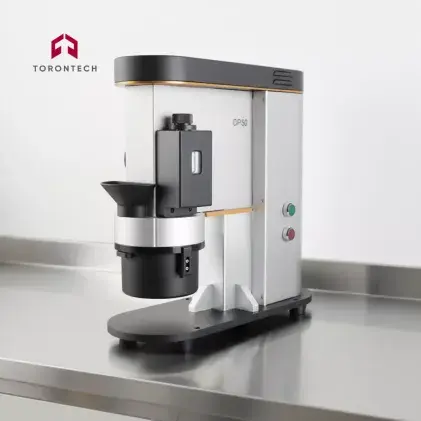
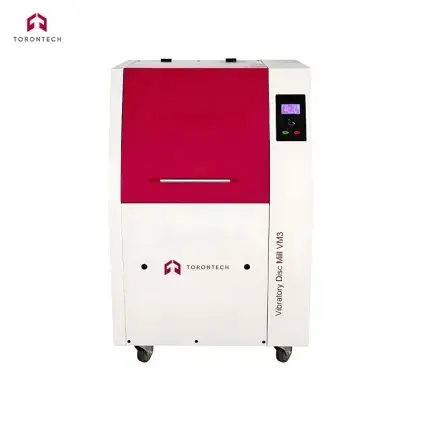
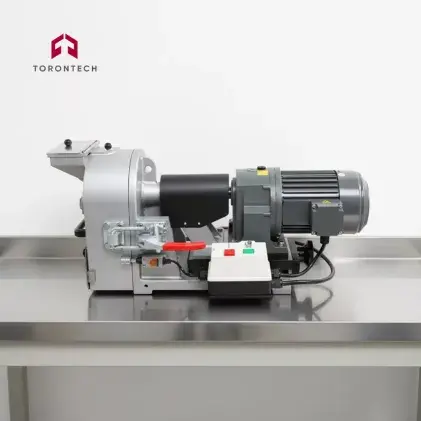
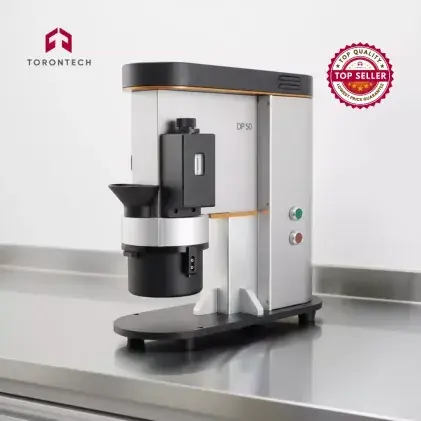
For instance, our Disc Mill DP100 effortlessly handles massive chunks measuring up to 20 mm while running at a steady 470 rpm. If you need something for slightly smaller feeds, the Soil Mill DP50 runs at 800 rpm to process pieces under 2 mm, ensuring 95% of the final product is strictly under 75 µm. Alternatively, the Vibratory Disc Mill VM3 handles inputs under 15 mm and offers adjustable speeds ranging from 700 to 1,500 rpm.
Related article: Rotatory Disc Mills vs Vibratory Disc Mills Compared
Because they get things down to a ridiculously tiny particle size, we believe they are an absolute necessity for preparing materials for strict analytical testing, especially when laboratories must satisfy rigorous ASTM or CSA guidelines. These machines are exceptionally efficient for breaking down fibrous biomaterials and offer noticeably narrower size bands than impact-based grinders. In fact, tests evaluating hotong flouring showed that the disc mill yielded the highest return of usable material and the lowest amount of scattered losses.
Evaluating the Performance and Mechanics of the Hammer Mill
Instead of squeezing and rubbing, the hammer mill uses pure, high-velocity dynamic impact to aggressively reduce particle size.
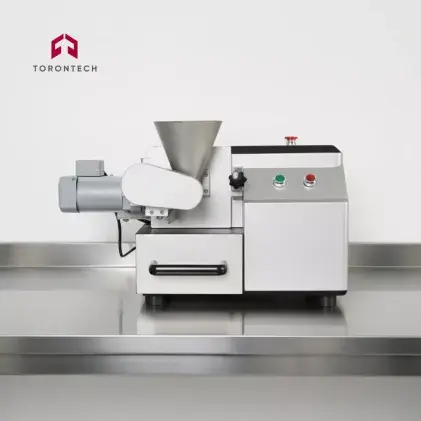
- How it actually does the job: You feed your sample through a highly efficient patented feeding hopper into the middle of the grinding chamber, where it meets a spinning rotor going at an incredibly high speed. Take our Hammer Mill CB1000, for example. It is equipped with a 1.2 KW rated motor that achieves an impressive rotor peripheral velocity of 76.3 meters per second. These steel hammers repeatedly bash the material, ultimately forcing the shattered particles through a metal screen (getting the output down to roughly 0.2 mm, depending on the bottom sieve you select). Because of this design, the chosen screen size and the rotor speed strongly control the final product output.
- Where it absolutely shines: In our honest opinion, if your main operational requirement is getting through massive piles of samples as fast as humanly possible, this machine is often the first choice for general size reduction and is widely utilized in laboratory and pilot work. While the CB1000 can hit a maximum speed of 10,000 rpm, operators can easily utilize its adjustable speed settings ranging from 500 to 3,000 rpm to suit different materials.
- Typical industry applications: High-volume agricultural crop testing across the US Midwest, food processing facilities, environmental soil analysis, and electricity-generating facilities (ideal for coal, coke, soil, glass, refractory clay, oxide, porcelain, and granite).
During comparative studies involving dried yam processing, researchers found that while a disc mill produced finer particles, it used far more energy, allowing the hammer mill to score much better overall on a general performance index. In the energy sector, industrial laboratories frequently utilize these mills to prepare Appalachian or Western Canadian coal samples for thermal testing.
Furthermore, in the hotong flouring tests, the highest processing capacity came from a hammer mill running at 4,330 rpm, which also successfully passed considerably more fine flour after 80-mesh sieving compared to the alternative options. Plus, because it draws air through the chamber, it stays incredibly cool. This quick, low-heat milling process makes it an absolute dream for highly temperature-sensitive samples that would normally melt or get sticky.
Evaluating Operational Costs: Cleaning and Maintenance Considerations
We firmly believe that the cheapest piece of equipment to buy is almost never the cheapest one to keep functioning in your facility. That is why we always encourage operations to look at the long-term running costs, especially for daily cleaning procedures and routine maintenance schedules.
Managing the Wearing Parts
Disc mills go through a massive amount of intense friction, which means those grinding plates need to be manufactured from incredibly resilient materials like tungsten carbide so they do not wear out in a single week.
Hammer mills, conversely, rely entirely on the internal hammers and bottom screens taking a severe beating. We think you should always look for a machine where your operators can swap these wearing parts out in a matter of seconds without needing a complex toolbox.
Dealing with Leftover Dust
Cross-contamination is an absolute nightmare for any testing facility. Hammer mills are fantastic here because they blow almost everything out of the chamber, leaving barely any leftover dust behind. The Hammer Mill CB1000 completely shines in this regard, offering incredibly easy removal and re-installation of the rotating knife, bottom sieve, and hopper, which makes cleaning the internal chamber an absolute breeze.
Disc mills require a bit more effort. Since they generate such microscopic powder, your team will spend more time with a specialized vacuum and a cleaning brush. Honestly, we think having a grinding chamber that swings wide open is one of the most satisfying mechanical features you can get on a modern machine.
Operator Safety and Laboratory Environmental Controls
Seriously, what kind of safety-minded director wants their team working in a loud, dusty room with machinery spinning at 10,000 RPM? We believe a highly productive facility is, first and foremost, a completely safe facility, and integrated safety features should never be treated like a boring optional extra. High-quality emission and hazard controls are essential for complying with strict OSHA regulations in the United States, CCOHS guidelines in Canada, and stringent EPA air quality standards.
Keeping Things Locked Down
High-speed spinning hammers can be incredibly dangerous if something goes mechanically wrong. That is why we think proper electronic safety locks are absolutely non-negotiable. For example, the Hammer Mill CB1000 features a dedicated electric safety switch that physically prevents the device from starting when the door is even slightly open.
We also highly recommend machines equipped with a large touchscreen panel, allowing operators to enjoy a highly user-friendly interface and manage speed adjustments without fumbling with complicated physical dials.
Dampening Vibrations and Collecting Dust
Grinding rocks generates a lot of loud noise and a massive amount of airborne dust. The best machines feature heavy, sound-dampened external housings to keep the racket down. Plus, we always suggest choosing a specialized setup that plugs directly into your central dust vacuum system so your staff is not breathing in a cloud of crushed rock all day.
Our Analysis: Which Mill Best Fits Your Operations?
If you ask our team to settle the hammer mill versus disc mill showdown once and for all, our advice heavily depends on your daily operational priorities:
- If your goal is general-purpose laboratory milling, hammer mills usually offer the more practical balance of features. They provide massive capacity and easy control through interchangeable screens, though you do have to watch out for excess fine dust and potential capacity drops when using very small screens.
- On the other hand, if your goal requires finer shear-dominated grinding on dry materials, a disc mill is an incredibly attractive option. They are perfect for highly shear-sensitive materials and deliver potentially narrow particle size distributions, provided you are prepared to manage a smaller operating volume, potential clogging risks, and higher energy requirements for extremely fine grinding.
Related article: Why Choose Laboratory Disc Mills for Prep
Get the Ideal Torontech Grinding Setup
At Torontech, we provide cost-effective solutions and innovative technologies to keep your facility running smoothly without draining your budget. Supporting laboratories from the agricultural Canadian Prairies to the heavy industrial belts of the United States, we are proud to be a highly dependable, local North American partner.
If you want to experience incredibly consistent, uniform batches of testing samples, look at our lineup of Laboratory Milling/Grinding today or contact our team for a quick quote. We would love to help you find the absolute perfect match for your facility.
References (Click to expand)
- Ämmälä, A. (2023). Comparison of Pin Mill and Hammer Mill in the Fine Grinding of Sphagnum Moss. Energies.
- Arce, C., & Krátký, L. (2022). Mechanical pretreatment of lignocellulosic biomass toward enzymatic/fermentative valorization. iScience, 25.
- Bassey, J., Odesola, I. F., & Olawuyi, J. A. (2022). A Comparative Technique for Performance Evaluation of Hammer Mill and Disk Mill in Yam Flour Processing. World Journal of Engineering and Technology.
- Hajratwala, B. (1982). Particle size reduction by a hammer mill I: Effect of output screen size, feed particle size, and mill speed.. Journal of pharmaceutical sciences, 71 2, 188-90.
- Kruszelnicka, W., Opielak, M., Ambrose, K., Pukalskas, S., Tomporowski, A., & Walichnowska, P. (2022). Energy-Dependent Particle Size Distribution Models for Multi-Disc Mill. Materials, 15.
- Lomovskiy, I., Bychkov, A., Lomovsky, O., & Skripkina, T. (2020). Mechanochemical and Size Reduction Machines for Biorefining. Molecules, 25.
- Lyu, F., Thomas, M., Hendriks, W., & Poel, A. (2020). Size reduction in feed technology and methods for determining, expressing and predicting particle size: A review. Animal Feed Science and Technology, 261, 114347.
- Niu, G., Zhang, T., Cao, S., Zhang, X., & Tao, L. (2023). Effect of Corn Grinding Methods and Particle Size on the Nutrient Digestibility of Chahua Chickens. Animals : an Open Access Journal from MDPI, 13.
- Sutejo, A., Kurniasari, R. S., & Wicaksono, D. D. (2023). Uji Performansi Mesin Penepung Tipe Palu (Hammer Mill) Untuk Penepungan Hotong (Setaria Italica L.). Jurnal Agricultural Biosystem Engineering.