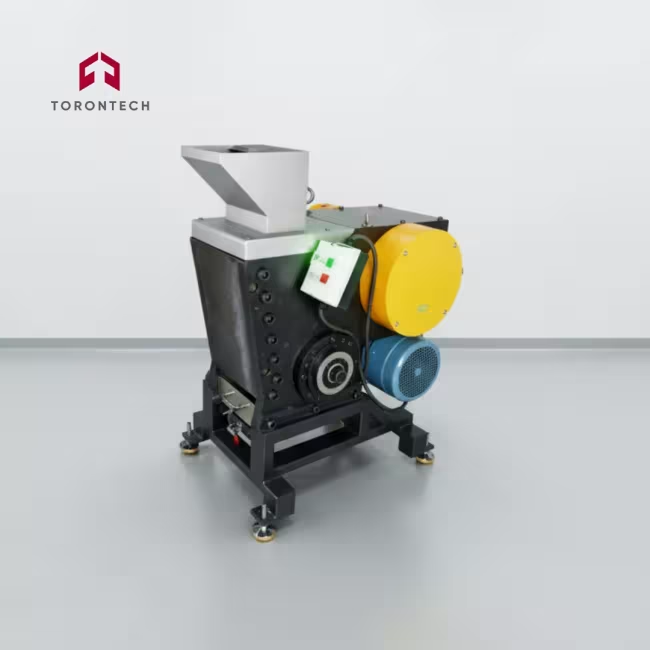
Applications Across Industries
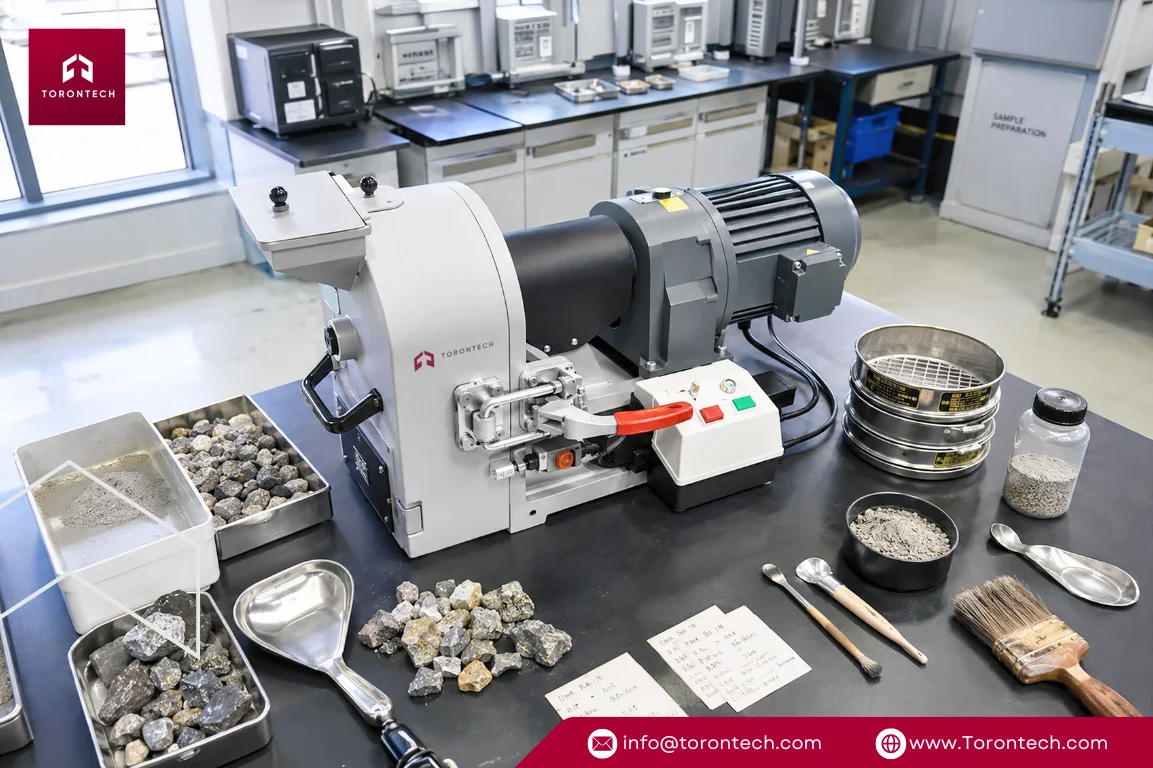
Our jaw crushers are suitable for various materials, including:
- Mining & Metallurgy: ores, coal, slag, coke, niobium, titanium alloys, vanadium iron, chrome vanadium, tungsten carbide
- Chemical Industry: pre-treatment of chemical raw materials for further analysis
- Geology & Mineralogy: rocks, granite, basalt, barite, silicates
- Ceramics: talc, sintered clay, electric ceramics
- Construction Materials: bauxite, quartz, cement, slag bricks

Working Principle of Jaw Crushers
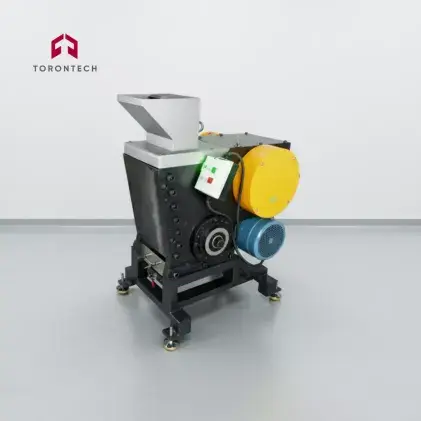
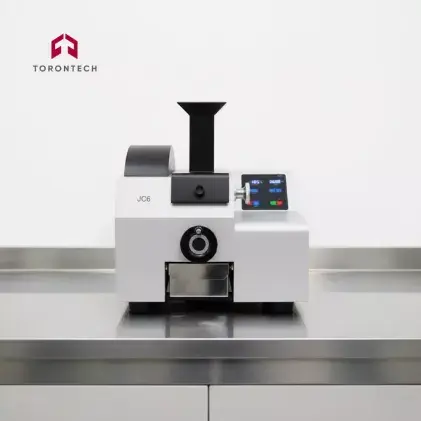
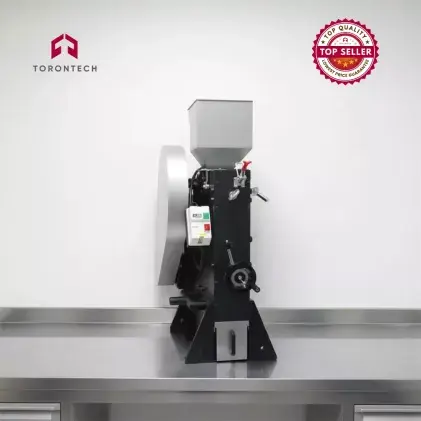
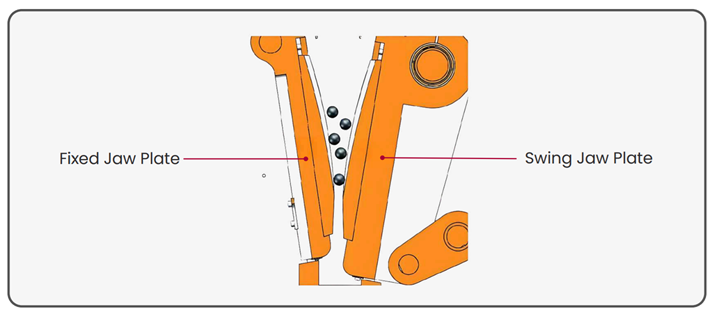
All Torontech jaw crushers operate based on a wedge-shaped crushing chamber. Samples are fed through an anti-splash hopper into the chamber. One jaw remains fixed, while the other is driven by a curved axle, moving in an elliptical pattern powered by a continuously rotating motor.
This motion creates a strong squeezing force, reducing sample size efficiently. Once the material reaches a size smaller than the discharge gap, it falls into a secure collection drawer.
This design ensures:
- Consistent size reduction
- Gravity-assisted discharge
- Minimal sample contamination
- Easy cleanup and operation
Frequently Asked Questions (FAQ) - Jaw Crushers
What is a Jaw Crusher?
A jaw crusher is a mechanical device used for crushing hard, brittle, and tough materials. It operates by compressing material between a fixed jaw and a moving jaw, forming a V-shaped chamber. As the moving jaw exerts force on the material, it breaks into smaller pieces, which then fall through the discharge opening.
What is a jaw crusher used for?
A jaw crusher is used for the primary size reduction of hard, brittle, and tough materials. It is commonly used in laboratories, mining, metallurgy, geology, ceramics, chemicals, and construction industries. Jaw crushers break down large samples into smaller pieces for further analysis or processing.
What are the advantages of a jaw crusher?
- High crushing efficiency
- Wide material compatibility (ores, ceramics, slag, coal, etc.)
- Simple structure with easy maintenance
- Available in both desktop and floor-standing models
- Adjustable gap for precise final fineness
- Multiple jaw plate material options to reduce contamination
What are the disadvantages of a jaw crusher?
- Not suitable for very soft or sticky materials
- Produces more dust compared to other crushers
- Final particle size may require secondary milling
- Larger models require more space and installation setup
How do I select the right jaw crusher model?
Choose based on:
- Feed size and final fineness requirements
- Sample type (hardness, abrasiveness)
- Throughput capacity
- Space constraints (desktop vs. floor models)
- Contamination concerns (jaw plate material options)
Compare Jaw Crusher Models
Side-by-side overview of Torontech laboratory jaw crushers for primary size reduction of hard, brittle, and tough materials across mining, geology, ceramics, chemicals, and construction workflows.
Torontech Jaw Crushers
| Feature | Jaw Crusher JC7 | Jaw Crusher JC6 | Jaw Crusher JC5 |
|---|---|---|---|
| Primary purpose | Primary crushing for hard, brittle, and tough materials with efficient size reduction | Primary crushing for lab sample preparation with reliable, repeatable output | Primary size reduction for routine lab workflows and sample prep |
| Best for | Labs needing strong crushing performance for demanding materials and frequent use | General lab crushing where balanced throughput and control are needed | Routine sample preparation where a practical primary crusher is required |
| Typical industries | Mining & metallurgy, geology, ceramics, chemicals, construction materials | Mining & metallurgy, geology, mineralogy, chemical pretreatment, ceramics | Geology & mineralogy, chemicals, ceramics, construction materials |
| Compatible materials | Ores, coal, slag, coke, rocks, granite, basalt, quartz, ceramics (application dependent) | Hard and brittle lab materials needing primary reduction (application dependent) | Hard / brittle samples for routine primary crushing (application dependent) |
| Typical role in workflow | Primary crusher before secondary milling or fine grinding | Primary crusher to bring large samples into manageable size for downstream steps | Entry-level or routine primary crushing step before finer processing |
| Key advantages | Efficient size reduction, adjustable discharge gap, minimal contamination options | Reliable operation, adjustable gap for target fineness, easy cleanup | Simple operation, broad material compatibility, good for recurring lab use |
| Contamination control | Jaw plate material options available to reduce contamination (workflow dependent) | Jaw plate options help align with analysis requirements (workflow dependent) | Jaw plate options support different sample types and contamination needs |
| How to choose | Choose when you need the highest performance option for demanding materials or higher usage | Choose when you want a balanced model for general lab crushing and repeatable results | Choose when you need a dependable primary crusher for routine sample prep |
| Selection tip | If your materials are harder, more abrasive, or your throughput needs are higher, start here | If you want a solid all-rounder for typical lab workflows, this is a safe choice | If you are setting up basic sample prep or have moderate volume, this is a practical baseline |
1. Wedge-Shaped Crushing Chamber
A fixed jaw and a moving jaw form a wedge-shaped chamber that squeezes material with strong, repeatable force for efficient size reduction.
2. Adjustable Discharge Gap
The gap between the jaws sets the final particle size. Adjusting it lets one crusher produce a range of output sizes from a single feed.
3. Hard and Brittle Material Capability
The crusher handles tough samples such as ores, rock, slag, ceramics, and refractory materials, which makes it suitable for mining, geology, and construction labs.
4. Anti-Splash Hopper and Collection Drawer
An enclosed feed hopper and a secure collection drawer keep crushed material contained, which reduces sample loss and keeps the workspace clean.
5. Low-Contamination Jaw Plates
Wear-resistant jaw plate options, such as manganese steel or tungsten carbide, support long service life and limit contamination of sensitive samples.
6. Continuous-Duty Drive
A continuously rotating motor drives the moving jaw through a curved axle, delivering steady throughput for routine sample preparation.