Choosing the Right Tool: Cutting Mill vs Crusher Guide
Precision in sample preparation is the bedrock of reliable analysis. For many lab professionals, the critical choice lies between two distinct technologies: Cutting Mills for soft, fibrous materials and Crushers for hard, brittle samples.
In our professional assessment, selecting the wrong equipment risks machine damage and flawed data; this guide ensures you choose the right cost-effective, innovative solution for your facility.
Key Takeaways
- Material Suitability: Jaw crushers are essential for hard, brittle, and abrasive materials like rocks and minerals, while cutting mills are the primary choice for soft, fibrous, and elastic samples such as plastics and biomass.
- Mechanism Difference: Crushers use compressive force and impact to fracture samples, whereas cutting mills utilize high-speed shearing to slice materials with precision.
- Analytical Quality: Cutting mills produce fewer fines and generate less heat, making them ideal for temperature-sensitive samples or recovery of ductile metals.
- Operational Efficiency: Torontech innovative designs focus on zero cross-contamination through tool-free chamber access and high durability for continuous heavy-duty use.
- Comprehensive Workflow: For complex analytical needs, a two-step approach using a jaw crusher for primary reduction followed by a fine-grinding mill ensures optimal results and equipment longevity.
The Crusher: The Heavy Hitter for Hard Materials
Crushers are the "sledgehammers" of the laboratory world. They are typically used for the primary size reduction of hard, brittle, and medium-hard materials.
How It Works
Crushers, such as our Jaw Crushers, operate mainly through pressure and impact.
The material is fed into a chamber where it is compressed between two solid surfaces, one stationary and one moving. This immense force fractures the material, effectively breaking it down into smaller, coarser particles.
However, it is worth noting that while compressive force is effective for hard materials, it can generate significant fines and micro-fractures, which may impact the quality of mineral liberation or recycled aggregates.
Best For:
- Hard & Brittle Materials: Rocks, ores, minerals, glass, ceramics, and construction materials. (Common samples: Granite, Basalt, Clinker, Slag).
- Abrasive Samples: Unlike cutting mills, which dull quickly on silica or hard metals, crushers are designed to withstand high-wear environments with minimal maintenance.
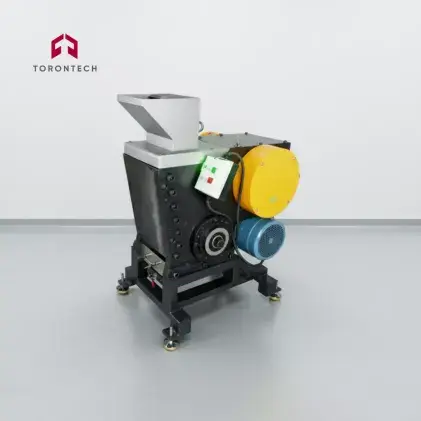
- Primary Reduction: Reducing large chunks into a size suitable for secondary fine grinding in a ball mill or disc mill. Models like the Torontech Jaw Crusher JC5 are specifically engineered for this stage, capable of handling feed sizes up to 90mm and reducing them efficiently.
- Continuous Heavy-Duty Operation: For labs processing high volumes of geological or industrial waste samples daily, the robust simplicity of a crusher offers superior uptime compared to more complex mills.
We believe that if your operations involve geology, metallurgy, or building materials, a robust crusher is your essential first line of defense. In our view, a high-quality crusher should not only be powerful but also engineered for long-term industrial durability.
Furthermore, modern innovations in frugal engineering allow for the design of jaw crushers that maintain high safety and functionality while reducing material use, supporting more sustainable operations.
The Cutting Mill: Precision for Soft and Fibrous Samples
While a crusher relies on brute force, we view our Cutting Mill as a tool of sharp precision. These machines are engineered to handle materials that are too tough, elastic, or sensitive to be processed by pressure alone.
How It Works
Cutting mills reduce particle size through shearing and cutting forces. Inside the chamber, a rotor equipped with sharp knives spins at high speed against stationary cutting bars. The material is sliced, much like a pair of industrial shears, until it passes through a bottom sieve that determines the final fineness.
Because cutting mills use rotating blades to shear rather than crush, they tend to produce fewer fines and can preserve ductile metals, such as copper or gold, in the fine fraction.
Best For:
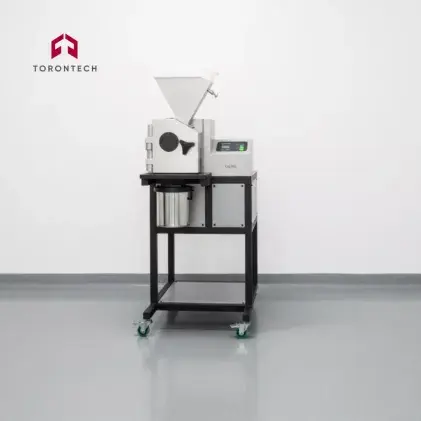
- Soft, Elastic, & Fibrous Materials: Plastics, rubber, leather, paper, textiles, biomass, wood, and animal feed. (Common samples: PET bottles, leather scraps, dried herbs, electronic circuit boards). Standard units like the Cutting Mill CM200 excel here, processing WEEE/RoHS plastics and biomass without fusing the sample.
- Temperature-Sensitive Samples: The shearing action generates significantly less heat than crushing friction, preserving the integrity of heat-sensitive compounds.
- Heterogeneous Mixtures: Waste and secondary fuels often contain a mix of materials that cutting mills process with high efficiency.
- RoHS & WEEE Compliance Testing: Essential for preparing electronic components. In printed circuit board recycling, cutting mills have demonstrated high efficiency, yielding up to 58% purity of liberated components with minimal dust generation.
- Controlled Particle Size Distribution: By using defined bottom sieves, cutting mills allow you to strictly control the maximum particle size, ensuring consistency for extraction or combustion analysis.
We note that attempting to process rubber or tough polymers in a Jaw Crusher is generally ineffective, as the material will simply deform and rebound. A Cutting Mill, however, will efficiently slice it into a homogenous powder ready for analysis.
Cutting Mill vs. Crusher: At a Glance
| Feature | Crusher (e.g., Jaw Crusher) | Cutting Mill |
|---|---|---|
| Mechanism | Pressure & Impact | Shearing & Cutting |
| Material Type | Hard, Brittle, Abrasive | Soft, Fibrous, Elastic, Tough |
| Typical Feed | Rocks, Glass, Ceramics | Plastics, Biomass, Electronic Parts |
| Primary Goal | Coarse/Pre-crushing | Fine grinding/Homogenization |
Industry Applications: Strategic Implementation
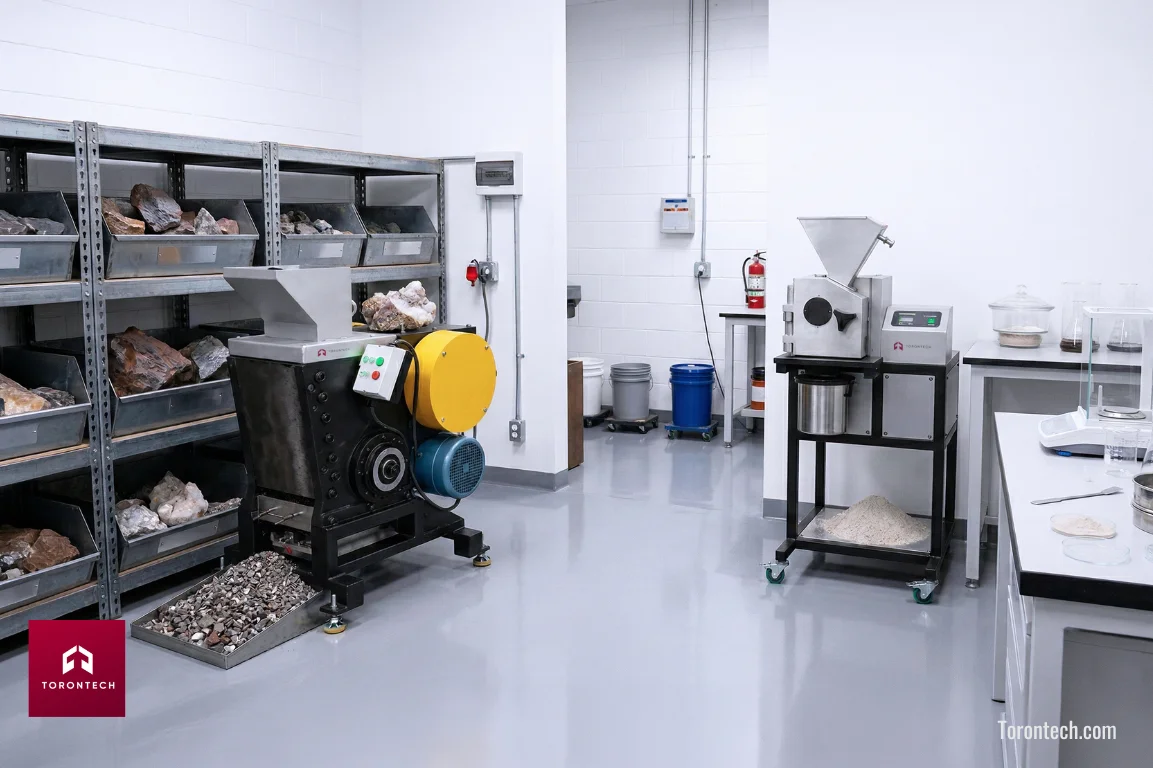
To assist in your selection process, here is how we typically see different sectors utilizing these technologies:
Mining, Geology & Metallurgy
These industries almost exclusively utilize Crushers for the initial breakdown of core samples, coal, and slag. In our experience, a typical task involves reducing geological core samples using a Jaw Crusher (JC Series) to determine mineral content.
From an operational standpoint, optimizing parameters in these units can achieve significant power savings in industrial plants.
Pharmaceuticals & Agriculture
These sectors rely on Cutting Mills to process medicinal plants, seeds, and animal feed. We believe this is the most reliable method to avoid degrading active ingredients through thermal exposure. Common tasks include homogenizing dried medicinal herbs for potency testing or preparing tablet coatings for quality control.
Plastics & Recycling
Facilities in this space utilize Cutting Mills to granulate PET, tires, and electronic waste (PCBs). For instance, shredding circuit boards to recover precious metals or granulating plastic waste using the CM200 for melt flow indexing are standard procedures.
Research indicates cutting mills are particularly suited for this because they offer delicate shearing with reduced dust.
Construction & Civil Engineering
This industry employs Crushers to test the compressive strength and chemical composition of concrete, asphalt, and cement clinkers. We often observe this technology used for crushing cured concrete cylinders to assess structural integrity, though care must be taken regarding the aggregate properties produced.
Environmental Science
A dual approach is common here; Crushers are used for soil and geological surveys, while Cutting Mills are essential for preparing sludge, biomass, and heterogeneous waste for toxicity testing.
Food & Chemical Technology
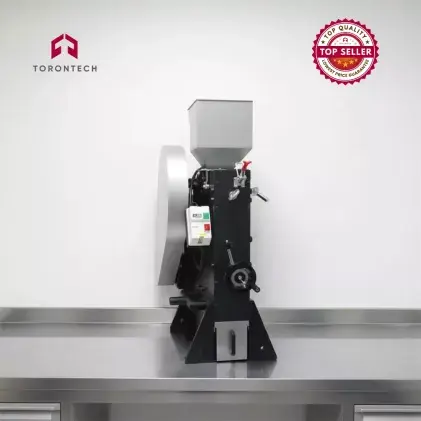
Knife Mills (such as the HM100) are often the standard for homogenizing dried foods, spices, and fibrous chemicals. This approach ensures that the nutritional or chemical composition remains unaltered during the preparation process.
3-Point Selection Checklist
Before finalizing a procurement decision, we suggest evaluating these three critical factors:
- What is the "Mohs" Hardness? If the material is high on the Mohs scale, such as quartz or granite, a crusher is required. If it is fibrous or elastic, we recommend a cutting mill.
- What is your Required Final Fineness? Crushers generally produce coarse material in the millimeter range. If your protocol requires fine powder from soft material, a cutting mill with a fine sieve is the logical choice.
- Is Moisture or Thermal Sensitivity a Concern? In our experience, wet or heat-sensitive samples often cause clogging in crushers. A cutting mill with high airflow or cryo-cooling capabilities is the superior technical choice.
The "Two-Step" Solution: Optimized Workflows
It is important to recognize that for many analytical processes, a single machine may not suffice. If you are starting with large, hard ores but require a fine powder for X-ray fluorescence (XRF) analysis, we often suggest a two-step process:
- Step 1 (Pre-Crushing): Utilize a Jaw Crusher (JC Series) to reduce 2-inch samples down to 2-4mm.
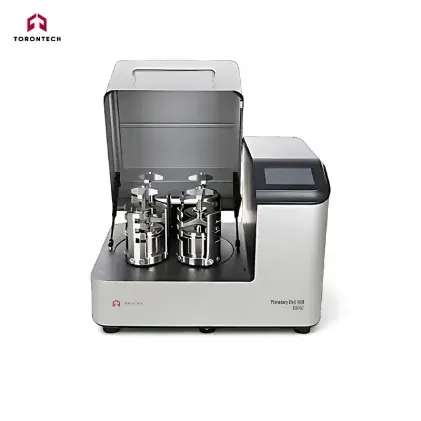
- Step 2 (Fine Grinding): Feed that pre-crushed material into a Planetary Ball Mill or Disc Mill to achieve analytical fineness (<100 µm).
We believe that understanding this workflow is essential to prevent overloading fine-grinding equipment, which ultimately reduces long-term maintenance costs and downtime.
Why Torontech?
At Torontech, we understand that modern laboratories face a dual challenge: the need for high-precision results and the pressure of optimizing operational budgets. We do not believe you should have to sacrifice performance for affordability.
We support the North American and global market with a comprehensive range of Sample Preparation Technology solutions. In our view, these innovative features solve the most common operational challenges in the lab:
- Zero Cross-Contamination: Our Cutting Mills and Crushers feature tool-free chamber access and smooth, stainless steel interiors. We believe this is a critical feature for regulated environments requiring rapid, thorough decontamination.
- Advanced Safety & Control: Equipped with digital speed controls and electronic safety interlocks, our machines ensure operator safety and highly reproducible results.
- Torontech Jaw Crushers (JC Series): Engineered for demanding environments, offering rapid pre-crushing with varied jaw sets to prevent unwanted sample contamination.
- Torontech Cutting Mills (CM Series): Designed for versatility, featuring customizable rotor speeds to accommodate everything from heat-sensitive polymers to tough biomass.
Torontech: Precision Cutting & Crushing Solutions
The choice between a cutting mill and a crusher is dictated by the physical properties of your sample. Hard and brittle demands a crusher; soft and fibrous demands a cutting mill.
However, in our professional opinion, the choice of vendor should be dictated by long-term value and technical support.
If you are looking to enhance your laboratory capabilities with equipment that blends innovative technology with a cost-effective price point, Torontech is your strategic partner. We don't just provide equipment; we believe we offer the competitive edge your facility needs to operate efficiently and economically.
Ready to find the perfect fit for your lab? Explore our full range of Laboratory Milling and Grinding solutions here or contact our team today to discuss how we can optimize your sample preparation process.
References:
- Arfoa, A., Alsafasfeh, A., Al-Qutimat, A., Awwad, A., Assolie, A., Dwairi, R., & Alshabatat, N. (2025). Power optimization in mill plant design: Theoretical analysis and AggFlow simulation. Mining of Mineral Deposits.
- Bacher, J., Rintala, L., & Horttanainen, M. (2022). The effect of crusher type on printed circuit board assemblies’ liberation and dust generation from waste mobile phones. Minerals Engineering.
- Krishnan, A., & Rao, B. (2025). Frugal engineering of a jaw crusher using the factor-of-frugality, a modern version of the safety-factor. PLOS One.
- Ulsen, C., Tseng, E., Angulo, S., Landmann, M., Contessotto, R., Balbo, J., & Kahn, H. (2018). Concrete aggregates properties crushed by jaw and impact secondary crushing. Journal of Materials Research and Technology.