Brake Fluid & Engine Coolant Testing Equipment
Brake Fluid & Engine Coolant Testing Equipment | FMVSS 116 & ASTM Testing
Brake fluid and engine coolant testing equipment covers the thermal, viscosity, water content, and corrosion parameters that determine whether these safety-critical automotive fluids perform in service. Both fluids share several requirements: they must protect steel, brass, copper, and aluminum system components from corrosion, hold their viscosity across a wide temperature range, and stay largely free of the water contamination that degrades boiling point over time.
Coolant testing adds freezing point, foaming, and pump cavitation checks specific to the cooling system, while brake fluid testing adds flash point screening under FMVSS 116 and ISO 4925, since brake fluid must resist boiling at the wheel cylinder without igniting.
Why Choose Torontech for Your Brake Fluid & Engine Coolant Testing Equipment
Torontech supplies testing and measurement equipment to laboratories and manufacturers across North America and worldwide, backed by responsive technical support and calibration service. The Brake Fluid & Engine Coolant Testing Equipment range is built for reliable, standards-driven results, so you can standardize on one supplier as your testing needs grow. Our team helps you match the right configuration to your samples, applicable standards, and throughput, then supports you through installation and beyond.
Request a Quote
Tell us which coolant or brake fluid parameters you need to test, and we will help you configure the right instrument lineup. Contact the Torontech team for pricing and lead times.
Applications
Testing supports quality control anywhere a glycol-based coolant or a DOT or ISO brake fluid needs to meet a regulatory or OEM specification.
- Coolant and Brake Fluid Manufacturing: benchmarks new formulations and inhibitor packages during research, development, and batch release testing.
- Automotive and Engine OEMs: approves coolants and brake fluids for factory-fill and service use against FMVSS 116, ISO 4925, ASTM, and SAE specifications.
- Fleet Maintenance and Heavy Equipment: supports fluid selection and in-service monitoring to protect pumps, calipers, radiators, and engine components.
- Independent and Third-Party Labs: runs compliance and batch-release testing for coolant and brake fluid producers who need standards-based reports.
- Power Generation and Off-Road Equipment: validates coolant performance in stationary engines and heavy machinery, where downtime from corrosion or boil-over is costly.
Brake Fluid & Engine Coolant Testing Equipment Range
Test Parameter | Model(s) & Standard | Fluids Tested | Description |
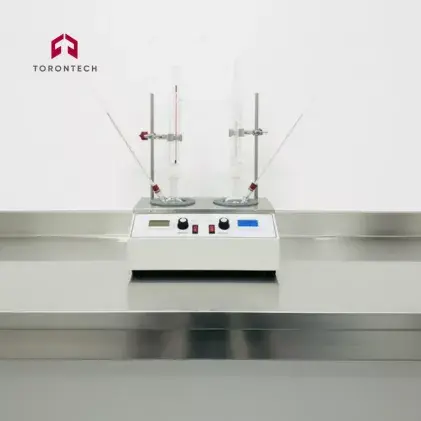
Boiling Point | TT-1120 (ASTM D1120) | Coolant & Brake Fluid | Measures dry and wet equilibrium reflux boiling point, the core DOT brake fluid grading parameter and a key coolant thermal check. |
Freezing Point | TT-1177Z (ASTM D1177) | Coolant | Determines the freeze protection level of ethylene and propylene glycol coolant formulations. |
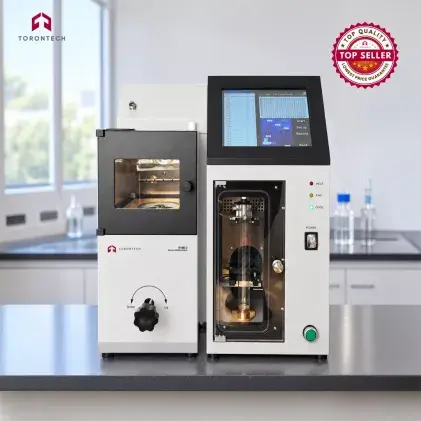
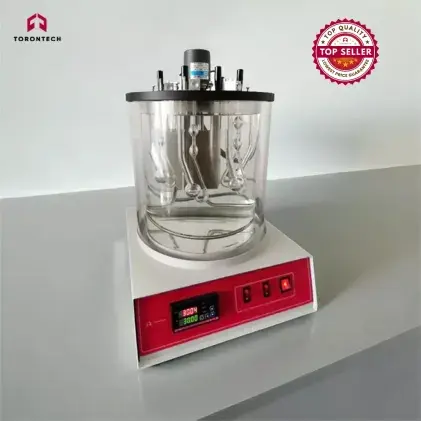
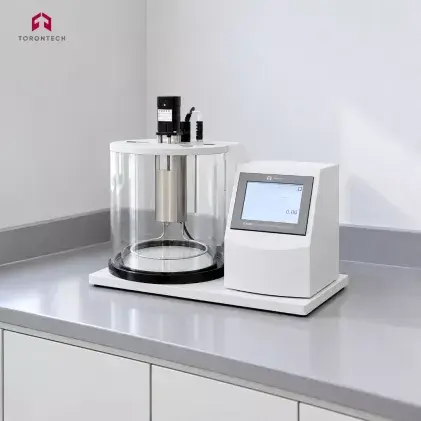
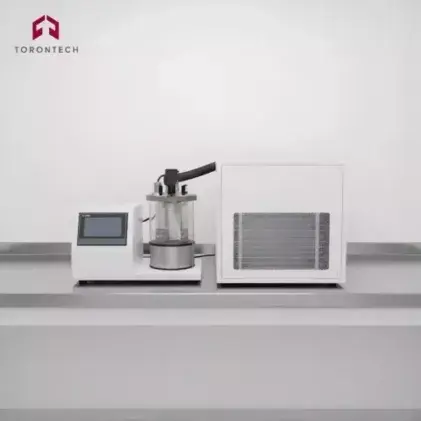
Kinematic Viscosity | TT-445, TT-445BZ, TT-445L (ASTM D445) | Coolant & Brake Fluid | Confirms pumpability at ambient temperature, and, with the low-temperature model, down to -40°C for FMVSS 116 grading. |
Pour and Cloud Point | TT-9725 (ASTM D97 / D2500) | Coolant & Brake Fluid | Tracks the low-temperature flow behavior of coolant and brake fluid concentrates. |
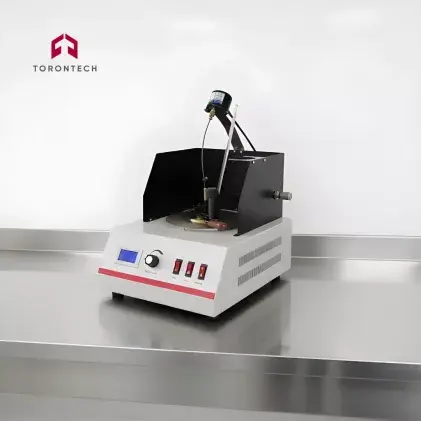
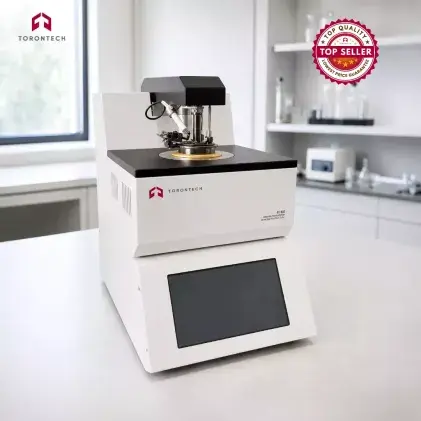
Flash Point | TT-92 / TT-92Z (ASTM D92), TT-93 / TT-93Z (ASTM D93) | Brake Fluid | Screens brake fluid flammability by Cleveland open cup or Pensky-Martens closed cup, in manual or automatic form. |
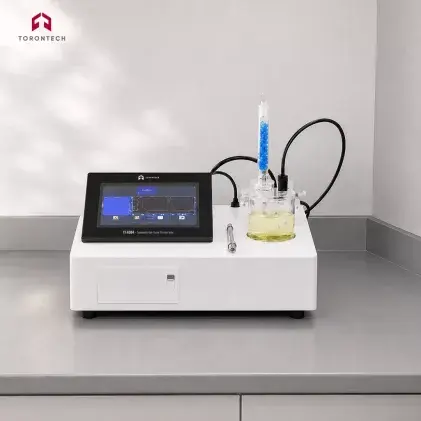
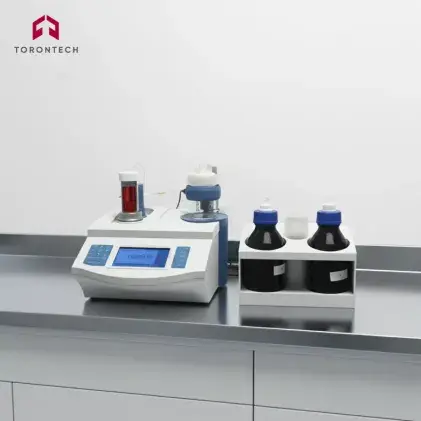
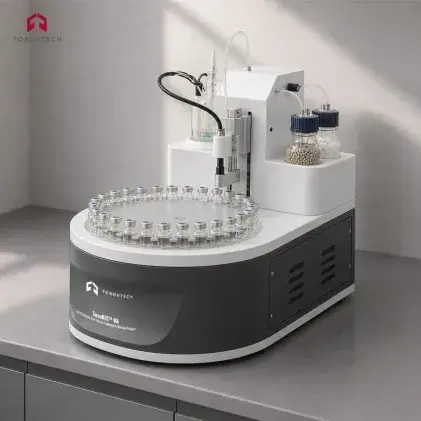
Water Content | TT-6304, TT-203, ToronKFC™ MA (ASTM D6304 family) | Coolant & Brake Fluid | Quantifies moisture in glycol-based fluids, since water content lowers wet boiling point as the fluid ages in service. |
Multi-Metal Corrosion | TT-1384 (ASTM D1384) | Coolant & Brake Fluid | Screens corrosivity across steel, cast iron, brass, copper, and aluminum coupons in one glassware test. |
Aluminum Heat-Rejection Corrosion | TT-4340 (ASTM D4340) | Coolant & Brake Fluid | Confirms protection of aluminum components under heat-transfer conditions, a requirement for aluminum-head engines. |
Cavitation and Erosion Corrosion | TT-2809 (ASTM D2809) | Coolant | Evaluates coolant protection of aluminum water pumps against cavitation and erosion-corrosion damage. |
Simulated Service Corrosion | TT-2570 (ASTM D2570) | Coolant | Circulates coolant under conditions built to replicate actual cooling-system operation for a fuller corrosion picture. |
Foaming Tendency | TT-1881 (ASTM D1881) | Coolant | Measures coolant foam generation, which can cause pump cavitation and reduced heat transfer if left unchecked. |
Density | TT-1298 (ASTM D1298) | Coolant & Brake Fluid | Confirms concentration and specific gravity of coolant and brake fluid samples by API hydrometer. |
How to Choose the Right Brake Fluid & Engine Coolant Testing Equipment
- For DOT brake fluid grading (DOT 3, 4, 5, 5.1): combine the TT-1120 boiling point apparatus with the TT-445L low-temperature viscosity tester to cover the two core FMVSS 116 classification parameters.
- For engine coolant formulation and freeze protection: pair the TT-1177Z freezing point tester with the TT-1120 boiling point apparatus to confirm both ends of the coolant's thermal protection range.
- For a full corrosion qualification program: run the TT-1384 and TT-4340 for general metal and aluminum protection, adding the TT-2809 and TT-2570 for coolants used with water pumps and full-system simulation.
- For water content monitoring on in-service fluid: use the coulometric TT-6304 for trace moisture or the volumetric TT-203 for higher water levels in aged coolant or brake fluid.