Expert Guide: Best Ways to Analyze Precious Metals
Ever wondered how much cash leaks out of your business because of a single bad guess on metal purity? In high-stakes shops like yours, we're firm believers that being "mostly sure" is a total nightmare for your bank account.
Here’s a strategic breakdown of the smartest ways to analyze precious metals and how to pick the perfect hardware to keep your profits safe and sound.
Key Takeaways
- Speed and Safety First: Modern testing methods like XRF and LIBS provide lightning-fast results without leaving a single scratch on your valuable items.
- Fast Financial Returns: High-precision hardware acts as a financial safeguard. It stops you from buying clever fakes and has the potential to pay for itself over time by actively protecting your margins.
- Match the Tool to the Job: Finding the perfect analyzer depends entirely on where your team works. A muddy scrap yard demands a completely different setup compared to a pristine retail counter.
Industry-Leading Methods for Precious Metal Analysis
Back in the day, everyone stayed stuck using fire assays or messy acid tests. While those methods are okay for accuracy, they’re a total headache.
You have to break things, use scary chemicals, and spend ages training people. In our humble opinion, the heavy lifting and safety headaches of those dinosaur methods just don't make sense for shops that need to move at a fast clip.
From where we sit, the winners in this industry are the ones who pick speed, safety, and gear that doesn't leave a scratch. Research shows that combining different light-based techniques often gives you the most complete picture of what you're holding.
X-Ray Fluorescence (XRF) Technology
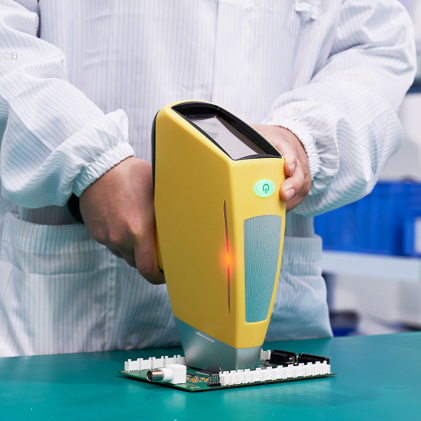
We’d call this the top choice for checking metals without ruining them. XRF is highly valued for its rapid, multi-elemental analysis, making it incredibly effective for spotting metals in tricky mixes like electronic waste.
Think about checking a delicate, antique gold watch. You can’t scratch it up to test it. With XRF, you just point, shoot, and get the reading without leaving a single mark.
Thanks to smart additions like Peltier electric refrigeration keeping the internal hardware cool, these compact designs deliver laboratory-comparable results right out in the field. While XRF provides great precision for heavier metals, it can sometimes miss very light elements like lithium.
Related article: Choosing the Right XRF: Handheld vs Benchtop Guide
Laser-Induced Breakdown Spectroscopy (LIBS)
This one uses a tiny, super-hot laser pulse to see what you’ve got. It’s incredibly snappy, and we usually suggest it as a fantastic alternative to XRF when your main goal is sorting through piles of stuff at top speed. Take our dedicated LIBS Analyzer for instance.
LIBS offers high spatial resolution and can detect those light elements, like lithium, that XRF might skip over. Picture a mountain of dirty, mixed scrap metal hitting the floor. You don't need delicate handling; you need sheer speed.
LIBS lets your crew blast through that pile, providing detailed characterization faster than a hiccup.
X-Ray Diffraction (XRD) for Structural Analysis
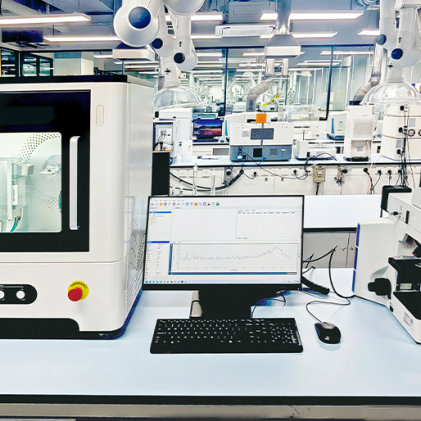
For the real science-heavy work and checking the "skeleton" of a metal, XRD Analyzers (X-ray Diffractometers) are exactly the way to go.
It is important to remember that XRD is built for phase identification rather than just counting elements. It provides deep crystallographic information that helps you see how the material is structured.
Let's say your team is pulling apart complex mineral structures in a lab. You need to see the crystal makeup, not just the surface elements. That's exactly where XRD steps in to give you the structural blueprint. We find this kit is a must-have for teams doing deep-level research and development.
Strategic Selection Criteria for Metal Analyzers
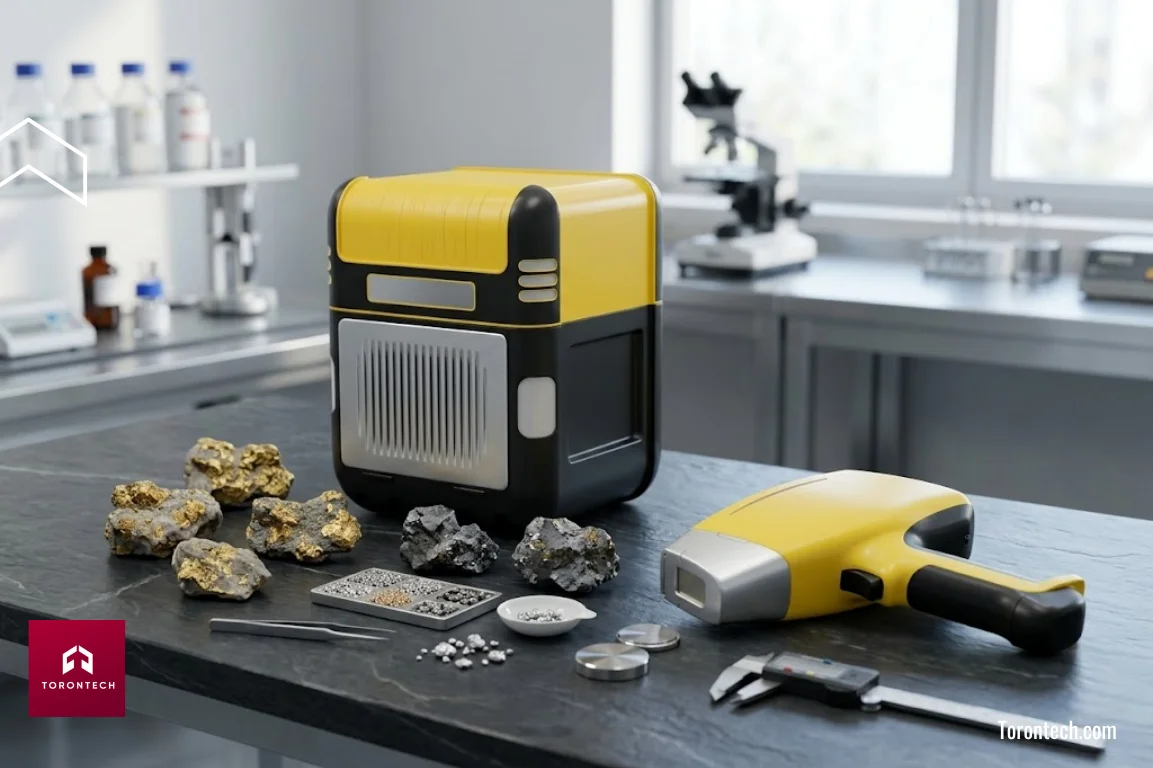
Picking out heavy-duty gear takes some serious thinking. Before we break down the specific details of how to choose precious metal analyzer tools for your shop, here is a quick checklist of absolute must-haves you should demand from any piece of testing hardware:
- Zero-Damage Testing: It needs to test without leaving a single scratch, file mark, or burn on the goods.
- Rookie-Friendly Controls: If a brand-new hire can't figure it out in ten minutes, the software is too complicated.
- Built-in Rule Following: It should automatically handle local safety and compliance checks right out of the box.
Now, we suggest looking at your daily grind through a few important filters:
1. Operational Environment
Are you testing in a steady lab or out in the elements? Consider a worker testing grimy catalytic converters out in a freezing, wet scrap yard versus a jeweler checking pristine rings on a glass counter.
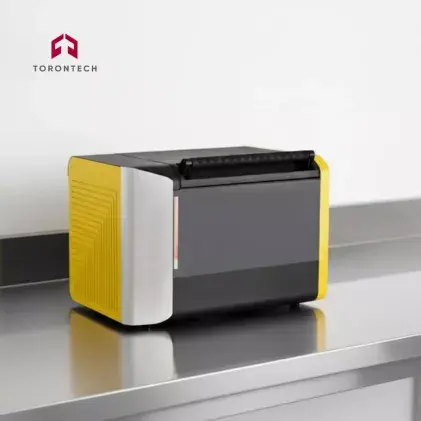
The yard worker needs a tough, field-ready setup like the PeDX Portable XRF Series, while the jeweler is perfectly set up for a stable, highly controlled unit like the ScopeX CS Desktop Spectrometer Family.
2. Throughput and Analysis Speed
If you’re a high-volume recycling spot, you need point-and-shoot gear that keeps the line moving. Think of a busy processing center receiving truckloads of scrap every hour.
If your scanner takes a full minute per piece, your entire operation grinds to a halt. We always tell people to pick tools that are quick on the draw but still keep that pinpoint accuracy that keeps your wallet happy.
3. Surface Preservation and Sample Integrity
If you’re handling high-end jewelry or pawned treasures, you can’t have your gear leaving marks. Let's say someone walks into your shop looking to sell a flawless, inherited platinum necklace.
If your testing process involves filing a notch into the clasp, you've just ruined the piece and lost the deal. We’re convinced XRF is the top dog here because it leaves your samples looking brand new.
4. Software Intuition and Compliance
We’re of the mind that great gear shouldn't feel like you’re trying to fly a rocket ship.
Think about hiring a new floor worker on a Tuesday and needing them to test scrap by Wednesday. If the software looks like a dense spreadsheet, they will make costly mistakes. You also want systems that guarantee compliance with national radiation safety standards right out of the box.
For specific rule-following, tools like the ScopeX RoHS Analyzer completely remove the headache from consumer product safety checks. Easy-to-use screens and big, clear buttons are things we think are absolutely vital for getting your team up to speed quickly.
Driving Bottom-Line Results: The ROI Factor
For business, a new analyzer needs to earn its keep.
The great news is that top-shelf, high-precision tools offer a clear path to protecting your investments. We're sure that by spotting "fake" gold instantly and stopping you from buying stuff that isn't as pure as it looks, this gear actively defends your margins.
Picture a highly realistic situation: a seller brings in a heavy, impressive-looking "gold" bar. It looks perfect, but it's secretly packed with a thick tungsten core. A quick zap from a reliable scanner catches the fraud instantly, saving you from a massive financial hit.
That single save can offset a huge portion of the hardware costs right then and there. In our professional view, a solid analyzer has the strong potential to pay for itself over time by stopping big losses before they happen.
Technical Solutions for Specific Industry Workflows
The bottom line is that the best precious metal analyzer is the one that fits your specific operation like a glove. To make things incredibly simple, here is how we match the hardware to the hustle:
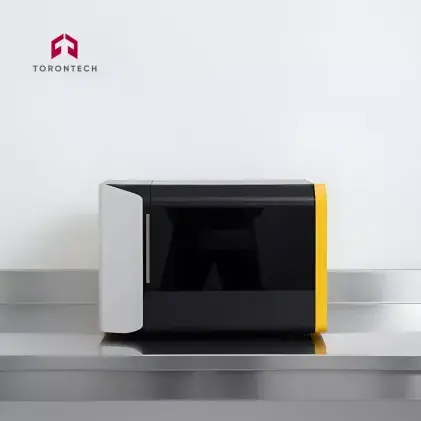
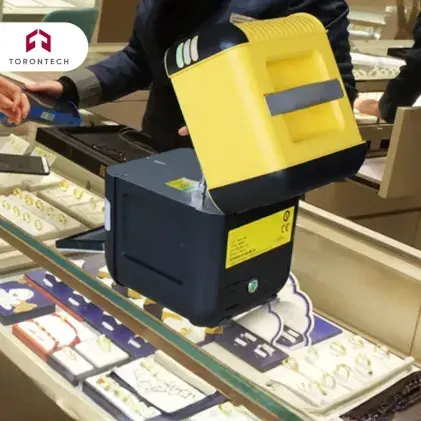
- Showrooms and Retail Trade: If you are dealing with rings, necklaces, or the gold trade, we point you directly at the G7 Precious Metal Analyzer for Showroom/Factory. It keeps things looking pretty for the customers and is built exactly for front-of-house work.
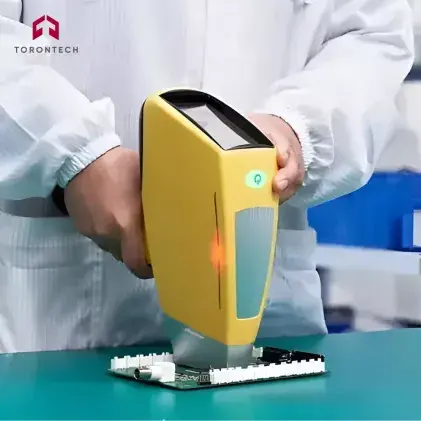
- Mobile Inspections and Recycling Yards: If you are dealing with all sorts of random bits, general scrap, or big site inspections, we are big fans of the TrueX Handheld XRF Series. It’s basically like carrying a world-class lab in your pocket.
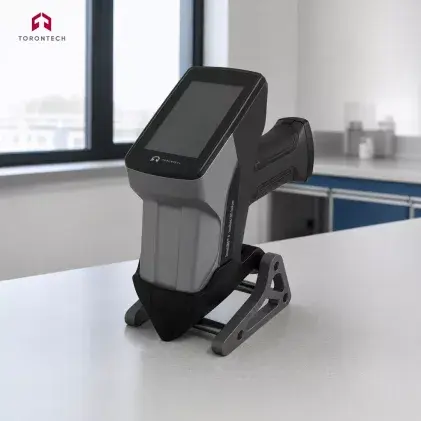
- Laboratory Research and Development: When your team needs to dig deep into crystal structures or run highly controlled testing, a stationary unit like the ScopeX CS Desktop Spectrometer Family or our dedicated XRD Analyzers gives you that serious, scientific muscle.
By matching the shape of the tool and the tech inside to the specific bottlenecks in your business, we’re certain you can crank up your speed and stop worrying about getting cheated by low-quality metals.
Related article: XRD vs XRF vs LIBS: Choosing Your Ideal Analyzer
Secure Your Profits with Torontech’s Analytical Tools
At Torontech, we know that picking out new tech is a big deal. We’ve been supporting the North American market for over 20 years, and we’re convinced our long run comes from being obsessed with seeing our customers win.
Our goal is simple: we want to give you cost-effective solutions and innovative technologies that are both smart and safe. Whether you need a rock-solid desktop unit or a portable XRF that can go anywhere, our lineup is built to handle the toughest jobs.
Ready to bring laboratory-comparable precision directly to your workflow? We’d love for you to check out our full list of XRF and XRD Analyzers today. If you want some friendly advice on picking the right tool for your specific spot, get in touch with the Torontech crew: we’re ready to help you make a smart move that really pays off.
References
- Baig, M., Fayyaz, A., Ahmed, R., Umar, Z., Asghar, H., Liaqat, U., Hedwig, R., & Kurniawan, K. (2024). Analytical Techniques for Elemental Analysis: LIBS, LA-TOF-MS, EDX, PIXE, and XRF: A Review. Proceedings of the Pakistan Academy of Sciences: A. Physical and Computational Sciences.
- Jatteau, M., Cauzid, J., Fabre, C., Voudouris, P., Soulamidis, G., & Tarantola, A. (2025). Portable Analyses of Strategic Metal-Rich Minerals Using pXRF and pLIBS: Methodology and Database Development. Data, 10, 12.
- Lancaster, S., Sahlin, E., Oelze, M., Ostermann, M., Vogl, J., Laperche, V., Touzé, S., Ghestem, J., Dalencourt, C., Gendre, R., Stammeier, J., Klein, O., Pröfrock, D., Košarac, G., Jotanovic, A., Bergamaschi, L., Di Luzio, M., D’Agostino, G., Jaćimović, R., Eberhard, M., Feiner, L., Trimmel, S., Rachetti, A., Sara-Aho, T., Roethke, A., Michaliszyn, L., Pramann, A., Rienitz, O., & Irrgeher, J. (2024). Evaluation of X-ray fluorescence for analysing critical elements in three electronic waste matrices: A comprehensive comparison of analytical techniques. Waste management, 190, 496-505.
- Rao, A., Jenkins, P., Auxier, J., Shattan, M., & Patnaik, A. (2022). Analytical comparisons of handheld LIBS and XRF devices for rapid quantification of gallium in a plutonium surrogate matrix. Journal of Analytical Atomic Spectrometry.
- Ribeiro, R., Capela, D., Ferreira, M., Martins, R., Jorge, P., Guimarães, D., & Lima, A. (2021). X-ray Fluorescence and Laser-Induced Breakdown Spectroscopy Analysis of Li-Rich Minerals in Veins from Argemela Tin Mine, Central Portugal. Minerals.
- Seidel, P., Ebert, D., Schinke, R., Möckel, R., Raatz, S., Chao, M., Niederschlag, E., Kreschel, T., Gloaguen, R., & Renno, A. (2021). Comparison of Elemental Analysis Techniques for the Characterization of Commercial Alloys. Metals, 11, 736.