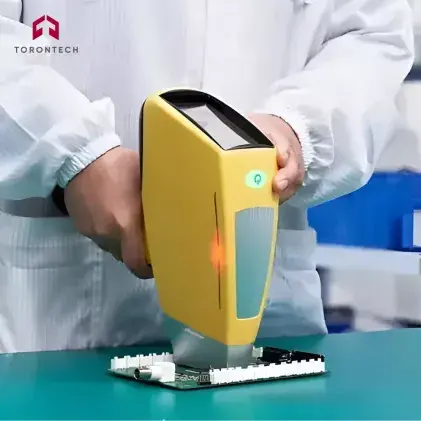
XRD vs XRF vs LIBS: Choosing Your Ideal Analyzer
Getting your material data exactly right is a massive win for your whole operation. We think it’s the best way to keep your quality high and your team moving fast.
There’s not a trace of fluff in this guide—all you seasoned pros who have seen it all know exactly what we’re talking about. We’ve put together a breakdown that’s thicker and far more detailed than a basic spec sheet to help you choose between XRF vs XRD vs LIBS with total confidence.
XRF vs XRD vs LIBS Comparison
If you are currently sorting through a mountain of paperwork and need an answer right now, here is how we think these three main tools stack up:
| The Feature | XRF (X-ray Fluorescence) | XRD (X-ray Diffraction) | LIBS (Laser-Induced Breakdown) |
|---|---|---|---|
| Primary Goal | Finding the ingredients | Figuring out the recipe | Rapid ingredient checks |
| Analytical Strength | Detecting heavy metals and transition metals with ease | Identifying rock types and specific crystal shapes | Blazing-fast speed; spots tiny elements like Lithium and Carbon |
| Material Impact | Zero, zilch, nada | None at all | Just a tiny, microscopic scorch mark |
| Workflow Prep | Just point and zap | High (Requires grinding into a fine dust) | Point and pull the trigger |
| Operational Profile | The reliable old faithful | The brainy laboratory scientist | The speedy newcomer |
| Top Torontech Gear | TrueX Handheld XRF Analyzer (for field work) or ScopeX CS Desktop Spectrometer (for lab settings) | SHINE & FRINGE Family of XRD Analyzers (for decoding hidden shapes) | Handheld LIBS Lithium Analyzer (for grabbing lightweight data instantly) |
Technical Fundamentals: XRF, XRD, and LIBS Explained
Before you spend a large chunk of your budget, you should probably know how these machines actually tick. In our opinion, knowing the "how" prevents you from buying a tool that just sits on a shelf gathering dust.
XRF (X-ray Fluorescence)
This one shoots high-energy beams at your sample, making the atoms inside "glow" with their own specific light.
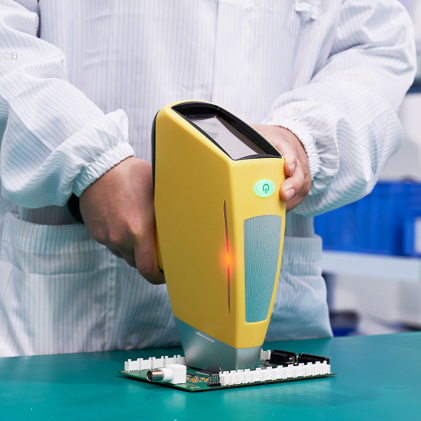
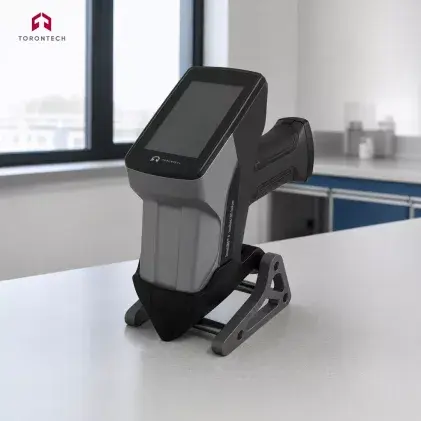
Think about pointing a tough-as-nails scanner like our TrueX Handheld XRF Analyzer, which boasts a massive detection range from Magnesium to Uranium, at an old, rusty pipe fitting to see if it’s standard 304 or the much pricier 316 stainless steel.
The glowing atoms give the secret away immediately. It’s a total classic for figuring out which elements are hanging out in your metal or soil samples due to its reliability and ease of calibration.
Related article: Choosing the Right XRF: Handheld vs Benchtop Guide
XRD (X-ray Diffraction)
Instead of just looking at elements, this one looks at how those atoms are holding hands in a crystal structure. It’s like a fingerprint for the actual internal shape of the material.
Consider looking at a sample of titanium dioxide and needing to know if it's the rutile form or the anatase form for making white paint. They look exactly the same to the naked eye, but tools like our SHINE & FRINGE Family of XRD Analyzers read those hidden crystal shapes and give them away completely.
Unlike XRF, XRD focuses entirely on the crystal structure rather than just listing elements.
LIBS (Laser-Induced Breakdown Spectroscopy)
This uses a tiny, super-strong laser to make a micro-plasma fireball on the surface. It’s incredibly fast and can see the "lightweight" elements on the periodic table that the others often miss.
Picture trying to figure out exactly how much lithium is hiding inside a core chunk from a new dig site. This is exactly why our Handheld LIBS Lithium Analyzer exists: to grab that specific lightweight data (like Li, C, or B) in a matter of seconds.
XRD vs XRF: Identifying Composition vs. Structure
When you look at XRD vs XRF, do not think of them as enemies. We think they’re more like a hammer and a screwdriver; you need the right one for the job.
In our view, many facilities actually benefit from having both, as they are often seen as complementary tools in field and laboratory settings.
The XRF Win
If you just need to know if there’s lead in a toy or how much gold is in a ring, XRF is the champion. It’s simple, it’s fast, and it does not leave a mark. Even if you have uneven, weirdly shaped pieces of scrap, a "mobile laboratory" setup like our PeDX Portable XRF Analyzer Series will handle those tricky surfaces effortlessly.
The XRD Win
Let's say you have two chunks of carbon: one is a diamond and the other is the graphite in your pencil. XRF would say "yep, that’s carbon" to both. But XRD looks at the "bones" of the material and tells you which one is worth a fortune. We think XRD is the only way to go when the internal structure is what actually matters for your profit margins, though it does not count up elemental concentrations directly.
XRF vs LIBS: Comparison for Portable Analysis
Comparing XRF vs LIBS is where things get interesting. Both of these come in handheld versions that look like something out of a science fiction movie.
Why XRF Stays On Top
It’s been around for decades and it is completely non-destructive. We’d bet that most folks doing environmental checks or checking for strict compliance rules will stick with XRF because it’s just so incredibly dependable for heavy metals and gives you straightforward results with established calibration methods.
Why LIBS is Catching Up
It is wicked fast. We're talking results in the blink of an eye. In our view, the real "killer app" for LIBS is its ability to find Lithium or Carbon—the stuff XRF struggles with. If your main goal is speed, LIBS is a total beast.
For instance, if you are out checking a pipeline and absolutely need to verify the exact amount of carbon baked into a piece of steel to ensure it will not crack, LIBS is the gadget that grabs that data flawlessly.
Industry Applications and Sector Use Cases
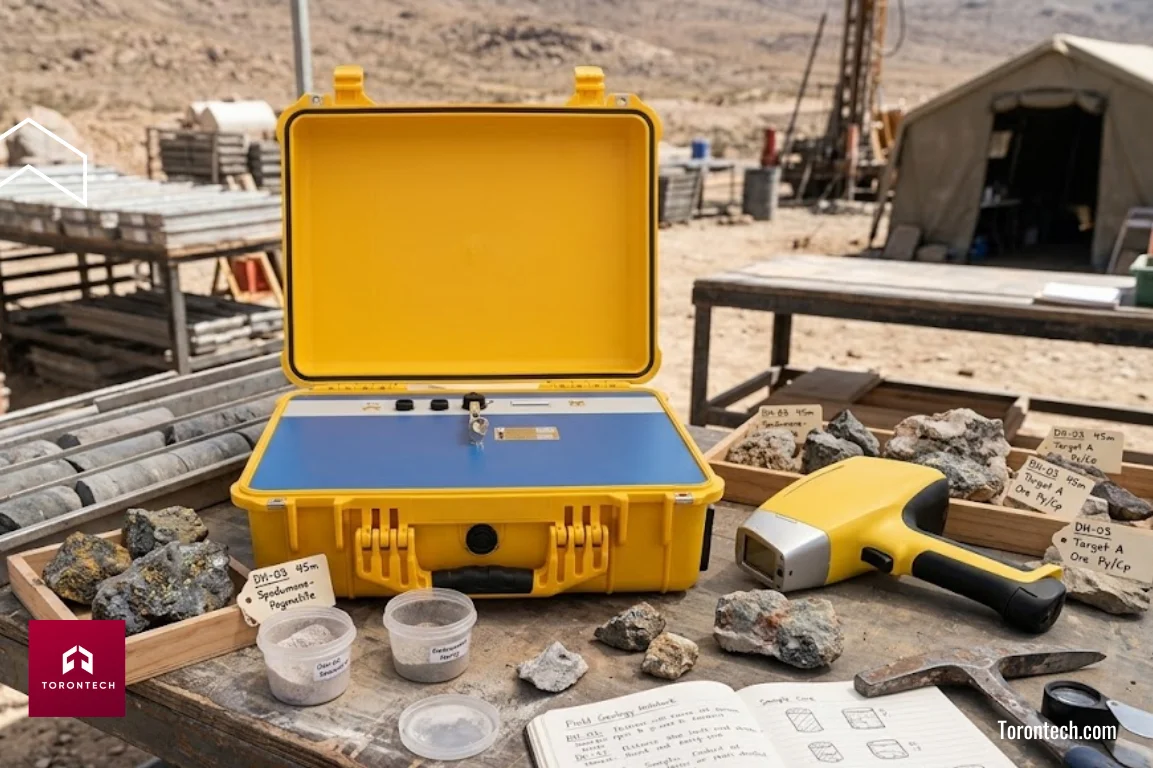
Here is how we see people actually using these tools in the daily grind. Studies on alloy characterization highlight that both have strengths depending on the sample type and size.
Metals and Scrap Recycling
We see LIBS winning the race for aluminum sorting because it’s just so snappy.
Picture a yard manager needing to separate a pile of 6061 aluminum from 6063 aluminum; the LIBS gun spots the tiny differences in magnesium instantly. But for the heavy-duty stainless steel and high-temp alloys? A solid XRF unit is still the undisputed king of the heap.
Mining and Geological Surveys
You basically can’t live without XRD here. You’ve got to know if your copper is in a form that’s easy to get out of the rock.
Think about a geologist who needs to figure out if a rock chunk contains valuable minerals trapped inside quartz or if it is just a lump of useless pyrite. XRF is just the sidekick that tells you how much is there.
Manufacturing Quality Control
For making sure the metal you bought is actually what the supplier said it was, XRF is a safe, rock-solid bet every single time to avoid expensive mistakes. Running samples under our ScopeX CS Desktop Spectrometer guarantees high-precision laboratory results.
Also, if your facility is strictly checking for hazardous materials on incoming shipments, an all-in-one setup like our ScopeX RoHS Analyzer is sheer perfection for compliance screening.
Environmental Assessments and Remediation
When dealing with polluted land, XRF is the absolute go-to for sniffing out heavy metals. Picture an environmental inspector needing to map out lead or arsenic levels across a massive old industrial lot.
Taking our highly portable TXRF Total Reflection X-ray Fluorescence Spectrometer straight to the dirt delivers crucial trace analysis right on the spot without hauling bags of soil back to a laboratory.
Battery and EV Component Production
With electric vehicles completely dominating the streets, LIBS is getting loads of attention because it is one of the only portable tools that can actually measure lithium content directly on the production line.
Meanwhile, XRD is working behind the scenes in the lab, making sure the crystal structure of the battery's cathode is satisfyingly spot on so it holds a charge properly.
Precious Metal Verification
If you are buying or selling gold, you absolutely cannot tolerate a tool that leaves even a microscopic scratch. XRF is sheer perfection for this.
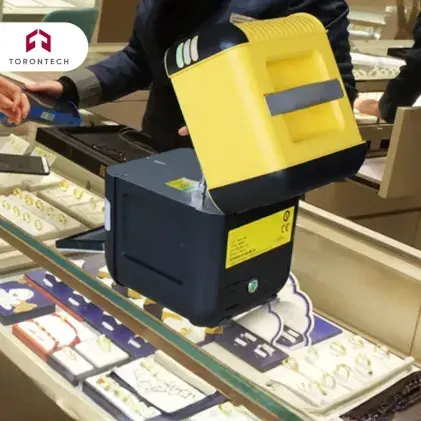
Consider a jeweler needing to verify if a heavy gold chain is pure 24-karat or just cheap brass with a convincing plating. Slipping that chain into our Gold Precious Metal Analyzer gives them an incredibly accurate answer without damaging the goods.
Read more: Expert Guide: Best Ways to Analyze Precious Metals
Operational Considerations: Preparation, Safety, and TCO
You’ve got to think about the day-to-day grind before you pull the trigger on a purchase. We often find that the "hidden" costs of ownership are what truly define if a tool is a good deal or a dud.
1. Sample Preparation
- XRF and LIBS are "point and shoot." It’s satisfyingly simple and keeps your workflow moving.
- XRD is a bit of a diva. You usually have to smash your sample into a super-fine, uniform powder. It’s an extra chore, but in our opinion, the data you get back is completely ideal for mineral analysis.
2. Safety Compliance
- XRF & XRD: These use X-ray beams. We think it is vital that operators get basic safety training and fill out the paperwork for the government.
- LIBS: No radiation here, but you’re playing with lasers. You’ve got to wear those special safety glasses so you do not hurt your eyes from the scattered light.
3. Total Cost of Ownership (TCO)
- XRF/XRD: The X-ray tubes are the heart of the machine. They last a long time, but when they finally wear out, it’s a big repair bill.
- LIBS: You’ve got to keep the laser maintained. Also, some of the fancier LIBS units need Argon gas canisters to do their best work, which adds a recurring cost to your list.
Innovative Analytical Solutions from Torontech
Based right here in North America, Torontech focuses on getting you clever, new technology without the "big brand" price hike.
We don’t think you should have to spend your entire yearly budget to get laboratory-grade data. Our XRF and XRD Analyzer lineup is full of budget-friendly gems—from tough-as-nails TrueX handhelds to our innovative SHINE and FRINGE benchtop units—that get the job done right.
Ready to stop guessing and start knowing? Reach out to our team at Torontech today. We’ll help you pick the right tool for your specific needs, give you a price that’s actually fair, and help you get set up with tech that is satisfyingly spot on.
References
- Bagaskara, A., Soesanto, Q., Sugito, H., & Khumaeni, A. (2020). Effects of repetition rate on the identification of elements in gemstone using the LIBS method. Journal of Physics: Conference Series, 1524.
- Carvalho, G., Guerra, M., Adame, A., Nomura, C., Oliveira, P., Carvalho, H., Santos, D., Nunes, L., & Krug, F. (2018). Recent advances in LIBS and XRF for the analysis of plants. Journal of Analytical Atomic Spectrometry, 33, 919-944.
- Fahad, M., Farooq, Z., & Abrar, M. (2019). Comparative study of calibration-free laser-induced breakdown spectroscopy methods for quantitative elemental analysis of quartz-bearing limestone.. Applied optics, 58 13, 3501-3508.
- Lemière, B., & Harmon, R. (2021). XRF and LIBS for Field Geology.
- Ovide, O., Corzo, R., & Trejos, T. (2024). Assessment of performance rates on the elemental comparison of small and irregular glass fragments using µ-XRF and LIBS. Forensic Chemistry.
- Rao, A., Jenkins, P., Auxier, J., Shattan, M., & Patnaik, A. (2022). Analytical comparisons of handheld LIBS and XRF devices for rapid quantification of gallium in a plutonium surrogate matrix. Journal of Analytical Atomic Spectrometry.
- Ribeiro, R., Capela, D., Ferreira, M., Martins, R., Jorge, P., Guimarães, D., & Lima, A. (2021). X-ray Fluorescence and Laser-Induced Breakdown Spectroscopy Analysis of Li-Rich Minerals in Veins from Argemela Tin Mine, Central Portugal. Minerals.
- Seidel, P., Ebert, D., Schinke, R., Möckel, R., Raatz, S., Chao, M., Niederschlag, E., Kreschel, T., Gloaguen, R., & Renno, A. (2021). Comparison of Elemental Analysis Techniques for the Characterization of Commercial Alloys. Metals, 11, 736.
- Vanhoof, C., Bacon, J., Fittschen, U., & Vincze, L. (2022). Atomic spectrometry update: review of advances in X-ray fluorescence spectrometry and its special applications. Journal of Analytical Atomic Spectrometry.