Choosing the Right XRF: Handheld vs Benchtop Guide
Nailing the exact mix of your materials is a massive win for your bottom line. These XRF tools work like high-intensity flashlights that spot the unique energy signatures of the elements hiding inside your samples.
You have two great ways to boost your efficiency: the grab-and-go handheld or the rock-solid benchtop. Your final pick usually comes down to whether you need to move fast in the field or look deep into the data in a lab.
Key Takeaways
- Handheld units are your go-to for rapid, point-and-shoot field sorting where extreme mobility is everything.
- Benchtop systems are absolutely mandatory for strict lab compliance and spotting those microscopic trace elements.
- Sample prep varies: portable scanners need zero prep, whereas stationary lab setups require perfectly prepped samples for top-tier accuracy.
- The final choice depends entirely on your daily routine: fast field checks versus deep analytical reporting.
Handheld XRF: Maximizing Field Mobility
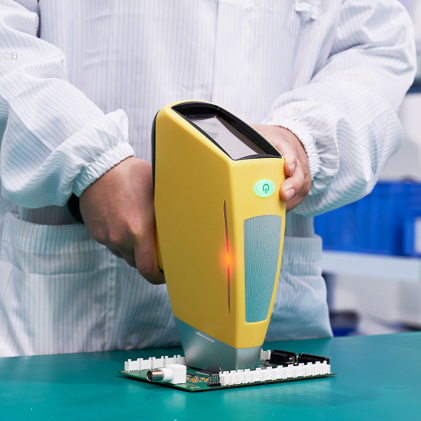
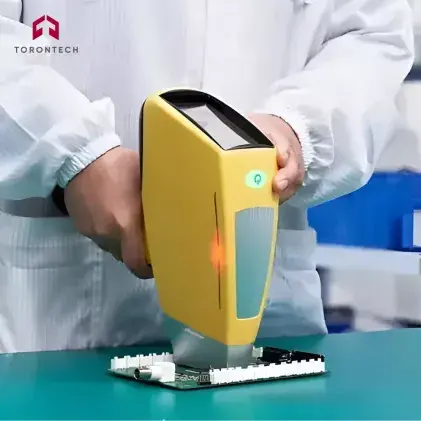
Handheld XRF analyzers are the undisputed kings of the field. These are the point-and-shoot devices that take that high-level science out of the lab and put it right onto a work belt.
In our view, this technology is what finally made life manageable for teams who refuse to spend their whole day hauling samples back and forth to a central office.
Key Operational Benefits
- Portability: These units are incredibly light. Take our TrueX Handheld XRF Series, for example: it uses a highly compact design and built-in Peltier electric refrigeration to keep the hardware cool, so your team can run it through a massive, all-day sorting shift without overheating.
- Immediate Results: You get the "yes" or "no" on a material in a heartbeat. Studies confirm these devices are ideal for real-time decision-making and rapid, in-situ measurements.
- Non-Destructive Testing: You can check out a heavy pipe or a giant machine part without having to saw off a piece for the lab.
- Low Infrastructure Costs: Usually, these portable units require zero dedicated room space, which keeps your daily costs impressively low.
Practical Field Applications
- Sifting through scrap metal and getting the alloys sorted correctly. For instance, a yard manager quickly separating high-value aluminum 6061 from standard 6063 using a highly mobile PeDX Portable XRF Series scanner.
- Double-checking components in the oil and gas sector. Think of a field inspector verifying the grade of a pipeline weld out in the mud (though we suggest keeping matrix-specific calibration in mind for the most reliable results).
- Checking the ground in a backyard for unwanted pollutants. Consider an environmental crew screening soil for heavy metal contamination before breaking ground.
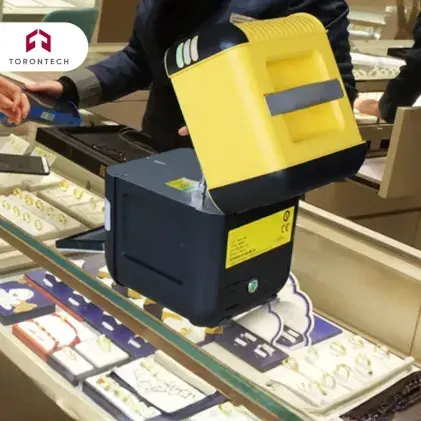
- Spotting fake gold or verifying precious jewelry on the spot. Like a pawn shop owner confirming the purity of a gold chain with a dedicated Gold Precious Metal Analyzer.
Note: While handhelds are brilliant for many jobs, they can sometimes hit a wall with very light elements like Magnesium, Sodium, or Phosphorus.
Benchtop XRF: Precision for Laboratory Systems
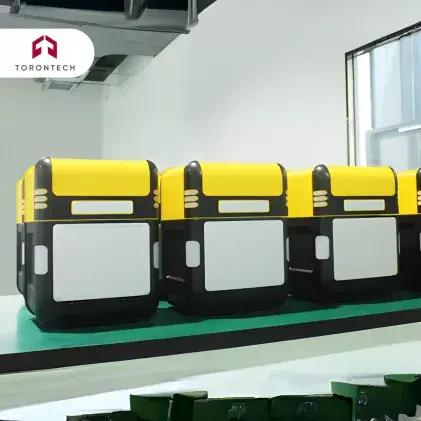
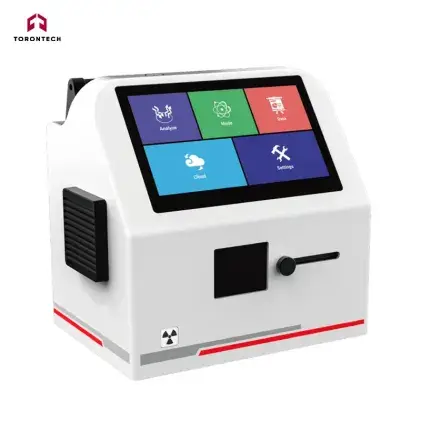
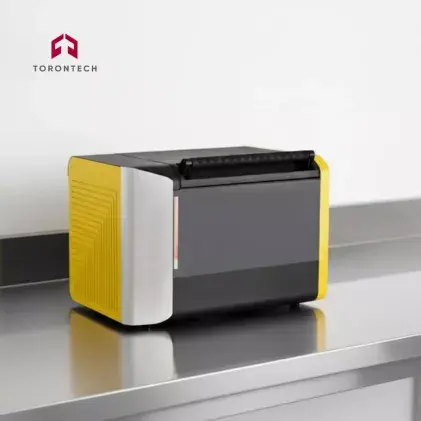
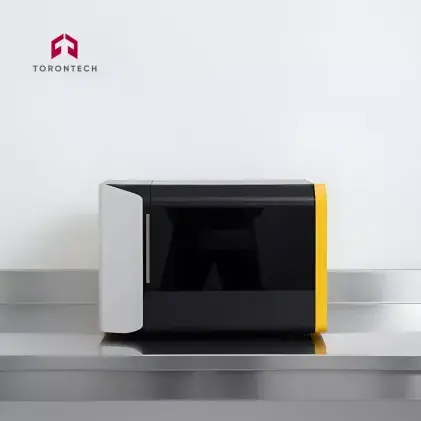
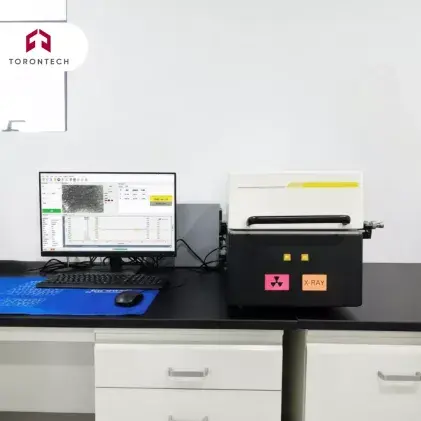
Benchtop (or desktop) units stay put. They are the heavy-duty stations you find in a lab or a very controlled testing environment. You lose the ability to carry it around, but you gain a massive jump in how deep the machine can see into a sample.
We have noticed that for jobs where being "mostly right" isn't an option, the unshakeable stability of a benchtop system remains the industry benchmark.
Analytical Precision and Depth
- Detection Accuracy: These models have bigger X-ray tubes and much more sensitive detectors. Research shows they consistently outperform handhelds when it comes to precision and sensitivity for trace elements.
- Automated Testing: A lot of these have rotating trays. You can pop in a dozen samples, hit a button, and handle other tasks while the machine does the heavy lifting.
- Eliminating Interference: These often use vacuums or special gases to get the air out of the way, allowing for much better detection of those tricky light elements.
- Reliable Compliance Data: They are the go-to choice when you need a report that will stand up against heavy scrutiny.
Standard Laboratory Applications
- Advanced research and development. Picture a research team using a specialized TXRF Spectrometer (TTX3000S) to find trace elements in a newly synthesized alloy with lower detection limits.
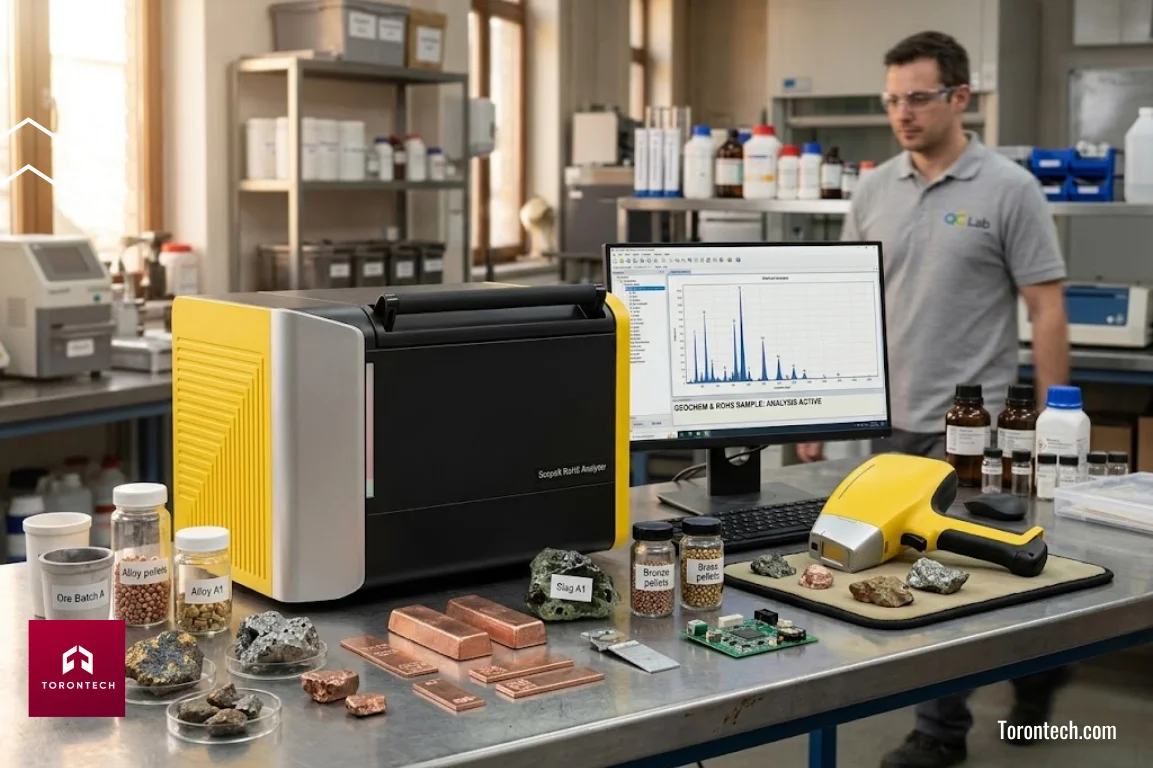
- Following strict consumer safety rules. For example, a consumer electronics manufacturer proving their casings are lead-free by running them through a ScopeX RoHS Analyzer.
- Testing cement or minerals. Consider a plant running hourly batch samples through the ScopeX CS Desktop Spectrometer Family to ensure the chemical mix is perfectly balanced.
- Measuring coating thickness with absolute certainty. Like an aerospace supplier verifying an anti-corrosive layer with a Coating Thickness Analyzer to pass a safety audit.
Comparative Analysis: Handheld vs. Benchtop
| Operational Feature | Handheld XRF | Benchtop XRF |
|---|---|---|
| Mobility | High. Take the tool to the sample. | Low. Bring the sample to the station. |
| Detection Limits | Solid for major elements. | Top-tier for trace elements. |
| Sample Prep | None for quick checks. | Often involves pressed powder pellets. |
| Work Speed | Fast for one-off checks in the field. | Fast for automated batches in a lab. |
| Environment | Built for dust and the occasional bump. | Requires a clean, climate-controlled space. |
Strategic ROI Factors
To get the most for your money, we think you should look at the details that are rarely printed on the shiny marketing brochures.
1. Lifetime Operational Costs
Handhelds are usually cheaper to buy on day one, but we suggest keeping an eye on the cost of batteries and screen repairs if your crew is rough with the gear. Benchtops cost more upfront, but they stay safe inside and often last longer.
2. Operator Expertise
Handhelds are essentially like using a modern smartphone (super easy to pick up). Benchtops are a bit more like a cockpit. You usually need a dedicated person who knows how to prep the samples because research shows that prepping samples as "pressed powder" makes handheld results correlate much better with benchtop precision.
3. Compliance and Regulatory Standards
Consider a hypothetical toy manufacturer fighting to meet strict consumer safety limits: in our view, a benchtop is the only way to sleep soundly at night, giving you the proof required for picky auditors. Contrast that with a local fabrication shop just making sure the steel they bought is the right grade: in that scenario, a handheld scanner gets the job done.
4. Maintenance and Calibration
Everything needs a little love.
Handhelds are front-line soldiers: you just have to keep the "eye" clean and make sure the battery is charged. (Plus, we ensure our TrueX and PeDX models are fully compliant with national radiation safety standards). Benchtops need more tinkering (checking vacuum pumps and gas lines) to maintain their high-level accuracy.
Selecting the Optimal Solution
Go for a Handheld XRF if:
- Your samples are too massive to move. (e.g., inspecting storage tanks bolted to the floor.)
- You need to know "what is this?" right this second on the floor.
- Your "office" is a construction site or a recycling yard.
Go for a Benchtop XRF if:
- You need to find "a needle in a haystack" (trace elements).
- You are testing dozens of tiny pieces throughout the day via an automated tray.
- You need results that are 100% airtight for strict compliance.
Related article: XRD vs XRF vs LIBS: Choosing Your Ideal Analyzer
Trust Torontech for High-Precision XRF Solutions
Choosing between these two options is purely about what keeps your daily work moving. Whether you need to be fast and mobile or incredibly thorough and precise, you need data that is genuinely dependable.
At Torontech, we have spent two decades helping businesses find this exact balance. We focus on providing cost-effective solutions built with innovative technologies to ensure you get the job done right without overspending.
Ready to see what your materials are actually hiding? Check out the full Torontech lineup of XRF and XRD Analyzers right here, and let our team help you find the perfect, affordable fit for your daily routine.
References
- Goff, K., et al. (2020). Impact of sample preparation methods for characterizing the geochemistry of soils and sediments by portable X‐ray fluorescence. Soil Science Society of America Journal.
- Guerra, M., et al. (2014). Comparison of analytical performance of benchtop and handheld energy dispersive X-ray fluorescence systems for the direct analysis of plant materials. Journal of Analytical Atomic Spectrometry.
- Hall, G., et al. (2014). Evaluation of portable X-ray fluorescence (pXRF) in exploration and mining: Phase 1, control reference materials.
- Kuzel, A., et al. (2016). Calcium and Phosphorus Detection Using Benchtop Versus Handheld X‐ray Fluorescence Spectrometers. Journal of Forensic Sciences.
- Reilly, F. (2006). XRF for film thickness measurement: Pros vs. cons of common configurations. Metal Finishing.
- Rowe, H., et al. (2012). The quantification and application of handheld energy-dispersive x-ray fluorescence (ED-XRF) in mudrock chemostratigraphy and geochemistry. Chemical Geology.
- Specht, A., et al. (2024). Benchtop x-ray fluorescence to quantify elemental content in nails non-destructively. The Science of the Total Environment.
- Young, K., et al. (2016). A review of the handheld X-ray fluorescence spectrometer as a tool for field geologic investigations on Earth and in planetary surface exploration. Applied Geochemistry.