

TXRF Total Reflection X-ray Fluorescence Spectrometer – TTX3000S
TXRF Total Reflection X-ray Fluorescence Spectrometer – TTX3000S is a highly portable device specifically crafted for elemental and trace analysis. This advanced spectrometer achieves high-sensitivity detection even in extremely low-noise environments, delivering fast, precise quantitative and semi-quantitative multi-element trace analysis for a range of substances, including liquids, suspensions, solids, and contaminants.
With a design focused on high performance, user-friendliness, environmental responsibility, and cost-effectiveness, the TTX3000S is an invaluable tool for applications in scientific research, quality assurance, and environmental monitoring.
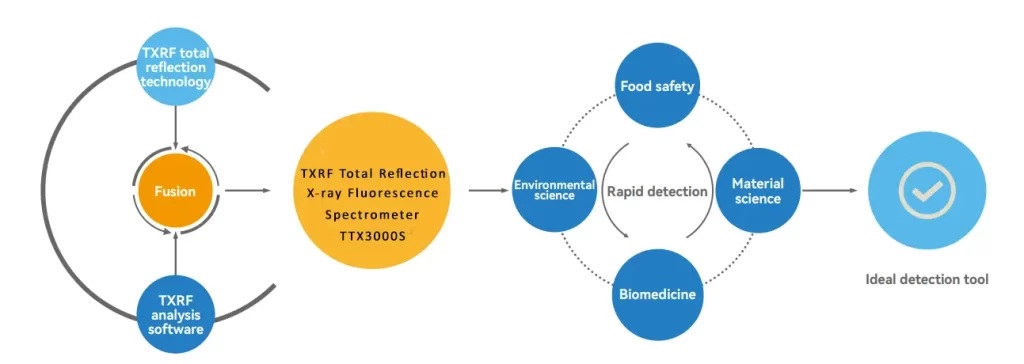
TXRF Total Reflection X-ray Fluorescence Spectrometer – TTX3000S supports trace elemental analysis workflows in food safety, environmental science, biopharmaceuticals, cosmetics, forensic medicine, and criminal investigation laboratories.
Typical use cases include heavy metal screening in beverages and foods, trace element analysis in soil, air, and water samples, contamination checks in pharmaceutical materials, and public safety evidence screening.
Working Principle
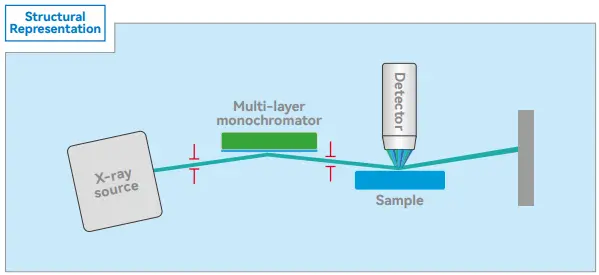
The TTX3000S instrument operates on total reflection X-ray fluorescence spectroscopy (TXRF), utilizing a high-brightness, micro-focus fixed-target light source to produce a precise X-ray beam. This beam is refined further by a multi-layer monochromator that reflects the X-rays twice, narrowing the beam's energy range to an exceptionally focused band. The resulting thin beam strikes a flat sample carrier at an extremely shallow angle (less than 0.1°), supporting complete reflection. The sample then emits characteristic fluorescence, which is captured by an energy-dispersive X-ray detector. Due to the minimal distance between the detector and sample carrier, the TTX3000S achieves high fluorescence detection efficiency while reducing air absorption of X-rays, improving overall sensitivity.
Application Fields

Food Safety
Drinking water, beverages, condiments, vegetable products, seafood, etc.
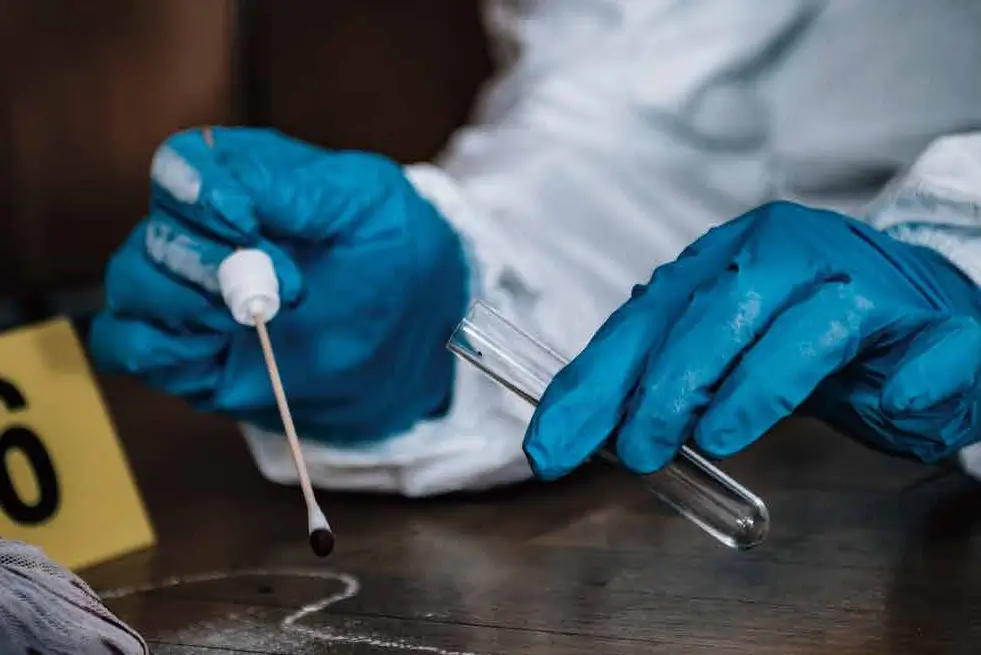
Criminal investigation

Forensic medicine

Biopharmaceuticals

Environmental science
Trace element analysis of soil, air and water quality

Cosmetics
Application Cases
The TTX3000S portable total reflection X-ray fluorescence spectrometer serves as a highly efficient tool for detecting elemental content in beverages and foods, helping ensure food safety standards. It provides necessary technical support and a scientific basis for law enforcement, greatly improving the efficiency and accuracy of public safety investigations.
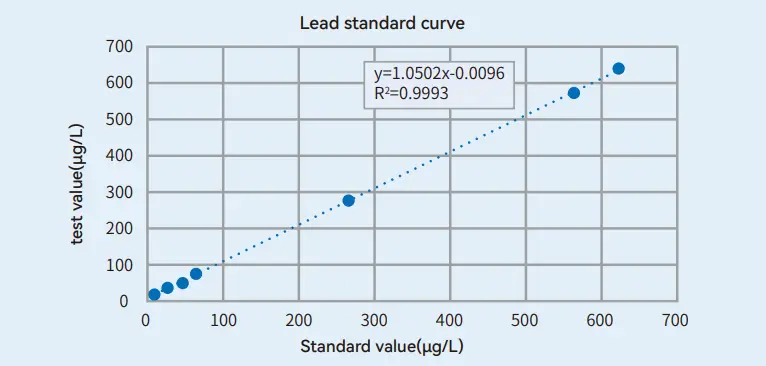
Linearity graph of food heavy metal calibration curve:
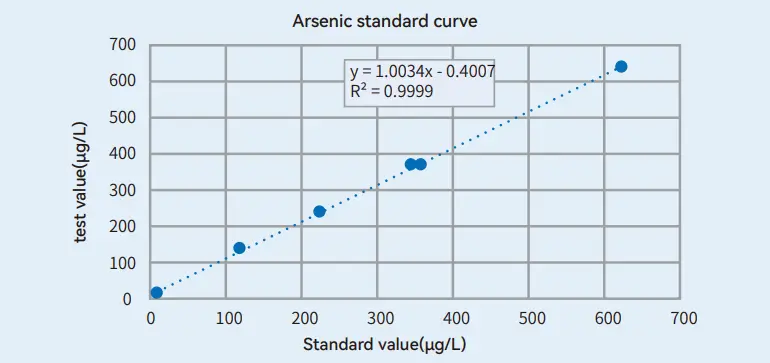
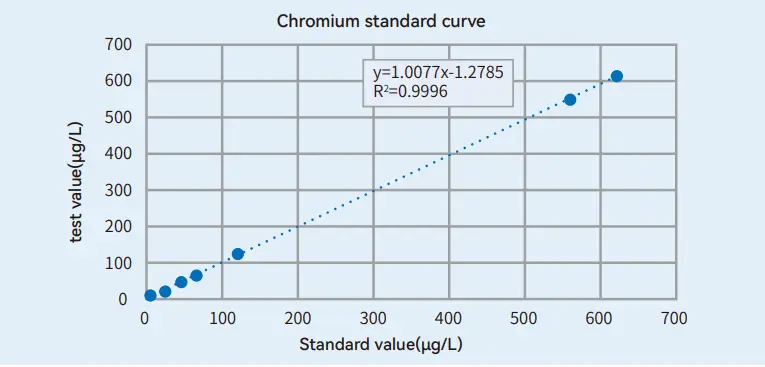
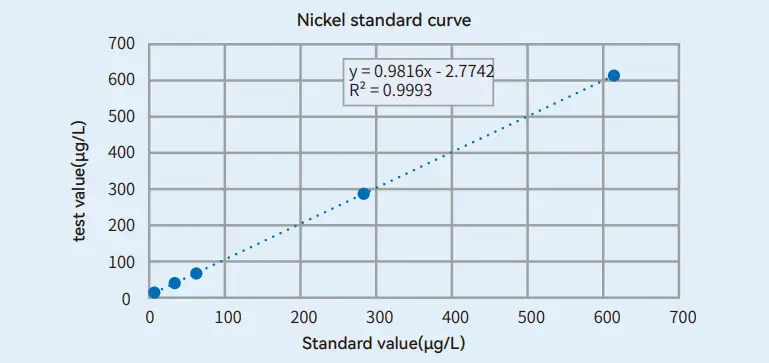
Analysis of Extremely Small Sample Amounts at the ng-μg Level
This method enables accurate analysis with only minimal sample quantities, making it highly suitable for situations where sample volume is limited.
Simultaneous Multi-Element Analysis
The instrument is capable of detecting multiple elements at once, including eight primary heavy metals like chromium and lead. With flexible detection settings, it can expand to analyze nearly 30 elements based on testing needs, significantly reducing analysis time.
LOD as Low as ppb Level
Achieving detection limits down to the parts-per-billion (ppb) level, this instrument surpasses the capabilities of traditional XRF, opening up vast potential for trace element analysis.
Rapid 2-Minute Processing Time
With just a 2-minute processing requirement and no need for calibration or sample digestion, this instrument offers exceptional convenience and efficiency, especially suited for on-site analysis.
Low Operating Costs
By directing the X-ray beam at a grazing angle, the instrument minimizes scattering and fluorescence background, resulting in lower background noise and dramatically reducing the detection limit. This efficiency contributes to significantly lower operating costs.
Total reflection X-ray fluorescence (TXRF) is a highly sensitive form of X-ray fluorescence used to measure trace and ultra-trace elements. It can detect contamination at very low concentrations, which makes it valuable for semiconductor, environmental, and pharmaceutical analysis.
The Total Reflection Principle
In TXRF, the X-ray beam strikes a flat, polished sample carrier at a very shallow angle, below what is called the important angle. At this grazing angle the X-rays do not penetrate the carrier but are almost entirely reflected from its surface. The thin sample placed on the carrier is excited by both the incoming and the reflected beams.
Why It Detects Trace Elements
Because the beam barely enters the carrier, the background scatter that normally hides faint signals is almost eliminated. As in standard XRF, each element in the sample emits fluorescent X-rays at energies unique to that element, and the detector measures them. With the background suppressed, the instrument can pick out elements present at extremely low levels, far below the limits of conventional XRF.
Size | 360mm x 265mm x 365mm(L×W×H) |
Weight | ≤15KG(without battery) |
Core Technology | Total reflection X-ray fluorescence (TXRF) |
Element Range | Mg—U |
Concentration Range | ppb to 100% |
Sample Types | Liquids, suspensions, powders, particles, metals, film tissues, wipes, etc. |
Sample volume | Liquids and suspensions from 1 µl to 50 µl, Particles up to 100 µm in diameter, powders up to 10 µg |
Sample carrier | Glass carriers |
X-ray tube | High brightness micro-focus fixed target light source |
Optical system | Multi-layer monochromator |
Detector | 50mm2 large area SDD detector |
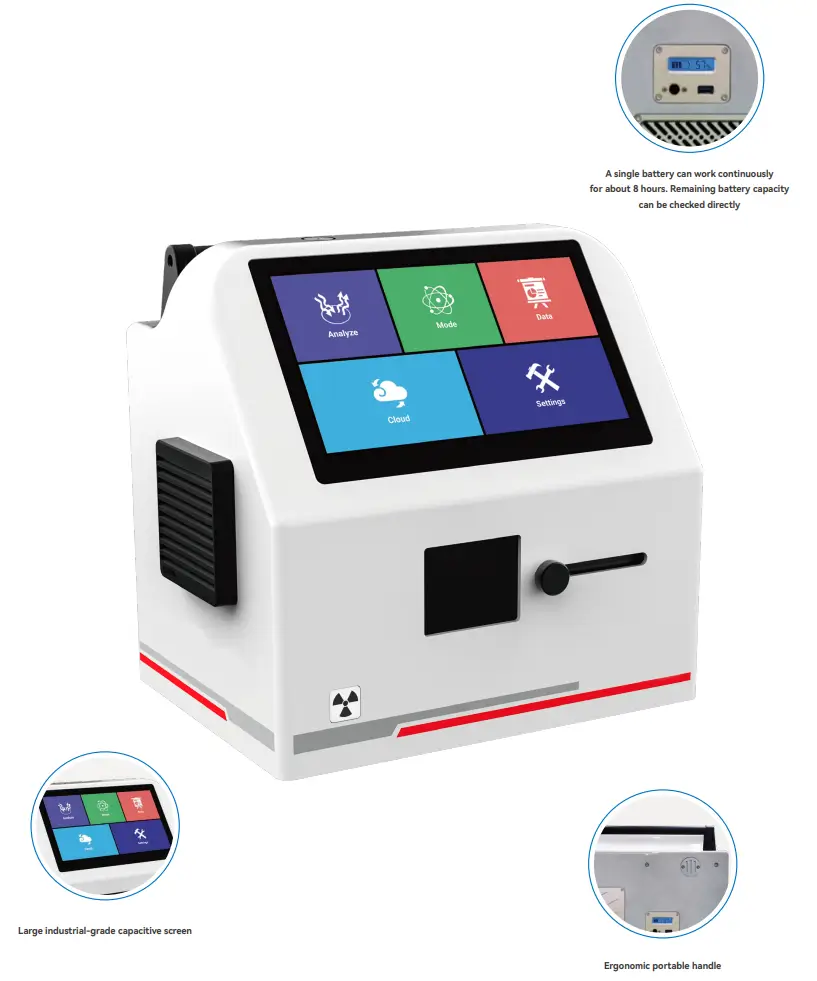
Data Display System | Integrated instrument with built-in display, super large industrial-grade capacitive screen |
Accessories(option) | Bluetooth printer, Pipette, Sampling tube, Heating dryer, Internal standard liquid, etc. |
Product configuration
High precision and good repeatability
The TTX3000S underwent multiple parallel enrichment measurements on a 5ppb standard sample to validate its repeatability and accuracy. The test results confirmed that the TTX3000S delivers outstanding performance in trace element analysis.
| Heavy Metal Elements Content In Food (µg/L) | ||||||||
|---|---|---|---|---|---|---|---|---|
| No. | Cr | Ni | Cu | Zn | As | Pb | Hg | |
| 1 | 4.70 | 4.98 | 4.91 | 5.04 | 5.36 | 4.90 | 5.04 | |
| 2 | 4.75 | 5.27 | 5.10 | 4.50 | 5.34 | 5.32 | 5.21 | |
| 3 | 5.47 | 4.59 | 4.92 | 5.46 | 5.27 | 4.89 | 5.13 | |
| 4 | 4.74 | 5.31 | 4.67 | 4.69 | 4.66 | 5.13 | 5.20 | |
| 5 | 5.02 | 5.11 | 4.98 | 5.07 | 5.38 | 5.06 | 4.86 | |
| 6 | 4.94 | 4.73 | 5.02 | 5.08 | 4.73 | 4.97 | 4.70 | |
| 7 | 5.16 | 4.74 | 4.87 | 5.14 | 5.35 | 4.97 | 4.50 | |
| 8 | 5.01 | 4.82 | 4.76 | 4.98 | 4.72 | 4.83 | 4.72 | |
| 9 | 4.86 | 4.57 | 4.88 | 5.12 | 4.76 | 5.29 | 4.91 | |
| 10 | 4.89 | 4.96 | 5.39 | 5.38 | 4.67 | 5.00 | 5.37 | |
| Average | 4.92 | 4.91 | 4.95 | 5.05 | 5.02 | 5.04 | 4.96 | |
| Standard deviation | 0.26 | 0.26 | 0.20 | 0.29 | 0.34 | 0.17 | 0.27 | |
| Relative standard deviation | 5.36% | 5.40% | 3.99% | 5.65% | 6.71% | 3.30% | 5.47% | |

