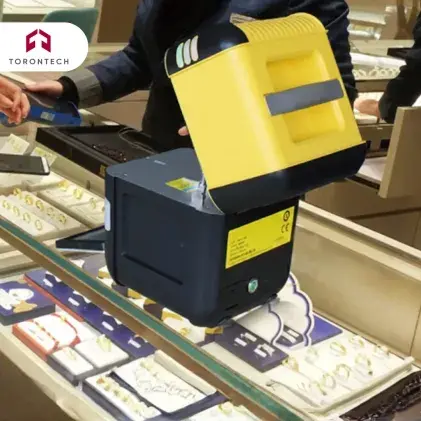
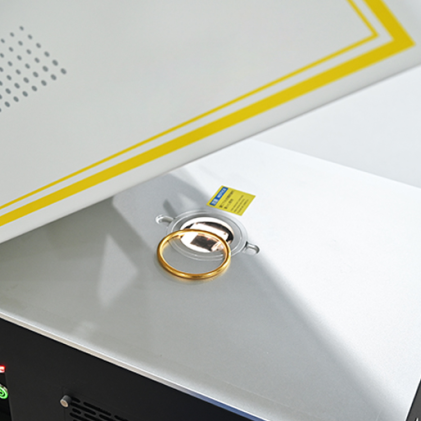
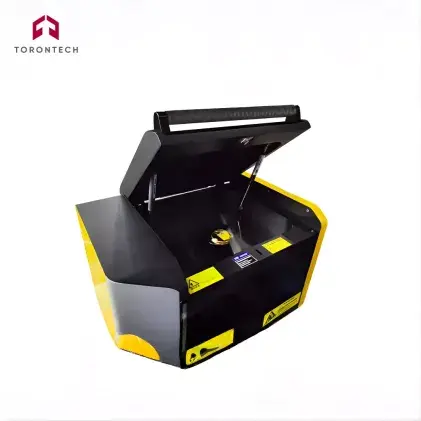
Introducing the Gold Precious Metal Analyzer series, a comprehensive lineup revolutionizing the assessment of precious metals. From handheld solutions like the TrueX Family for on-site evaluations to versatile benchtop analyzers like the PeDX and ScopeX PILOT Series, these instruments ensure swift and precise analysis of gold and other precious metals.
Whether for jewelry quality assessment, trade-in services, or recycling evaluations, trust these cutting-edge analyzers to deliver unparalleled accuracy, efficiency, and reliability, setting the standard for excellence in precious metal analysis.
The Gold Precious Metal Analyzer supports any operation that buys, grades, processes, or recycles precious metals. Because testing is non-destructive and fast, it fits both high-volume counters and precision laboratory grading.
Jewelry Retail and Manufacturing
Confirm karat value before purchase, resale, or repair. The analyzer detects under-karating and surface plating, which protects margins and customer trust.
Gold Buying and Trade-In Services
Verify purity at the counter in seconds. Accurate karat readings allow fair, defensible offers on scrap gold, coins, and second-hand jewelry.
Precious Metal Recycling and Refining
Sort incoming material by composition and confirm purity of refined output. Reliable elemental data improves recovery economics and reduces disputes.
Pawnbrokers and Assay Support
Screen items quickly during intake and support hallmarking and assay decisions with documented elemental results.
1. Non-Destructive XRF Analysis
The analyzer measures composition without cutting, scratching, or dissolving the sample, which preserves the value of finished jewelry and collectible items.
2. Direct Karat and Purity Readout
Results display in karat (10K to 24K) and percentage purity, with simultaneous detection of gold, silver, platinum, palladium, and common alloying elements such as copper, nickel, and zinc.
3. Handheld and Benchtop Configurations
Choose a portable handheld unit for counter and field testing, or a benchtop system for higher precision in laboratory and refinery settings.
4. Fast Multi-Element Results
Each measurement returns a full elemental breakdown in seconds, which keeps trade-in lines moving and shortens grading time.
5. Plating and Coating Detection
The analyzer flags surface plating over base metal, helping operators identify items that are not solid precious metal.
6. Consistent Reporting and Traceability
Standardized result formats support repeatable quality control and clear documentation for buyers, sellers, and auditors.
X-ray fluorescence (XRF) identifies the elements in a precious metal sample by measuring the characteristic X-rays each element emits. The technique is non-destructive, which is why it is the standard method for testing finished jewelry and high-value items.
How XRF Identifies Precious Metals
During analysis, an X-ray tube directs primary X-rays at the sample. This energy ejects an inner-shell electron from an atom in the material. The atom is now unstable, so an electron from a higher energy shell drops down to fill the vacancy.
As that electron moves to a lower energy level, it releases the energy difference as a secondary, or fluorescent, X-ray. Every element emits fluorescent X-rays at energies unique to that element. By measuring those energies, the analyzer determines which elements are present.
From Spectrum to Karat Value
The detector also counts how many fluorescent X-rays each element produces. Because the count relates to how much of that element is present, the system converts the spectrum into concentration values. For gold, those concentrations translate directly into karat value and percentage purity. As a result, the operator sees a clear elemental breakdown rather than a raw spectrum, which makes grading and trade-in decisions straightforward.