Comparing DWTT vs Charpy Cooling Chambers for Labs
Freezing your metal specimens to the exact required degree is a non-negotiable step to prevent catastrophic structural failures. Yet, finding the right sub-zero cooling setup can cause quite a headache when choosing between charpy vs DWTT cooling chambers.
Grasping the differences in sample sizes, target temperatures, and international testing standards is the key to securing highly repeatable, valid data for your facility. Read on as we break down the core mechanics of each system so you can make a practical, highly informed choice for your laboratory.
Key Takeaways
- Specimen Sizing Matters: Charpy setups handle small rectangular bars (10 x 10 x 55 mm), while DWTT hardware is built for thick, structural-weight steel plates (305 x 76.2 mm).
- Vastly Different Tank Volumes: Compact Charpy units utilize a 5L cooling bath, whereas massive DWTT chillers require a heavy-duty 60L fluid tank to manage the larger thermal mass.
- Different Goals: Charpy tests evaluate ductile-to-brittle transition temperatures, while DWTT checks fracture propagation in structural metals.
- Ergonomics are Standard: Both the DWTT-LTC80 and the CHARPY-LTC models use a split L-shape structure, protecting technicians from fatigue and making transfers incredibly fast.
- Cost-Smart Reliability: Every model runs on highly efficient refrigeration setups, including French Tecumseh compressors, keeping your long-term bills low while meeting strict ASTM rules.
Charpy Impact Cooling Chambers
The classic Charpy V-notch strike test is pretty much the most widely adopted method for mapping out ductile-to-brittle transition behavior (DBTT) and upper-shelf energy from small metal coupons. These Charpy chillers are typically small, totally enclosed, and heavily specimen-focused.
Charpy Temperature Control Mechanics
Your Charpy tests and the cold boxes you use must strictly follow heavy-duty official standards like ASTM E23 and ISO 148-1. To achieve this, Charpy temperature control relies on insulated holders, internal coolant flow, and dry-nitrogen-swept collapsible chambers that can hit a highly impressive ±1 °C precision. Modern setups even include direct cryogen injection systems, where liquid helium can stabilize specimens at an incredibly cold 4 K within just 45 seconds.
The Torontech Charpy Lineup
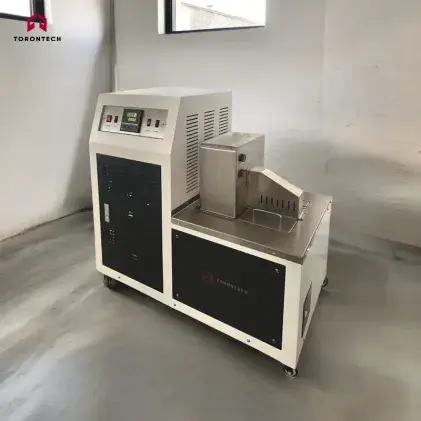
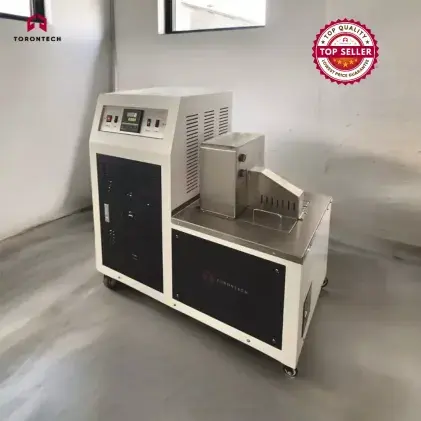
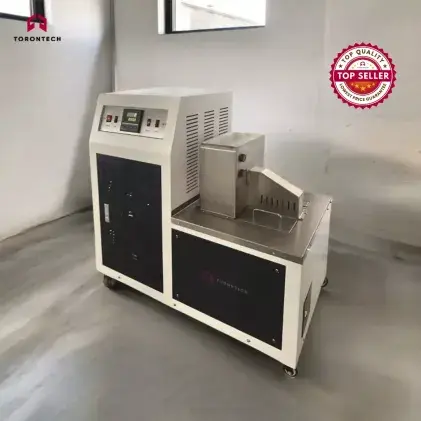
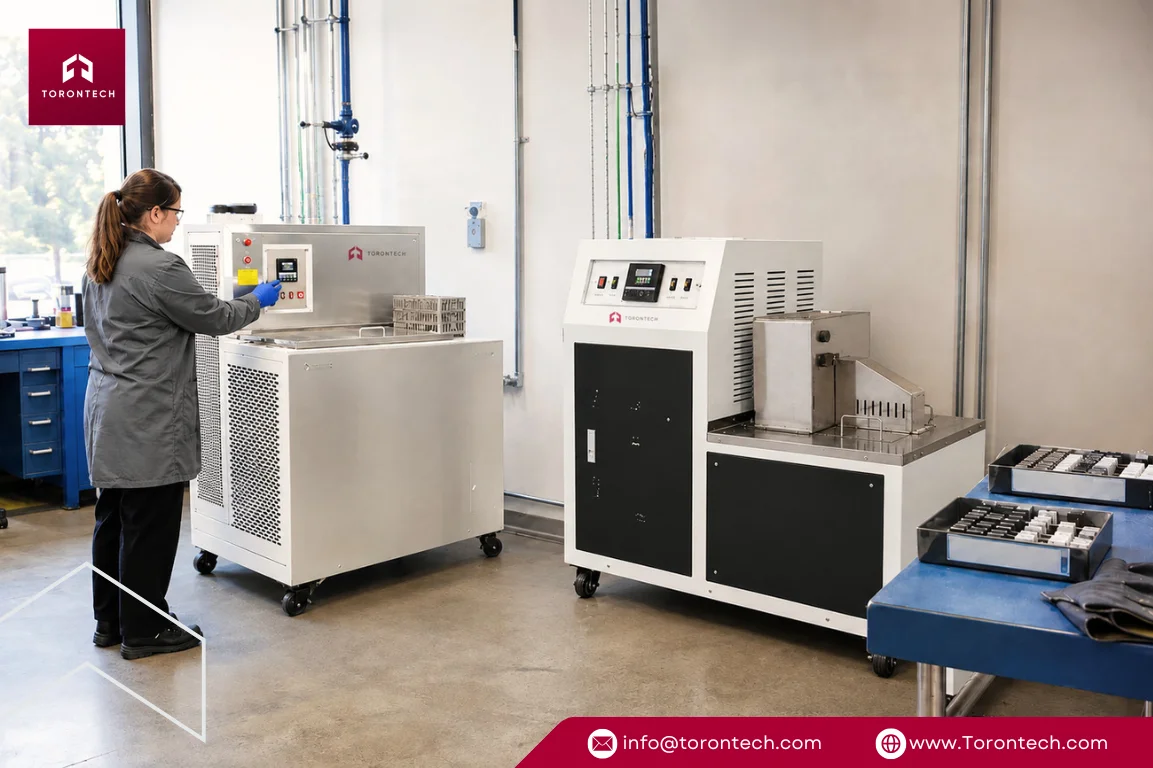
Our own lineup of CHARPY-LTC machines runs on highly durable cooling compressor setups built precisely for those tiny 10 x 10 x 55 mm specimen sizes. Every single one of these models features a smart 5L cooling tank capable of holding 60 standard specimens at once via three stainless steel baskets.
Depending on your exact needs, you can choose a single fully enclosed compressor for the LTC30 to hit -30°C, step up to a two-compressor setup for the LTC60 and LTC80, or scale all the way up to a three-compressor system on the LTC100 for an incredibly extreme -100°C test environment.
Our Honest Opinion: We think that even if the Charpy test looks perfectly straightforward on paper, the tiny, split-second window between retrieving that frozen metal bar out of the bath and placing it under the striking hammer is unbelievably narrow.
In our view, having a super-steady, quick-grab freezing box is what actually decides whether your whole test is successful or a total waste of time. However, buyers should always keep in mind a key limitation: the small specimen geometry inherent to Charpy testing can sometimes shift the apparent transition behavior.
Drop-Weight Tear Test (DWTT) Cooling Chambers
Drop-Weight Tear Testing (DWTT) is a far more intensive, structurally demanding level of impact testing. Rather than using a compact specimen chamber, DWTT cooling setups are typically built as massive liquid baths or machine-integrated chambers designed around giant specimens or even full-thickness pipe sections.
Primary Functions and Industrial Applications
While Charpy focuses on DBTT, DWTT is directly tied to assessing fracture propagation in thicker, highly structure-representative materials. These colossal chillers are essential for heavy oil and gas pipeline manufacturers, shipyard docks, and structural steel plants making giant plates.
A classic industry scenario is the manufacturing of high-strength steel pipes destined for extreme northern environments, such as major pipeline networks across British Columbia, Alberta, or Alaska. When winter temperatures in these regions plummet below -40°C, the steel must be certified to resist brittle fracture propagation under high pressure, making precise sub-zero DWTT pre-conditioning mandatory.
Refrigeration Architecture and Compliance
DWTT setups have to play by serious industry rules like ASTM E436 and ASTM E208. Because these specimens are absolute giants compared to tiny Charpy bars, DWTT cooling hardware prioritizes massive thermal mass.
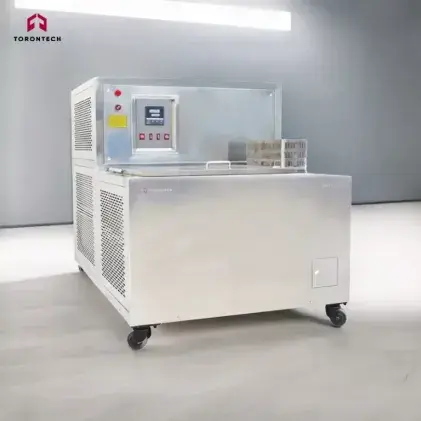
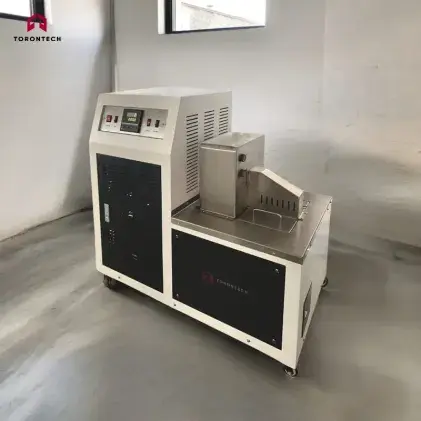
For instance, our DWTT-LTC80 model features an expansive 60L cooling tank that easily freezes up to 22 standard DWTT specimens (each measuring a giant 305 x 76.2 mm) in a single cycle. To handle this immense load, it relies on a heavy-duty cascade compressor refrigeration system using original France Tecumseh fully enclosed compressors, smoothly dropping temperatures from +30°C down to -80°C.
Some specialized setups use liquid-nitrogen cooling baths placed on both sides of a test vessel to create two different test temperatures simultaneously. Other modernized drop-weight machines feature fully integrated heating and cooling systems for across-the-board temperature testing.
Our Honest Opinion: Let's call it like it is: Drop-Weight Tear Testing is probably one of the most demanding, physically heavy tests you can run in a metallurgy lab. We think a lot of shops occasionally underestimate how much heat these massive chunks of metal hold, which can easily swamp an under-engineered cooling box.
We also advise laboratories to watch out for DWTT-specific artifacts near the transition region, as abnormal or inverse fractures can severely complicate your data interpretation.
Charpy vs DWTT Technical Comparison
To help visualize the differences at a glance, here is a breakdown of typical cooling approaches and capacities:
| The Testing Method | Typical Cooling Approach | What Actually Fits Inside | The Biggest Limitation |
|---|---|---|---|
| Charpy Testing | Small chamber, insulated holder, internal coolant flow, or direct cryogen injection. | A smart 5L fluid tank (holds 60 standard 10x10x55mm specimens via three stainless steel baskets). | Small specimen geometry can shift the apparent transition behavior. |
| DWTT Testing | Massively large bath or a machine-integrated temperature system for incredibly thick specimens. | A massive 60L fluid tank (easily holds up to 22 giant 305x76.2mm plates). | Abnormal or inverse fractures can make interpretation a massive headache. |
| Modified Charpy | Side-grooved and instrumented Charpy with strictly controlled temperature limits. | Varies by machine, but similar compact footprint to standard Charpy setups. | It is still not perfectly equivalent to a true DWTT test. |
So, for DWTT vs charpy cooling chambers, Charpy heavily relies on a compact, high-precision specimen chamber, whereas DWTT requires vastly larger cooling baths because the specimen and fracture problems are larger and far more structural in nature.
Related article: Cryostats vs. Mechanical Cooling for Impact Testing
Structural and Workflow Differences
When you are trying to choose between these two systems for your lab, some pretty major mechanical differences pop up:
1. Ergonomic Design and Transfer Speed
Grabbing freezing-cold steel specimens and placing them onto an impact testing machine must happen with lightning speed. Under strict ASTM E23 and ISO 148-1 rules, a Charpy specimen must be retrieved from the cooling liquid and struck within a strict 5-second window before ambient room heat ruins the test data. DWTT specimens face similarly demanding transfer limits, typically requiring placement in under 10 seconds despite the massive weight of the steel plates.
To help your technicians hit these tight time limits, both our DWTT-LTC80 and our entire CHARPY-LTC series use a brilliantly clever split L-shape layout. The taller section houses the digital control screen right at eye level, while the lower section keeps the freezing bath positioned low. This low-slung height sits flush with standard impact machines, allowing operators to slide heavy steel plates or retrieve small specimen baskets in one fluid motion without beating up their backs or losing precious seconds.
Our Honest Opinion: We absolutely believe that worker ergonomics and compliance speed go hand in hand. In our view, that low-slung L-shape build is not just a convenient feature; it is an essential safety shield that stops lab technicians from getting exhausted and dropping heavy sub-zero metal on their toes while racing against the 5-second clock.
2. Temperature Uniformity and Performance
Even though both chillers have to be highly accurate, the massive warmth trapped in giant DWTT plates means you need some intensely serious refrigeration performance. The DWTT-LTC80 uses a double-cascade compressor system loaded with genuine, fully sealed French-made Tecumseh compressors.
It pairs this with active fluid-stirring fans, a super-accurate PT100 sensor, and highly intelligent PID automatic adjustment. This setup gives you a rock-solid, incredibly uniform temperature (with an accuracy of ≤±0.5°C), even when you dial it down to a bone-chilling -80°C.
Equipment Selection Criteria
We always suggest that lab managers take a careful, step-by-step look before buying. Purchasing a machine that is entirely too big wastes your hard-earned budget, while buying one that is too small causes massive testing delays. Before you ask for a price, we suggest a run-through of this checklist:
1. Figure Out Your Daily Workload
Are you checking pile after pile of tiny samples for DBTT mapping, or are you running massive batches of heavy steel slabs for fracture propagation?
2. Know Your Coldest Testing Limits
Do your testing rules say you need to drop down to -30°C (perfect for the single-compressor CHARPY-LTC30), -80°C (ideal for the heavy-duty DWTT-LTC80), or an incredibly extreme -100°C (where the triple-compressor CHARPY-LTC100 shines)?
In North America, these testing parameters are often driven by regional infrastructure codes, such as the National Building Code of Canada or Federal Highway Administration rules in northern US states. For instance, structural steel used in bridge construction throughout Minnesota, North Dakota, or the Yukon must be certified to resist cracking at the specific, historical winter minimums of those locations.
3. Measure Your Actual Floor Space
Look closely at how much room the machine takes up and what physical features your staff need to stay safe (like that low-slung L-shape for lifting heavy plates).
4. Double-Check Your Official Rules
Make sure the cold box you pick plays perfectly by the exact ASTM, ISO, or GB/T rulebooks written into your client contracts.
Getting the Most for Your Money: The True Cost of Owning a Chamber
In any busy testing lab, a sub-zero chiller is a machine you will use for years on end. What makes Torontech’s cooling boxes stand out is the highly specific way they keep more cash in your wallet over the long haul.
By using incredibly energy-smart setups (like those original France Tecumseh compressors inside our DWTT machines) our chillers use significantly less electricity even when running flat-out. Plus, the rock-solid, highly dependable cold management from our PT100 sensors and PID control brains means you will never see your cold levels jumping around.
Related article: Choosing the Right Low-Temp Chamber for Impact Test
Our Honest Opinion: We have always said it, and we will keep saying it: buying an under-engineered cooling box that lets the temperature drift all over the place is a significant drain on your operating budget. The right machine saves you from the painful, hidden bills of wasted metal, running the same test three times, and having your whole lab sit idle.
Secure Reliable Lab Data with Torontech Chambers
A fraction of a degree off during impact testing can lead to completely invalid data, costly material rejections, or safety liabilities.
For more than twenty years, our crew has helped laboratories across the United States, Canada, and the globe secure highly stable, dependable cooling setups. By putting our brilliantly clever features and highly competitive prices to work, we make sure your testing steps strictly follow the hardest global and local rules, including ASTM and CSA standards, without draining your bank account.
Our team is entirely ready to help you get the job done, from answering technical questions to supplying your next upgrade. Reach out to the Torontech sales crew for a quick price check today to see how our brilliantly smart, budget-friendly machinery can keep your laboratory running like an absolute dream.
References (Click to expand)
- Amano, T., Igi, S., Sakimoto, T., Inoue, T., & Aihara, S. (2016). Fracture Behavior in West Jefferson Test Under Low-Temperature Condition for X65 Steel Pipe With High Charpy Energy: Current Activities in HLP Committee, Japan, Report 1.
- Chaouadi, R., & Gérard, R. (2021). Development of a method for extracting fracture toughness from instrumented Charpy impact tests in the ductile and transition regimes. Theoretical and Applied Fracture Mechanics, 115, 103080.
- Eiber, R., Duffy, A., & McClure, G. (1970). SIGNIFICANCE OF THE DROP-WEIGHT TEAR TEST AND CHARPY V-NOTCH IMPACT TEST RESULTS.
- Gioacchino, F., Lucon, E., Mitchell, E. B., Clarke, K., & Matlock, D. (2021). Side-grooved Charpy impact testing: Assessment of splitting and fracture properties of high-toughness plate steels. Materials science & engineering. A, Structural materials : properties, microstructure and processing, 252.
- Kang, M., Kim, H.-M., Lee, S., & Shin, S. (2014). Effects of Dynamic Strain Hardening Exponent on Abnormal Cleavage Fracture Occurring During Drop Weight Tear Test of API X70 and X80 Linepipe Steels. Metallurgical and Materials Transactions A, 45, 682-697.
- Kravchuk, A. V., Kondryakov, E., Zhmaka, V. N., & Kharchenko, V. V. (2024). Modernization of the VK-350 Instrumented Drop Weight Impact Testing Machine for Impact Testing of Various Types. Strength of Materials, 56, 305 - 315.
- Lee, I., Merickel, J. W., Sreenivasulu, Y. K., Xu, F., Tang, Y., Rittenhouse, J. E., Vakanski, A., & Song, R. (2025). Comprehensive Toughness Dataset of Nuclear Reactor Structural Materials using Charpy V-Notch Impact Testing. Scientific Data, 12.
- Majidi-Jirandehi, A., & Hashemi, S. (2018). Weld metal fracture characterization of API X65 steel using drop weight tear test. Materials Research Express, 6.
- Mao, J., Xu, Q., Yang, J., Cao, C., Wang, D., Zhong, F., & Chen, M. (2024). Nonlinear Impact Damage Evolution of Charpy Type and Analysis of Its Key Influencing Factors. Chinese Journal of Mechanical Engineering, 37, 1-11.
- Merle, G., Yong-Sok, O., Pillot, C., & Sautereau, H. (1985). Instrumented and temperature-controlled charpy impact tester. Polymer Testing, 5, 37-43.
- On, H., Yoon, J., Kwon, J.-Y., Lee, G.-H., & Oh, S. (2025). Feasibility Analysis and Verification of 4K Cryogenic Charpy Impact Test Method Using Liquid Helium. Korean Journal of Metals and Materials.
- Zhang, F., & Rosenfeld, M. (2022). Update of Line Pipe Charpy Test Interpretation. Volume 3: Operations, Monitoring, and Maintenance; Materials and Joining.