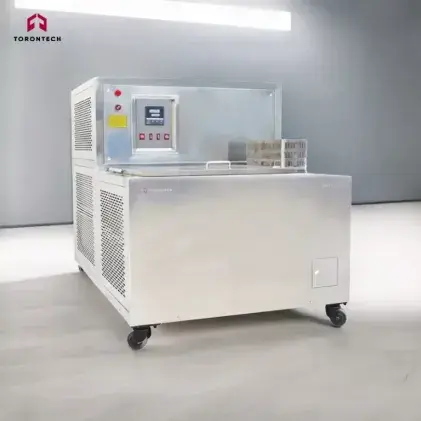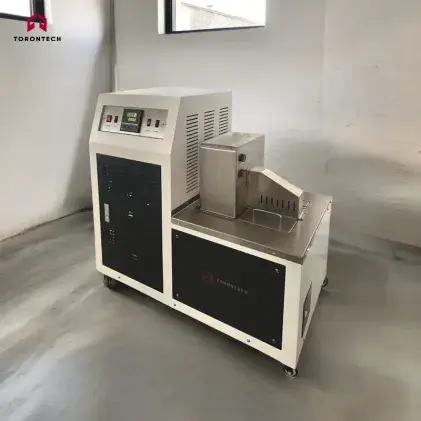
Choosing the Right Low-Temp Chamber for Impact Test
Watching a critical piece of structural metal fracture under intense mechanical stress is deeply revealing, but getting your temperature off by even a fraction of a degree is an absolute disaster. In structural testing, ensuring your specimens stay at exact, uniform sub-zero temperatures is the difference between reliable data and a total testing failure.
The best cooling chamber holds your target temperature during the actual impact event, matches your physical testing rig, and keeps your operational budget happy. We believe finding the right equipment is the key to consistent, compliant test results: here is exactly what you must look for.
Key Takeaways
- Focus on Specimen-Level Tracking: Accurate impact results rely on measuring temperatures directly on your test bars, rather than trusting the empty cabinet air.
- Prioritize Mechanical Compatibility: Confirm that your cooling cabinet integrates cleanly with the geometry of your existing drop tower, Charpy rig, or testing fixtures.
- Choose Compressor Technology Over Nitrogen: Modern mechanical refrigeration is safer, easier to manage, and completely eliminates recurring gas delivery bills.
- Review Local Compliance Standards: Select hardware that aligns easily with North American safety guidelines, including OSHA in the US and CCOHS in Canada.
- Assess Long-Term Operating Costs: Factor in ongoing maintenance and logistics, since cheap upfront setups often turn into massive money pits over time.
Critical Factors for Equipment Selection
Every single testing facility operates under unique limits. Maybe you are being squeezed into a tight room, running samples non-stop day and night, or counting every single dollar.
If you are carefully weighing your options on how to choose low-temperature cooling chamber for impact testing, a practical selection sequence is required: define the target freezing point and impact method, choose a compatible cooling medium, confirm the testing rig integration, and then verify the temperature control directly at the specimen.
Related article: Cryostats vs. Mechanical Cooling for Impact Testing
Here are the non-negotiable points we think you should focus on before signing any purchase orders:
1. Operational Temperature Limits and Required Precision
Start with the absolute bottom-of-the-thermometer freeze your testing guidelines force you to hit. Modern cold-making cabinets use specific cooling setups built for different freezing zones. Studies span roughly 0 to -60°C in integrated environmental cabinets, -169°C with liquid nitrogen boxes, and a staggering 4 K with specialized liquid helium systems.
In our view, selecting your minimum temperature range is heavily dictated by your geographical target market:
- Standard Infrastructure (-30°C to -40°C): Testing automotive polymers or interior components in North American hubs like Michigan or Ontario usually requires a single fully enclosed compressor, like those found in the CHARPY-LTC30 or CHARPY-LTC40.
- Extreme Environments (-60°C to -100°C): Analyzing structural steel destined for high-pressure pipeline networks in Yukon, Alberta, or Alaska demands deep freezes. These applications require the intense freezing muscle of dual or triple compressor units like the CHARPY-LTC80 or CHARPY-LTC100.
But hitting the target temperature is only half the battle; maintaining it is where compliance actually happens. To ensure your data is perfectly accurate, look for these precision capabilities:
- Validated Control: True precision requires validated control hovering closely around ±1 to ±2°C. We insist on machines utilizing high-precision platinum resistance PT100 sensors to achieve a temperature accuracy of ≤±0.5°C and an internal uniformity of ≤1°C for standard Charpy chambers (≤2°C for larger DWTT units).
- Specimen-Level Tracking: Recent papers highlight placing heat sensors directly on the specimens rather than just measuring the internal air, because reading the empty cabinet environment alone can completely mislead your data.
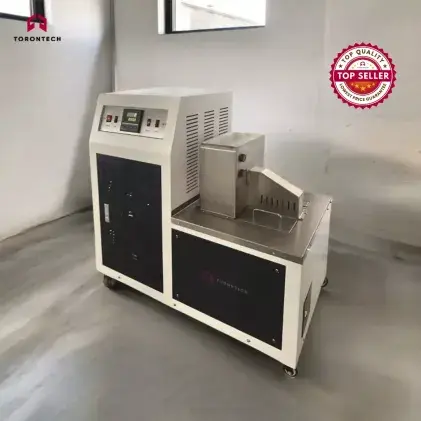
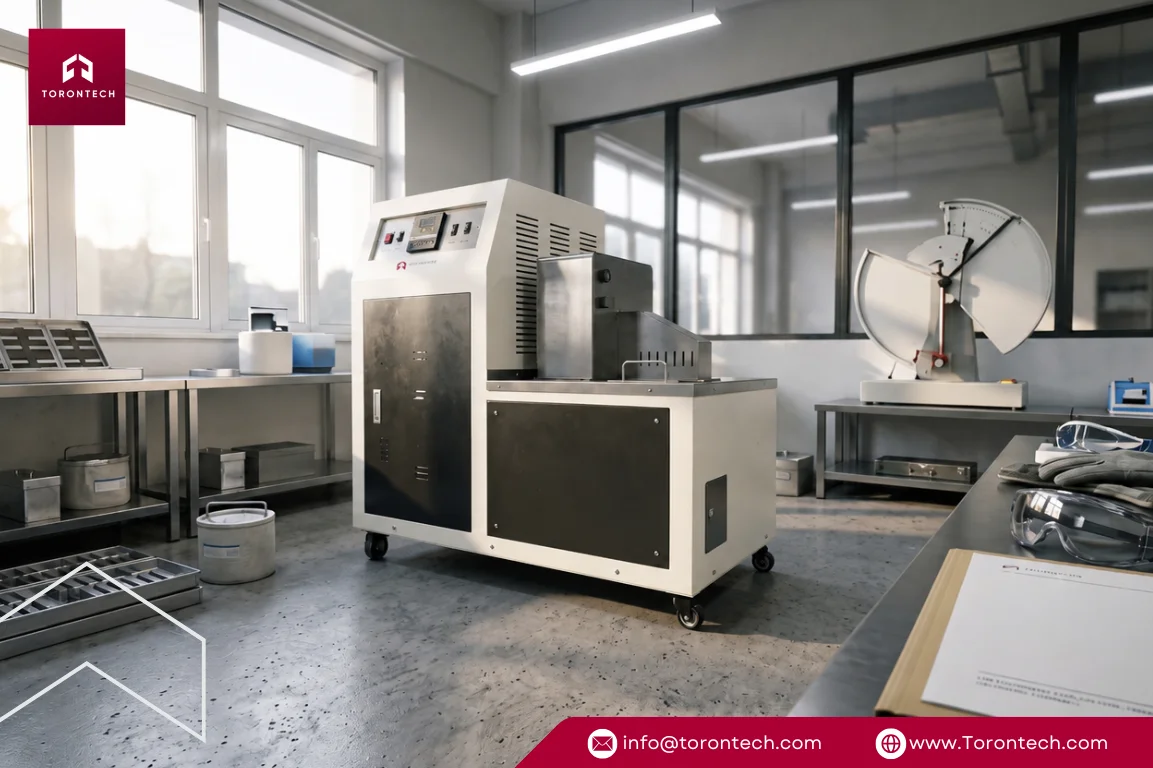
- Executing ASTM E23 Timing Rules: ASTM E23 dictates two highly critical timeframes: a mandatory liquid bath soak time to stabilize the material core, and a strict five-second maximum window to extract the specimen and strike it on the anvil. You can easily manage both phases by combining a built-in digital timer (allowing exact 1 to 9999-minute soak tracking) with an ergonomic "L" shape cabinet design. The lower height of the "L" structure aligns perfectly with the impact machine, preventing awkward lifting and allowing your technicians to beat that five-second transfer window effortlessly.
Related article: Comparing DWTT vs Charpy Cooling Chambers for Labs
2. Mechanical Integration and Heat-Load Tolerance
Before you get focused on buttons and digital control screens, look at the actual chunks of material you need to freeze and how they fit into your testing workflow. Your cabinet must fit perfectly with your drop tower, Charpy setup, or split Hopkinson pressure bar geometry.
Naturally, the physical size of your cooling chamber depends entirely on whether your laboratory runs standard Charpy impacts or Drop-Weight Tear Tests (DWTT). While both methods evaluate cold-stress failures, they use vastly different materials: Charpy relies on small, easily handled notched bars to check baseline toughness, whereas DWTT requires massive steel slabs to simulate catastrophic, long-running pipeline fractures.
Because of this drastic difference in physical mass, your specific test method directly dictates the internal volume and structure of your ideal chamber:
- Standard Charpy Specimens: If you are chilling traditional rectangular metal specimens, standard configurations like the CHARPY-LTC series easily hold 60 pieces of standard impact specimens measuring 10 × 10 × 55 mm across three stainless steel sample baskets.
- DWTT Steel Slabs: Drop-Weight Tear Testing (DWTT) is a mandatory safety safeguard relied upon by major pipeline operators across Canada and the US. Major North American steel mills testing these thicker, larger plates require a unit specifically built for heavy geometry, which is why the DWTT-LTC80 is configured to accommodate up to 22 standard DWTT specimens measuring 305 x 76.2 mm.
We often see testing teams forget how much a big, warm pile of steel blocks the internal fluid flow and alters temperature uniformity. We highly recommend prioritizing setups featuring a magnetic induction stirring motor to provide forced fluid agitation, ensuring every single sample gets blasted with cold fluid evenly. It makes grabbing them with your tongs significantly easier, especially if the cabinet features an "L" shape ergonomic design that prevents your staff from hurting their backs during the critical transfer phase.
3. Refrigeration Technology: Compressor vs. Liquid Nitrogen
Historically, everyone relied on large tanks of liquid nitrogen to freeze materials. But honestly, we think that is becoming a major operational hassle.
For moderate freezing needs, modern compressor cooling paired with an absolute ethyl alcohol cooling medium is significantly more sensible. Utilizing original France Tecumseh fully enclosed compressors and Danfoss thermal expansion valves removes the necessity for messy gas tanks.
Here is our raw breakdown of how they stack up against each other:
| Feature | Modern Compressor Technology | Traditional Liquid Nitrogen (LN2) |
|---|---|---|
| Ongoing Costs | Wonderfully affordable: Uses standard wall electricity. | Painfully expensive: Constant delivery bills for gas refills. |
| Safety & Handling | High: Plug it in, turn it on, zero hazards. | Low: Cryogenic burns and scary suffocation risks; needs serious protective gear. |
| Temperature Stability | Perfectly steady: Clever controllers hold your target. | Highly variable: Fluctuates wildly depending on manual tweaking. |
| Maintenance | Minimal: Standard checks keep things running smoothly. | Annoying: Constant tank swaps and frosty valve issues. |
4. Standards Alignment and Simulation Verification
Do not even think about cutting corners on compliance. Your machine must work seamlessly with global rulebooks like ASTM E23-2018, ISO 148-1:2016, and DIN EN 10045-1:1991.
The right gear ensures that from the minute your sample takes a bath in the cold absolute ethyl alcohol to the second you slap it onto the anvil, the temperature stays locked in. We also favor simulation-backed designs. Utilizing digital-twin and computational fluid dynamics (CFD) studies heavily improves the prediction of settling times and temperature-field behavior.
Total Cost of Ownership (TCO) and ROI Analysis
Let us talk about money. Specifically, we need to address the trap of buying a cheap machine. In our experience, focusing purely on the sticker price is the quickest way to blow your budget. Simpler liquid nitrogen setups or low-cost baths emphasize economical operation upfront, but a bargain-bin machine that hogs liquid nitrogen or constantly drifts out of calibration will turn into a massive money pit over time.
By switching to compressor-driven chillers, you completely eliminate those costly recurring gas deliveries. Eliminating high-pressure liquid nitrogen tanks immediately helps your testing facility easily align with OSHA regulations in the US and CCOHS workplace safety guidelines in Canada.
Beyond safety, avoiding recurring gas deliveries is a massive benefit for remote testing labs across North America, where winter logistics make nitrogen hauling highly unreliable and outrageously expensive. Plus, integrated overload and leakage protection features keep things safe, meaning you avoid paying for complicated safety certifications! Choosing clever, durable setups keeps your ongoing costs incredibly low, saving you heaps of cash while keeping your testing super accurate.
Torontech Low-Temperature Chamber Specifications
At Torontech, we focus intensely on helping laboratories pair high-end performance with smart, budget-friendly equipment. We build our cooling chambers to handle the brutal, chilly demands of impact testing without making your staff pull their hair out trying to operate them.
Check out our lineup of compressor-based setups built specifically for real-world testing:
| Torontech Model | Minimum Temperature | Ideal Application | Specimen Capacity |
|---|---|---|---|
| CHARPY-LTC30 / 40 | -30°C / -40°C | Everyday freezing setups using a single enclosed compressor | 60 standard impact pieces |
| CHARPY-LTC60 / 80 | -60°C / -80°C | Deep-freeze testing utilizing two fully enclosed compressors | 60 standard impact pieces |
| CHARPY-LTC100 | -100°C | Specialty tests relying on three fully enclosed compressors | 60 standard impact pieces |
| DWTT-LTC80 | -80°C | Heavy-duty pipeline checks requiring massive internal volume | 22 standard DWTT slabs |
Secure Accurate Cold Impact Testing with Torontech
The best low-temperature cooling chamber for impact testing is the one that matches your minimum temperature, maintains verified specimen temperature during the hit, and integrates cleanly with your testing rig. When you grab a high-quality cold box, you kill off the headache of fluctuating temperatures, making sure your results are always on point and ready for any auditor.
If you want to step up your laboratory's testing setup, we are here to make it happen. Based in the US and Canada, we focus on hooking up testing facilities with cost-effective solutions and innovative technologies. Our friendly experts are ready to help you identify the exact system your lab requires.
Explore our full range of Low-Temperature Cooling Chambers here and shoot us a message today to get a quick quote. Let us make your sample prep absolutely worry-free!
References (Click to expand)
- Castellanos, A., & Prabhakar, P. (2021). Elucidating the mechanisms of damage in foam core sandwich composites under impact loading and low temperatures. Journal of Sandwich Structures and Materials, 24, 337 - 359.
- Xu, H., Rong, C.-X., Wang, B., Zhang, Q., Shen, Z., & Jin, Y. (2024). Dynamic mechanical behavior and energy dissipation characteristics of low-temperature saturated granite under cyclic impact loading. Scientific Reports, 14.
- Merle, G., Yong-Sok, O., Pillot, C., & Sautereau, H. (1985). Instrumented and temperature-controlled charpy impact tester. Polymer Testing, 5, 37-43.
- Shichao, J. (2019). Research on Modelling and Simulation Method of Low Pressure and Temperature Environment Chamber. Journal of Physics: Conference Series, 1284.
- Zeng, Y., Chen, H., Yu, R., Shen, Z., Yu, Z., & Liu, J. (2020). Experimental Research on Dynamic Behavior of Circular Mild Steel Plates with Surface Cracks Subjected to Repeated Impacts in Low Temperature. Shock and Vibration.
- Ezike, S., Alabi, A. B., Ossai, A. N., & Aina, A. (2018). A Low-Cost Temperature-Controlled Chamber Fabricated for Materials Testing. Designs.
- Ji, C., Li, Y., Xie, Z., Yuan, Q., Feng, W., & Ding, G. (2020). Research on Test Method about Coupling Effect of Ultra Low Temperature and Mechanic Force. Journal of Physics: Conference Series, 1622.
- On, H., Yoon, J., Kwon, J.-Y., Lee, G.-H., & Oh, S. (2025). Feasibility Analysis and Verification of 4K Cryogenic Charpy Impact Test Method Using Liquid Helium. Korean Journal of Metals and Materials.
- Zhu, L., Guo, K., Li, Y., Yu, T. X., & Zhou, Q. (2018). Experimental study on the dynamic behaviour of aluminium foam sandwich plates under single and repeated impacts at low temperature. International Journal of Impact Engineering, 114, 123-132.
- Ibekwe, S., Mensah, P., Li, G., Pang, S., & Stubblefield, M. (2007). Impact and post impact response of laminated beams at low temperatures. Composite Structures, 79, 12-17.
- Li, C., Xie, S., & An, Q. (2025). Practice and Analysis of Dynamic Mechanical Experiments of Low-Temperature Rocks in Blasting Engineering Educations. Education Insights.
- Liu, Z., Zhang, B., Wang, G., & Li, S. (2023). Simulation study on flow and response temperature of armored vehicle in low temperature environment test. Journal of Physics: Conference Series, 2599.
- Yang, H., Fan, R., Jin, L., & Wang, J. (2025). Research on parallel simulation and digital twin method for temperature control of high and low temperature environment experimental chamber. Measurement Science and Technology, 36.
- Wang, Kuai, & Chen. (2007). Direct cooling accumulation high and low-temperature impact testing box.
- Vajda, J., & Hart, D. P. (1953). A Low Temperature Bath for Constant Temperature Studies. Review of Scientific Instruments, 24, 354-355.