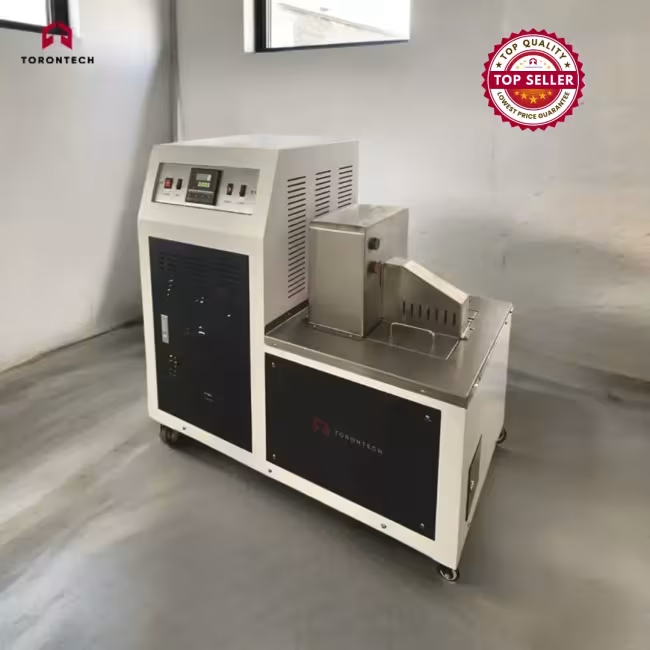
Charpy Impact Test Specimen Low Temperature Chamber - CHARPY-LTC60
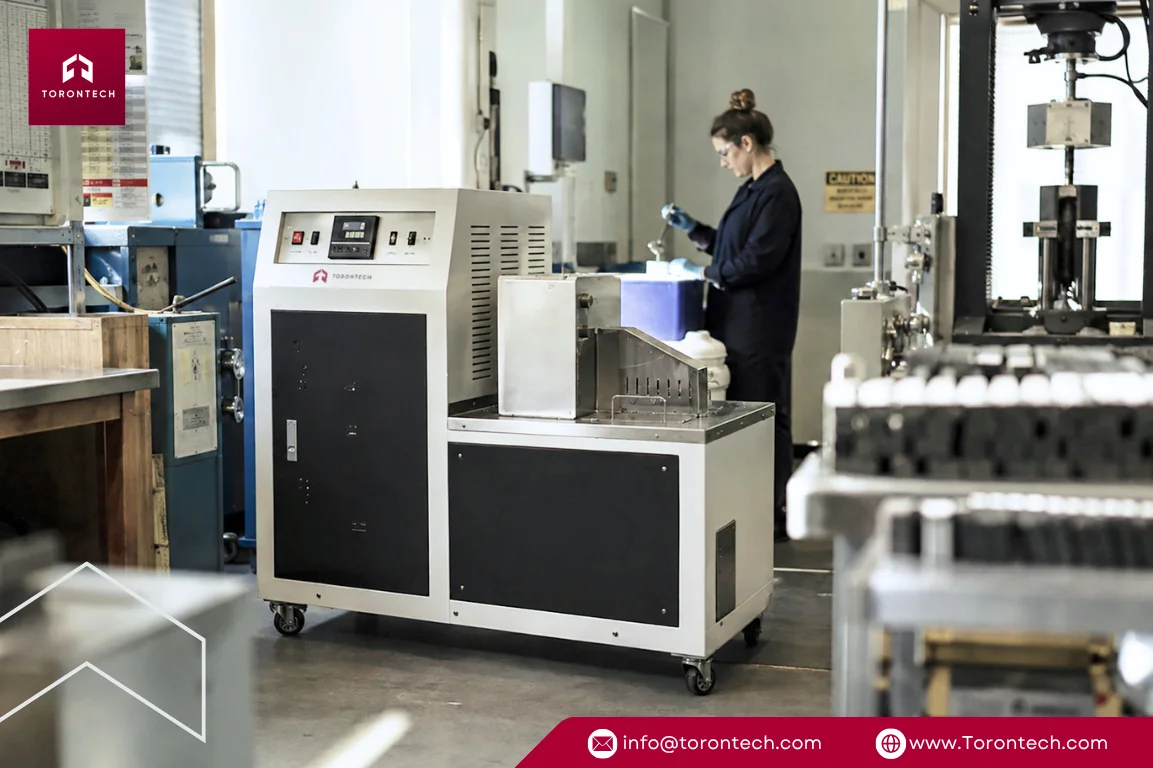
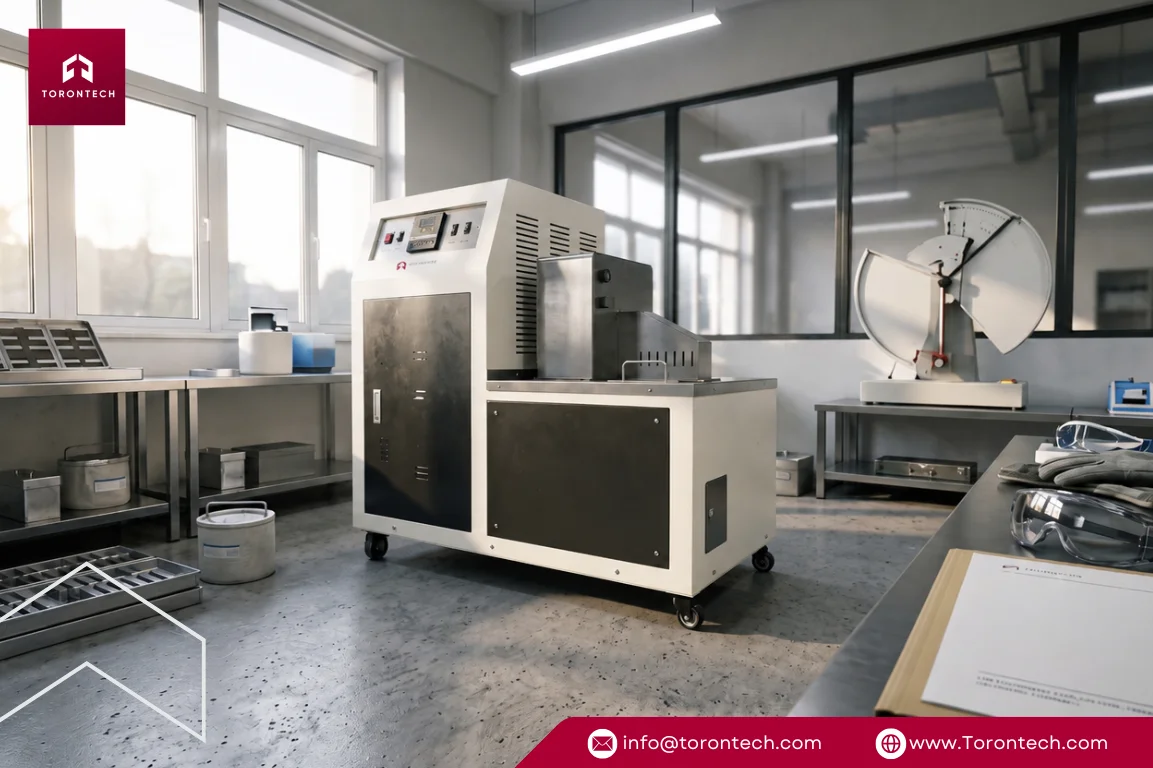
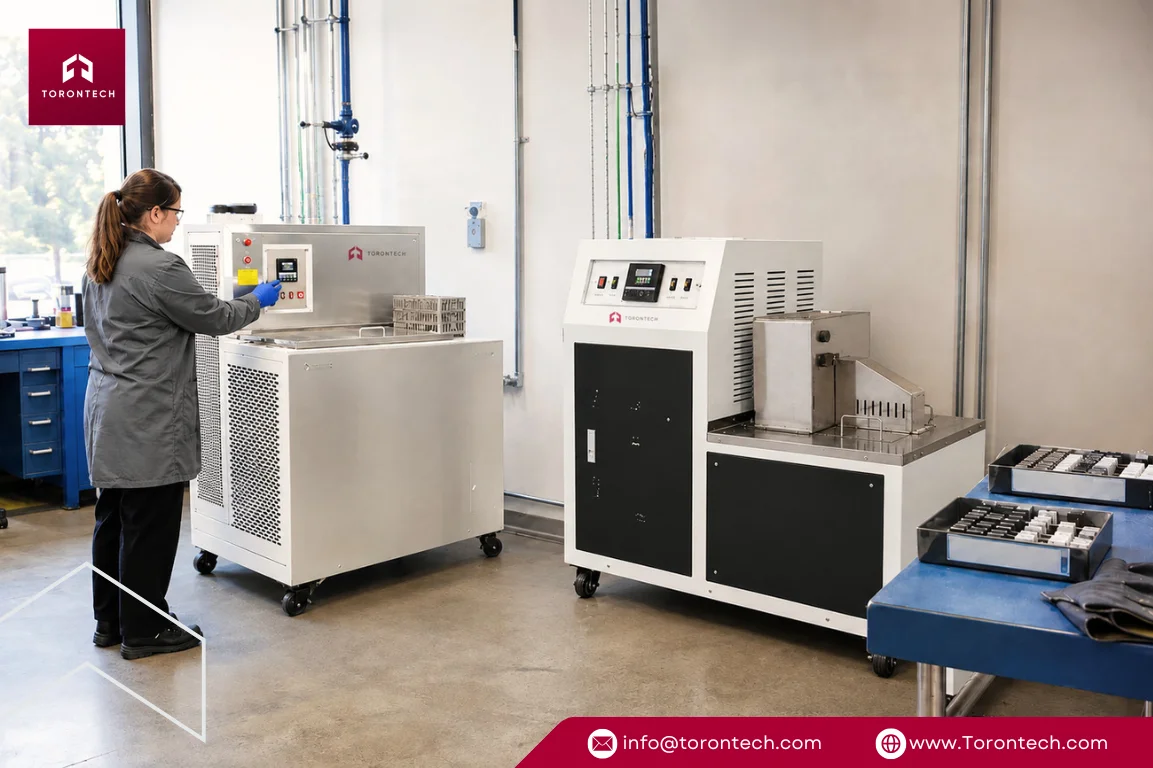
Charpy Impact Test Specimen Low Temperature Chamber - CHARPY-LTC60 is a newly developed compressor refrigeration system designed to meet the requirements for low-temperature testing as outlined in ASTM E23-2018, ISO 148, European EN10045 standards.
This equipment utilizes compressor refrigeration technology, heat balance principles, and a circulating stirring method to ensure uniform, automatic cooling and stable temperature control for test specimens.
The CHARPY-LTC60 is controlled by microcomputer technology, offering digital temperature display, automatic temperature regulation, timing, and alarm functions. It features fast cooling, a large chamber, and high temperature control accuracy, making it the ideal equipment for low-temperature impact testing, sample cooling, and heat preservation. Its versatility also allows it to be used for other low-temperature detection and testing applications. With easy operation and reliable performance, it fully meets the temperature control requirements of international standards.
Applicable Standards
- ASTM E23-2018: Metallic materials — Notched specimens impact test method
- ISO 148-1:2016: Metallic materials — Charpy pendulum impact test — Part 1: Test method
- DIN EN 10045-1:1991: Charpy impact test on metallic materials; Part 1 — Test method
- JB-5376-1991: Technical requirements for low-temperature constant temperature tank
Performance Characters
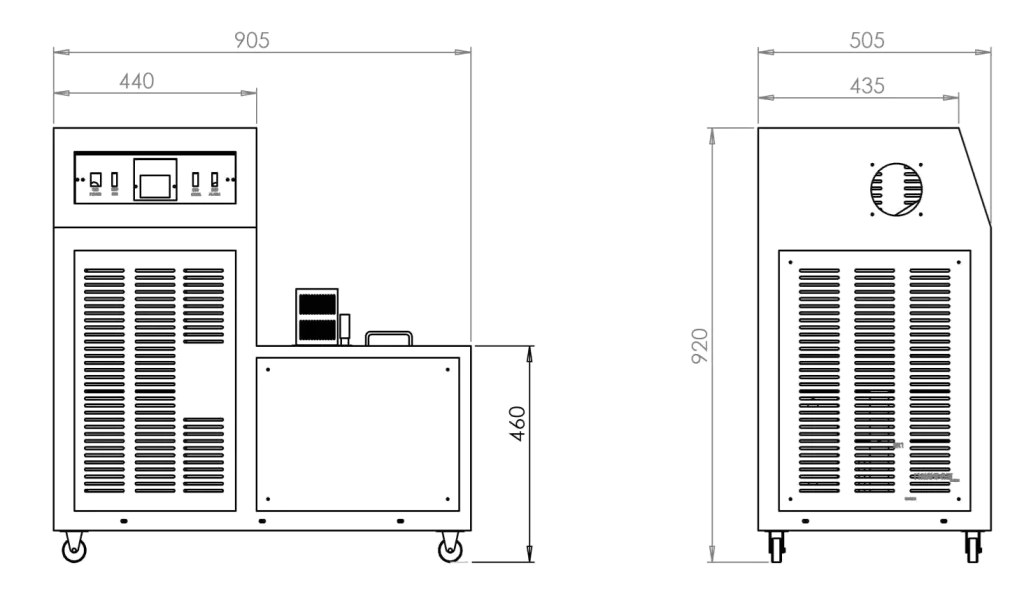
- Ergonomic Structure Design: The machine features a practical "L" shape, with a high section for control functions (temperature setting and operation) and a lower freezing tank that facilitates easy sample placement and clamping. The height is designed to align with the impact testing machine, enabling quick and precise sample positioning.
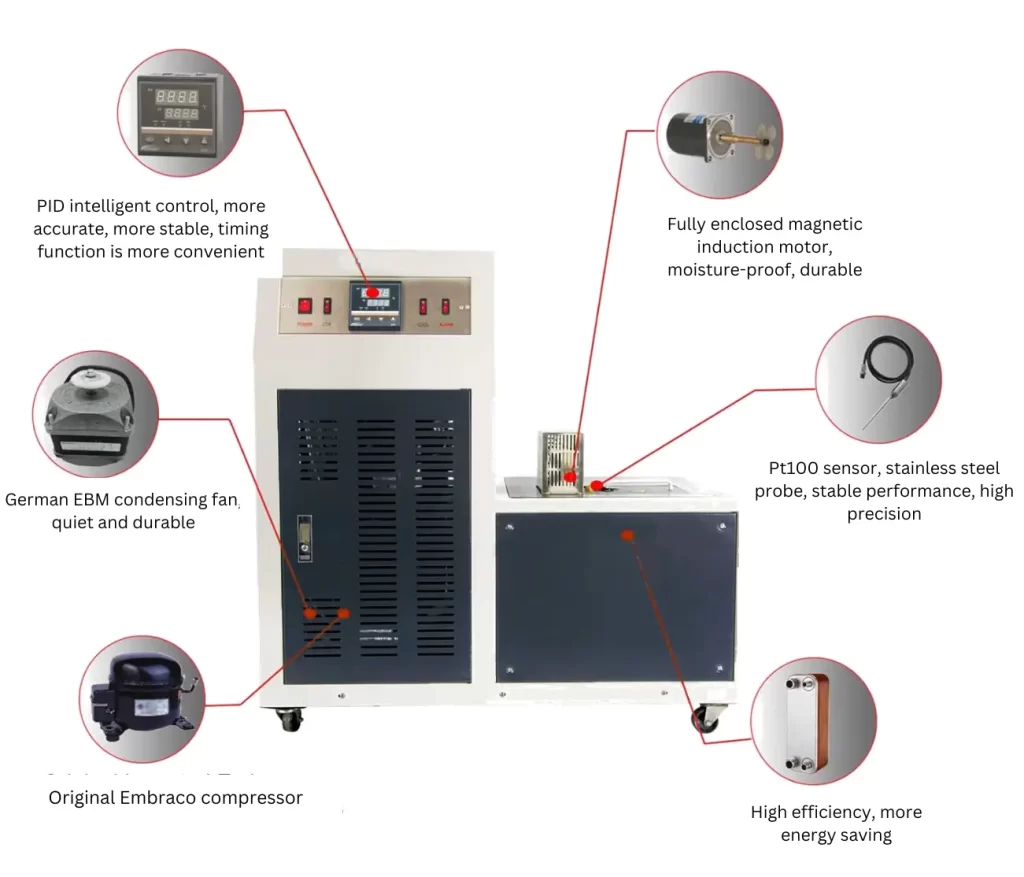
- High-End Refrigeration Components: The system is equipped with an fully enclosed compressor and premium core components, ensuring long-term stable operation and extended service life. Condensing fan operates quietly with a long lifespan, and the environmentally friendly refrigerant adds to the system's green credentials.
- Precise Temperature Control: The equipment uses a high-precision temperature control system with automatic PID adjustment, maintaining constant temperature. It features a platinum resistance sensor, a stainless steel probe for stable performance, and low-noise, long-life magnetic induction stirring motor. This motor operates efficiently in low-temperature, high-humidity environments, ensuring the tank's medium is effectively agitated with good fluidity, while the high-quality stainless steel heater minimizes temperature fluctuations and ensures uniformity.
- High Sample Capacity: The system comes with three sample baskets, capable of freezing 60 standard-sized samples (10 x 10 x 55 mm) at once. Smaller sample sizes, such as 7.5 x 10 x 55 mm, 5 x 10 x 55 mm, and 2.5 x 10 x 55 mm, can also be accommodated in greater numbers.
- Ease of Use and Mobility: Universal casters at the bottom of the equipment allow for easy movement. The sample basket design simplifies sample handling, while a liquid discharge port facilitates cooling medium recycling and cleaning. Additional features include temperature alarms and insulation timing, which help operators schedule tasks efficiently.
- Comprehensive Protection: The equipment includes overload protection, leakage protection, grounding protection, compressor overload protection, and medium over-temperature (anti-drying) protection, ensuring safe and reliable operation at all times.
Configuration
- Compressor: Fully enclosed compressors with original packaging and serial numbers — two sets
- Condensing Device: High-efficiency finned condenser, condensing fan with original packaging — two sets
- Heat Exchanger: Stainless steel plate-type heat exchanger — one piece
- Heat Insulation: Rigid polyurethane foam insulation for effective thermal retention
- Shell: Cold-rolled steel, folded, with an electrostatic spray coating for durability
- Stirring Device: One set for consistent medium circulation
- Temperature Control Device: One set for precise temperature regulation
- Stainless Steel Sample Basket: Three pieces for holding samples securely
Temperature control range | +30~-60℃ |
Temperature control accuracy | ≤±0.5℃ |
Temperature uniformity | ≤1℃ |
Cooling speed (when room temperature is 25℃) | Room temperature~0℃: 1.8℃/min 0℃~-20℃: 1.5℃/min -20℃~-40℃: 1.3℃/min -40℃~-60℃: 1.0℃/min |
Heating speed | 3℃/min |
Size of cooling tank | 275×160×120mm (Length x Width x Height), 5L |
Effective size of cooling tank | 150×140×110mm (Length x Width x Height) |
Specimen capacity | 60 pieces (impact specimen size:10×10×55mm) |
Digital timer | 1minute ~ 9999 minutes, resolution: 1minute |
Cooling medium | Absolute ethyl alcohol |
Dimensions | 905×505×920mm (Length x Width x Height) |
Voltage | AC220V,50HZ (110V is also available) |
Power | 2.2kW |
Operating environment temperature | 5℃~30℃ |
Dimensions