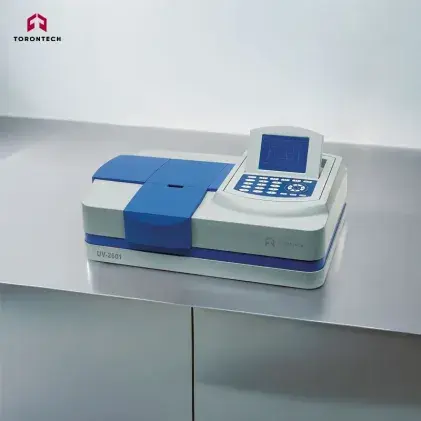
UV-VIS Spectrophotometers – ToronUV-VIS™ Series
UV-VIS Spectrophotometers – ToronUV-VIS™ Series
Torontech offers a comprehensive range of UV-VIS Spectrophotometers, designed to deliver precise and reliable spectral analysis across various industries. Our advanced models include single beam, split beam, and double beam UV-VIS spectrophotometers, providing cutting-edge technology for laboratories, research institutions, and industrial applications.
What is a UV-VIS Spectrophotometer?
A UV-VIS Spectrophotometer is an essential analytical instrument used to measure the absorbance or transmittance of light in the ultraviolet (UV) and visible (VIS) spectrum (typically 190 nm to 1100 nm). This technology is widely used for quantitative and qualitative analysis of liquids, solids, and gases in scientific and industrial settings.
Applications of UV-VIS Spectrophotometry
Torontech's UV-VIS Spectrophotometers are designed for a diverse range of applications, including:
- Pharmaceutical & Biotechnology
- Drug formulation and quality control
- Analysis of active pharmaceutical ingredients (APIs)
- DNA, RNA, and protein quantification in molecular biology
- Chemical & Petrochemical Industry
- Determination of chemical composition
- Monitoring of reaction kinetics
- Analysis of hydrocarbons and petroleum products
- Environmental Testing
- Water and wastewater analysis (e.g., detecting pollutants, nitrates, phosphates)
- Air quality monitoring
- Analysis of heavy metals in environmental samples
- Food & Beverage Industry
- Quality control of food products
- Detection of food adulteration
- Analysis of color and additives in beverages
- Life Sciences & Academic Research
- Spectral analysis of biological samples
- Enzyme kinetics studies
- Nanomaterial and polymer research
- Industrial & Material Science
- Measurement of optical properties of materials
- Coating and film thickness analysis
- Analysis of dyes, pigments, and inks
Torontech’s Advanced UV-VIS Spectrophotometer Models
1. Single Beam UV-VIS Spectrophotometers
Torontech’s single beam spectrophotometers provide accurate and economical solutions for routine laboratory analysis. These instruments use a single light path, making them ideal for basic absorbance and transmittance measurements in educational institutions and standard lab applications.
2. Split Beam UV-VIS Spectrophotometers
The split beam models feature enhanced optical stability and higher accuracy, making them suitable for research and industrial laboratories that require real-time reference measurements. These spectrophotometers ensure improved baseline stability and minimal drift over time.
3. Double Beam UV-VIS Spectrophotometers
Torontech’s double beam UV-VIS spectrophotometers offer high-precision spectral analysis by using two simultaneous light paths - one for the sample and one for reference. These models provide superior measurement accuracy, low stray light, and high wavelength reproducibility, making them ideal for pharmaceutical, biochemical, and high-end research applications.
Why Choose Torontech's UV-VIS Spectrophotometers?
- High-Precision Optical Systems - Ensures accurate and repeatable measurements.
- User-Friendly Software Interface - Simplifies data analysis and spectral processing.
- Versatile Wavelength Range - Covers 190 nm to 1100 nm for broad application flexibility.
- Robust and Reliable Design - Built to withstand rigorous laboratory conditions.
- Advanced Data Connectivity - USB and network-enabled models for seamless integration.
Torontech is a trusted provider of cutting-edge UV-VIS spectrophotometry solutions. Whether you need a cost-effective single beam spectrophotometer, a versatile split beam model, or a high-performance double beam system, we have the right instrument for your needs.
Compare UV-VIS Spectrophotometer Options (ToronUV-VIS™ Series)
Side-by-side overview of Torontech UV-VIS spectrophotometers for routine absorbance/transmittance work through higher-precision double beam analysis in research and industrial labs.
ToronUV-VIS™ Spectrophotometers
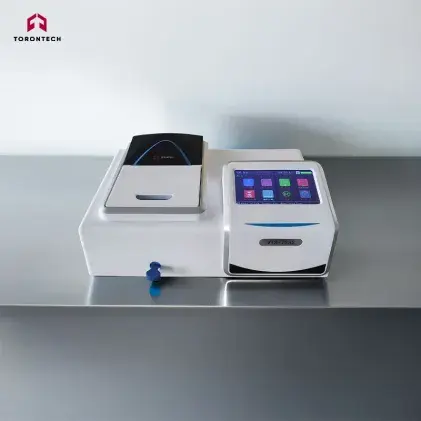
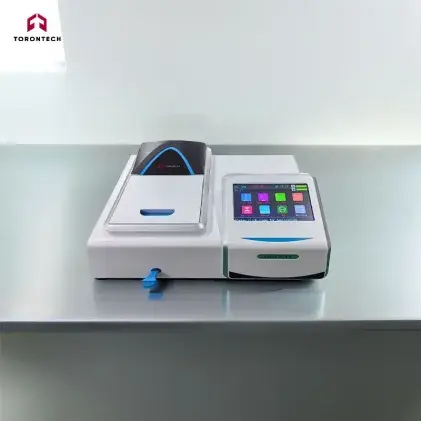
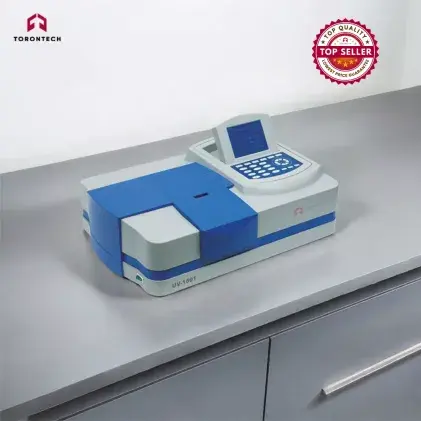
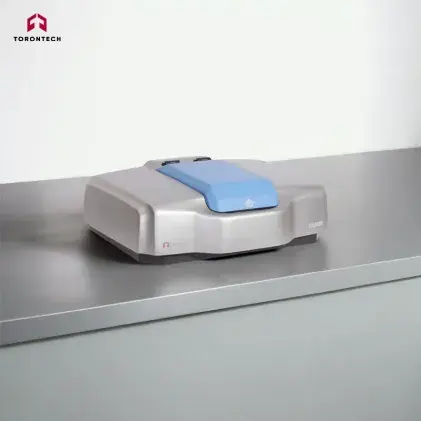
| Feature | Spectrophotometer ToronVIS™-723S | UV/VIS Spectrophotometer ToronUV™-1801P/1801S | UV/VIS Spectrophotometer ToronUV™-1601 | Double Beam UV/VIS ToronUV™-2200 | Double Beam UV/VIS ToronUV™-2601 |
|---|---|---|---|---|---|
| Primary purpose | Visible-range spectrophotometry for routine QC and educational lab workflows | UV/VIS spectrophotometry for general quantitative and qualitative analysis | UV/VIS analysis platform for routine lab measurement needs | High-precision UV/VIS analysis using simultaneous sample and reference paths | High-performance double beam UV/VIS for demanding accuracy and stability requirements |
| Best for | Standard color/absorbance testing where VIS coverage is sufficient | Routine UV/VIS lab work in pharma, environmental, food, and general labs | Labs needing dependable UV/VIS measurement for everyday analysis | Labs requiring improved baseline stability, reproducibility, and higher accuracy | Pharma, biochemical, and high-end research labs needing strong measurement control |
| Instrument class | VIS spectrophotometer | UV/VIS spectrophotometer | UV/VIS spectrophotometer | Double beam UV/VIS spectrophotometer | Double beam UV/VIS spectrophotometer |
| Typical applications | Dyes, pigments, inks, educational testing, routine QC (application dependent) | Pharma QC, environmental water analysis, food testing, general research | Industrial and academic UV/VIS measurement for liquids/solutions (application dependent) | Method-driven analysis with tighter accuracy needs and reduced drift | Precision spectral work where reproducibility and stability are priorities |
| Why choose this tier | Cost-effective entry point when UV range is not required | Balanced UV/VIS capability for common lab tasks | Practical UV/VIS option for routine analysis and stable workflows | Double beam design supports improved accuracy and baseline stability | Higher performance double beam option for stricter research or QC requirements |
| How to choose | Choose when your testing is mainly in visible wavelengths and budget is a priority | Choose when you need general UV/VIS capability for routine absorbance/transmittance | Choose when you want a straightforward UV/VIS platform for recurring lab work | Choose when you need double beam accuracy for regulated or more demanding methods | Choose when your work requires stronger stability, reproducibility, and high precision |
| Selection tip | If your lab rarely measures below the visible range, this is a solid baseline | If you want UV/VIS coverage without over-specifying, start here | If you run many routine UV/VIS tests daily, this is a practical workhorse | If baseline drift and precision matter, double beam is often the right move | If your lab is method-heavy and accuracy-driven, choose the higher-performance double beam |
Quick selection guide: choose ToronVIS™-723S for VIS-only routines, choose ToronUV™-1801P/1801S or 1601 for general UV/VIS lab work, and choose ToronUV™-2200 or 2601 when double beam stability and higher accuracy are required.
A UV-Vis spectrophotometer measures how much ultraviolet and visible light a sample absorbs, which supports both identification and concentration measurement. It is one of the most widely used instruments in analytical and quality control laboratories.
Pharmaceutical and Life Sciences
Quantify active ingredients, measure DNA and protein concentration, and run assays that support quality control. UV-Vis methods underpin many pharmacopeia tests and routine release testing.
Water and Environmental Analysis
Measure parameters such as nitrate, phosphate, and chemical oxygen demand. Reliable absorbance data supports environmental monitoring and regulatory reporting.
Food, Beverage, and Chemical QC
Check color, additives, and concentration of key components to confirm product consistency and detect contamination.
Academic and Research Laboratories
Study reaction kinetics, characterize new compounds, and teach core analytical chemistry, all from a single benchtop instrument.
1. Wide Wavelength Coverage
The instrument measures across the ultraviolet and visible range, with many models extending into the near-infrared, which supports a broad set of applications.
2. Single- and Double-Beam Options
Single-beam designs offer value for routine work, while double-beam designs correct for lamp drift in real time for higher stability and accuracy.
3. Low Stray Light
Quality optics keep stray light low, which preserves accuracy at high absorbance and improves confidence in concentration measurements.
4. Stable Light Sources
Deuterium and tungsten-halogen lamps provide steady output across the UV and visible ranges, supporting reproducible results over long sessions.
5. Flexible Accessories
Cuvette holders, sippers, and fiber-optic probes adapt the instrument to liquids, small volumes, and specialized sampling needs.
6. Compliance-Ready Software
Software supports photometric measurement, spectrum scanning, kinetics, and quantitative analysis, with options that support data-integrity requirements such as 21 CFR Part 11 for regulated laboratories.
A UV-Vis spectrophotometer determines what is in a sample, and how much, by measuring the light it absorbs in the ultraviolet and visible range. Many molecules absorb light at specific wavelengths, so absorbance reveals both identity and concentration.
The Beer-Lambert Law
The instrument shines a beam of light through the sample and compares the light entering with the light leaving. The fraction absorbed follows the Beer-Lambert law, which states that absorbance is proportional to the concentration of the absorbing substance and the path length the light travels through it. In practice, this means a more concentrated sample absorbs more light.
How the Instrument Builds a Measurement
A light source, usually a deuterium lamp for ultraviolet and a tungsten lamp for visible light, produces a broad beam. A monochromator selects one wavelength at a time and passes it through the sample. A detector then measures the transmitted light and the system calculates absorbance. By plotting absorbance against a set of known standards, the analyst converts a reading into an exact concentration. This direct relationship between absorbance and concentration is why UV-Vis is a core tool for quantitative analysis.