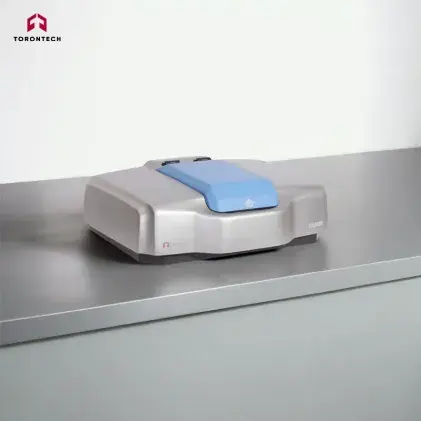
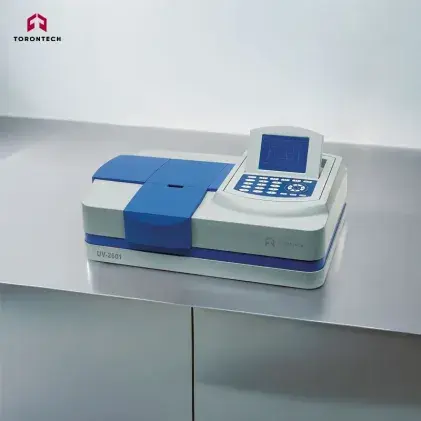
A Guide to Choosing a UV-Vis Spectrophotometer
Finding laboratory equipment that delivers accurate results without straining the budget is a common challenge.
In our experience, the UV-Vis spectrophotometer is a foundational instrument that consistently provides exceptional value. To help you make an informed decision, we’re offering a straightforward perspective on the key advantages of a UV-Vis spectrophotometer and clear guidance on how to choose the right UV-Vis spectrophotometer for your operations.
The Clear Advantages of a UV-Vis Spectrophotometer
We've worked with these instruments for years, and their value remains clear. Their presence in nearly every modern laboratory is a direct result of their reliable performance and efficiency. Here’s a deeper look at the specific advantages of a UV-Vis spectrophotometer that impact your daily work.
Handles a Wide Spectrum of Applications
The key strength of this instrument is its operational flexibility. It's a genuine workhorse, capable of serving multiple functions within a single lab. This adaptability is enhanced by its compatibility with chemometric methods for more advanced data analysis in complex mixtures, making it useful for both targeted and non-targeted analyses (Shi et al., 2022; Farag et al., 2022). This prevents the need to purchase multiple specialized devices, maximizing your return on investment.
Analysis Without Sample Destruction
When you're working with valuable or limited materials, preservation is critical. This analytical method is non-destructive, often requiring no sample pre-treatment, which is a major advantage (Shi et al., 2022). It functions by passing light through the sample, leaving it completely unaltered. This is a critical feature that allows for re-testing to confirm a questionable result or for using the same sample in subsequent, different analyses.
Obtain Rapid, Efficient Results
In a production or research setting where timelines are tight, speed is a competitive advantage. UV-Vis spectrophotometers are ideal for real-time monitoring because they provide rapid and continuous measurements (Shi et al., 2022). This translates directly to higher operational throughput. Faster quality checks mean faster product batch release, quicker identification of process deviations, and an overall increase in your team's productivity.
Achieve High Sensitivity and Accuracy
Ultimately, the quality of your data is what matters. These instruments are valued for their simplicity, precision, and accuracy, detecting a wide range of analytes with acceptable error rates when compared to more expensive tools (Farag et al., 2022; Abadi et al., 2012). The technique is sensitive enough for trace analysis, with validated methods showing high accuracy for applications in pharmaceuticals and environmental monitoring (Liu et al., 2022; Maharani et al., 2024).
Straightforward Operation and Cost-Effectiveness
We believe powerful technology should be accessible. The low cost and reagent-free operation of many UV-Vis methods make them a sound and predictable long-term investment (Farag et al., 2022; Shi et al., 2022). Consumables are inexpensive, and the durable hardware requires minimal maintenance, which contributes to a low total cost of ownership.
Where These Instruments Make a Difference
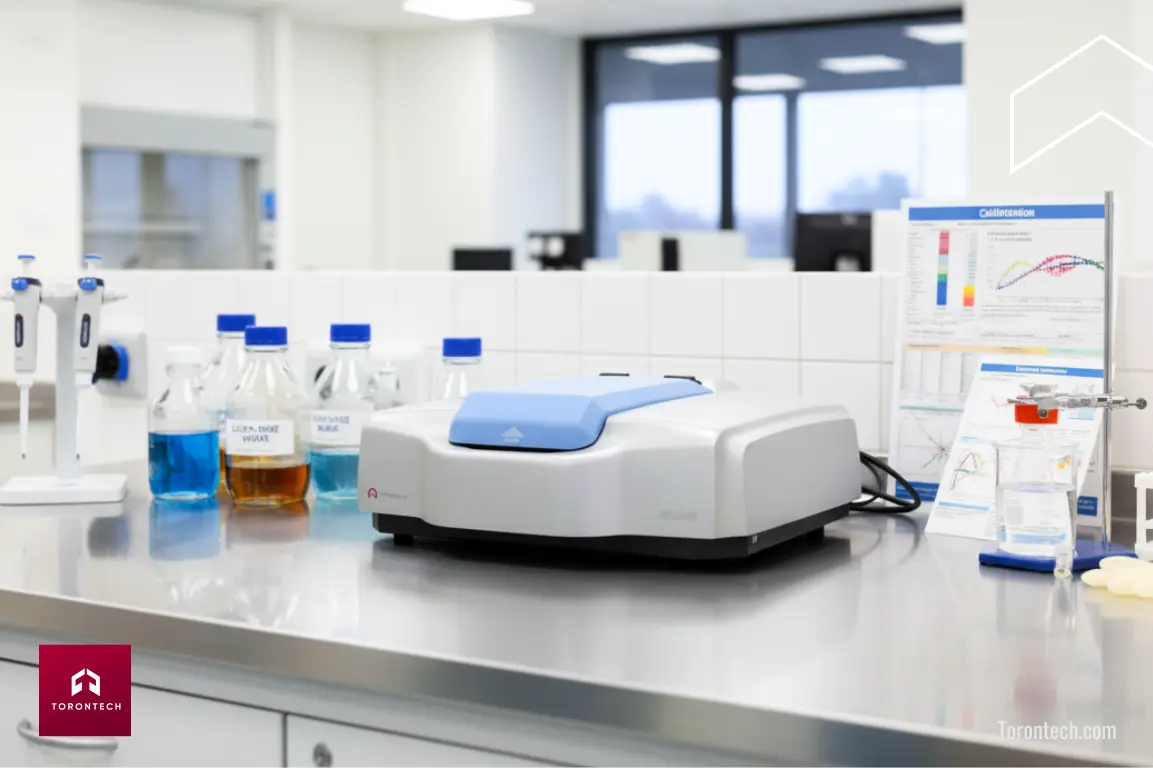
To appreciate the instrument's full impact, it’s useful to see where it performs critical functions every day, with real-world examples:
- Pharmaceuticals: It is the backbone of drug formulation and quality control. For example, it's used to run a dissolution test to verify the release rate of an active ingredient from a tablet, ensuring it meets strict pharmacopeial standards.
- Food & Beverage: This is a key tool for ensuring product consistency. A common application is measuring the bitterness units (IBUs) in beer or detecting fraudulent adulteration in honey by analyzing its unique sugar spectrum.
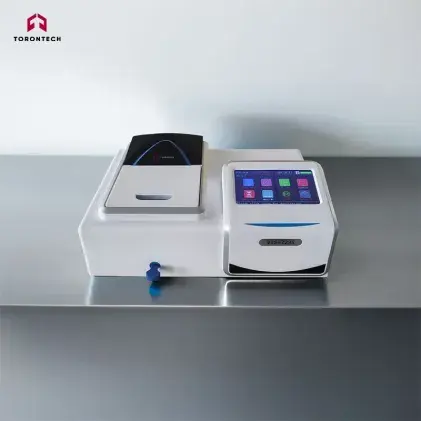
- Environmental Monitoring: It is relied upon for testing water purity. A prime example is routinely checking drinking water for nitrate levels—a task perfectly suited for a reliable instrument like the ToronUV-1801S—to ensure safety and meet regulatory limits.
- Life Sciences: In research, it's a fundamental tool. A standard procedure is performing the crucial A260/A280 purity check on a DNA sample before it's used in a sensitive downstream application like PCR.
- Chemical Manufacturing: In industrial quality control, it's used to confirm the purity of raw materials or to verify that a final synthesized chemical product meets concentration specifications before being shipped to a customer.
- Clinical Diagnostics: In medical labs, these principles are applied in analyzers for critical tests, like quantifying bilirubin or certain enzymes in blood serum to help diagnose liver conditions and other diseases.
How to Choose a UV-Vis Spectrophotometer: A Practical Guide
Understanding how to choose a UV-Vis spectrophotometer means focusing on the specifications that directly impact your results. Your choice should be guided by your intended application, whether it's water quality, food analysis, or pharmaceuticals (Shi et al., 2022; Farag et al., 2022).
The Proper Wavelength Range
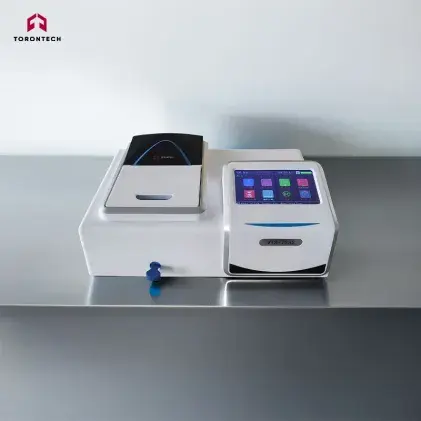
Your primary applications will determine the required wavelength range. Simple colorimetric tests only need the visible spectrum, making an instrument like the Spectrophotometer ToronVIS-723S a cost-effective choice. However, if you're measuring DNA, proteins, or most organic compounds, analysis in the ultraviolet range is necessary.
Determining the Right Spectral Bandwidth
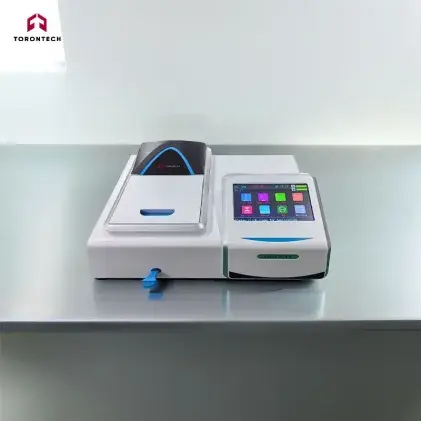
This specification defines the instrument's resolution. For routine quality checks, the 2nm bandwidth on a workhorse like the ToronUV-1801P is perfectly adequate. For high-precision quantitative work, a narrow bandwidth of 1 nm or less is essential, a key feature of our double-beam models like the ToronUV-2601.
Related article: Spectrophotometer: Single Beam vs Double Beam Explained
Portability and Environment
Consider where you will be performing your analysis. While laboratory benchtop instruments may offer the highest precision for controlled analyses, portable and online models are preferable for high-frequency or remote monitoring (Shi et al., 2022; Zhu et al., 2020). Portable spectrophotometers enable practical field measurements in remote or challenging environments (Zhu et al., 2020).
The Importance of Low Stray Light
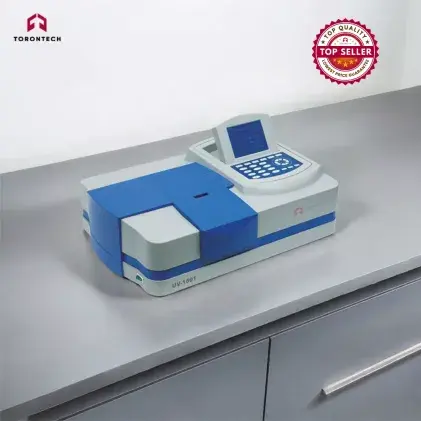
We consider this a critical specification for high-end work. Stray light becomes a major issue when you're measuring highly concentrated samples. For applications requiring a wide and accurate dynamic range, you need an instrument with very low stray light, like the Double Beam UV/VIS Spectrophotometer ToronUV-2200.
Ensuring a Clean, Stable Signal
Photometric noise directly impacts reproducibility. You must evaluate an instrument’s ability to handle the sample types and concentrations relevant to your needs (Abadi et al., 2012; Maharani et al., 2024). For the highest stability, a split-beam or double-beam design like that in the ToronUV-1601 is preferable.
Software and Data Integration
An instrument's usability is heavily dependent on its software. For advanced analysis, look for systems with compatibility with chemometric tools (Shi et al., 2022; Farag et al., 2022). For regulated environments, you should also look for features like multi-level user access and audit trails to help with compliance.
Torontech: Your Partner for Spectrophotometry Solutions
At Torontech, our approach is guided by a simple principle: every lab deserves access to precise and reliable instrumentation without compromising its budget. We believe that a critical balance between performance and price isn't just possible; it's essential for modern labs to succeed.
This philosophy is at the core of our comprehensive ToronUV-VIS Series. From the durable ToronUV-1801S for daily work to the high-performance ToronUV-2200 for demanding research, our instruments deliver the reliability you need and the value you expect.
Now that you have a better understanding of both the advantages of a UV-Vis spectrophotometer and the key factors in how to choose a UV-Vis spectrophotometer, our team is here to assist. Let us help you find the perfect instrument to support your quality control and research objectives.
Contact us today for a free, no-obligation quote and discover the Torontech advantage.
References:
- Shi, Z., Chow, C., Fabris, R., Liu, J., & Jin, B. (2022). Applications of Online UV-Vis Spectrophotometer for Drinking Water Quality Monitoring and Process Control: A Review. Sensors (Basel, Switzerland), 22.
- Zhu, X., Chen, L., Pumpanen, J., Keinänen, M., Laudon, H., Ojala, A., Palviainen, M., Kiirikki, M., Neitola, K., & Berninger, F. (2020). Assessment of a portable UV-Vis spectrophotometer's performance for stream water DOC and Fe content monitoring in remote areas. Talanta, 224, 121919.
- Farag, M., Sheashea, M., Zhao, C., & Maamoun, A. (2022). UV Fingerprinting Approaches for Quality Control Analyses of Food and Functional Food Coupled to Chemometrics: A Comprehensive Analysis of Novel Trends and Applications. Foods, 11.
- Liu, J., Yuan, C., Pu, J., Fu, D., & Min, Y. (2022). UV-vis spectroscopic detection of formaldehyde and its analogs: A convenient and sensitive methodology. Journal of hazardous materials, 438, 129457.
- Abadi, D., Ashraf, N., Chamsaz, M., & Shemirani, F. (2012). An overview of liquid phase microextraction approaches combined with UV-Vis spectrophotometry. Talanta, 99, 1-12.
- Maharani, S., Hidayat, M., Ramadhany, I., Khairani, N., Rahman, N., & Permana, A. (2024). Application of validated UV-Vis spectrophotometry-colorimetric methods for specific quantification of deferiprone in the development of iron-responsive nanoparticle loaded into dissolving microneedle. Mikrochimica acta, 191 10, 587.