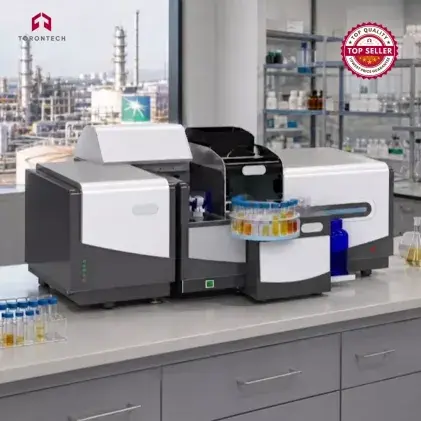
What is Atomic Absorption Spectrophotometer? Full Guide
Finding a dependable way to analyze metals in water, food, or pharmaceutical samples? The Atomic Absorption Spectrophotometer (AAS) is likely the answer.
Laboratories have relied on this instrument for decades because it catches trace metals at parts-per-million or even billion levels without complex setups. This guide breaks down exactly how AAS works, the components involved, and why it remains a smart choice for precise elemental analysis.
Key Takeaways
- Atomic Absorption Spectrophotometry remains the industry standard for precise elemental analysis and detecting metal concentrations in samples.
- Selecting the right model depends on your sensitivity needs since Flame systems handle parts per million while Graphite Furnace units detect parts per billion.
- AAS offers a more affordable entry point than ICP-OES and is ideal for labs focused on analyzing specific elements rather than high-throughput screening.
- Industries like pharmaceuticals, mining, and environmental testing rely on this technology for meeting strict regulatory compliance standards.
Understanding the Principle of Atomic Absorption Spectroscopy
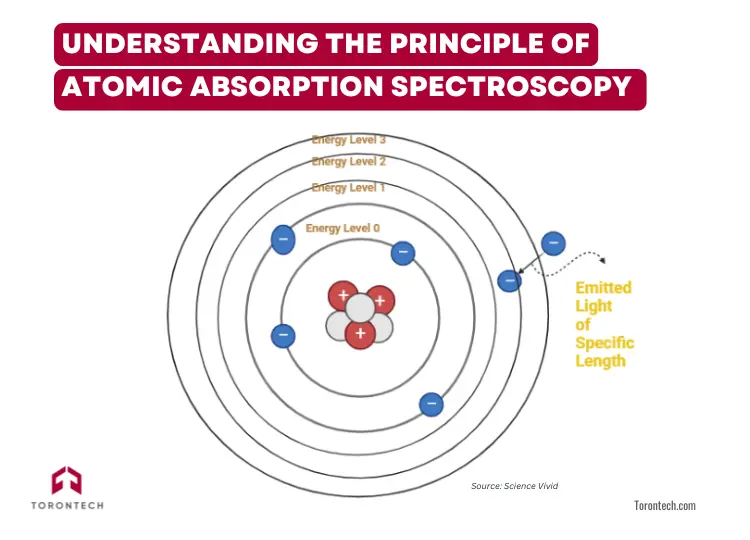
At the heart of atomic absorption spectroscopy lies a fundamental concept: atoms absorb light at specific wavelengths. When an atom is in its ground state and exposed to light at its resonant wavelength, it absorbs energy, exciting one of its electrons to a higher energy level.
This principle is governed by the Beer-Lambert Law, which states that the amount of light absorbed is proportional to the concentration of the absorbing atoms in the sample. Each element absorbs light at a unique wavelength, allowing highly selective detection.
This method is especially valuable for quantifying metals and metalloids, as these elements have sharp, well-defined absorption lines, making measurements highly specific and sensitive.
How Does an Atomic Absorption Spectrophotometer Work?
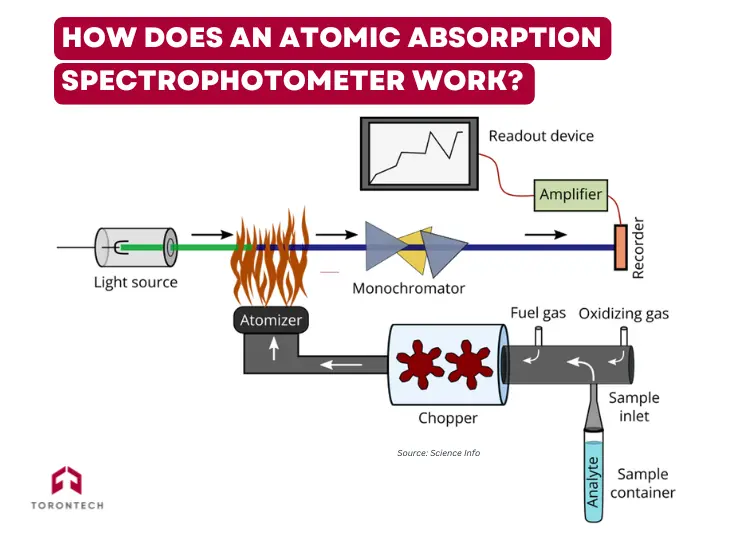
An atomic absorption spectrophotometer combines several systems into one cohesive analytical tool. Here's how it operates:
- Sample Preparation: Liquid samples are typically used, though solids may be digested. The goal is to obtain a homogenous solution containing the target element.
- Atomization: The sample is introduced into an atomizer (either a flame or a graphite furnace), which breaks it down into free ground-state atoms.
- Light Emission: A hollow cathode lamp (HCL) emits light specific to the target element.
- Light Absorption: As the beam passes through the cloud of atoms, some of the light is absorbed.
- Wavelength Selection: A monochromator isolates the desired wavelength to minimize interference.
- Detection: A photomultiplier tube (PMT) or CCD detector measures the drop in light intensity.
- Data Processing: A computer compares the reading to a calibration curve to determine the element’s concentration.
This step-by-step process allows AAS instruments to deliver precise quantitative analysis — often at trace levels.
Key Components of an Atomic Absorption Spectrophotometer
Each AAS system includes several critical components:
- Light Source: Usually a hollow cathode lamp (HCL) containing the element to be measured. Deuterium lamps are used for background correction in the UV range.
- Atomizer:
- Flame atomizers (using air-acetylene or nitrous oxide-acetylene flames) are best for routine analyses.
- Graphite furnaces offer higher sensitivity and lower detection limits.
- Monochromator: Filters out unwanted wavelengths, focusing only on the absorption line of the target element.
- Detector: Converts light into an electrical signal. Photomultiplier tubes (PMT) are standard, though CCD detectors are now used in high-resolution systems.
- Computer & Software: Controls parameters, builds calibration curves, and processes results in real-time.
What Elements & Sample Types Can Be Analyzed?
Elements
AAS is primarily designed to detect metals and metalloids, including:
- Lead (Pb)
- Cadmium (Cd)
- Zinc (Zn)
- Copper (Cu)
- Arsenic (As)
- Iron (Fe)
- Mercury (Hg)
- Nickel (Ni)
- Manganese (Mn)
- Selenium (Se)
- Bismuth (Bi)
These elements are often measured in concentrations as low as parts per billion (ppb) using graphite furnace AAS (GFAAS), or parts per million (ppm) using flame AAS (FAAS).
Types of Samples
AAS works best with samples in liquid form. These can include:
- Water (drinking, wastewater, environmental)\
- Digested solids (soils, rocks, food, metals)
- Biological fluids (blood, urine, plasma)
- Industrial materials (plating baths, alloys, catalysts)
Sample preparation for AAS may involve acid digestion, filtration, and dilution to ensure homogeneity and compatibility with the atomization system.
Industries That Rely on Atomic Absorption Spectrophotometers
AAS is used in a wide range of industries and applications:
- Environmental Monitoring: Lead in drinking water, mercury in soil, arsenic in groundwater
- Food and Beverage: Trace metal screening for safety and labeling compliance
- Pharmaceuticals: Residual metal analysis as required by USP <232>/<233>
- Mining and Metallurgy: Quantifying valuable or toxic metals in ores and smelting products
- Clinical and Biomedical: Assessing nutritional deficiencies and toxic exposure
- Agriculture and Cannabis: Fertilizer formulation and heavy metal screening
AAS is often cited in regulatory standards from the EPA, FDA, WHO, and ISO — making it a trusted compliance tool.
Is AAS Suitable for Regulatory Compliance?
Yes and it’s widely recognized in national and international standards. AAS is used to meet requirements from:
- EPA Method 200.9 (metals in water)
- USP <232>/<233> (elemental impurities in drugs)
- AOAC methods for food safety
- ISO 15586 (water analysis by GFAAS)
A properly calibrated AAS instrument with routine validation and background correction is fully capable of regulatory-grade accuracy.
Flame vs. Graphite Furnace: The Sensitivity Check
Selecting the right atomizer depends on the sensitivity you need. Flame AAS is robust and fast for parts-per-million (PPM) analysis, whereas Graphite Furnace AAS is essential for trace level detection at parts-per-billion (PPB).
Read more: Flame AAS vs Graphite Furnace AAS: The Key Differences
AAS vs. ICP-OES: The High-Level Decision
While AAS is the gold standard for cost-effective, single-element analysis, labs requiring high-throughput multi-element detection often consider ICP-OES. The choice ultimately comes down to your daily sample volume and budget.
Read more: ICP OES vs AAS: Comparing Cost, Speed, and Accuracy
Pros and Cons of Using Atomic Absorption Spectrophotometer
AAS remains a reliable choice for labs focused on elemental analysis. They offer notable benefits in sensitivity and specificity, but they also come with limitations that may impact throughput, flexibility, or usability in some settings.
A. Advantages of AAS
High Accuracy and Sensitivity
AAS delivers precise results with error rates typically between 0.5–5%, and it can detect elements down to ppb levels, especially with graphite furnace atomization.
Cost-Effective for Routine Analysis
While initial investment may be moderate to high, the cost per test is low, and consumables are inexpensive compared to techniques like ICP-MS.
Wide Dynamic Range
AAS can measure both trace and high concentrations, reducing the need for multiple instruments or dilution steps.
Versatility Across Sample Types and Industries
Suitable for analyzing liquids, digested solids, and gases, AAS is used in environmental labs, clinical research, food safety, mining, and more.
Compact and User-Friendly
Many systems have a small footprint, with easy-to-use software and high-throughput capability via autosamplers, making them ideal for space- and time-efficient labs.
B. Disadvantages of AAS
Limited to Metal and Metalloid Analysis
AAS cannot detect non-metals or organic compounds, restricting its use to elemental testing.
Single-Element Analysis at a Time
Each element requires a specific hollow cathode lamp, and the system measures only one element per run, limiting efficiency in multi-element workflows.
Sample Preparation Requirements
Most samples must be converted into liquid form, often requiring acid digestion, which can be time-consuming and introduces the risk of contamination.
Potential Interference and Background Effects
Matrix, chemical, or spectral interferences can affect results, particularly in complex or dirty samples, requiring careful correction techniques.
Use of Flammable Gases (for Flame AAS)
Acetylene and nitrous oxide flames present safety and environmental concerns, demanding proper ventilation and gas-handling protocols.
Common Troubleshooting Issues with AAS
Even experienced users occasionally face instrument issues. Here are a few examples:
- Unstable readings: May result from lamp flicker, dirty optics, or incorrect burner alignment.
- Low sensitivity: Often caused by clogged nebulizers, degraded lamps, or poor sample prep.
- Interference from the matrix: Use background correction techniques or matrix modifiers.
- Calibration drift: Make sure to use fresh standards and run blank samples routinely.
Modern AAS systems often include automated alerts, diagnostics, and safety interlocks to improve reliability and user safety.
Ensuring Precision with AAS from Torontech
Atomic Absorption Spectrophotometers deliver a smart balance of precision and cost-efficiency. This technology supports facilities that value consistent data and straightforward operation. It is the logical choice when your team needs to:
- Target specific elements with high accuracy.
- Manage operational expenses and bench space effectively.
- Maintain strict regulatory compliance without unnecessary technical complications.
From checking water quality to verifying pharmaceutical safety, this instrument proves that getting accurate results doesn't require a complicated setup. It is simply about having a reliable tool that works as hard as your team does.
Ready to upgrade your analytical capabilities? Equip your laboratory with a system built for longevity and performance. Explore Torontech’s range of AAS models to find the configuration that matches your specific workflow.