Flame AAS vs Graphite Furnace AAS: The Key Differences
Choosing the right spectrometer for your lab can be a significant challenge. For elemental analysis, the decision often comes down to two leading technologies: Flame Atomic Absorption Spectroscopy (Flame AAS) and Graphite Furnace Atomic Absorption Spectroscopy (GFAAS).
Both techniques measure elemental concentrations by detecting how free atoms absorb light in the gas phase. However, their methods and capabilities differ significantly. We have seen firsthand how selecting the right instrument can impact a lab's efficiency and budget.
This guide offers a straightforward look at the difference between flame AAS and graphite furnace AAS to help you make a well-informed decision.
Key Takeaways
- Sensitivity Matters: Flame AAS measures higher concentrations in parts per million (ppm), while Graphite Furnace AAS detects ultra-trace elements in parts per billion (ppb).
- Speed vs. Precision: Choose Flame AAS for rapid screening of many samples. Select Graphite Furnace AAS when you need extreme precision for a limited number of samples.
- Sample Volume: Flame systems require milliliters of solution to run. Furnace systems are highly efficient and need only microliters of sample.
- Operational Costs: Flame AAS incurs costs through continuous gas consumption. Graphite Furnace AAS costs come primarily from replacing the graphite tubes.
- The Integrated Solution: You do not have to choose just one. Torontech’s combined systems allow you to perform both types of analysis on a single instrument to save space and money.
The Technical Difference Between Graphite Furnace and Flame AAS
To appreciate the distinct capabilities of these machines, it helps to know how each prepares a sample for analysis. Understanding the mechanics is key to grasping the difference between these Atomic Absorption Spectrophotometer.
Flame AAS: The Direct, Continuous Method
This technique uses a direct and continuous method. The instrument aspirates your sample into a high-temperature flame to atomize it. This process produces a steady absorbance signal (Erspamer & Niemczyk, 1981).
The continuous nature of the flame makes it a robust process designed for rapid measurements, typically providing detection limits in the range of 1–100 µg/L (Sperling, 2006).
Related article: Sample Preparation for AAS: Methods & Best Practices
Graphite Furnace AAS: The Controlled, Staged Technique
In contrast, the graphite furnace uses a more precise and staged technique. A single droplet of the sample is placed into an electrically heated graphite tube. The instrument then executes a programmed heating sequence to dry, ash, and atomize the sample.
Unlike the steady signal of the flame, this method generates a distinct absorbance peak (Erspamer & Niemczyk, 1981). This discrete process is the primary operational difference between graphite furnace and flame AAS.
Flame AAS vs Graphite Furnace AAS: A Head-to-Head Comparison
To simplify your evaluation of flame AAS vs graphite furnace AAS, we have outlined the factors that matter most.
| Feature | Flame AAS (The Workhorse) | Graphite Furnace AAS (The Specialist) |
|---|---|---|
| Detection Limit | 1–100 µg/L (ppm range) (Sperling, 2006) | ppb range (Parts per Billion) |
| Raw Sensitivity | Moderate | 20 to 200 times more sensitive than FAAS (Sperling, 2006) |
| Sample Volume Needed | Requires milliliters (mL) | Requires only microliters (µL) |
| Analysis Speed | Very fast (seconds per sample) | Slower (minutes per sample) |
| Daily Throughput | Suited for high-volume batches | Best for smaller, critical batches |
| Typical Example | Testing for high levels of sodium in a sports drink. | Detecting trace amounts of lead in a single drop of blood. |
Industry-Specific Applications: Finding the Right Tool for the Job
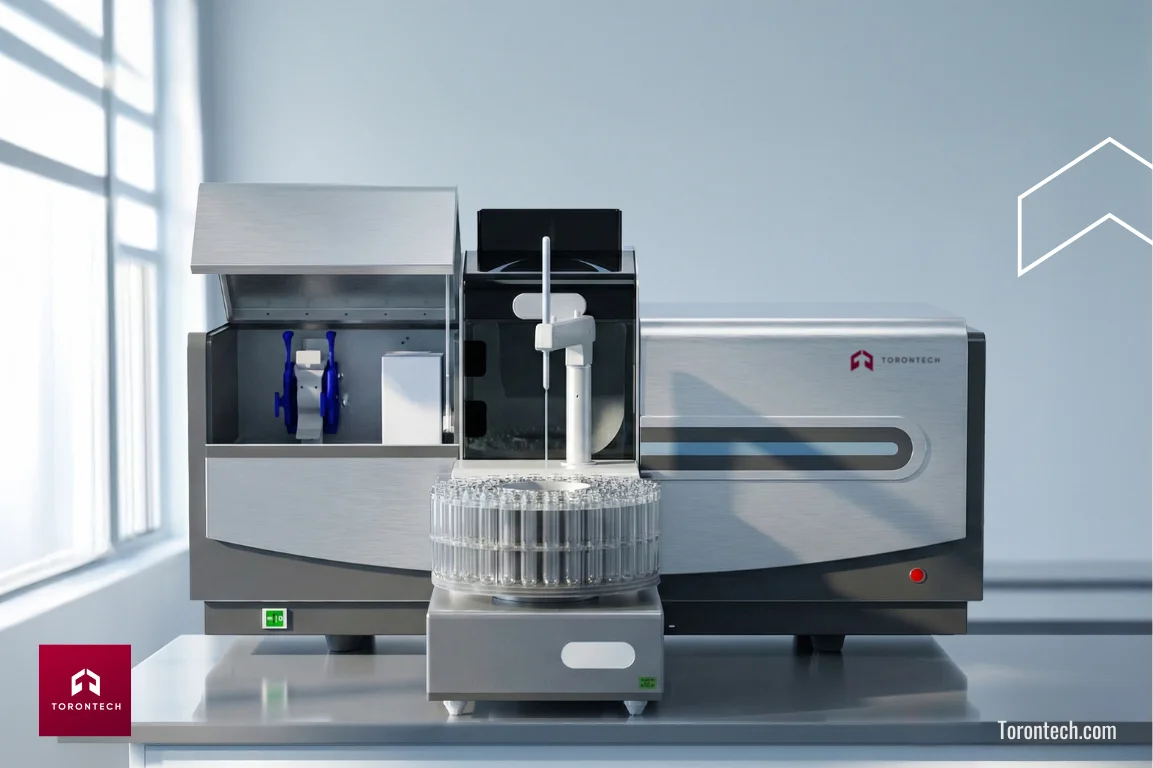
A technology is only as good as the problem it solves. When weighing flame AAS vs graphite furnace AAS, matching your primary workload to the right instrument is the most critical step.
The Flame Domain (Speed and Higher Concentrations)
For labs that exclusively need high speed and process samples with higher concentrations, a dedicated flame-only system like our AAS3000F is often the most cost-effective solution.
1. Mining & Metallurgy
In this sector, the goal is speed and efficiency. A typical use would be a lab that needs to assay hundreds of ore samples per shift to check for copper concentrations in the 1-2% range.
Our Recommendation: Flame AAS is the ideal choice for its rapid analysis times.
2. Agriculture & Food Screening
Flame AAS is often used for the rapid screening of nutritional elements in food samples (Price, 2012). For example, verifying that a batch of liquid fertilizer or a food product contains the correct percentage of potassium requires high throughput.
Our Recommendation: Flame AAS is perfect for these high-volume needs.
3. Workplace Safety Monitoring
Industrial hygiene labs often need to determine lead fume and dust in the air of workplaces. Comparative studies suggest that while both methods can be used, flame methods are often sufficient for these higher-concentration industrial environments (Ri-Dong, 2005).
Our Recommendation: Flame AAS provides the speed needed for operational monitoring.
The Furnace Domain (Sensitivity and Small Samples)
The applications below require the ultra-trace sensitivity that only a graphite furnace can provide. This is where instruments that include a furnace, like our AAS3000FG models, become essential.
4. Environmental & Food Safety
When your work involves regulatory compliance for trace contaminants, the detection limits are incredibly low. For instance, precise quantification of toxic elements like lead and cadmium at very low concentrations is required for food safety (Hight, 2000).
Our Recommendation: The Graphite Furnace is the necessary tool for this work.
5. Petrochemicals & Nuclear Applications
Specialized industries often deal with hazardous samples or require containment. Research indicates that graphite furnace setups are favored when higher sensitivity and smaller sample volumes are needed, including specialized adaptations for hazardous materials (Gupta et al., 2014).
Our Recommendation: The Graphite Furnace provides the necessary sensitivity and safety for these critical materials.
6. Pharmaceuticals & Clinical Research
In clinical settings, samples are often available only in very small quantities. An example would be measuring the zinc concentration in a 20 µL blood serum sample.
Our Recommendation: The Graphite Furnace is the superior option for its microliter sample requirement.
7. Forensic Science
Forensic labs often deal with minute traces of evidence. A critical application could be detecting gunshot residue, which contains antimony and barium, on a tiny fabric sample from a crime scene.
Our Recommendation: The furnace's ability to analyze microscopic samples is essential in this field.
Operational Costs: The Difference Between Flame AAS and Graphite Furnace AAS
The purchase price of the instrument is just the starting point. We always advise our clients to consider the total cost of ownership, as the difference between flame AAS and graphite furnace AAS extends to your monthly budget.
Flame AAS Costs
The most significant ongoing expense for a flame system is the continuous consumption of high-purity gases. An air-acetylene flame is common, but hotter flames require nitrous oxide.
These gases are consumed during the entire analytical run. While generally very reliable, other minor costs can include periodic replacement of lamps and nebulizer parts.
Graphite Furnace Costs
The main consumable for a furnace system is the graphite tube. This part has a finite lifespan of a few hundred to a few thousand firings before its performance degrades and it must be replaced. It also requires a continuous flow of a high-purity inert gas, typically Argon, to protect the tube.
However, the gas flow rate is much lower than the fuel consumption in a flame system. This makes the graphite tubes the primary driver of operational cost.
The Torontech Approach: Integrated Technology for Modern Labs
We saw labs facing a difficult choice: buy two separate machines or compromise on their analytical capabilities. We felt there was a more logical solution to the flame AAS vs graphite furnace AAS dilemma.
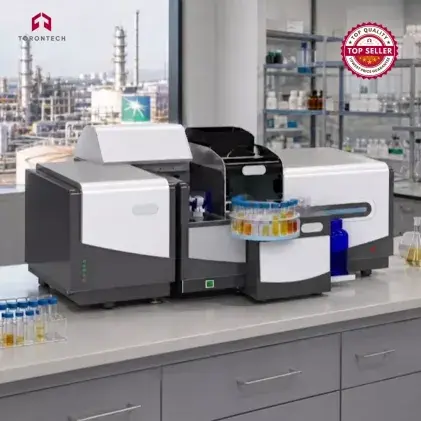
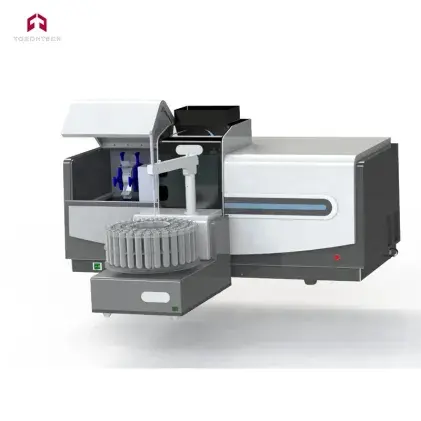
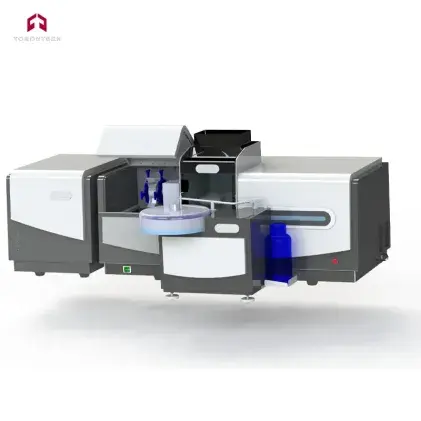
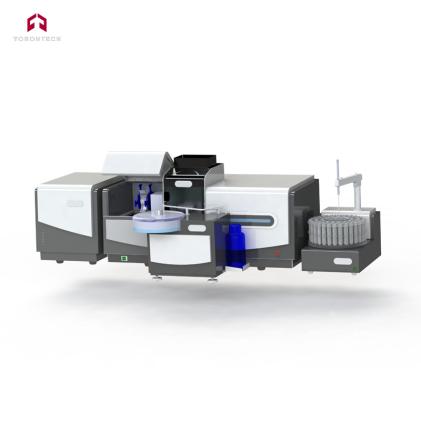
Our AAS3000 Series was created to solve this very problem. Instead of forcing a choice, we offer integrated systems like the AAS3000FG and the more advanced AAS3000FG-Pro, which thoughtfully combine both Flame and Graphite Furnace systems into one efficient unit.
Why our integrated AAS solutions make sense:
- Seamless Switching: We enabled users to switch between Flame and Furnace modes directly through the software. This saves time and prevents manual errors.
- Optimized Throughput: Our 8-lamp turret preheats the next lamp in the sequence. We know that reducing downtime between analyses is key to a productive lab.
- Built-in Safety: We integrated advanced gas-leak detectors and safety interlocks because we believe the operational safety of your facility is a top priority.
By combining these technologies, we offer a single instrument that provides comprehensive analytical range. This ultimately lowers the total cost of ownership compared to running two separate systems.
Torontech Final Recommendation
Your primary application should always guide your decision. If you require high throughput for concentrated samples, a dedicated unit like the AAS3000F is a reliable and efficient tool. If your work depends on achieving the lowest possible detection limits with minimal sample, the Graphite Furnace is the clear choice.
However, the reality for most modern labs is that they need the flexibility to do both. Is it time to equip your lab with a single, versatile solution that can handle your complete workload?
Contact our team at Torontech to learn how our cost-effective and innovative technology can enhance your lab's analytical capabilities.
References
- Erspamer, J., & Niemczyk, T. (1981). Convenient Modifications to a Varian AA-6 Atomic Absorption Spectrometer to Allow Use with a Graphite Furnace Atomizer. Applied Spectroscopy, 35, 512–513.
- Gupta, S., Thulasidas, S., Goyal, N., & Godbole, S. (2014). A MODULAR-TYPE ATOMIC ABSORPTION INSTRUMENT WITH THE GRAPHITE FURNACE IN A GLOVE BOX FOR NUCLEAR APPLICATIONS. Instrumentation Science & Technology, 42, 161–172.
- Hight, S. (2000). Graphite furnace atomic absorption spectrometric determination of lead and cadmium extracted from ceramic foodware: Collaborative Study. Journal of AOAC International, 83(5), 1174–1188.
- Price, R. (2012). Determination of Trace Elements in Rice Products by Flame and Graphite Furnace Atomic Absorption Spectrometry.
- Ri-Dong, Z. (2005). Comparison between two Atomic Absorption Spectrometric Methods with Flame or with Graphite Furnace in Determining Lead Fume and Dust in the Air of Workplaces. Occupation and Health.
- Sperling, M. (2006). Flame and Graphite Furnace Atomic Absorption Spectrometry in Environmental Analysis.