Sample Preparation for AAS: Methods & Best Practices
Want to get the absolute best performance out of your spectrometer? We believe the secret isn't just in the hardware; it is in the beaker.
We know that when sample preparation for AAS is done right, it transforms a standard analysis into a showcase of precision. As noted by Fisher (2025), sample preparation is a critical step that requires tailored approaches based on sample type to ensure precise measurements.
This guide looks at the practical methods for AAS sample preparation. We will cover the established digestion techniques and the more efficient, modern approaches.
Key Takeaways
- Preparation Is Everything: The accuracy of your spectroscopic analysis relies entirely on the quality of your sample digestion rather than just the instrument settings.
- Modern vs Traditional: While acid boiling is common, microwave digestion offers a faster and safer closed-loop alternative that retains volatile elements.
- Method Matches Matrix: Specific samples require specific approaches, such as dry ashing for high-volume food products or fusion for dissolving stubborn mining ores.
- Watch the Details: Most data errors come from simple oversights like using low-quality water or failing to run reagent blanks to catch contamination.
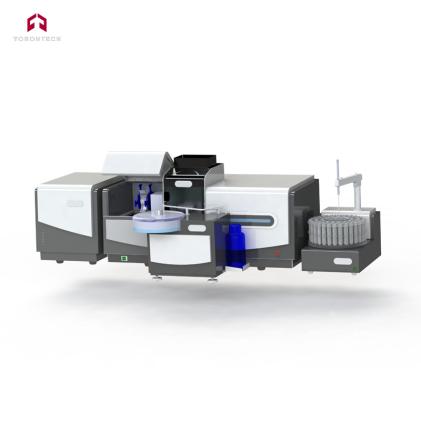
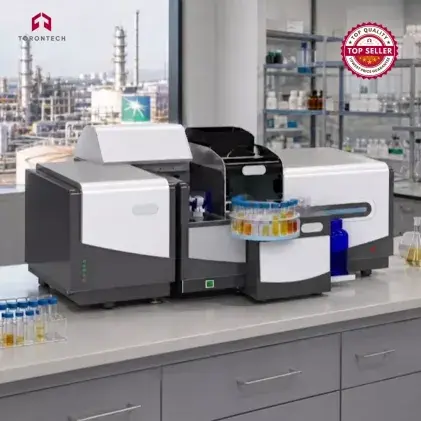
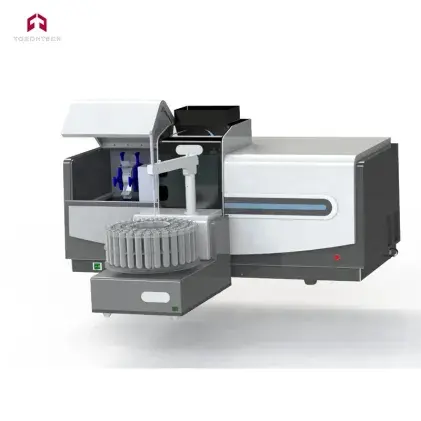
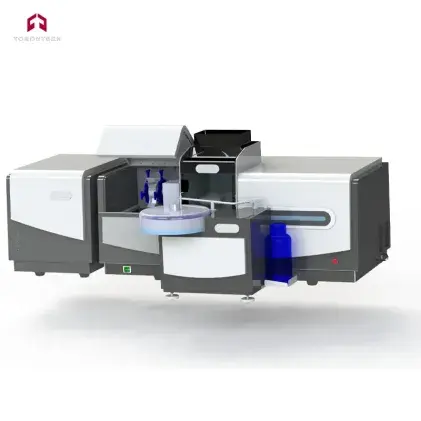
- The Right Tool: Torontech’s AAS 3000 Series uses advanced background correction to handle the complex matrices that difficult sample preparation often creates.
Why Is Sample Preparation for AAS Analysis So Important?
An Atomic Absorption Spectrometer is a precise tool that requires a homogenous, particle-free liquid solution.
It cannot produce accurate readings from a sample with suspended solids or an inconsistent matrix. Your real-world materials, such as soil, food, or metal alloys, are rarely in this state.
The goal of sample preparation for AAS analysis is to completely break down the original sample matrix, leaving only the target elements fully dissolved. Sample preparation directly affects the accuracy, precision, and reliability of metal quantification (Nakayama & Wagatsuma, 2020; Korn et al., 2008).
In our experience, investing time here pays off with results you can trust.
Key Techniques for AAS Sample Digestion
Depending on your sample type, you have a few established options. Here is a closer look at how these methods work and our professional take on each technique used in AAS sample digestion.
1. The Traditional Acid Boil (Wet Decomposition)
This is the classic approach where the sample is heated in an open beaker or flask with strong acids, typically nitric, sulfuric, or perchloric acid. The heat and acid work together to oxidize the organic matter and release the metals into the solution (Hoenig, 2001).
- Good for: Simpler materials, like biological tissues or water samples requiring concentration.
- Typical Application: For instance, a municipal lab testing river water for basic dissolved metals like Copper or Zinc would likely rely on this method. Since these samples are relatively straightforward, they pair perfectly with a robust flame-only system like our AAS3000F, which acts as a reliable workhorse for these high-volume, routine checks.
Our Take: While the low equipment cost makes this accessible, we find it is often an inefficient trade-off for professional labs. The open-vessel design allows corrosive fumes to escape, and the risk of contamination is higher here than in closed systems.
2. The Modern Acid Zap (Microwave Digestion)
This method takes the chemistry of wet decomposition and accelerates it. You seal the sample and acid in a specialized, high-strength vessel and heat it in a laboratory-grade microwave. It has become a cornerstone of modern AAS sample preparation, offering faster and more efficient preparation compared to traditional methods (Nakayama & Wagatsuma, 2020).
- Good for: Difficult materials, like industrial sludge, plastics, or tough-to-dissolve metals.
- Typical Application: Consider a facility analyzing recycled polymers or industrial waste sludge. These dense materials resist standard boiling but break down rapidly under pressure.
Our Take: We consider this the industry standard for any serious laboratory. Because it is a closed loop, you do not lose volatile elements, and you use significantly less acid. For labs handling these diverse and difficult digestion outputs, the versatility of the AAS3000FG is ideal, as it allows you to switch methods if the digestion results require a different atomization approach.
3. The Burn-to-Ash Method (Dry Ashing)
For samples that are almost entirely organic, this technique uses heat instead of just acid. The material is placed in a crucible and heated in a high-temperature muffle furnace until the organic matrix is completely oxidized and turns to ash (Korn et al., 2008).
- Good for: Food products, agricultural samples, and bulky biological materials.
- Typical Application: This is perfect for a food quality team testing milk powder for Iron content, where the sheer volume of organic carbohydrates needs to be removed before the metal can be measured.
Our Take: This is an excellent method for our clients in the food industry because it allows you to process a much larger sample mass. However, you must be careful; the high heat can cause volatile metals like Mercury to vaporize.
4. The Meltdown (Fusion Techniques)
Some samples, like silicates, simply will not dissolve in acid. In these cases, you mix the ground sample with a solid flux (like borate) and melt it in a crucible until it forms a molten glass, which is then dissolved in dilute acid (Nakayama & Wagatsuma, 2020). While other methods like slurry preparation allow for direct solid analysis (Miller-Ihli, 1988), fusion remains the gold standard for total dissolution.
- Good for: Ores from mining, ceramics, cement, and other geological materials.
- Typical Application: If a geologist needs to analyze silica sand, fusion is the only path forward.
Our Take: For our partners in the mining sectors, this is often the only way to get a true reading. The trade-off is that the flux adds a large amount of dissolved solids. This creates a "heavy" matrix that can confuse basic sensors. We specifically recommend the AAS3000FG-Pro for these scenarios, as its advanced automation and sensitivity are designed to cut through that heavy background noise.
A Special Case: Hydride Generation
For certain regulated heavy metals like Arsenic or Selenium, standard flame AAS methods may not provide the sensitivity you need. Separation and preconcentration steps are often necessary here to remove interfering substances and enhance detection limits (Yang et al., 2023).
- The Prep: These elements are chemically converted into a gaseous hydride form using a reducing agent (Bader, 2011).
- Our Take: If your lab is responsible for reporting these specific elements, relying on standard flame analysis is a compromise you shouldn't make. The entire AAS 3000 Series is equipped to integrate seamlessly with hydride generation accessories, ensuring you can meet strict environmental limits without buying a separate machine.
Common Pitfalls in AAS Sample Preparation
Inaccurate data is rarely the fault of the instrument hardware. It is almost always traced back to a small oversight during the sample preparation for AAS analysis. Common pitfalls include incomplete digestion, contamination, and matrix effects (De Oliveira et al., 2016). We advise all labs to be diligent about the following areas.
The Importance of Running a Blank
You should always run a "method blank", a sample containing only your acids and reagents, alongside your actual samples. The blank is your only way to confirm that the chemicals you are using are clean.
Without this step, a technician might report high Lead levels in a soil sample when the contamination actually came from a bad batch of nitric acid. Careful method optimization helps mitigate these errors (Nakayama, 2022).
Why Water Quality Matters
Water is the biggest component of your solution, yet it is often the most overlooked. We have seen instances where data was invalidated because a technician used standard distilled water instead of Type I ultra-pure water.
If you use lower-quality water, you might see spikes in readings that are simply impurities in the water itself. For proper AAS sample digestion, purity is non-negotiable (Hoenig, 2001).
The Danger of Dirty Glassware
A proper acid wash between samples is critical. Simply rinsing with water is not enough to remove metal ions that may have adsorbed onto the glass surface. Consider testing a drinking water sample immediately after a high-concentration copper plating bath; without an acid wash, the copper residue could leach out and cause the water sample to falsely fail inspection.
The Instrument That Acts as a Safety Net
You can follow every protocol for sample preparation for AAS perfectly, but some samples will still produce high background signals due to their inherent makeup. This is where your instrument must compensate for the challenges that even great prep cannot eliminate.
We believe a well-prepared sample deserves an analyzer that can deliver clean results without excessive cost or complexity.
Torontech: Advanced Technology Without the Premium Price
We understand the pressures B2B labs face: the need to increase throughput without expanding the budget. We believe you should not have to compromise between advanced features and affordability.
Our AAS 3000 Series was developed with this principle in mind:
- Tailored to Your Workflow: Whether you need the dedicated throughput of the AAS3000F, the flexibility of the AAS3000FG, or the advanced professional capabilities of the AAS3000FG-Pro, we have a model that fits your specific sample prep strategy.
- Superior Background Correction: We know real-world samples are complex. That is why our systems feature both Deuterium Lamp and Self-Absorption (Smith-Hieftje) background correction. This technology effectively removes erroneous signals, ensuring your final results are accurate.
- Automated Versatility: With the AAS3000FG and FG-Pro, the system switches automatically between Flame and Graphite Furnace. This means you can move from high-concentration geological samples to trace-level pharmaceutical analysis without time-consuming manual changeovers.
We built these systems to be durable and efficient, providing a solution that is both powerful and remarkably cost-effective over its operational lifetime.
Perfecting AAS Prep with Torontech
Mastering AAS sample preparation is fundamental to your lab’s reputation for producing reliable data. However, that effort must be paired with an instrument capable of handling the demands of your samples.
Torontech’s Atomic Absorption Spectrometers provide a balance of high-level performance and sensible economics, ensuring your careful sample preparation for AAS analysis yields the precise results your clients depend on.
Ready to enhance your analytical capabilities? Discover our cost-effective and innovative AAS products today and learn how Torontech can improve your laboratory’s workflow.
References
- Bader, N. (2011). Sample Preparation for Flame Atomic Absorption Spectroscopy: An Overview.
- De Oliveira, R., Antunes, A., Vieira, M., Medina, A., & Ribeiro, A. (2016). Evaluation of sample preparation methods for the determination of As, Cd, Pb, and Se in rice samples by GF AAS. Microchemical Journal, 124, 402-409.
- Fisher, A. (2025). Atomic Spectrometric Methods of Analysis.
- Hoenig, M. (2001). Preparation steps in environmental trace element analysis - facts and traps. Talanta, 54(6), 1021-38.
- Korn, M., Da Boa Morte, E., Santos, D., Castro, J., Barbosa, J., Teixeira, A., Fernandes, A., Welz, B., Santos, W., Santos, E., & Korn, M. (2008). Sample Preparation for the Determination of Metals in Food Samples Using Spectroanalytical Methods—A Review. Applied Spectroscopy Reviews, 43, 67 - 92.
- Miller-Ihli, N. (1988). Slurry sample preparation for simultaneous multi-element graphite furnace atomic absorption spectrometry. Journal of Analytical Atomic Spectrometry, 3, 73-81.
- Nakayama, K., & Wagatsuma, K. (2020). Borate Fusion Preparation of High-speed Steel for Determination of Vanadium by Flame Atomic Absorption Spectrometry with a Continuum-light-source Spectrometer System. ISIJ International.
- Nakayama, K. (2022). Precise Quantification of Tungsten in Tool Steel Samples by Simultaneous Measurement of Vanadium Internal Standard in Continuum-light-source Flame Atomic Absorption Spectrometry. ISIJ International.
- Yang, Q., Zhao, Y., Yu, H., Xiong, X., & Huang, K. (2023). Recent advances of sample separation and preconcentration techniques for analytical atomic spectrometry. Applied Spectroscopy Reviews, 59, 652 - 677.