ICP OES vs AAS: Comparing Cost, Speed, and Accuracy
As a decision-maker for your lab, you are constantly balancing analytical performance with budgetary realities. When the discussion turns to elemental analysis, the debate of AAS vs ICP OES is a frequent topic.
At Torontech, we understand the pressure to adopt the most complex, high-cost technology available. However, we believe a better approach is to first identify the right tool for the job. Making an informed investment starts with a clear-eyed look at what each of these platforms truly offers.
Key Takeaways
- Core Difference: AAS measures light absorption to analyze one element at a time, while ICP-OES measures light emission to analyze multiple elements simultaneously.
- Cost Efficiency: AAS is the budget-friendly winner. It requires a lower initial investment and costs significantly less to run than ICP-OES, which consumes expensive Argon gas.
- Best Use Cases: Choose ICP-OES for high-volume screening of many elements. Choose AAS for precise, targeted analysis in sectors like mining, food safety, and clinical toxicology.
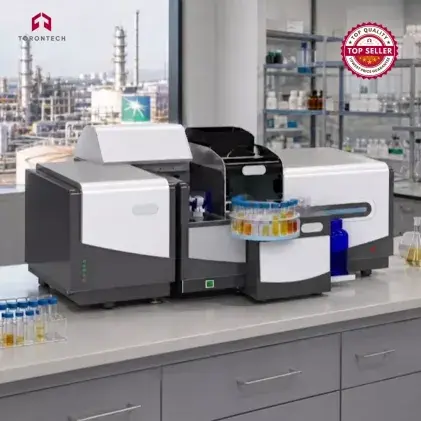
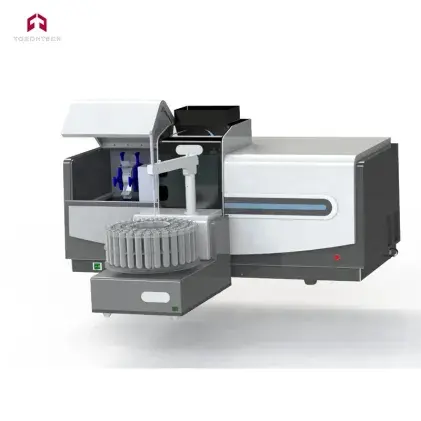
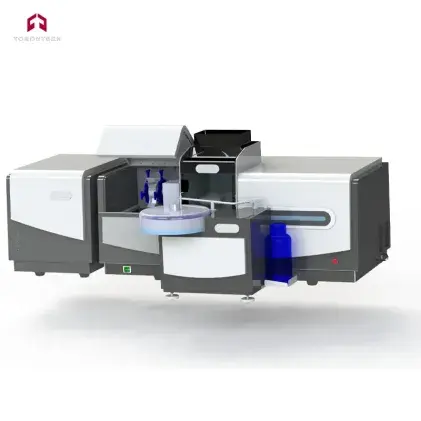
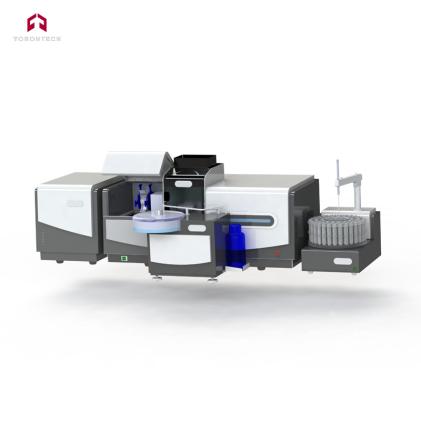
- Torontech Solution: Our AAS3000 Series offers a smart compromise. It provides advanced automation and high sensitivity without the massive operational overhead of a plasma system.
Quick View: Difference Between ICP OES and AAS
For a straightforward summary of the difference between ICP OES and AAS in practice, we’ve put together this essential breakdown.
| Key Factor | Atomic Absorption (AAS) | ICP-OES |
|---|---|---|
| Core Function | Measures light absorbed by one element. | Measures light emitted by all elements. |
| Operational Speed | A methodical and focused performer. | Extremely fast for high-volume, multi-element runs. |
| Trace Detection | Excellent, especially for specific elements with a Graphite Furnace (ppb). | Very good (ppb), but can be limited by spectral noise. |
| Initial Investment | A cost-effective and accessible capital expense. | A significant capital investment. |
| Ongoing Expenses | Low and predictable. | High, with continuous consumption of expensive Argon gas. |
| Operator Skill | Can be operated effectively after moderate training. | Requires a highly experienced analyst for best results. |
The Difference Between AAS and ICP-OES: Core Mechanics
Before comparing performance points, it's helpful to visualize the fundamental operational difference between AAS and ICP-OES.
Atomic Absorption (AAS): The Lock-and-Key Approach
Atomic Absorption (AAS) operates on a principle of high specificity. It measures the absorption of light by free atoms in the ground state, typically analyzing one element at a time. It uses a lamp designed for a single element and measures how much of that specific light is absorbed by the atoms in your sample (Bukhatir, 2018; Tawfik et al., 2024).
Think of it as a lock-and-key system; it’s focused on one target, which is the source of its celebrated accuracy. Because it isolates a single wavelength, it cuts through the noise that often plagues other methods.
ICP-OES: The Broad Spectrum Approach
ICP-OES takes a broader approach. It uses a high-temperature plasma to excite atoms and ions, causing them to emit light at characteristic wavelengths.
This mechanism allows for simultaneous multi-element detection with high sensitivity across a broad concentration range (Bukhatir, 2018). The instrument analyzes this complex spectrum of light to identify and quantify the elements. It’s like turning on every light in a stadium at once and trying to measure the brightness of each bulb instantly.
Our Perspective: While the technology behind ICP is impressive, the straightforward nature of AAS is a significant advantage in many lab settings. The operational simplicity of AAS often translates to greater uptime and more repeatable results.
The AAS vs ICP-OES Trade-off: A Practical Breakdown
Here is what the ICP OES vs AAS comparison means for your daily operations, budget, and results.
1. Throughput and Workflow
ICP-OES
If a laboratory is a high-volume operation that needs to screen dozens of samples for a wide array of elements daily, the simultaneous analysis of ICP-OES is a clear advantage. Studies confirm that ICP-OES tends to be faster and more suitable for samples containing multiple elements (Shawkat et al., 2025; Hall et al., 2021).
Real-World Example: Consider a commercial environmental testing facility. They might need to analyze 30 different elements across 200 wastewater samples every single day. That is 6,000 data points daily, which is strictly ICP-OES territory.
AAS
If the work involves routine testing for a defined list of elements, the sequential nature of AAS provides a reliable and efficient workflow. It is purpose-built for focused, repetitive analysis.
Real-World Example: Conversely, take a quality control lab at a metal plating factory. They likely only need to check the concentration of Nickel and Chrome in their plating baths once every few hours. For this, a dedicated flame system like our AAS3000F is the definition of efficiency. It is robust, fast, and far less expensive to run than an ICP.
Our Recommendation: It is vital to assess the genuine daily sample load. The throughput capacity of an ICP-OES is often far more than what a typical quality control or research lab requires, leading to an over-investment in unused potential.
2. Sensitivity for Trace Analysis
Graphite Furnace AAS: This is where the AAS vs ICP-OES battle for sensitivity gets interesting.
For labs that need to detect extremely low concentrations of specific elements, like lead in drinking water or cadmium in soil, a Graphite Furnace AAS is the specialized instrument for the most demanding trace analysis.
Models like the AAS3000FG combine this sensitivity with flame capabilities, offering a versatility that often outperforms standard ICP-OES in detection limits.
3. Managing Interferences
AAS
This platform is largely immune to spectral interference because it analyzes one element at a time. The primary challenge is chemical interference, which is well-understood and typically resolved with standard, documented lab procedures.
ICP-OES
The simultaneous emission of light from all elements can create a crowded environment, similar to trying to isolate one voice in a loud room. These spectral interferences can overlap, requiring advanced optical systems and complex software algorithms to correct, which places a heavier burden on the operator.
Our View: For labs without a dedicated spectroscopist on staff, AAS is the more forgiving and manageable system. Its interferences are simpler to diagnose and correct.
4. Total Cost of Ownership
ICP-OES
The high initial purchase price is only the beginning. The continuous need for high-purity Argon gas is a major operational expense that is a significant factor in its total cost of ownership.
AAS
This instrument represents a much lower financial barrier to entry. Furthermore, its modest consumption of common and less expensive gases makes it the clear leader in providing long-term value and a faster return on investment.
Common Applications by Industry
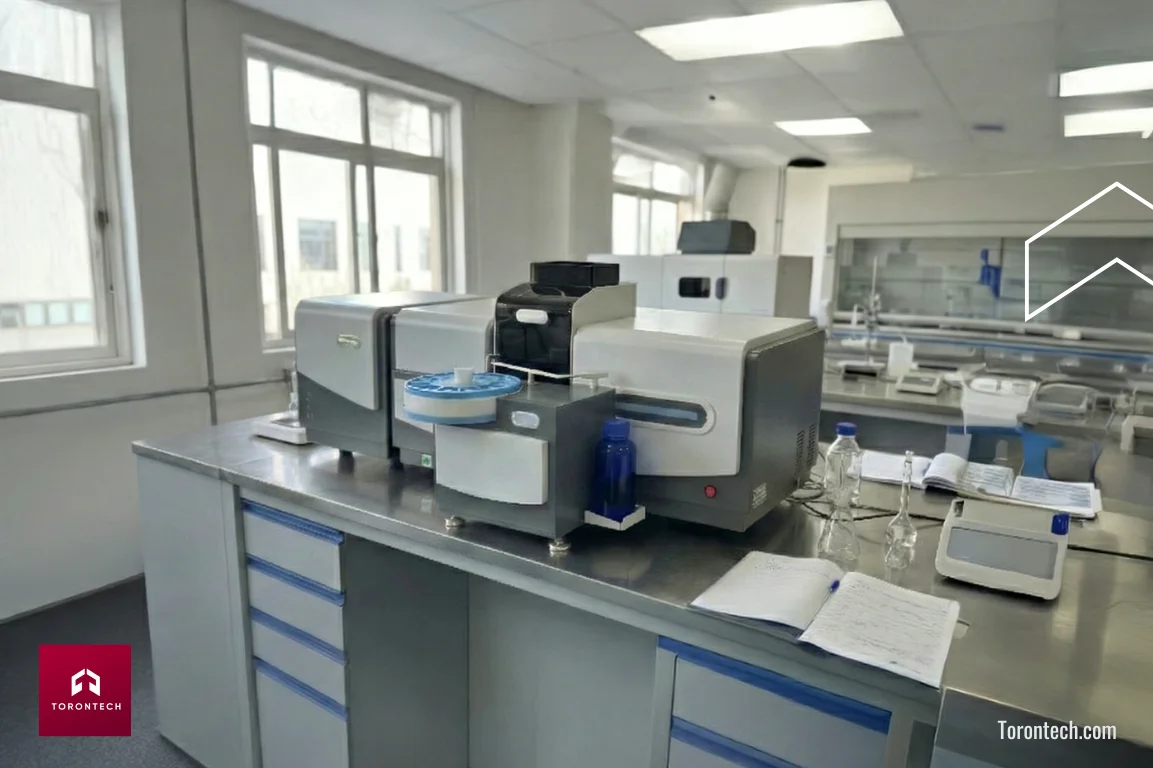
Across different sectors, here is how analytical needs typically align and which specific configurations serve them best.
Mining and Precious Metals
These labs are almost always focused on quantifying one or two primary elements, like gold or silver. The dependability and low operating cost of AAS make it the industry standard. The AAS3000F (Flame Type) is a strong fit here because it handles dissolved rock matrices without clogging or requiring excessive maintenance.
Specific Use Case: Monitoring gold concentration in cyanide leaching solutions to ensure the extraction process is running efficiently.
Environmental Labs
The choice here often splits down the middle. For large-scale commercial labs performing broad environmental screens, an ICP-OES is widely applied due to its ability to handle complex matrices (Shawkat et al., 2025; Planeta et al., 2021).
However, for municipal water facilities or compliance labs focused on a specific list of regulated heavy metals, we recommend the AAS3000FG for its superior detection limits and cost-efficiency.
Specific Use Case: Verifying that local drinking water supplies meet EPA limits for arsenic and lead.
Pharmaceuticals and Nutraceuticals
Compliance is the name of the game here. Detecting elemental impurities requires exceptional sensitivity to meet strict pharmacopeial standards. The AAS3000FG-Pro is often the preferred choice for these applications because it reliably hits those ultra-trace limits without the massive overhead of a plasma system.
Specific Use Case: Testing raw ingredients for "Class 1" elemental impurities, such as Cadmium, Lead, Arsenic, and Mercury.
Petrochemicals and Lubricants
Whether checking additives in fresh oil or wear metals in used engines, the matrix is often heavy and organic. A durable Flame AAS, such as the AAS3000F, handles these organic solvents with ease, providing the necessary data for predictive maintenance without overcomplicating the process.
Specific Use Case: Tracking wear metals, like iron from cylinders or copper from bearings, in used engine oils to predict engine failure.
Clinical Toxicology and Biology
When health is on the line, accuracy is non-negotiable. Testing biological samples for lead or other heavy metals is a classic application. AAS is often preferred for trace element analysis in biological samples where high sensitivity for specific elements is required (Planeta et al., 2021; Tawfik et al., 2024).
For many specialized clinics, a dedicated AAS provides the specific, reliable results needed for patient diagnosis without the noise of unnecessary elements.
Specific Use Case: Screening blood samples from pediatric patients for elevated lead levels.
Food and Product Safety
This type of testing requires high precision for a known list of potential contaminants.
AAS delivers the sensitivity needed to meet regulatory standards without the operational complexity of an ICP system. It allows food safety labs to pinpoint toxic metals quickly and accurately.
Specific Use Case: Ensuring that rice or fruit juices are free from arsenic contamination before they reach store shelves.
The Torontech Approach: Advanced Capabilities, Sensible Investment
At Torontech, our engineering philosophy is simple: you shouldn't have to compromise on features to meet your budget. We build our Atomic Absorption Spectrometers with the innovative technologies and automation you’d expect from higher-priced systems.
Our AAS3000 Series is a direct result of this thinking:
- Dual-Atomizer Design: Models like the AAS3000FG-Pro come standard with fully automated switching between the Flame and Graphite Furnace atomizers. This gives the lab the flexibility to handle both high-concentration and ultra-trace analysis in one instrument.
- Engineered for Efficiency: We integrated an automated 8-lamp turret that pre-warms the next lamp in the sequence. This simple innovation drastically reduces the downtime between analyses that operators often experience with other systems.
- Integrated Safety Systems: Every instrument is equipped with extensive safety protocols and gas leak monitoring as a standard feature, ensuring a secure operating environment for your team.
Torontech’s Verdict: AAS vs ICP-OES
The decision between AAS vs ICP-OES depends on factors such as sample type, required detection limits, and the number of elements to analyze (Sunitha et al., 2015; , 2021). If the work demands extreme-speed, multi-element analysis on a massive scale, an ICP-OES is a capable tool.
However, for the majority of labs performing targeted, precise analysis where return on investment is a key consideration, we are confident that a modern AAS is the smarter, more sustainable choice.
Understanding the difference between AAS and ICP-OES helps you avoid overspending on features you don't need. Our commitment at Torontech is to provide these cost-effective solutions, empowering laboratories to achieve excellent results with intelligent technology.
Ready to explore a more effective solution for your lab? You can review our line of advanced Atomic Absorption Spectrometers here or contact our team today to discuss your specific analytical needs.
References
- Bukhatir, S. (2018). An Overview. ICP Emission Spectrometry.
- Hall, A., King, J., & McDonald, C. (2021). Comparison of Serum, Plasma, and Liver Zinc Measurements by AAS, ICP-OES, and ICP-MS in Diverse Laboratory Settings. Biological Trace Element Research, 200, 2606 - 2613.
- Planeta, K., Kubala-Kukuś, A., Dróżdż, A., Matusiak, K., Setkowicz, Z., & Chwiej, J. (2021). The assessment of the usability of selected instrumental techniques for the elemental analysis of biomedical samples. Scientific Reports, 11.
- Shawkat, S., Ahmed, S., & Nadeem, S. (2025). Which Is More Reliable? ICP-OES vs AAS for Chromium and Lead Analysis in Heavy Metal Monitoring. Journal of Chemical Learning Innovation.
- Sunitha, M., Sahrawat, K., & Wani, S. (2015). Comparative Evaluation of Inductively Coupled Plasma–Optical Emission Spectroscopy and Atomic Absorption Spectrophotometry for Determining DTPA-Extractable Micronutrients in Soils. Communications in Soil Science and Plant Analysis, 46, 627 - 632.
- Tawfik, W., El-Saeed, M., Khalil, A., & Fikry, M. (2024). Detection of heavy metal elements by using advanced optical techniques. Journal of the Egyptian Society for Basic Sciences-Physics.
- (2021). Procurement of Equipment and Preparation of the Laboratory. ICP Emission Spectrometry.