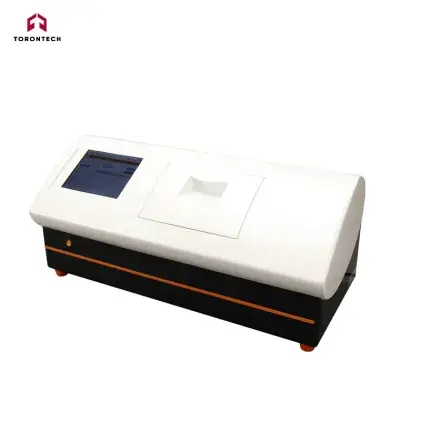
Polarimetry and the International Sugar Scale Explained
Global commerce thrives on clear, universal standards. In the sugar industry, that cornerstone of trust and reliability is the International Sugar Scale (°Z). This globally accepted benchmark ensures fairness and consistency in trade, but its power comes from the precise technology used to measure it.
To us at Torontech, a solid grasp of the relationship between polarimetry and the international sugar scale is essential for any business focused on accuracy and quality. This guide will walk through the science and how it's applied, connecting the core principles to the equipment that performs the work.
Key Takeaways
- The Global Standard: The International Sugar Scale (°Z) is the universal standard for determining sucrose purity in global trade, ensuring fairness and consistency.
- The Core Technology: Polarimetry is the specific scientific technique used to measure the °Z scale. It works by analyzing how optically active molecules like sucrose rotate polarized light.
- A Crucial Distinction: Polarimetry (°Z) is not the same as refractometry (Brix). Polarimetry measures sucrose exclusively, while Brix measures all total dissolved solids.
- Direct Financial Impact: Accurate measurement is critical because the °Z reading often directly determines the commercial value and payment for raw sugar and other products.
- Equipment Requirements: Adhering to the International Sugar Scale requires precise, reliable equipment designed to meet strict industry standards like those set by ICUMSA.
So, What's the Big Idea with Polarimetry?
At its heart, polarimetry is a remarkably effective and non-destructive method for checking the concentration of a substance. The technique works on a unique property of molecules like sucrose. Due to its specific three-dimensional chemical structure (a property known as chirality), sucrose is ‘optically active,’ which means it has the ability to rotate the plane of polarized light as it passes through.
This isn't just a random effect; it's a fundamental interaction between light and the molecule's unique shape. The degree of this rotation is directly and predictably related to the concentration of sucrose in the solution (Singerman, 2007; Salelign & Duraisamy, 2021). This dependable relationship is the scientific foundation of the international sugar scale.
How the Machine Actually Works
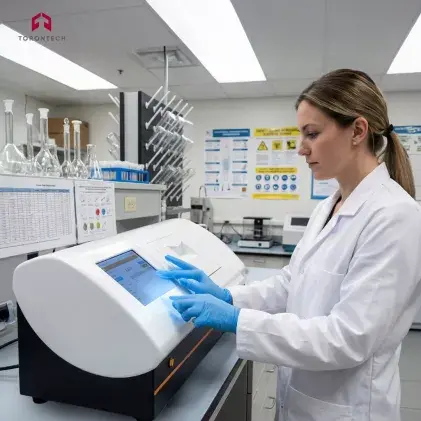
The process inside a polarimeter is an elegant and precise one. It involves several key components working in perfect sequence to get the job done:
- A high-intensity Light Source initiates the process.
- That light then passes through a fixed Polarizer, a filter that allows only light waves that are properly aligned to continue.
- This uniform beam of light travels through a Sample Tube holding the solution being tested.
- If sugar is present, it will rotate the plane of the light.
Finally, a second, rotatable filter called an Analyzer is adjusted to measure the exact angle of that rotation. This final number provides the basis for calculating the substance's concentration with high precision.
Related article: Sodium Lamp vs LED: The Better Polarimeter Light
Let’s Clear the Air: Polarimetry (°Z) vs. Refractometry (Brix)
A common point of confusion in concentration measurement is the distinction between polarimetry and refractometry. While both are important tools, they measure fundamentally different properties and provide very different information. Choosing the right one is critical, especially when your results must conform to the international sugar scale.
- Polarimetry (°Z): This method is highly specific to sucrose. It works by measuring a unique physical interaction that only optically active molecules like sucrose have with light. This makes it the true measure of sugar purity, as it effectively ignores other dissolved solids (Salelign & Duraisamy, 2021; Singerman, 2007).
- Refractometry (Brix): This approach measures the bending of light (refractive index) as it passes from the air into the liquid. This bending is affected by the density of the solution, so it measures the concentration of all dissolved solids, including sucrose but also other sugars, salts, and minerals. It provides a quick estimate of total solids but not specific purity (Jaywant et al., 2022; E.N., 2012).
For example, while refractometry is great for a quick check on the total sugar content of fruit juice, it can't distinguish between added sucrose and the naturally occurring fructose. A polarimeter can, making it the indispensable tool for quality control and verifying formulations.
Polarimetry and the International Sugar Scale (°Z): The Rulebook
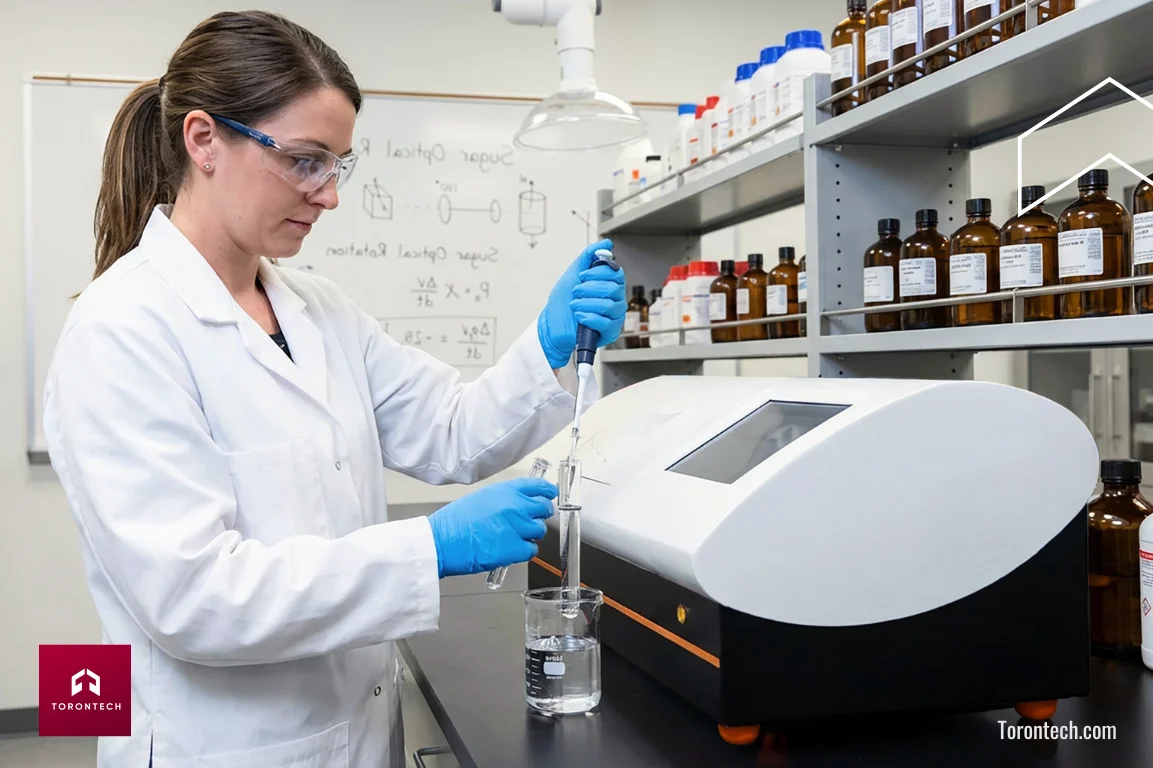
Now that the technology is clear, we can see why its primary application is so important.
Before a global standard existed, international sugar trade was often complicated by disputes over quality. The International Commission for Uniform Methods of Sugar Analysis (ICUMSA) solved this by creating the International Sugar Scale (ISS), a uniform system that standardized polarimetric measurements across the globe (Singerman, 2007; Emmerich & Zander, 1988).
The entire international sugar scale is defined by the 'normal sugar solution'. This is a precisely defined recipe of 26 grams of pure sucrose dissolved in 100 cm³ of water, which, when measured in a 200mm polarimeter tube at a constant temperature of 20°C, gives a reading of exactly 100°Z (Salelign & Duraisamy, 2021; Singerman, 2007).
Related article: Interpreting Polarimeter Readings & Standards
This physical standard ensures that every properly calibrated polarimeter, anywhere in the world, is referencing the exact same measurement point. This system creates a level playing field and has direct financial implications. A raw sugar supplier's payment is often calculated from the polarimeter's reading, where a fraction of a degree can significantly impact the final price.
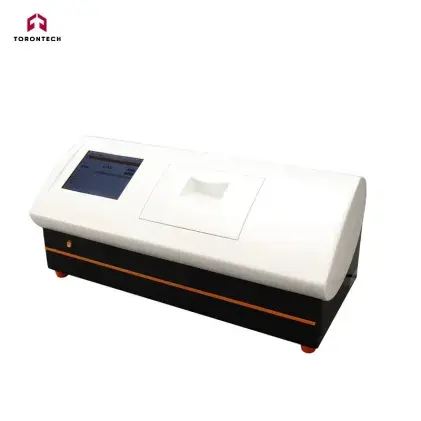
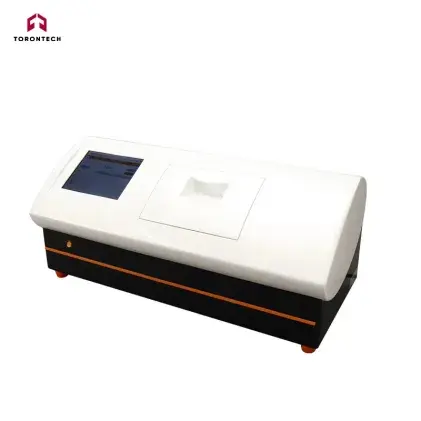
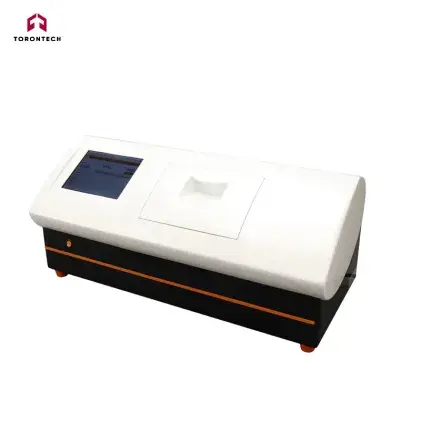
To handle these high-stakes measurements, we typically recommend high-precision models like the ToronAP50 Auto, which are engineered to meet these stringent ICUMSA requirements.
It's Not Just a One-Trick Pony for Sugar
While its importance in the sugar trade is clear, the precision of polarimetry has proven valuable in a surprising number of other highly demanding fields:
- Pharmaceuticals: It is an essential tool for quality control, for instance, confirming the purity of an incoming shipment of a chiral active ingredient.
- Food and Drinks: It's frequently used to verify product consistency, e.g., ensuring a batch of premium syrup meets its specified sugar concentration.
- Cosmetics and Fragrance: This field relies on it for quality assurance, for example, verifying the authenticity of essential oils like peppermint or orange oil.
- Chemicals: It serves as a reliable check for product specifications, such as verifying the stereochemical purity of a specialty chemical.
- University and Research Labs: It is a fundamental instrument for discovery, such as characterizing a newly synthesized chiral molecule.
Picking the Right Gear for the Job
Choosing a new instrument is a significant business decision. From our perspective, the focus shouldn't just be on the initial price, but on long-term performance and reliability. We believe it comes down to a few key factors:
- Is the Data Reliable? First and foremost, the instrument must provide accurate results that align with industry standards. The integrity of your data is paramount, especially when working within the strict tolerances of the international sugar scale (Emmerich & Zander, 1988).
- Does It Improve Your Workflow? This is where smart innovation makes a difference. Automated equipment can significantly reduce measurement time and minimize the potential for human error, leading to a more efficient operation.
Is It Built for the Long Haul? A polarimeter is an investment in your process. We advocate for solidly constructed equipment that can handle the daily demands of a busy lab, delivering real value year after year.
Related article: Manual vs Automatic Polarimeters: Which is Best?
Torontech: Your Partner in Precision and Innovation
Here at Torontech, we know our clients are looking for equipment that performs consistently and makes good business sense. Our focus is on supplying cost-effective and innovative solutions that help improve quality and productivity.
Our lineup of polarimeters, from the versatile ToronAP10 Auto to the high-performance ToronAP50 AutoPlus, is put together to give you the kind of accurate, repeatable readings that are essential in the sugar business and other demanding industries.
If you are looking to improve the accuracy and efficiency of your quality control, contact Torontech today. Let’s discuss our range of innovative and cost-effective polarimetry solutions and find the right fit for your operation.
References
- Salelign, K., & Duraisamy, R. (2021). Sugar and ethanol production potential of sweet potato (Ipomoea batatas) as an alternative energy feedstock: processing and physicochemical characterizations. Heliyon, 7.
- E.N., E. (2012). Comparative Analysis of Monosaccharide and Disaccharide Using Different Instrument Refactometer and Polarimeter.
- Emmerich, A., & Zander, K. (1988). Polarimetry and the international sugar scale. **, 14, 275-330.
- Jaywant, S., Singh, H., & Arif, K. (2022). Sensors and Instruments for Brix Measurement: A Review. Sensors (Basel, Switzerland), 22.
- Singerman, D. (2007). “A Doubt is at Best an Unsafe Standard”: Measuring Sugar in the Early Bureau of Standards. Journal of Research of the National Institute of Standards and Technology, 112, 53 - 66.
- (1937). New Form of Saccharimeter. Nature, 140, 678-678.