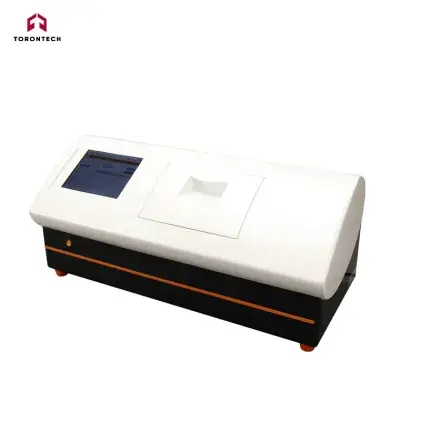
Manual vs Automatic Polarimeters: Which is Best?
Ready to get perfect measurements every single time?
We believe every lab deserves results they can trust without the headache. For our partners in the pharmaceutical, food, and chemical sectors, the right polarimeter turns a daily routine into a seamless process.
In our view, the choice regarding manual vs automatic polarimeters is about more than just hardware. It is about unlocking better efficiency and total confidence in your data. Here is our perspective on making the right call.
Key Takeaways
- Automatic polarimeters are the clear winner for commercial labs as they eliminate the subjective guesswork of manual readings.
- Modern automatic systems deliver high precision and repeatable results in seconds rather than minutes.
- Industries like pharma and food processing rely on automatic units to ensure strict compliance and data integrity.
- Manual models remain useful for educational settings but lack the efficiency needed for high-throughput testing.
- Torontech offers the ToronAP Series to provide innovative and cost-effective automatic solutions for any budget.
The Clear Difference: Manual vs Automatic Polarimeters
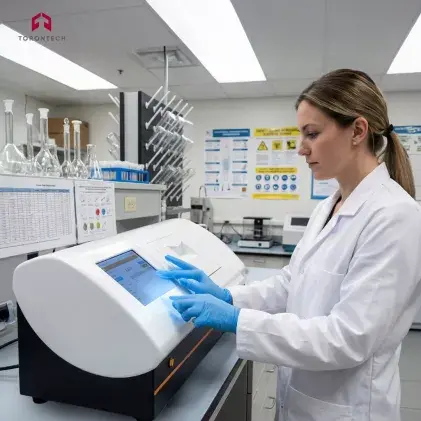
We'll be direct with our assessment: for any professional laboratory, an automatic polarimeter is a significant step up. It completely removes the element of subjective guesswork. All you folks who have spent time with a manual instrument know the moments of uncertainty we're referring to. With an automatic system, you get a clear and unambiguous digital result.
Research supports this view, noting that automatic imaging polarimeter systems can increase work efficiency by about 20% while maintaining high resolution and accuracy through automated processes (Hu et al., 2025).
Every reading is exceptionally repeatable, and the process is straightforward from start to finish. The readings are consistently accurate. They are strong and stable without requiring constant user interpretation. It is a level of reliability that lab managers find invaluable.
Related article: Interpreting Polarimeter Readings & Standards
For a direct side-by-side look at manual vs automatic polarimeters, here’s how we break it down:
| Feature | Traditional Manual Systems | Modern Automatic Systems |
|---|---|---|
| Measurement Process | Requires manual adjustment and visual interpretation by the operator. | Fully automated measurement with a direct digital readout. |
| Accuracy & Repeatability | Lower. Results can vary between different operators. | High. Delivers consistent, operator-independent results. |
| Speed per Sample | Slower. Typically takes several minutes for a stable reading. | Fast. A reading is often complete in under 30 seconds. |
| Potential for Error | High. Very dependent on operator skill and interpretation. | Minimal potential for operator-induced error. |
| Data Management | Requires manual transcription, which can introduce errors. | Automatic digital data capture, ready for export and reporting. |
| Recommended Environment | Primarily for academic or educational purposes. | Essential for QC, R&D, and high-throughput production labs. |
| Initial Investment | Lower upfront cost. | A higher initial investment. |
When you consider the operational costs of incorrect readings, repeat analyses, and staff time, the initial investment in automatic technology presents a clear and compelling business case in the automatic vs manual polarimeters debate.
Where Automatic Systems Prove Their Worth
We have seen these automatic instruments become a genuine asset across a wide range of industries. It’s about getting a number you can trust, efficiently and consistently.
In the Pharmaceutical Industry
In this sector, there is no margin for error. We believe that relying on manual methods introduces an unnecessary level of risk. Automatic polarimeters are essential for confirming drug purity and verifying raw materials.
For example, ensuring a specific rotation for an active ingredient like Dextromethorphan falls within the tight specifications required by the USP is a simple and rapid check on a high-precision unit like our ToronAP50 AutoPlus.
In the Food & Beverage Sector
Brand reputation is built on consistency. We work with companies that depend on these instruments to verify sugar concentrations. Studies have shown that automatic systems demonstrate lower variability in specific optical rotation measurements, such as in honey analysis, compared to manual polarimeters, which directly improves reliability (Serrano et al., 2019).
Related article: Polarimetry and the International Sugar Scale Explained
A common application is accurately measuring the sugar inversion in syrups to prevent unwanted crystallization, a task easily handled by the dependable ToronAP10 Auto, or confirming that a product's Brix value corresponds to the correct optical rotation.
In the Cosmetics and Fragrance Industry
Here, product authenticity is paramount. Automatic polarimeters are the most reliable method we know for verifying the purity of high-value essential oils. For instance, a shipment of L-menthol can be quickly verified against its known specific rotation using the ToronAP50 Auto, instantly flagging a potentially diluted or synthetic batch.
In the Chemical Industry & Research
Progress is built on good data. We support scientific researchers who need to monitor reactions and characterize new compounds.
An automatic system, such as the ToronAP10 AutoPlus, can be used to track the progress of a chiral synthesis in real-time. This allows a chemist to determine the optimal point to stop a reaction, saving both time and materials.
Automatic vs Manual Polarimeters: A Look at the Core Technology
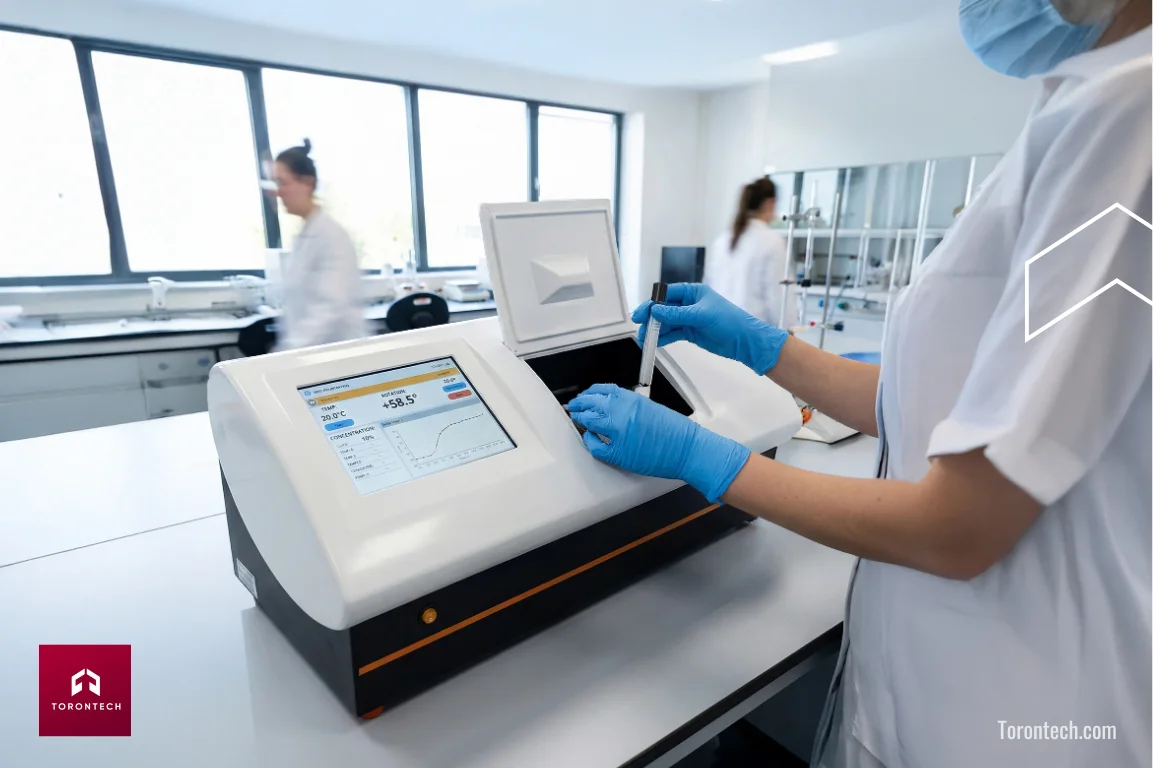
To fully appreciate the performance difference, we think it helps to understand what separates these instruments internally.
Manual Polarimeter Technology
A manual polarimeter uses the human eye as its detector. The operator must look through an eyepiece and physically rotate a filter until two halves of an image match in brightness. While functional for its era, this process is inherently subjective and a source of variation.
Automatic Polarimeter Technology
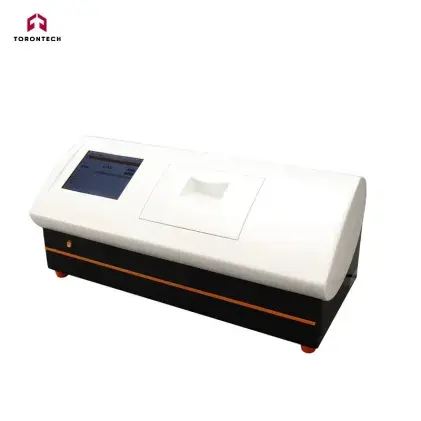
A modern automatic polarimeter replaces human perception with precision components. It uses a Faraday modulator and a highly sensitive photodetector to electronically pinpoint the exact angle of rotation. The use of electronic control and data acquisition enables simultaneous multi-parameter measurements and automatic calibration, which are difficult to achieve manually (Pellicori & Gray, 1967; Almanza-Ojeda et al., 2022).
The system provides a precise digital result that removes operator variance from the equation. We believe this is the best way to ensure true measurement integrity, which is why this technology is standard across our ToronAP Series.
The Torontech Advantage: Innovative Technology, Sensible Economics
This brings us to our core mission. We believe advanced technology should be accessible rather than out of reach due to a high price tag. We developed our line of automatic polarimeters with a guiding principle: to offer cost-effective solutions packed with innovative technology.
Interestingly, modern engineering allows automatic polarimeters to be built from low-cost components yet still achieve research-grade precision and fast measurement times (Harvie et al., 2020).
Our ToronAP Series was created to meet this exact need for high-performance instruments that fit within a practical budget:
- Advanced Photoelectric Components: This is the core that delivers the precise and repeatable measurements our clients depend on.
- An Intuitive Digital Interface: Designed for ease of use to reduce training time and ensure accurate results from any member of your team.
- A Durable, Versatile Build: Constructed to perform reliably in demanding environments, from the quality lab to the production floor.
The Torontech Choice for Modern Labs
So, what is our final assessment on manual vs automatic polarimeters?
While manual polarimeters have a role in academic settings, the automatic polarimeter is, in our professional opinion, the superior choice for nearly all commercial applications. The reduction in operator-related errors, combined with greater speed, accuracy, and data integrity, presents a clear return on investment.
If you are looking to upgrade your lab's capabilities within a practical budget, we are here to help you explore a modern solution. Find out how Torontech’s innovative and cost-effective automatic polarimeters can bring a new level of precision and efficiency to your operations.
Contact us today. We would be glad to discuss your specific requirements and help you find the perfect instrument for your application.
References:
- Almanza-Ojeda, D., Rodriguez-Sotelo, D., Castro-Sanchez, R., Martinez-Celorio, R., & Ibarra-Manzano, M. (2022). Stokes Dynamic Polarimeter for Non-Organic and Organic Samples Characterization. Sensors (Basel, Switzerland), 22.
- Harvie, A., Phillips, T., & deMello, J. (2020). A high-resolution polarimeter formed from inexpensive optical parts. Scientific Reports, 10.
- Hu, Y., X., Zheng, M., Liu, L., & Li, Y. (2025). Automatic detection technology and application of high-performance Stokes-Mueller imaging polarimeter. SPIE, 13513, 135130P - 135130P-7.
- Pellicori, S., & Gray, P. (1967). An automatic polarimeter for space applications. Applied optics, 6 6, 1121-7.
- Serrano, S., Rodríguez, I., Moreno, R., & Rincón, F. (2019). Detection of key factors affecting specific optical rotation determination in honey. CyTA - Journal of Food, 17, 574 - 580.