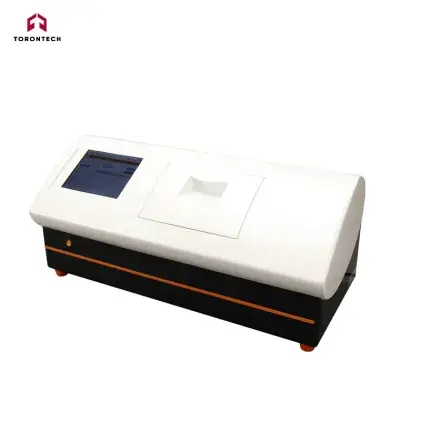
Sodium Lamp vs LED: The Better Polarimeter Light
We're going to make a clear statement here: regarding the light source in your polarimeter, LED technology is a significant step up from the traditional sodium lamp. For years, the scientific community has relied on those familiar yellow sodium lamps.
Anyone who's spent time in a lab knows the routine that comes with them: the warm-up delays, the unpredictable lifespan, and the constant need for replacements. We believe there's a more efficient way to work.
Key Takeaways
- Superior Performance: LED technology provides instant stability and lasts over 5,000 hours, vastly outperforming the short lifespan of traditional sodium lamps.
- Operational Efficiency: Modern LEDs eliminate the frustrating 15-30 minute warm-up delay required by older sodium lamp technology.
- Cost Savings: Switching to LED polarimeters significantly lowers the total cost of ownership by reducing downtime, energy consumption, and bulb replacement fees.
- Industry Compliance: The stable light source of Torontech’s ToronAP series ensures the data integrity required for strict standards like FDA 21 CFR Part 11.
- Versatile Application: High-intensity LED light penetrates dark or opaque samples effectively, making it ideal for the sugar, chemical, and pharmaceutical industries.
Why the Light Source is the Heart of the Measurement
Before comparing hardware, it’s worth focusing on the principle that guides our thinking.
The entire purpose of a polarimeter is to produce a dependable, accurate result. That result, however, is completely dependent on the quality and stability of its light source. If the light is inconsistent or weak, the data it produces will be just as questionable.
Think of it this way: if the light flickers even slightly while measuring a pharmaceutical ingredient, that fluctuation can be the difference between a batch that meets strict regulatory standards and one that has to be discarded.
Getting the light source right isn't just a component choice. It is the foundation for every measurement you take.
Related article: Interpreting Polarimeter Readings & Standards
The Sodium Lamp: A Respected but Outdated Standard
We'll be the first to acknowledge the sodium lamp's place in history. They have traditionally been favored in polarimeters due to their nearly monochromatic yellow light at the sodium D-line, which provided a stable, intense source ideal for measuring optical rotation (Fk & Ov, 2017).
However, technology has moved forward.
Relying on one today can feel like an unnecessary handicap. Beyond the operational hurdles like warm-up times and frequent burnouts, sodium lamps require bulky vacuum envelopes for thermal isolation (Fk & Ov, 2017). This requirement limits the ability to miniaturize devices and complicates the engineering of modern, sleek instruments. From our perspective, these are limitations that a modern lab shouldn't have to navigate.
The LED Lamp: A Clear Technical Winner
The arrival of LED technology, in our opinion, has solved the core operational issues of the sodium lamp.
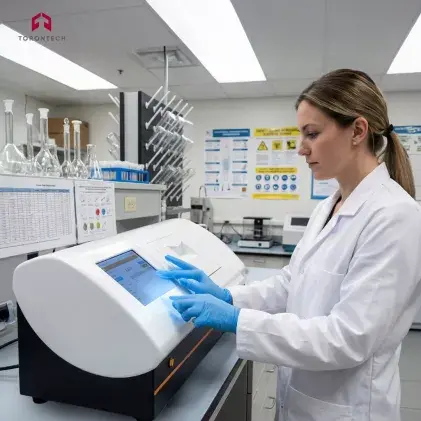
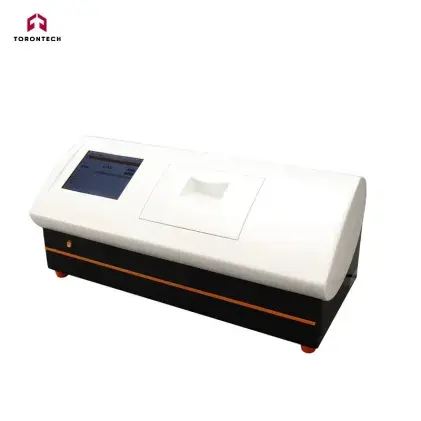
LEDs offer significant advantages such as longer lamp life, higher luminous efficacy, and the ability to emit at selectable wavelengths (Ng & Asundi, 1997). This is why we have equipped our entire lineup, from the versatile ToronAP10 Auto to the high-precision ToronAP50 Auto, with this superior light source.
While some might note that LEDs have a broader spectral bandwidth than sodium lamps, their emission typically remains within a range that maintains measurement accuracy in polarimetry (Ng & Asundi, 1997). A direct comparison makes the advantages obvious.
| Operational Factor | The Traditional Sodium Lamp | The Modern LED Solution |
|---|---|---|
| Wavelength Stability | Fluctuates while warming up | Rock-solid stable from the moment it's on |
| Warm-Up Time | A notable delay (15-30 mins) | Instantaneous. No waiting required. |
| Operational Lifespan | A few hundred hours at best | 5,000+ hours of consistent performance |
| Heat Output | Generates significant heat, can affect samples | Stays cool, protecting sample integrity |
| Maintenance Needs | Requires frequent replacement | Virtually maintenance-free |
| Environmental Profile | Contains mercury, requiring special disposal | Contains no hazardous materials |
This "plug and measure" capability isn't just about convenience. It’s about ensuring high-quality, dependable light for every single measurement.
Beyond the Purchase Price: The Total Cost of Ownership
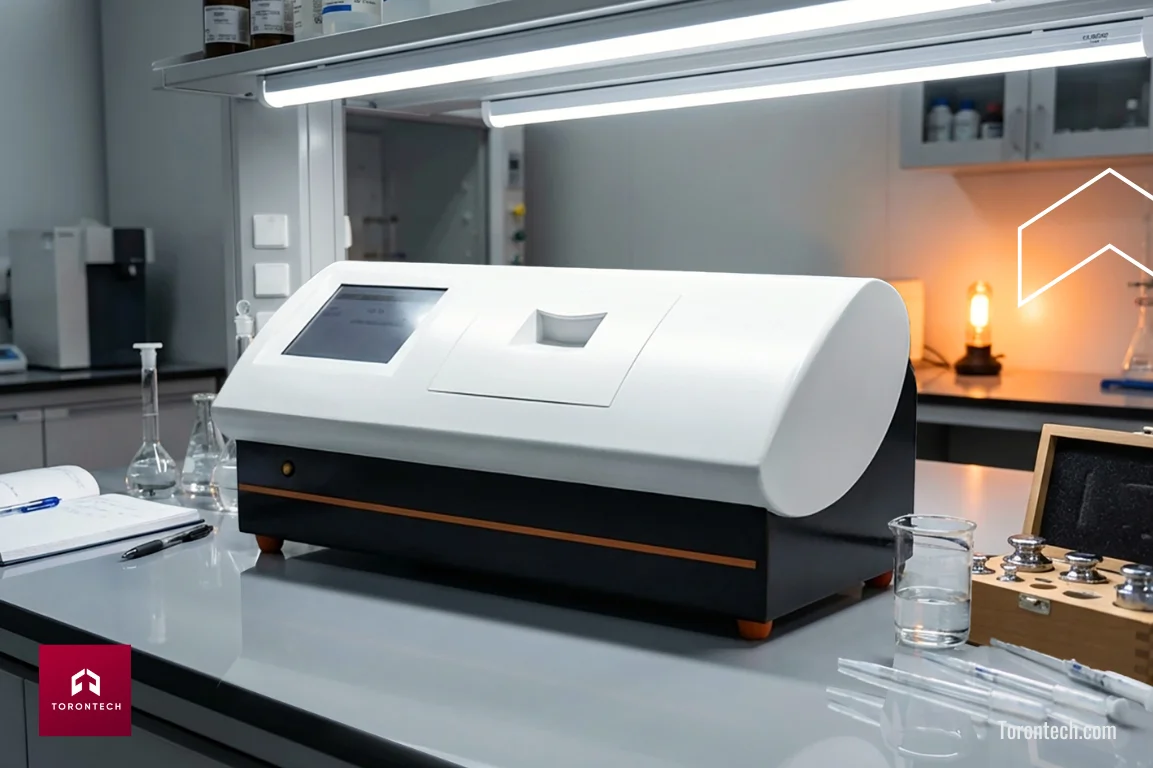
We always encourage our clients to look at the bigger financial picture. A polarimeter is a long-term asset, and the lifetime operational costs are where the real story unfolds. That lower initial price on a sodium lamp system can be misleading.
- Recurring Replacement Costs: The need to continually purchase new bulbs creates a significant and ongoing operational expense.
- The Cost of Downtime: Lost productivity is a real cost. The time your team spends replacing lamps or waiting for warm-ups is time not spent on productive analysis.
- Energy Consumption: The lower power draw of LEDs translates directly into savings on your facility's energy bills, month after month.
When you analyze the total picture, an investment in an LED-based system like the ToronAP10 AutoPlus becomes a sound financial decision aimed at improving your bottom line.
Application-Specific Benefits: Real-World Performance
This isn't just theory. The practical impact of this technology is evident across a range of industries:
Meeting Pharmaceutical Industry Standards
In the pharmaceutical industry, consistency is non-negotiable. The unwavering stability of an LED source is essential for meeting strict data integrity requirements. This is exactly why instruments like the ToronAP50 AutoPlus are engineered to be fully compliant with FDA 21 CFR Part 11, ensuring precision when confirming the specific rotation of an active pharmaceutical ingredient (API) for batch release.
High-Speed Food and Beverage QC
In the fast-paced sector of food and beverage QC, speed is critical. The instant-on capability of models like the ToronAP10 Auto helps laboratories increase their sample throughput, such as by quickly measuring the Brix of incoming fruit juice concentrate to ensure it meets specifications.
Profitability in the Sugar and Sweetener Industry
The sugar and sweetener industry requires precision for profitability. The high intensity of an LED light provides accurate readings even with dark samples. The ToronAP50 Auto excels here, as it is designed to grade dark, opaque molasses where sodium lamps often fail to penetrate.
Related article: Polarimetry and the International Sugar Scale Explained
Verifying Authenticity in Fragrances and Essential Oils
For producers of fragrances and essential oils, product authenticity is key. The stability of an LED system is vital to verify the purity of high-value materials, for instance, to distinguish natural l-menthol from a synthetic mixture in peppermint oil.
Versatility for Chemical Manufacturing
In chemical manufacturing, versatility is a must. The ability to accurately measure a wide variety of samples makes LED polarimeters a more reliable tool, like when monitoring a reaction's progress by observing changes in the optical rotation of a chiral polymer.
Durability for Academic and Research Labs
Within academic and research labs, durability and ease of use are paramount. A maintenance-free LED source means the instrument is always ready for characterizing a newly synthesized compound without the frustrating warm-up delays.
Torontech Commitment to a Brighter Future
At Torontech, our goal is to build high-performance equipment that is also financially accessible. Our ToronAP series is the result, engineered with modern LED sources that allow for compact designs and efficient integration.
We believe the debate is settled: the superior lifespan, performance, and ROI of LED technology make it the only logical choice for modern labs. We didn't just build a machine; we created a solution you can trust.
Contact us today to see how the ToronAP Series can elevate your quality control and deliver a strong return on investment.
References
- Fk, O., & Ov, G. (2017). Optical Fiber Laser Polaristrobometers and SpectroPolaristrobometers Based on Pr3+-Doped Laser Sources as a Possible Compact Alternative to the Old Type Polaristrobometers Based on Huge Low-Pressure (Mono-chromatic) SodiumVapor Gas-Discharge Lamps. Journal of Electrical & Electronic Systems, 2017, 1-1.
- Kvittingen, L., & Sjursnes, B. (2020). Demonstrating Basic Properties and Application of Polarimetry Using a Self-Constructed Polarimeter. Journal of Chemical Education, 97, 2196 - 2202.
- Ng, T., & Asundi, A. (1997). Light emitting diodes for illumination in photoelasticity. Experimental Techniques, 21, 28-30.