A Guide to Wear Metal Analysis of Oil
From our position in the industrial sector, we've consistently seen one issue disrupt operations and strain budgets: unscheduled equipment failure.
It's a costly event that brings productivity to a standstill. We believe the conventional approach of only fixing equipment after it breaks is an inefficient and risky strategy. There's a more effective way to operate, and it involves interpreting the information coming directly from inside your machinery.
You see, the oil circulating through your equipment is more than a simple lubricant; it’s a fluid report on the condition of your assets. By learning how to analyze it correctly, you can identify signs of trouble well before they escalate into a major failure.
Overall, the analysis of lubricants is a well-established and evolving field that plays a vital role in industrial maintenance and machinery health monitoring (Vähäoja et al., 2008).
The Strategy: In-Depth Wear Metal Analysis of Oil
The concept is quite straightforward and represents a fundamental shift from reactive repairs to proactive asset management.
This strategy, centered on the wear metal analysis of oil, involves examining the microscopic metal particles suspended in the lubricant. As your machine’s internal components—gears, bearings, and other moving parts—function, they gradually shed these fine particles. These metallic traces tell a clear story, acting as a direct indicator of which specific part is under stress. In essence, the oil becomes a liquid diagnostic medium, carrying vital information from deep inside the machine directly to you (Vähäoja et al., 2008).
When we help a facility put a program like this in place, the operational advantages become immediately apparent. It allows a business to avert major breakdowns by resolving minor issues before they become critical.
This focus on data-driven repairs helps stop unnecessary maintenance spending on healthy components and directly extends the service life of valuable assets. Furthermore, it allows you to confidently optimize oil change intervals based on the oil's actual condition, reducing expenditures on both lubricants and labor.
Reading Your Report: The Analysis of Wear Metal in Lubricants & More
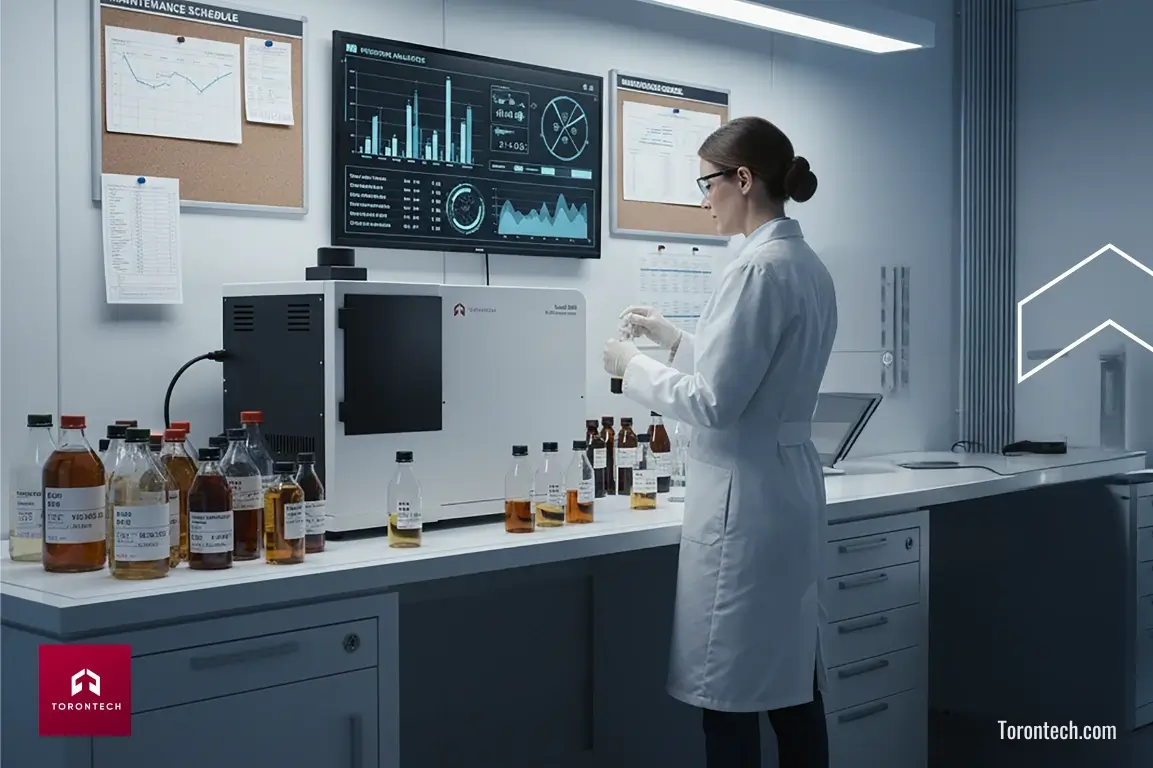
A complete oil analysis gives you the full diagnostic picture, allowing for more accurate and confident maintenance decisions. It's our firm opinion that looking at wear metals alone overlooks the root causes of a problem. A proper report from an analysis of wear metal in lubricants tells you what is wearing, why it's wearing, and if the oil itself is still fit for service.
Wear Metals (The "What")
These particles identify the specific components that are degrading. The presence and concentration of specific metals in oil can reveal the type and severity of wear, helping to diagnose issues before catastrophic failure occurs (Vähäoja etal., 2008). Consider this your reference guide:
- Iron (Fe): Indicates wear in gears, cylinders, or crankshafts.
- Chromium (Cr): Almost always points to piston rings or specialized hard coatings.
- Copper (Cu): A classic signal that bearings, bushings, or oil coolers may be degrading.
- Lead (Pb) & Tin (Sn): Tell-tale signs of wear in certain types of sleeve bearings.
- Aluminum (Al): Typically means pistons, housings, or thrust washers are wearing down.
- Nickel (Ni): Can indicate wear in valves or turbocharger components.
Contaminants and Additives (The "Why")
These elements provide the crucial context, often revealing the external aggressors or internal weaknesses causing the wear.
- Contaminants: These are the foreign agents that accelerate damage. The main three are Silicon (dirt/grit), Sodium/Potassium (coolant leak), and Water (corrosion risk). A spike in contaminants is a huge red flag that often precedes a rise in wear metals and must be addressed immediately.
- Additive Package: Quality lubricants are full of additives that form a protective shield inside the machine. We check these to confirm the oil hasn't been chemically depleted and can still perform its function effectively.
Putting It All Together: A Practical Scenario
Let’s look at a common and practical scenario to see how these data points connect. Consider a fleet manager for a large construction firm who has a consistent program for monitoring their heavy-duty excavators.
- The Observation: A routine oil sample from one of their key machines shows a sudden spike in its Silicon (Si) reading. It's caught early, so at this point, the wear metal levels are still normal.
- The Diagnosis: An experienced manager knows that high silicon means dirt is getting into the engine. This immediately and correctly points to a suspected issue with the air intake system.
- The Action: A physical inspection reveals a small, hard-to-see tear in a gasket on the air filter housing—a minor issue that wasn't caught during a standard visual check. The gasket is replaced for less than a hundred dollars.
- The Result: The next oil sample showed silicon levels have returned to normal. By catching this, the manager prevented that abrasive dirt from circulating and causing what would have certainly become a catastrophic failure of the engine's cylinders and pistons. This simple action prevented a repair that could have cost tens of thousands of dollars, avoided costly project delays, and kept the machine generating revenue.
This is a perfect illustration of how a proper wear metal analysis program allows you to turn a small, inexpensive repair into a huge cost-saving victory.
The Superior Method: Focusing on the Trend
The first question clients often ask is about oil analysis wear metal limits. While it seems logical to ask for a simple 'pass/fail' number, focusing on fixed, universal limits can be a misleading approach. What's considered "normal" for a brand-new engine is entirely different from the baseline of a machine with 10,000 hours of service.
In our experience, a far more powerful and predictive strategy is trend analysis. This is the method that separates basic oil monitoring from a truly proactive maintenance program. However, interpreting the data patterns correctly is a discipline in itself.
We explain more of this in our detailed guide: How to Interpret Oil Analysis Results Like a Pro
The Right Technology for the Job: Why We Stand Behind RDE-OES
Several technologies exist for performing wear metal analysis, but at Torontech, we’ve built our solutions around the method we are confident is superior for in-service oils: Rotating Disc Electrode Optical Emission Spectrometry (RDE-OES).
This is one of the most commonly employed techniques in the industry, and unlike other methods that can be slow or require hazardous chemicals, RDE-OES is uniquely suited for rapid, on-site analysis (Vähäoja et al., 2008).
Related article: RDE-OES vs. ICP-OES: The Clear Choice for Oil Analysis
Our entire ToronEA-Series of spectrometers is based on this powerful technology, which offers a blend of speed, simplicity, and accuracy that is ideal for industrial applications.
How This Technology Works
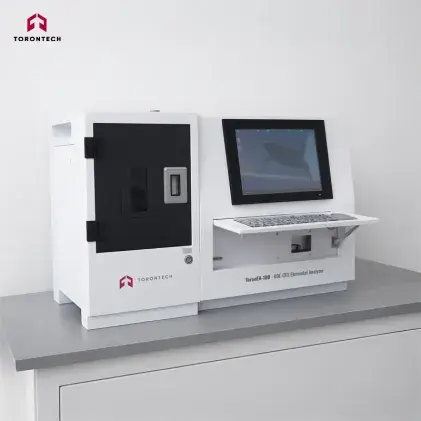
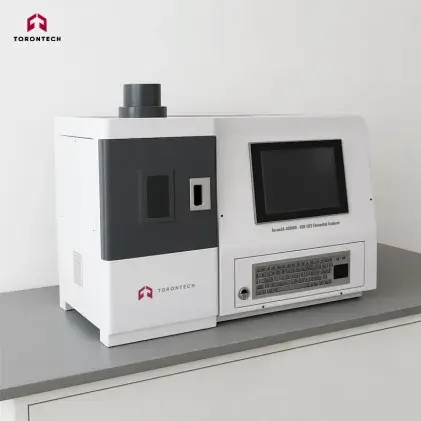
We ensured this technology is powerful without being complicated. When using a benchtop unit like our ToronEA-100, the process is a simple operation: the user obtains a small vial of used oil, with no complex prep needed, and places it into the instrument's analysis chamber.
From there, the machine’s graphite disc creates an electric arc with the oil, causing metallic elements to emit unique light signatures. The internal optical system then reads these signatures to instantly quantify up to 32 different elements. This generates a full report of actionable data, ready for immediate decision-making, in under 30 seconds.
Lower Maintenance Costs with Torontech
Our primary goal is to empower your team by making in-house analysis both effective and affordable. This approach removes the delays and recurring costs of sending samples to third-party labs, putting you in direct control of your maintenance schedule and budget.
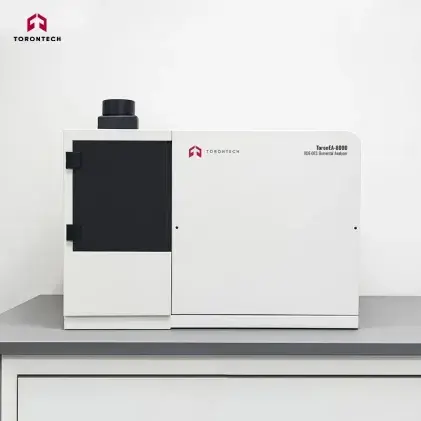
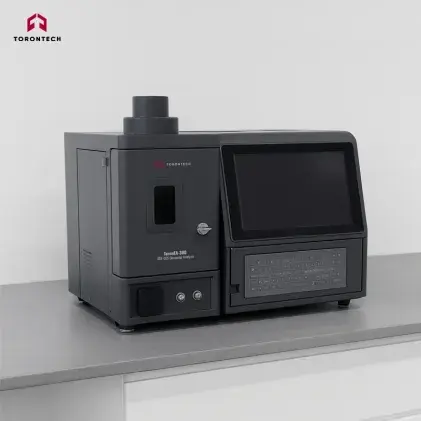
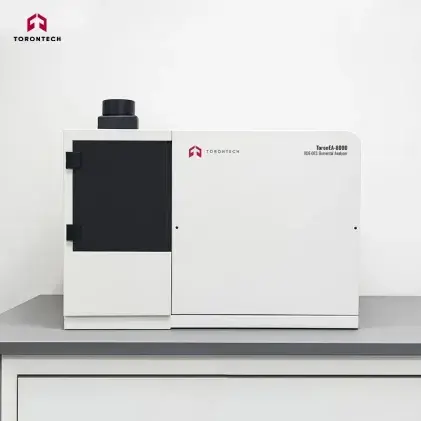
This is precisely why we developed our ToronEA-Series, with a model for any operational scale. Whether you need the ultra-compact portability of the ToronEA-300 for field analysis or the high-throughput capacity of our ToronEA-8000 series for a central lab, the core benefits remain the same.
Regardless of the model you choose, you get a complete and dependable analysis of all critical elements—from wear metals to contaminants—in under 30 seconds per sample. Every unit requires no special gases or chemical reagents, making it a straightforward addition to your existing workflow.
Ready to see how a more informed approach can improve your asset management program?
- Speak with one of our experts to discuss your specific application.
- Request a personalized quote to see the impressive ROI.
- Request our detailed datasheets for a complete technical overview.
Contact us at Torontech today, and let's begin using your lubricant data to protect and enhance the value of your equipment.
References:
- Vähäoja, P., Välimäki, I., Roppola, K., Kuokkanen, T., & Lahdelma, S. (2008). Wear Metal Analysis of Oils. Critical Reviews in Analytical Chemistry, 38, 67 - 83.