Cut Costs with Predictive Maintenance Oil Analysis
We all know the scenario: a critical piece of machinery goes down without warning, disrupting the entire workflow. The operation pauses, and the repair bills become a serious concern. We've seen this cycle of reactive maintenance play out countless times.
But there is a more effective strategy to get ahead of these failures. Predictive maintenance using oil analysis is, from our professional standpoint, the most direct way to get a real handle on your equipment's condition and keep your operations running without interruption.
From a Simple Sample to a Real-World Result
The core idea is to think of oil analysis for predictive maintenance as a diagnostic check-up for your machinery. It is a technique of regularly monitoring the condition of oils in your machinery to predict equipment health, spot early signs of wear, and perform maintenance only when it's truly needed, rather than on a fixed schedule (Badawi et al., 2022; Keartland & Van Zyl, 2020; Heinrich et al., 2024; Raposo et al., 2019).
The process is straightforward: a small sample is analyzed to provide a clear picture of what’s happening internally. Advanced strategies can even use statistical models to forecast the remaining useful life of both the oil and the machinery (Keartland & Van Zyl, 2020; Pan et al., 2023; Heinrich et al., 2024; Jun et al., 2006).
Consider a classic industrial scenario: a manufacturing plant sees a minor increase in iron particles during a routine analysis on a large press. The data indicates that a gear deep within the machine is beginning to fail. Instead of waiting for the inevitable breakdown, the team schedules a component replacement during a planned shutdown.
That simple, data-informed decision is what prevents a complete machine seizure that would have stopped production and resulted in six-figure losses from downtime and emergency repairs.
Related article: A Guide to Wear Metal Analysis of Oil
Industries That See the Greatest Impact
While nearly any operation with heavy equipment benefits, sectors like power generation, transportation, manufacturing, and oil and gas see the most significant returns because their machinery is mission-critical and expensive to repair (Badawi et al., 2022; Raposo et al., 2019; Keartland & Van Zyl, 2020; Heinrich et al., 2024; Laushkin et al., 2025; Aktaukenov et al., 2024; Azmi et al., 2024; Kalligeros, 2013).
Fleet Management & Transportation
For these businesses, engine health is the foundation of their operation. A simple analysis can spot early signs of bearing wear from a single sample, allowing for a planned engine overhaul instead of a catastrophic failure on a remote highway. This is crucial for urban buses, locomotives, and trucking fleets alike (Raposo et al., 2019; Laushkin et al., 2025).
Power Generation
When a turbine or generator is at risk, it's a high-stakes problem. Transformer oil analysis, in particular, is critical in the power industry for preventing multi-million dollar component failures and ensuring grid stability (Badawi et al., 2022).
Industrial Manufacturing
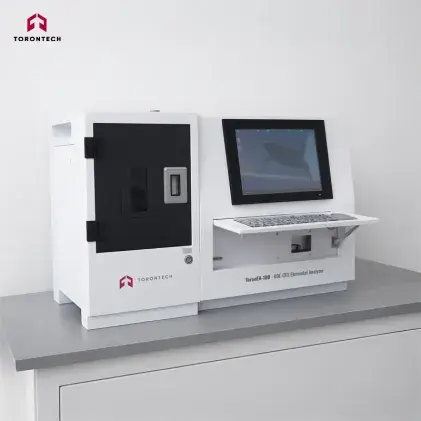
A single machine failure on the line can impact the entire plant's output. An in-house benchtop model like the ToronEA-100 allows a plant manager to track an increase of copper in a gearbox's oil and anticipate a synchro ring failure, replacing it during scheduled downtime.
Mining and Construction
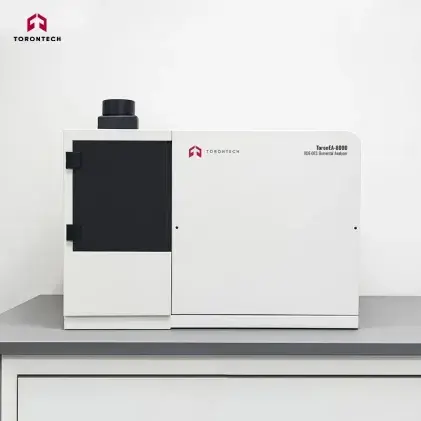
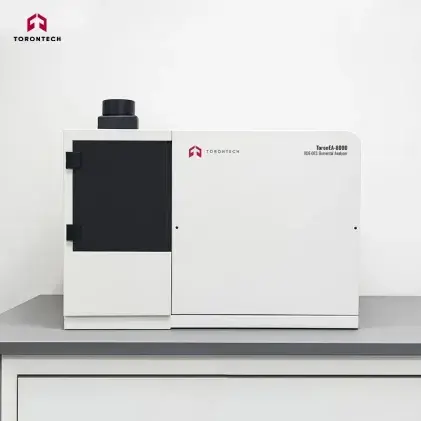
The equipment used is exceptionally expensive and operates under intense stress. High-volume labs supporting these sites rely on high-throughput models like the ToronEA-8000 to process hundreds of samples from haul trucks, identifying things like silicon (dirt) in final drive oil to prevent the destruction of a system worth hundreds of thousands of dollars.
Read more: A Guide to Mining Equipment Oil Analysis
Oil & Gas Extraction
In the oil and gas sector, predictive analytics are essential for maintaining pumps, compressors, and drilling equipment. Monitoring oil condition helps prevent unexpected breakdowns that can halt production and pose significant safety risks (Aktaukenov et al., 2024; Azmi et al., 2024).
Hydraulic Systems
For everything from industrial machinery to hydraulic lifts and elevators, oil analysis provides direct insight into the health of critical components. It helps prevent unexpected failures, extends equipment life, and lowers maintenance costs (Kalligeros, 2013).
The Tangible Advantages of Predictive Maintenance Oil Analysis

The benefits of this process are extensive, but they all ultimately lead to a more resilient and profitable operation. A consistent program of predictive maintenance oil testing delivers a significant impact on the bottom line.
- Protects Your Bottom Line: You begin to catch small issues that are inexpensive to fix, helping you avoid the major financial setbacks of a catastrophic failure. This transforms unpredictable, emergency expenditures into manageable, planned maintenance costs.
- Extends the Operational Life of Your Assets: Proactively managing your machinery’s condition ensures it performs optimally for a much longer lifespan. This improves the return on your initial investment and delays the need for massive capital expenditures on new equipment.
- Achieves True Equipment Reliability: You can move past hoping your machinery makes it through a shift and instead rely on hard data that confirms its operational readiness. The result is more predictable output, better resource planning, and greater confidence in meeting customer deadlines.
- Improves Workplace Safety: Equipment that fails unexpectedly is a primary safety risk. By identifying and addressing mechanical issues before they become critical, you are proactively removing known hazards from the work environment for your team.
Related article: How to Interpret Oil Analysis Results Like a Pro
What Predictive Maintenance Oil Testing Actually Looks For
A proper analysis is a forensic investigation into the oil, and it must provide a complete picture by assessing distinct areas like dissolved gas, moisture, acidity, and metal content. These categories are the pillars of effective oil analysis because together, they explain not just if there's a problem, but what and why.
Our entire ToronEA-Series, including the high-stability ToronEA-8000H, is engineered to precisely identify key indicators for:
| Category | What It Reveals | Key Indicators |
|---|---|---|
| Internal Component Wear | This shows which specific parts inside the machine are starting to degrade. | Iron, Copper, Lead, Aluminum |
| External Contamination | This identifies outside elements that have entered the system and are causing harm. | Silicon (dirt), Sodium (coolant), Water |
| Remaining Lubricant Health | This determines if the oil itself is still capable of protecting your components effectively. | Calcium, Zinc, Phosphorus |
Ready to Swap Guesswork for Certainty?
Investing in a predictive maintenance oil analysis program is a commitment to a more predictable and profitable way of operating. By closely monitoring the health of your equipment, you can reduce expenses, improve reliability, and create a safer workplace.
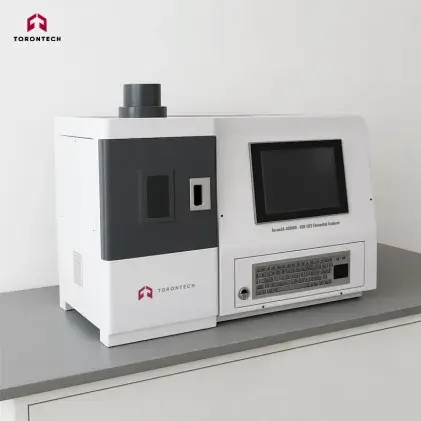
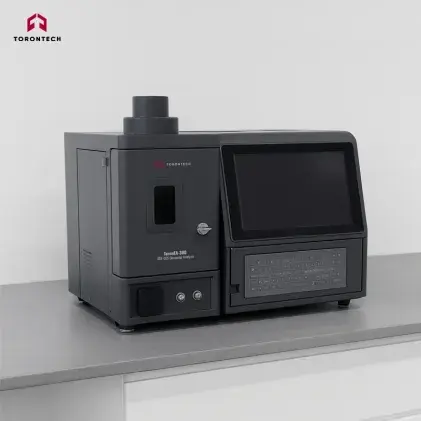
At Torontech, our focus is on providing the tools for this strategic shift. As seen, our ToronEA-Series offers solutions for every scale—from compact on-site units to high-throughput lab instruments. Models like the ToronEA-200 with its integrated printer are designed to streamline your workflow, providing the clear, fast, and reliable data you need to make the right call without unnecessary complexity.
If you are ready to see how our cost-effective solutions can directly benefit your business, we invite you to explore our full line of RDE-OES Rotating Disc Electrode Optical Emission Spectrometers. Our team is ready to help you identify the right solution for your operational needs and budget.
Contact us today for a quote and take the first step toward a more proactive and profitable maintenance strategy.
References
- Badawi, M., Ibrahim, S., Mansour, D., El-Faraskoury, A., Ward, S., Mahmoud, K., Lehtonen, M., & Darwish, M. (2022). Reliable Estimation for Health Index of Transformer Oil Based on Novel Combined Predictive Maintenance Techniques. IEEE Access, PP, 1-1.
- Raposo, H., Farinha, J., Fonseca, I., & Ferreira, L. (2019). Condition Monitoring with Prediction Based on Diesel Engine Oil Analysis: A Case Study for Urban Buses. Actuators.
- Keartland, S., & Van Zyl, T. (2020). Automating predictive maintenance using oil analysis and machine learning. 2020 International SAUPEC/RobMech/PRASA Conference, 1-6.
- Pan, Y., Han, Z., Wu, T., & Lei, Y. (2023). Remaining Useful Life Prediction of Lubricating Oil With Small Samples. IEEE Transactions on Industrial Electronics, 70, 7373-7381.
- Heinrich, F., Ghaeni, H., Erz, R., Schmidt, C., Von Der Esch-Letica, E., Moll, S., Kormann, B., & Wenninger, F. (2024). A Predictive Maintenance Concept for Lubricant Oil Usage. IECON 2024 - 50th Annual Conference of the IEEE Industrial Electronics Society, 1-6.
- Laushkin, E., Chernov, V., & Pashinin, V. (2025). IMPROVING THE RELIABILITY OF TRACTION ROLLING STOCK USING PREDICTIVE ANALYTICS OF ENGINE OIL INDICATORS. Transport engineering.
- Jun, H., Kiritsis, D., Gambera, M., & Xirouchakis, P. (2006). Predictive algorithm to determine the suitable time to change automotive engine oil. Comput. Ind. Eng., 51, 671-683.
- Aktaukenov, D., Alshaalan, M., Omirbekova, Z., & Pinsky, E. (2024). A predictive model for oil well maintenance: a case study in Kazakhstan. SOCAR Proceedings.
- Azmi, P., Yusoff, M., & Sallehud-Din, M. (2024). A Review of Predictive Analytics Models in the Oil and Gas Industries. Sensors (Basel, Switzerland), 24.
- Kalligeros, S. (2013). Predictive Maintenance of Hydraulic Lifts through Lubricating Oil Analysis. **, 2, 1-12.