A Guide to Mining Equipment Oil Analysis
Every operator knows the feeling: a critical piece of equipment unexpectedly goes down. The entire site slows, and the cost of that silence is something you can calculate by the minute.
We believe a reactive approach to maintenance is no longer a sustainable way to operate. A strategic program of oil analysis for mining provides a way to see internal problems developing much earlier, and the clues are all floating in your machine's oil.
The Source of the Problem: How a Mining Site Wears Down Equipment
Your machinery is in a constant battle with the very environment it works in. The materials you extract are often the primary source of contamination that degrades lubricants and damages expensive components from the inside out.
In fact, analytical models have shown that by correlating oil data with operational context, it's possible to predict the failure risk of critical mining components (Benjumea et al., 2023).
Abrasive Contaminants
Think of the silica and coal dust in the air not as simple dirt, but as microscopic abrasives. Once inside your lubricant, they act like a liquid sandpaper, continually scoring the surfaces of your gears, bearings, and hydraulic systems.
Constant Water Intrusion
Water is always trying to get in, from groundwater in the pit to high-pressure washing. When it mixes with your oil, it creates a useless, milky sludge that strips away the oil's protective qualities, inviting corrosion and accelerated wear.
Extreme Load and Pressure
The sheer force needed to move tons of earth can literally tear oil molecules apart. This process, called shearing, degrades the oil's viscosity and leaves your most vital parts dangerously unprotected.
This is a sustained assault on your fleet's health. This is why a regular mining equipment oil analysis program acts as an essential early warning system, and it's the only effective method to spot this internal damage before it results in a complete operational failure.
The Solution: On-Site Mining Oil Analysis Equipment
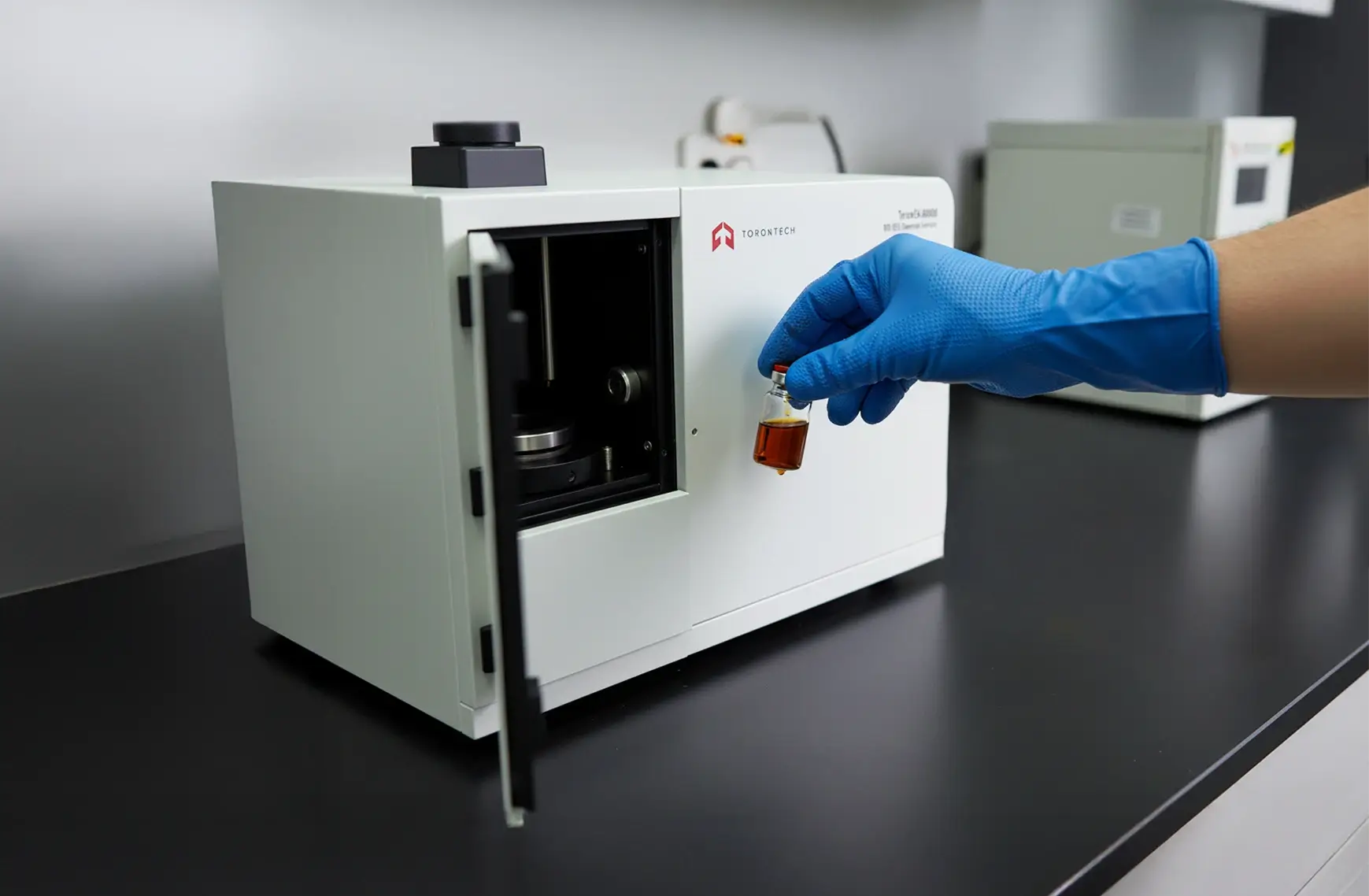
So, how do you defend against a threat you can't see? You need a clear view inside your machinery.
That's the advantage a proper mining oil analysis program provides. Specifically, we're talking about an instrument that uses Rotating Disc Electrode Optical Emission Spectrometry (RDE-OES).
Wear metal analysis performed by techniques like RDE-OES is a key diagnostic tool for detecting and quantifying the metal particles in lubricants that signal component wear (Kučera et al., 2020).
From a Small Sample to a Full Report in Minutes
Here's the real value in the process. It’s a simple, step-by-step way to get a full story on your machine’s health:
- It starts with a small sample: A single drop of used oil is placed into the instrument.
- The oil reveals what's inside: The sample is energized, causing every particle to emit a unique light signature based on what it is.
- You get a complete breakdown: The instrument reads these signatures to identify and count critical indicators—wear metals like iron, contaminants like silicon dust, or coolant traces like potassium.
- The result is an immediate action plan: In under a minute, you get a full health report that tells you exactly what's happening, allowing for a confident maintenance decision right then and there.
For instance, imagine that report shows a sudden spike in sodium and potassium. An external lab might take days to return that result. With an on-site unit, your maintenance lead sees it instantly.
Related article: How to Interpret Oil Analysis Results Like a Pro
They don't just see numbers; they see the classic signature of a coolant leak. They know that a simple, inexpensive hose or gasket is failing. This allows them to pull that truck for a 30-minute fix, preventing the coolant from mixing with the oil and destroying a $300,000 engine. That’s the kind of actionable insight we’re talking about.
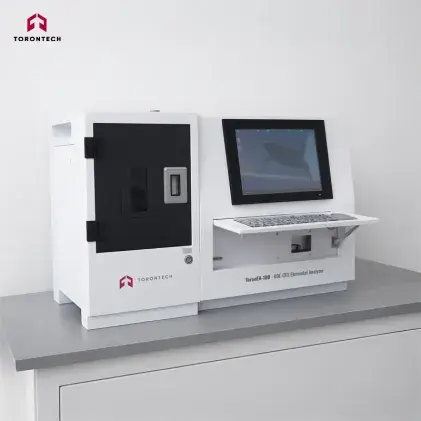
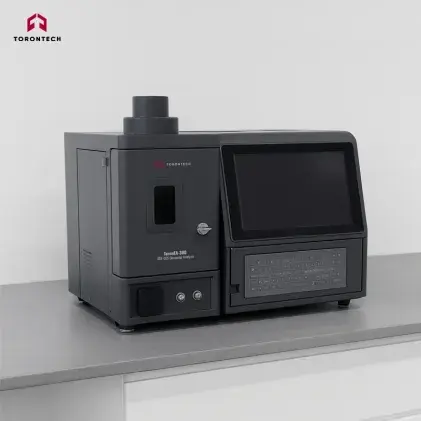
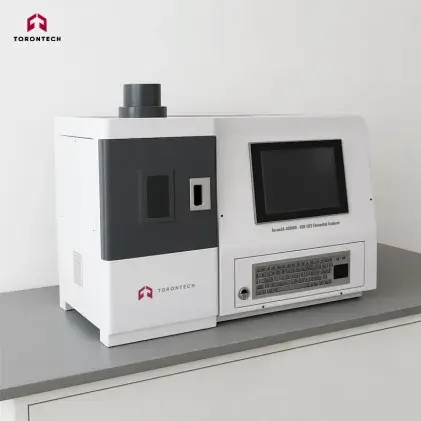
This is precisely why we developed our cost-friendly ToronEA-Series, a leading line of mining oil analysis equipment. We built them to give you laboratory-grade results in durable, easy-to-use instruments that are made to function in the mining environment.
The On-Site Advantage: From Faster Decisions to Financial Returns
Many operations are familiar with sending oil samples to a third-party lab. While this is a step in the right direction, it has one critical weakness: time.
Integrating lubricant condition monitoring directly into your maintenance strategy is what helps mitigate the effects of equipment aging and wear, ultimately optimizing maintenance intervals and reducing costs (Wakiru et al., 2020). The delay from an external lab creates a significant financial risk.
The primary advantage of bringing your mining oil analysis program in-house is the power of immediate decision-making.
Having a compact unit like our ToronEA-300 in an on-site trailer or a benchtop model like the ToronEA-200 in the workshop closes the gap between suspicion and certainty in minutes. While other advanced methods like vibration analysis can complement a maintenance program, regular monitoring of oil for wear metals, contaminants, and additive depletion remains a core pillar of proactive maintenance that improves equipment reliability (Kučera et al., 2020; Mao et al., 2023).
This control allows you to prevent the six-figure costs of a major component failure. An on-site analysis instrument from our ToronEA-Series costs a small fraction of such an event, and preventing just one pays for the system itself. But the savings don't stop there.
This is also about optimizing your oil drain intervals to reduce lubricant consumption across your fleet and avoiding the immense cost of lost production. It transforms maintenance from a reactive expense into a strategic investment in uptime and predictability.
Related article: RDE-OES vs ICP-OES: The Clear Choice for Oil Analysis
Torontech: Your Partner in Mining Equipment Oil Analysis
In a high-stakes operation like mining, guesswork is a liability.
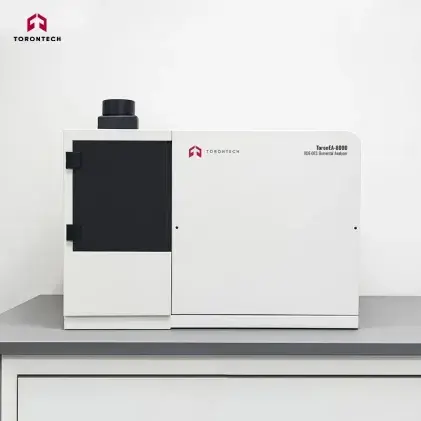
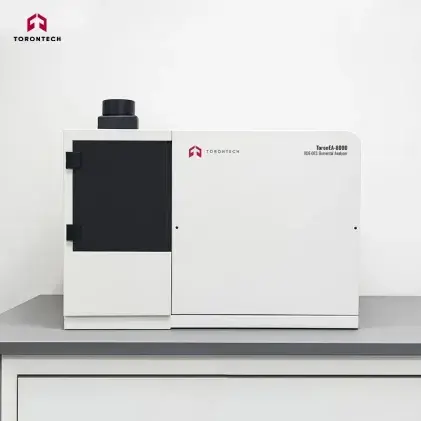
We are convinced that shifting to a proactive mining equipment oil analysis program, with on-site instruments at its center, is the key to maximizing your uptime, controlling your costs, and running a safer, more productive site. Whether you need an ultra-compact unit for tight spaces or a high-throughput system like the ToronEA-8000 for a large, centralized lab, we have a cost-friendly solution.
If you are ready to replace reactive repairs with proactive intelligence, we invite you to have a discussion about our RDE-OES solutions. Let’s talk about how we can help you get a clearer picture of your fleet's health.
References
- Benjumea, F., Olmos, C., & Jaramillo, S. (2023). Predicting the failure risk of mining equipment components based on oil analysis and operational context. Wear, 516, 204689.
- Kučera, P., Kučera, M., & Vlček, J. (2020). Comparison of various methods of wear particles analysis in lubricating oils. Journal of Physics: Conference Series, 1500(1), 012002.
- Wakiru, J. M., Kimani, S. K., & Ngeru, A. G. (2020). The role of oil condition monitoring in optimizing maintenance intervals and cost reduction. Journal of Quality in Maintenance Engineering, 26(1), 160-179.
- Mao, Y., Huang, H., & Zhou, W. (2023). A review of condition monitoring techniques for mining equipment. Measurement, 219, 113333.