Future-Proof Your Automotive NVH Testing Strategy
How can automotive engineers test for both the powerful rumble of a combustion engine and the subtle, high-frequency whine of an electric motor without doubling their lab equipment?
This is the core challenge in modern automotive NVH testing. The industry must validate the durability of traditional vehicles while also perfecting the acoustic refinement demanded by silent EVs.
This guide explains how a flexible approach to vehicle NVH testing can solve both problems, ensuring product quality across all platforms.
Key Takeaways
- The Modern NVH Challenge: Automotive testing must address both the low frequency durability of traditional vehicles and the high frequency acoustic refinement required for silent electric vehicles.
- Electronics are a Critical Focus: All modern cars are packed with sensitive electronics. Vibration testing is essential to prevent failures in circuit boards, sensors, and displays, regardless of the powertrain type.
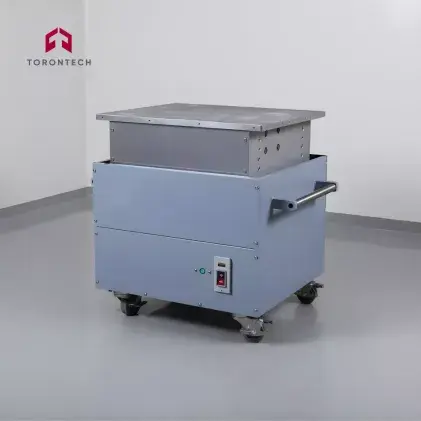
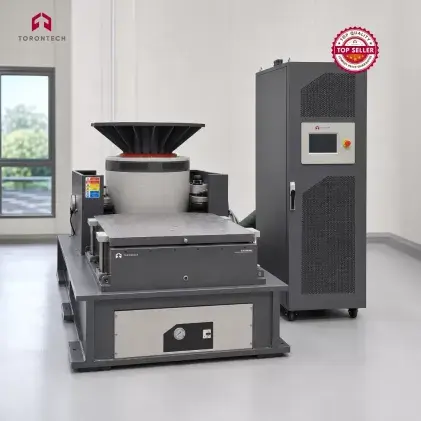
- Select the Right Equipment for the Job: Use precision Electrodynamic Shakers for high frequency analysis and electronics, while relying on robust Mechanical Vibration Testers for heavy duty durability and transport simulation.
- Testing is an Investment, Not an Expense: Proactive NVH testing in the lab is a cost effective strategy to prevent expensive product recalls, protect brand reputation, and avoid warranty claims.
- Compliance with Standards is Key: Proper testing ensures components and vehicles meet critical international standards like ISO, SAE, and ASTM, which is fundamental for quality assurance.
The Three Pillars of NVH Testing
When we talk with engineers about automotive NVH testing, the issues usually fall into the three main categories that define the field: Noise, Vibration, and Harshness.
This is the formal study of unwanted sound and mechanical oscillations in vehicles, aimed at improving comfort and meeting regulatory standards. The challenge has grown because in the absence of engine noise, customers are noticing things they never did before, making effective NVH testing more critical than ever.
- Noise: This includes high-frequency wind sounds from door seals and mirrors, as well as component noises. In a traditional car, the engine would mask the sound of a fuel pump or a cooling fan. In an EV, these sounds are suddenly front and center.
- Vibration: This is the low-frequency drone felt through the steering wheel, floor, and seats. While this has always been an issue, the sources are changing. Instead of engine rumble, the focus is now on vibrations from electric motors and the interaction of stiff, low-rolling-resistance tires on the pavement.
- Harshness: This is the car's response to sudden, sharp impacts. Harshness is often a subjective quality, and its evaluation requires correlating objective measurements with human perception to be fully understood. A good example is testing a glove box latch to ensure it doesn’t pop open when the vehicle simulates hitting a curb.
The Real Common Ground: It's All About the Electronics
While powertrains are diverging, the internal components are actually converging. Every new vehicle is essentially a powerful computer on wheels, filled with delicate electronics that are now mission-critical.
The focus of a test engineer in automotive NVH testing has shifted significantly. It's no longer just about whether a metal bracket will crack. It's about preventing issues like solder joint fatigue on a circuit board from long-term exposure to vibration.
Vibration testing is also critical for the safety and durability of core EV components like lithium-ion batteries, where mechanical vibrations can lead to fatigue damage and a shorter battery life.
Matching the Right Solution to Your Automotive NVH Testing Needs
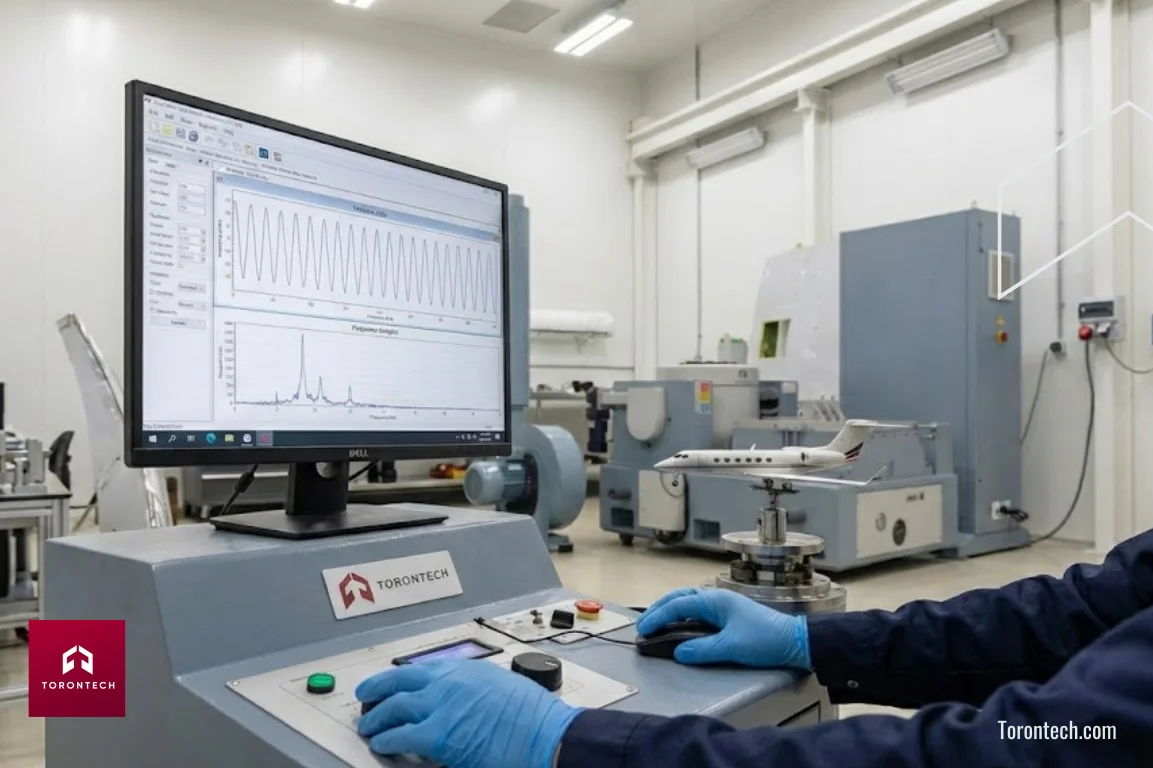
A costly pitfall we help our clients avoid is purchasing general-purpose equipment that can't meet the specific compliance tests they require. The right vibration testers help engineers identify the sources and transmission paths of these vibrations, which is the first step in solving the problem.
1. For High-Frequency Precision and Electronics (ISO Compliance)
When your work involves sensitive electronics or subtle, high-frequency sounds, you need equipment with fine-tuned control. This is a major focus in electric vehicle NVH testing, as electric motors and power electronics produce higher frequency noises than combustion engines.
- The Job: This is where engineers perform the most advanced diagnostic NVH testing. Using Modal Analysis, they can identify a component's natural ringing frequency. With Transfer Path Analysis (TPA), they can trace the exact journey a vibration takes from a motor to a seat bracket.
- Our Recommended Solution: Our Electrodynamic Shaker Vibration Test Systems, especially our TTEV series, are specifically designed for this kind of detailed analytical work.
Related article: Choosing Electrodynamic vs Mechanical Vibration Testers
2. For Mechanical Durability and Transport (ASTM & SAE Compliance)
When the goal is to confirm structural integrity and endurance against vibration and harshness, you need serious power.
- The Job: An engineer might be tasked with validating that a heavy battery pack enclosure for an electric bus can withstand a simulated 100,000-mile service life. This work is governed by standards like ASTM D4728 (Transport) and SAE J1455.
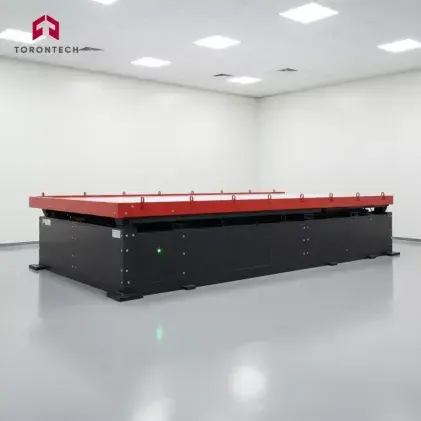
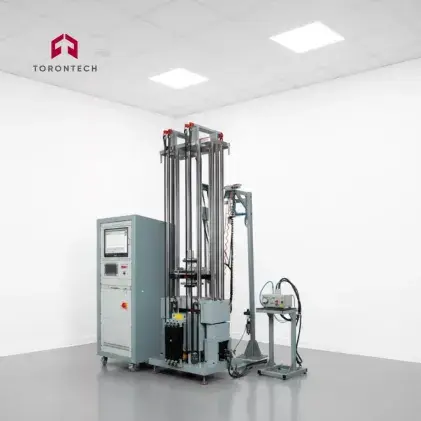
- Our Recommended Solution: A combination of equipment is often best. Our Mechanical Vibration Testers and dedicated Transportation Simulators handle long-duration stress tests, while our Shock Test Systems are crucial for replicating the "Harshness" factor of real-world impacts.
Why Lab-Based NVH Testing is a Sound Financial Investment
A truly cost-effective solution isn't the machine with the lowest initial price; it's the one that helps you prevent the massive downstream costs of a failure. Integrating efficient principles like lean management into the NVH testing workflow can further improve coordination and data accuracy, saving time and money.
Identifying a vibration issue in the development phase costs very little. Addressing it after the vehicle has been sold becomes a far more expensive problem. A solid automotive NVH testing strategy is a competitive advantage, and we see proper equipment as a critical insurance policy for your company's long-term financial health.
Prepare Your Lab for the Road Ahead with Torontech
The automotive market will feature a mix of powertrains for the foreseeable future, and your testing capabilities must be versatile enough to handle both traditional durability and EV acoustics.
At Torontech, we provide the innovative and cost-effective solutions to ensure your products meet the highest quality standards, from SAE to ISO specs.
Ready to solidify your quality control? Explore our range of cost-effective and innovative Vibration Testing Equipment. From protecting sensitive electronics to proving mechanical durability, we have the technologies to help ensure your products perform reliably and quietly on the road.
References
- Awan, U., Ghabraie, K., Zolfagharian, A., & Rolfe, B. (2025). Impact of vibrations on lithium-ion batteries in electric vehicles: sources, degradation mechanisms, and testing standards. Journal of Physics: Energy, 7.
- Aziz, S., Sohaimi, R., Pu’ad, M., & Yaman, M. (2012). Noise, Vibration and Harshness (NVH) Study on Malaysian Armed Forces (MAF) Tactical Vehicle. Applied Mechanics and Materials, 165, 165 - 169.
- Balc, D., Banciu, D., Oprean, C., & Țîțu, A. (2025). OPTIMIZATION OF NVH TESTING AND ANALYSIS PROCESSES THROUGH THE INTEGRATION OF LEAN MANAGEMENT. Annals of the Academy of Romanian Scientists Series on Economy, Law and Sociology.
- Cury, D., Melo, C., Faria, C., & Oliveira, A. (2018). CHALLENGES OF NVH TESTING AND ANALYSIS OF ELECTRIC MOTORS. Blucher Engineering Proceedings.
- Lijun, Z., Dejian, M., & Gang, C. (2020). Noise, Vibration and Harshness of Electric and Hybrid Vehicles.
- Matijevic, V., & Popovic, M. (2017). Overview of modern contributions in vehicle noise and vibration refinement with special emphasis on diagnostics. FME Transactions, 45, 448-458.
- Pietrusiak, D., Wróbel, J., Czechowski, M., & Fiebig, W. (2022). Numerical and Experimental NVH Testing of Vehicle Components – from Simple Part to Complex Assembly. MATEC Web of Conferences.
- Plato v5.2 - Production Line Noise/Vibration (NVH) Testing of Powertrain Assemblies with On-Line Statistical Analysis of Results. (2004). Noise & Vibration Worldwide, 35, 24 - 25.
- Shenkar, A., & Mishra, H. (2018). NHV CHALLENGE OF HYBRIDE VEHILE. International Journal of Advance Research and Innovative Ideas in Education, 4, 665-668.