A Complete Guide to Random Vibration Testing
It’s a common story. A fantastic product design fails because it couldn't survive the journey to the customer. All that innovation ends up compromised by a bumpy ride.
In the real world, products are subjected to a constant mix of shakes and impacts rather than a life of sitting still.
To build things that last, you have to test them against that real-life chaos. For that, you need random vibration testing.
Key Takeaways
- Random vibration testing simulates real-world environments by exciting multiple frequencies simultaneously, making it the most accurate method for durability prediction.
- While sine testing is useful for identifying specific structural resonances, random testing is better suited for finding complex interaction failures and overall fatigue.
- Executing a valid test requires adhering to a strict procedure that includes rigid fixturing, defining a Power Spectral Density profile, and performing low-level system checks.
- Compliance with major standards like MIL-STD-810 and ASTM D4728 is critical for market entry and ensuring product reliability during transport.
- Torontech offers innovative and budget-friendly equipment, such as the TTEV Series and Transportation Simulators, to help labs achieve precise results without the high premium.
So, What Exactly is a Random Vibration Test?
A random vibration test evaluates how a product responds to a broad range of frequencies simultaneously. This simulates real-world operating conditions where vibrations are unpredictable and complex (Kendre, 2016; Orlov et al., 2025).
This isn’t a polite, one-at-a-time process. It combines the low-frequency bumps of a bad road, the hum of an engine, and the high-frequency rattling of a freight train into one single event.
To give you a clearer picture, consider a smart display mounted in an off-road vehicle. It isn't just dealing with the deep rumble of the diesel engine. It is simultaneously fighting the high-pitched vibration of the gravel on the road and the sudden jolts from the stiff suspension. A proper random vibration test replicates that whole mess.
It is the difference between hearing a single note and a full orchestra. This test brings all that chaotic energy into your lab so you can see what really happens to your product once it leaves your facility.
Related article: Guide to Vibration Test Sytems & Standards
How Does Random Vibration Testing Work?
If you’re asking, “how does random vibration testing work?” the secret is in the profile. You can’t predict the motion at any given millisecond, but you can precisely control the overall energy and frequency content.
It uses a Power Spectral Density (PSD) profile to represent vibration energy distributed over frequency. This provides a more realistic assessment of fatigue and durability compared to single-frequency tests (Kendre, 2016; Orlov et al., 2025).
- The Controller: A sophisticated controller generates an electrical signal that is a complex jumble of different frequencies. This is your shake-and-rumble recipe, known as a PSD profile.
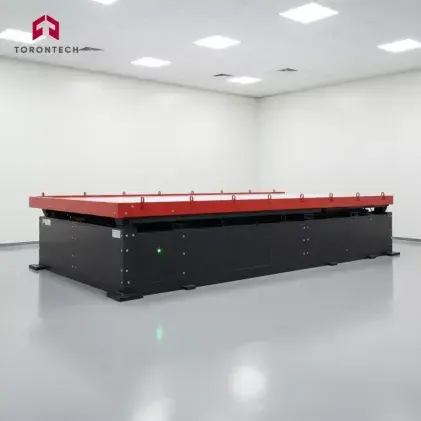
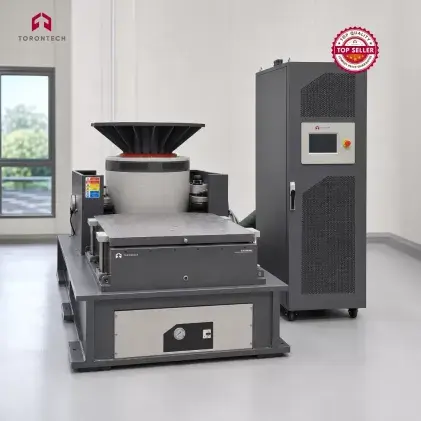
- The Shaker: That signal is sent to the shaker table, like our Electrodynamic Shaker Vibration Test System (TTEV Series), which is the powerhouse that does all the physical movement.
- The Feedback Loop: Small sensors, called accelerometers, are attached to your product. They constantly send performance data back to the controller to make sure the shaker is sticking to the recipe perfectly.
This entire system ensures that even though the vibration feels completely unpredictable, the random vibration testing is completely controlled and repeatable.
Sine vs. Random: Our Position on the Two Methods
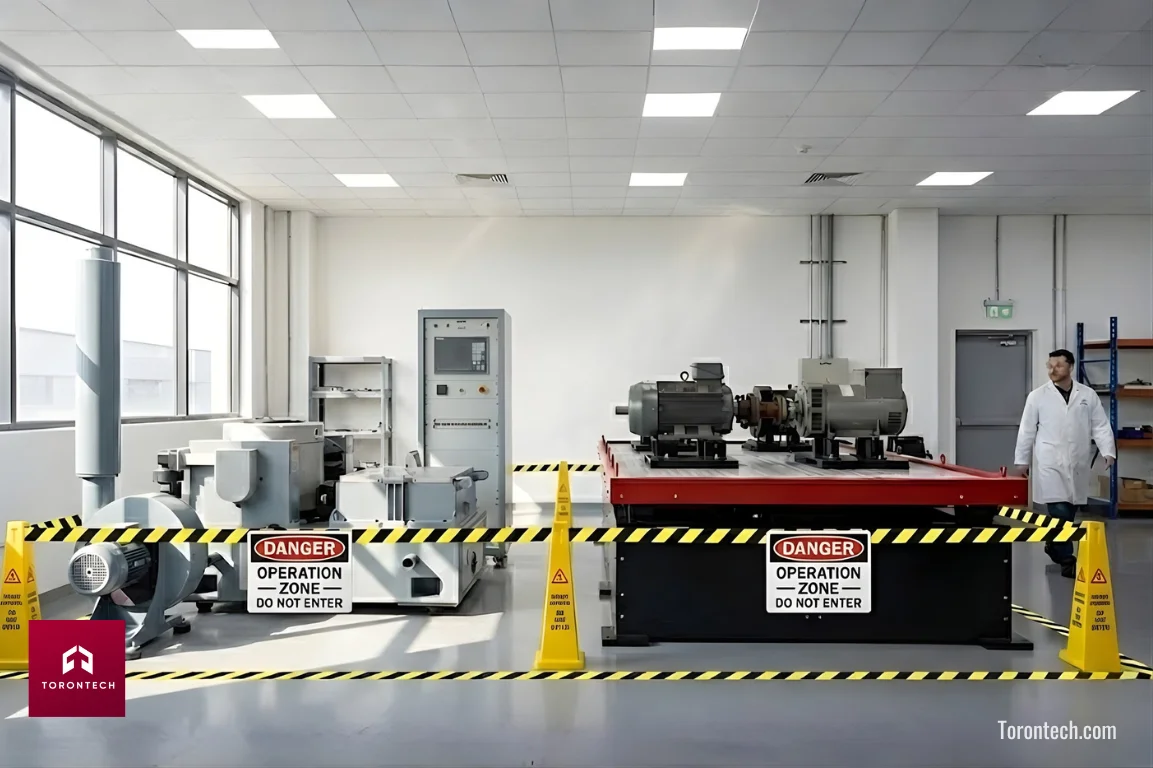
We often speak with engineers weighing the benefits of Sine versus Random testing. While Sine is excellent for finding a component’s specific resonance frequency, it just doesn’t capture the cumulative wear-and-tear of the real world.
Sine vibration testing applies a single-frequency sinusoidal wave that sweeps through frequencies to identify resonances and diagnose specific structural weaknesses (Patrick, 1967; Spence & Luhrs, 1961). However, it may overtest or miss combined effects present in real environments (Patrick, 1967; Spence & Luhrs, 1961).
In contrast, random vibration testing excites multiple natural frequencies at once, making it closer to actual service conditions, though it requires more complex and costly equipment (Orlov et al., 2025).
| Feature | Sine Vibration Testing | Random Vibration Testing |
|---|---|---|
| Signal Type | A single, predictable frequency at a time. | A complete spectrum of frequencies, all at once. |
| Primary Use | Resonance identification and fault detection (Caldicott, 1991). | Simulating operational vibration and fatigue damage (Van Baren, 2017). |
| Fatigue Simulation | Good for seeing how one specific part wears out. | The best way to simulate total, real-life structural fatigue. |
| Realism Factor | Low. The real world is far more complex. | High. This is what it actually feels like out in the field. |
| Failure Detection | Finds a single component on the verge of breaking. | Reveals how different parts interact and fail as a system. |
Our Professional Take: The choice between sine and random testing depends on the test objectives (Caldicott, 1991; Van Baren, 2017). Use a Sine test to diagnose where a product is weak. But to prove it can survive, use a random vibration test.
For the most advanced applications, some engineers use sine-on-random testing. This combines both methods by superimposing sinusoidal signals on random vibration to better replicate environments where components experience both harmonic and random excitations (Kim, 2017; Angeli et al., 2018).
The No-Nonsense Guide to the Random Vibration Test Procedure
A test is only as good as its execution. We've learned that taking shortcuts during the random vibration test procedure leads to unreliable data.
1. Ensure a Rigid Setup
Your product, the Device Under Test (DUT), must be bolted securely to the shaker table with a solid fixture. This isn't just about tightness. The fixture itself needs to be stiff. If the fixture bends or rattles more than the product, you are essentially testing the fixture rather than the device.
2. Define the Test Profile
The test engineer loads the PSD profile into the controller. This profile acts as the instruction manual for the shaker, telling it exactly how much energy (Grms) to apply at specific frequency breakpoints.
3. Perform a Low-Level Check
We always recommend running the test at a low level first. It’s a quick, safe way to verify that the control loop is stable and that the accelerometers are reading correctly before you risk damaging the prototype with full power.
4. Run the Full-Level Test
The system ramps up to full power. Your product is subjected to the random vibration for a set duration, often an hour or more per axis. This phase of the random vibration test procedure compresses a product’s lifetime of vibration exposure into a short period.
5. Conduct a Post-Test Analysis
After the shaking is complete, the inspection goes beyond just looking for cracks. We look for "soft" failures too, such as screws that have backed out slightly, connectors that feel loose, or intermittent electrical faults that only happen when you tap the unit.
Meeting Key Industry Standards
You aren’t just inventing these test profiles. In most cases, you’re working to satisfy specific industry standards that dictate the parameters for your random vibration testing. We build our equipment to help you pass these with confidence:
- MIL-STD-810: The benchmark for military and ruggedized equipment (think of a ruggedized tablet mounted in a helicopter).
- ASTM D4728 & ISTA 3 Series: These are the key standards for shipping containers and package systems. For pure logistics simulation, our Transportation Simulator is often the go-to solution for validating that a pallet of goods can handle a cross-country rail trip.
- ISO 13355: Another important standard focused on validating packaged goods with random vibration.
Related article: ASTM D4169 vs ISTA: The Ultimate Testing Guide
Torontech: Performance Without the Premium
To meet rigorous standards like MIL-STD and ASTM, you need equipment that delivers. But far too often, we see companies forced to choose between performance and affordability.
Torontech exists to eliminate that choice.
We believe reliable data shouldn't come with a massive premium. Our Vibration Testing Equipment, anchored by our versatile TTEV Series, combines innovative technologies with cost-effective solutions.
This ensures your random vibration test is accurate, compliant, and repeatable. Don't compromise your brand's reputation on subpar testing. Whether you are outfitting a new lab or upgrading a legacy system, we are here to help you find the perfect fit.
Ready to upgrade your testing process? Explore our full line of Vibration Testing Systems today or contact Torontech to discuss a solution for your specific application.
References
- Angeli, A., Cornelis, B., & Troncossi, M. (2018). Synthesis of Sine-on-Random vibration profiles for accelerated life tests based on fatigue damage spectrum equivalence. Mechanical Systems and Signal Processing, 103, 340-351.
- Caldicott, P. (1991). Distribution testing — sine or random?. Packaging Technology and Science, 4, 287-291.
- Kendre, R. (2016). Random Vibration Analysis for Starter Motor of Three Wheeler Automobile. Procedia Engineering, 144, 1381-1388.
- Kim, C. (2017). Accelerated Sine-on-Random Vibration Test Method of Ground Vehicle Components over Conventional Single Mode Excitation. Applied Sciences, 7, 805.
- Orlov, S., Zvyhlianych, S., Chervotoka, O., & Herashchenko, M. (2025). ANALYSIS METHODS LABORATORY VIBRATION TESTING OF FLIGHT APPARATUS UNMANNED AVIATION COMPLEXES. Випробування та сертифікація.
- Patrick, T. (1967). Sweep sine wave simulation of random vibration and its effect on design with particular reference to space rockets. Journal of Sound and Vibration, 5, 37-41.
- Spence, H., & Luhrs, H. (1961). Peak Criterion in Random vs Sine Vibration Testing. Journal of the Acoustical Society of America, 33, 652-654.
- Van Baren, J. (2017). Test my product using sine or random. Vibroengineering PROCEDIA, 16, 102-107.