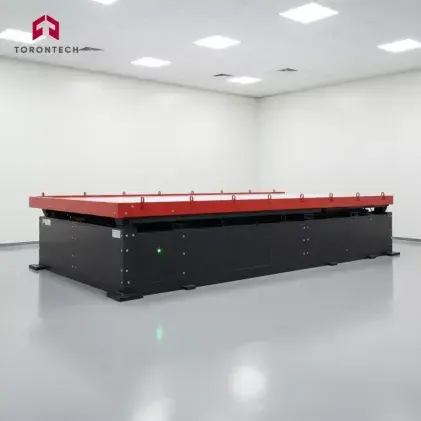
ASTM D4169 vs ISTA: The Ultimate Testing Guide
Selecting the right test standard is the first step toward shipping with absolute confidence. Whether you choose ASTM D4169 or ISTA, the objective is the same: proving your product can handle the road ahead and arrive in pristine condition.
This guide clarifies the distinct advantages of each protocol, ensuring you select the best fit to optimize your packaging, protect your brand, and delight your customers.
Key Takeaways
- Custom vs. Standardized: ASTM D4169 offers a flexible menu to build custom test cycles, whereas ISTA provides a strict recipe for consistent, standardized results.
- Industry Preference: Medical device manufacturers typically choose ASTM D4169 for FDA compliance, while Amazon vendors must use ISTA to ensure retail readiness.
- Test Severity: ISTA 3A is often more physically demanding than ASTM because it combines random vibration with a heavy top-load to simulate stacking pressure.
- Preventing Failure: Both standards aim to identify critical issues like resonance fatigue, cap loosening, and surface abrasion before shipments leave your facility.
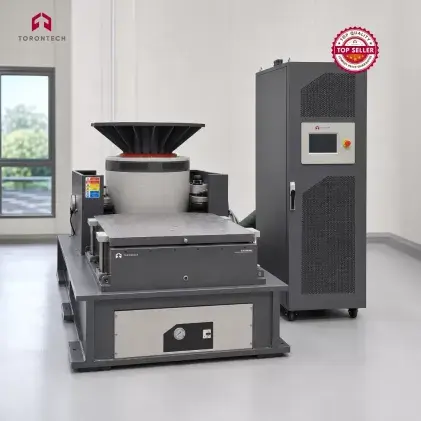
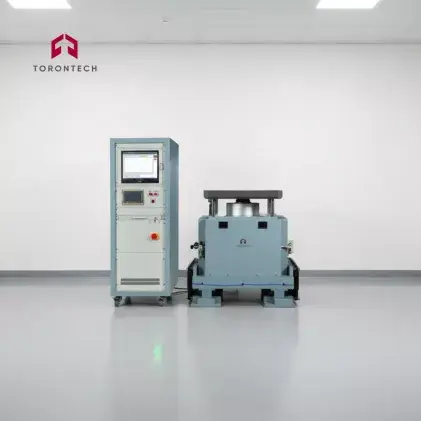
- Versatile Equipment: Torontech’s TTEV Series and Transportation Simulators allow you to switch between complex ASTM profiles and rigorous ISTA sequences using a single machine.
The Core Difference: Custom Plan vs. Fixed Protocol
We often explain the ISTA vs. ASTM choice to our clients by comparing the fundamental philosophy behind each organization. They approach the problem of "safe shipping" from two completely different angles.
ASTM D4169: The Flexible "Menu" Approach
ASTM D4169 serves as a broad distribution environment simulation standard (Vasudevan et al., 2020). Think of it as a customizable toolkit. It provides a comprehensive menu of test elements, such as rail vibration, air pressure, or truck bounce, along with distinct intensity levels.
Your engineers act as the architects. They select specific elements to build a test plan that matches your product's actual distribution path. This includes using random vibration profiles based on power spectral density (PSD) curves to simulate transport environments over a frequency range of about 1–200 Hz (Tihanyi-Kovács et al., 2022; Wang et al., 2025).
While this flexibility is fantastic for simulating a unique supply chain, utilizing a high-performance system like our TTEV Series Electrodynamic Shaker is often required to accurately replicate these complex, variable profiles.
ISTA: The Strict "Recipe" Approach
In contrast, ISTA publishes pre-shipment test procedures focused specifically on packaged-product performance (Németh et al., 2021). It acts as a rigid rulebook or recipe. If you are running ISTA 3A, you must follow the instructions exactly as written with no room for improvisation.
ISTA procedures also use PSD-based random vibration spectra, but they are tailored for specific scenarios like parcel delivery vans (Böröcz & Singh, 2018). In our view, this rigidity is a benefit for large operations. It ensures that a lab in Ohio and a lab in Shenzhen will produce identical results, making it the superior choice for standardization.
A Closer Look at ASTM D4169
Best for high-stakes industries: medical devices, pharmaceuticals, and products with complex distribution networks.
We consider ASTM D4169 to be the benchmark standard for regulated products, especially in medical packaging. Its greatest strength is its adaptability. You can construct a test that mirrors a real-world route, such as an air shipment followed by a long-haul truck delivery.
You can also adjust the intensity using "Assurance Levels" (low, medium, or high). However, research indicates that measured truck vibrations often differ from the standard profiles, especially at higher frequencies (Paternoster et al., 2017; Park et al., 2020).
This suggests that local, route-specific profiles may be needed to avoid discrepancies (Vasudevan et al., 2019). Our advice is to ensure your team has a deep knowledge of your supply chain before using this standard.
A Closer Look at ISTA Standards
Ideal for consumer goods, e-commerce, and anything destined for a retail environment.
ISTA’s test series are purpose-built. Series 3A, for example, defines a pickup-and-delivery spectrum designed to replicate the rigors of parcel systems like FedEx or UPS (Németh et al., 2021). For anyone selling on Amazon, ISTA 6-Amazon is a key procedure. We tell our clients that it is a non-negotiable requirement to avoid chargebacks and stay in their good graces.
Head-to-Head Comparison: ASTM D4169 vs. ISTA
| Attribute | ASTM D4169 | ISTA (Series 3A) |
|---|---|---|
| Scope | General distribution environment simulation (Vasudevan et al., 2020) | Packaged-product performance test (Németh et al., 2021) |
| Methodology | Flexible "Practice" (Customizable) | Rigid "Procedure" (Step-by-step) |
| Vibration Type | Truck/Rail/Air PSD curves (1–200 Hz) | Random vibration, often with top-load |
| Medical Use | The preferred standard | Accepted, but less common for sterile barriers |
| Retail Use | Less common for vendor compliance | The industry standard for Amazon & major carriers |
A Critical Difference in Vibration Testing
The way each standard handles vibration is fundamentally different. ISTA 3A often requires "random vibration with top load," which means your package is shaken while a heavy weight simulates other boxes stacked on top of it. It is an intense test that reveals if your packaging can resist being crushed in a real-world truck trailer.
Related article: Guide to Vibration Test Systems & Standards
ASTM, on the other hand, typically separates these forces. This is where equipment choice becomes critical. While a basic machine might handle simple shaking, the TTEV Series Electrodynamic Shaker is designed to handle the precise random vibration profiles of ASTM while also possessing the power to manage the combined top-load stresses of ISTA 3A.
Choosing ISTA or ASTM: Which Standard Suits Your Business?
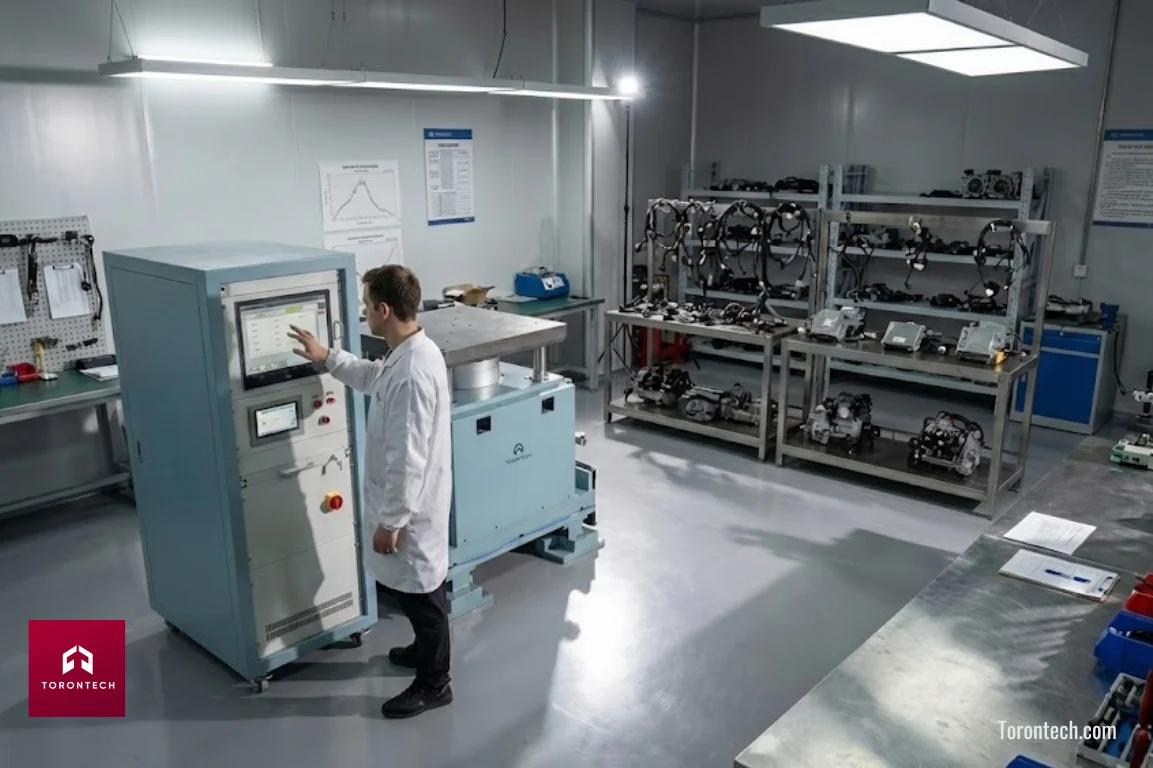
When clients ask for our recommendation on ISTA vs. ASTM, we look at their commercial goals and specific product needs:
Are you a Medical Device Manufacturer?
We strongly recommend ASTM D4169. It is the standard referenced in FDA guidance and is ideal for defending your validation process to auditors.
Example: Consider a manufacturer shipping pre-filled syringes. They need to prove not just that the box survives, but that the sterile barrier inside remains intact after a specific sequence of air freight and van delivery. ASTM allows them to simulate that exact sequence.
Are you selling through Amazon or major retailers?
Your best choice is ISTA. Its certifications are often required to meet vendor compliance rules, such as Amazon's Frustration-Free Packaging.
Example: Think of a company launching a new Bluetooth speaker on Prime Day. Amazon doesn't care about the specific truck route; they care that the speaker survives their fulfillment center chaos. ISTA 6-Amazon proves exactly that.
Are you trying to cut packaging costs (Sustainability)?
We suggest ASTM D4169. Because it allows you to adjust the "Assurance Level" (intensity), you can fine-tune the test to find the exact breaking point. This helps you remove excess cardboard and fillers without risking product safety, saving you money on every unit shipped.
Example: Imagine a high-volume snack food brand. If they can reduce the cardboard thickness by just 5% without the crackers crushing during a Level II truck profile, they save millions annually.
Is your product heavy, oversized, or industrial?
ASTM D4169 is usually the better fit. ISTA tests are often categorized by standard parcel sizes (Németh et al., 2021).
If you are shipping an industrial generator or large machinery that doesn't fit a standard mold, ASTM allows you to build a custom cycle using a Transportation Simulator to mimic flatbed truck movements.
Example: Picture a massive 2-ton custom turbine. It isn't going through a UPS sorter. It is going on a flatbed truck and maybe a rail car. ASTM lets you build a test specifically for those heavy-transport vibrations.
Are you conducting internal R&D?
We suggest starting with a cost-effective test like ISTA 1 Series. It helps you identify design weaknesses early, before you invest in a full-scale certification test.
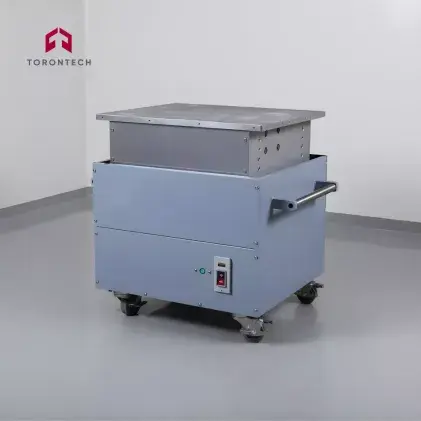
Example: Consider a startup designing a new glass beverage bottle. Before paying for official certification, they just need to know if the neck snaps during a basic drop test. A standard Mechanical Vibration Tester gives them that quick "pass/fail" answer.
Why Packages Fail During Transit
Once you have settled the ISTA or ASTM question, the objective is to expose weaknesses before they happen in the real world.
Field studies show that neither ASTM nor ISTA profiles perfectly match local road conditions (Paternoster et al., 2017; Boukat et al., 2021). This means packages can often be over-tested or under-tested (Németh et al., 2021). To avoid this, precise equipment is needed to identify failures such as:
- Resonance Fatigue: When a truck's vibration matches a product's natural frequency, it can cause components to shake themselves loose or break entirely. This happens even inside a box that looks perfectly fine.
- For instance: Imagine a printed circuit board inside a computer. If the board's natural frequency matches the truck's engine hum, the solder joints can crack from fatigue. Detecting these specific frequencies requires the high sensitivity of a TTEV Series system.
- Closure Loosening: Sustained vibration can cause bottle caps and closures to back off, leading to leaks. This is a frequent failure point we see with liquid products (Tihanyi-Kovács et al., 2022).
- For instance: Consider a pallet of liquid laundry detergent. After 500 miles of highway vibration, the screw caps might back off just a quarter turn. That is enough to leak soap over the entire shipment.
- Surface Abrasion: Constant movement inside the box can scuff finishes and damage labels (Ge & Pan, 2018). This ruins the product's presentation.
- For instance: Think about a premium matte-black gift box. If it isn't secured tightly, the vibration will act like sandpaper, rubbing the corners white and ruining the "unboxing experience" for the customer.
The solution is precision. Basic test equipment can create random noise that masks these issues. Our innovative technologies provide the high-precision frequency control needed to accurately identify these failure modes.
The Torontech Solution: Versatile Equipment
The reality for many manufacturers is that they eventually need to test for both. Having one product line for medical use and another for e-commerce is a common scenario.
We believe investing in separate machines for every standard is not cost-effective. The strategic approach is to select versatile equipment that can be programmed to run multiple profiles. Torontech offers a range of cost-effective technologies to do just that.
- TTEV Series Electrodynamic Shaker Vibration Test Systems: These are the workhorses of a modern lab. They can be programmed to run the complex random vibration profiles required by ASTM D4169 DC13 and the top-load vibration sequences of ISTA 3A.
- Mechanical Vibration Testers & Transportation Simulators: Perfect for the simpler fixed-displacement vibration tests found in ISTA 1 Series or older ASTM methods where programmable random vibration is not required.
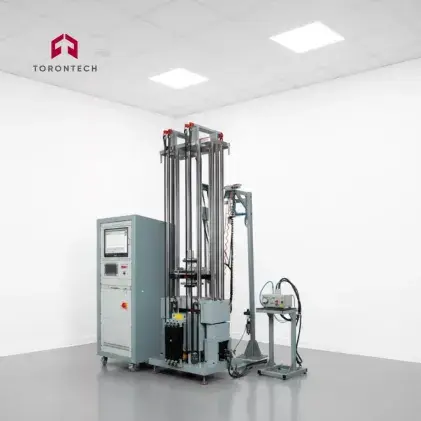
- Shock Test Systems: Essential for the drop and impact sequences required by both standards. Whether it is a small parcel drop or a larger pallet impact, a dedicated shock system ensures you meet the full compliance checklist.
Torontech’s Verdict: ASTM or ISTA?
The choice is clear. For FDA compliance and complex supply chains, trust ASTM D4169. For retail mandates and e-commerce, ISTA is your answer.
At Torontech, we simplify compliance with versatile, budget-friendly solutions like our TTEV Series and Shock Test Systems. Equip your lab with the best to ensure your products arrive safely, every single time.
Ready to upgrade? Explore our full range of Vibration Testing Equipment today.
References
- Böröcz, P., & Singh, S. (2017). Measurement and Analysis of Vibration Levels in Rail Transport in Central Europe. Packaging Technology and Science, 30, 361-371.
- Böröcz, P., & Singh, S. (2018). Measurement and analysis of delivery van vibration levels to simulate package testing for parcel delivery in Hungary. Packaging Technology and Science, 31, 342-352.
- Boukat, A., Navid, H., Niya, M., & Ranjbar, S. (2021). Estimating of the vibration levels for truck transport in Iran. Revista Agrogeoambiental.
- Bwade, E., Aliyu, B., & Tashiwa, Y. (2024). Sensors, standards and analysis techniques for road transport vibration: A systematic review. Systematic Literature Review and Meta-Analysis Journal.
- Ge, C., & Pan, L. (2018). Vibration damage rate curves for quantifying abrasion of printed packaging in accelerated random vibration test. Packaging Technology and Science, 31, 71-81.
- Németh, Z., Molnár, B., Pánczél, C., & Böröcz, P. (2021). Vibration levels of stacked parcel packages in laboratory test environment. Over-tested or under-tested?. Acta Technica Jaurinensis.
- Park, J., Choi, S., & Jung, H. (2020). Measurement and Analysis of Vibration Levels for Truck Transport Environment in Korea. Applied Sciences.
- Paternoster, A., Vanlanduit, S., Springael, J., & Braet, J. (2017). Measurement and analysis of vibration and shock levels for truck transport in Belgium with respect to packaged beer during transit. Food Packaging and Shelf Life, 15, 134-143.
- Tihanyi-Kovács, R., Böröcz, P., & Ásványi, B. (2022). The effect of transportation vibration on the microbiological status of bottled mineral water. Journal of the Science of Food and Agriculture, 103, 1059-1068.
- Vasudevan, D., Bhatt, P., & Kottantharayil, A. (2019). Impact of Transportation on Indian Roads, on PV Modules. 2019 IEEE 46th Photovoltaic Specialists Conference (PVSC), 1529-1532.
- Vasudevan, D., Bhatt, P., & Kottantharayil, A. (2020). Lateral vibrations experienced by vertically placed PV modules in the pallet during transportation. 2020 47th IEEE Photovoltaic Specialists Conference (PVSC), 1323-1325.
- Wang, L., Xie, Z., Wu, Y., Gao, J., & Song, H. (2025). Effects of Packaging Constraints on Vibration Damage of ‘Huangguan’ Pear During Simulated Transport. Horticulturae.