Comparing Spark OES vs ICP OES for Your Laboratory
Achieving pristine chemical verification on your production floor is the fastest route to maximizing yield and securing long-term profitability. For busy foundries and testing laboratories, Spark OES and ICP-OES stand out as the premier methods for elemental analysis.
Selecting the right instrument guarantees flawless quality control, keeps production lines moving on time, and protects your capital budget. To help you choose, we have compared spark oes vs icp oes so you can secure the ideal spectrometer for your operations.
Technical Comparison: Spark OES vs ICP-OES
| Feature | Spark OES | ICP-OES |
|---|---|---|
| Primary Sample Form | Solid bulk metals and electrically conductive alloys | Liquids (solid materials require harsh acid dissolution) |
| Detection Threshold | Parts-per-million (ideal for standard alloying elements) | Parts-per-billion (down to trace contaminants) |
| Impact on Sample | Semi-destructive (leaves a very minor burn mark) | Fully destructive (the physical sample is entirely dissolved) |
| Preparation Window | Under a minute (requires very basic surface grinding or polishing) | Multiple hours (demands intensive wet chemistry preparation) |
| Argon Gas Demand | Low consumption (gas flows exclusively during active discharge) | High consumption (continuous heavy flow required to maintain the plasma fire) |
| Routine Maintenance Focus | Periodic electrode brushing and simple stand cleaning | Replacing delicate sample introduction glassware, torches, and plastic tubing |
| Relevant Torontech Models | TT-OES9000 (Bench-top or Floor model), ToronOES™ M (Mobile) | ToronICP™ Series (including the 900T, 900T DV, 700TP, and OES9000 PRO) |
Figure 1: Key practical differences between spark OES, conventional ICP-OES, and spark/ablation-ICP hybrids.
Now that we have established this baseline, let us explore the mechanisms driving each technology, starting with the solid-metal option.
The Spark OES Operating Principle
To properly evaluate these instruments, we believe it is essential to first grasp the physical science making them tick. The spark OES principle centers on capturing the light emitted by highly excited atomic particles.
When you initiate a test, the instrument discharges a high-voltage electrical spark, or a steady electrical arc, directly onto the prepared, perfectly flat surface of your solid metal sample. This high-voltage discharge immediately vaporizes a minute fraction of the target material, creating a high-energy cloud of intensely active atoms.
Spark OES remains a standard metallurgical method because the spark source is straightforward, incredibly fast, and highly sensitive for finding minor and trace elements in conductive samples at the parts-per-million level. As those excited atoms return to their quiet, stable ground state, they emit light. Every single element spits out its own distinct wavelength of light.
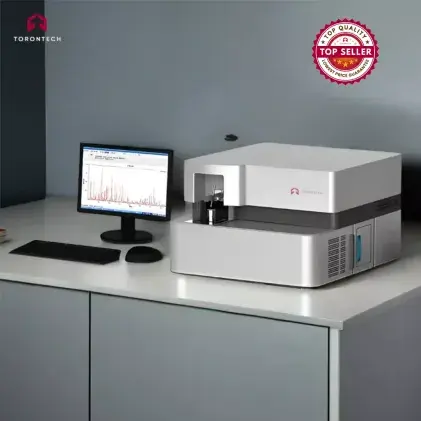
Our own TT-OES9000 OES Optical Emission Spectrometer uses a specialized Paschen-Runge optical system combined with high-resolution multi-CCD detectors covering a massive wavelength range from 130nm to 800nm.
Because our TT-OES9000 covers a deep ultraviolet wavelength spectrum starting at 130nm, it easily captures critical light elements such as Carbon (C), Sulfur (S), Nitrogen (N), Phosphorus (P), and Boron (B). Measuring carbon directly on solid metal is essential for separating low-carbon alloy grades (such as 304L stainless steel from standard 304). This is an area where liquid ICP-OES struggles, as acid digestion often causes carbon to escape as volatile gas before measurement can even begin.
Related article: Pro Tips: Spark OES Sample Preparation Guide
Powered by a HEPS digital excitation source, it easily analyzes up to 31 elements simultaneously. This sophisticated setup gives you exactly how much of each element is present across Fe, Al, Cu, Zn, Ti, Ni, and Pb bases. It even accommodates incredibly tricky, small samples with diameters ranging from 1mm to 8mm using an adjustable clamp.
Securing these rapid figures is absolutely key if you want to comply with strict ASTM, DIN, and ISO manufacturing standards without slowing your shop down. In fact, many aerospace and defense contractors across North America rely heavily on these identical test speeds to meet critical safety requirements prior to final part assembly.
The ICP-OES Operating Principle
We view ICP-OES as an unbelievably flexible analytical beast, although its main strength lies almost entirely in liquid sample analysis. Instead of using a high-voltage electrical spark on a solid surface, this technique relies on a high-temperature argon plasma discharge (which can reach up to an intensely hot 10,000 Kelvin, comparable to the outer layer of the sun). This massive heat supports intense atomic and ionic emission, enabling the measured concentration to scale perfectly with the emitted photon counts.
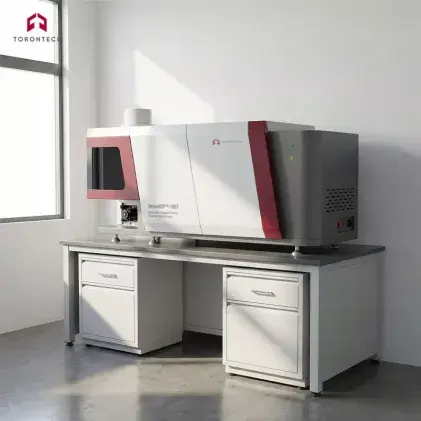
When you spray a liquid sample into this roaring plasma fire as a super-fine mist, the atoms become incredibly excited and emit characteristic light. ICP-OES remains one of the most widely used multielement techniques on the market because it offers exceptionally low detection limits, a broad linear measurement range, and fantastic matrix tolerance across many different sample types. Instruments like our ToronICP™ 900T DV (featuring bidirectional dual-view observation) utilize stable solid-state RF plasma generation and automated RF matching to continuously measure over 70 elements in a single run.
In our observation, this is the exact technology specified by regulatory standards like US EPA Method 200.7 for clean water monitoring, as well as strict guidelines from Environment and Climate Change Canada (ECCC). It is frequently described as far more sensitive and less prone to annoying chemical interferences than many alternative spectrometric approaches.
Core Differences: Operational and Analytical Variables
When you are comparing spark oes vs icp-oes, our perspective is that your final choice should depend entirely on the physical nature of your samples, how incredibly fast you need your results, and what your long-term operational budget looks like.
1. Sample Integrity and Preparation
Spark OES
We recommend Spark OES for metal production facilities because it is a direct solid method for conductive materials. It is basically semi-destructive.
The discharge leaves behind only a minor burn mark, meaning you can test actual production parts and still deliver them to your clients. Plus, spark sources aggressively remove much more material per event than a single laser pulse, which drastically helps with inclusion analysis and ensuring the reading represents the bulk material.
ICP-OES
On the flip side, conventional ICP-OES generally requires harsh chemical extraction or full acid digestion for solid items. You must take that solid metal sample, cut it down, and digest it using concentrated laboratory acids until it completely dissolves into a clear liquid. This multi-hour process demands specialized chemical supplies, well-ventilated fume hoods, and thoroughly trained laboratory technicians.
2. Analytical Resolution: Trace vs. Ultra-Trace
ICP-OES
If your testing requirements involve tracking down microscopic, highly elusive contaminants in water, soil, or chemicals down to the parts-per-billion level, you absolutely require ICP-OES. Consider the environmental labs monitoring runoff around the Great Lakes or the St. Lawrence River basin: they rely on ICP-OES to sniff out sub-ppb heavy metal contamination that is completely invisible to lesser instruments.
Spark OES
However, for standard foundry checks, or for scrap-sorting yards located across North America trying to rapidly classify truckloads of incoming material, the parts-per-million resolution of Spark OES is more than sufficient. There is zero operational need to chase parts-per-billion trace elements when you are simply verifying that your structural steel meets fundamental carbon specifications.
3. Operational Velocity and Turnaround Time
Spark OES
Speed is where Spark OES completely steals the show. For routine metal analysis, spark OES is generally faster than competing optical plasma methods and has successfully enabled full automation in modern industry.
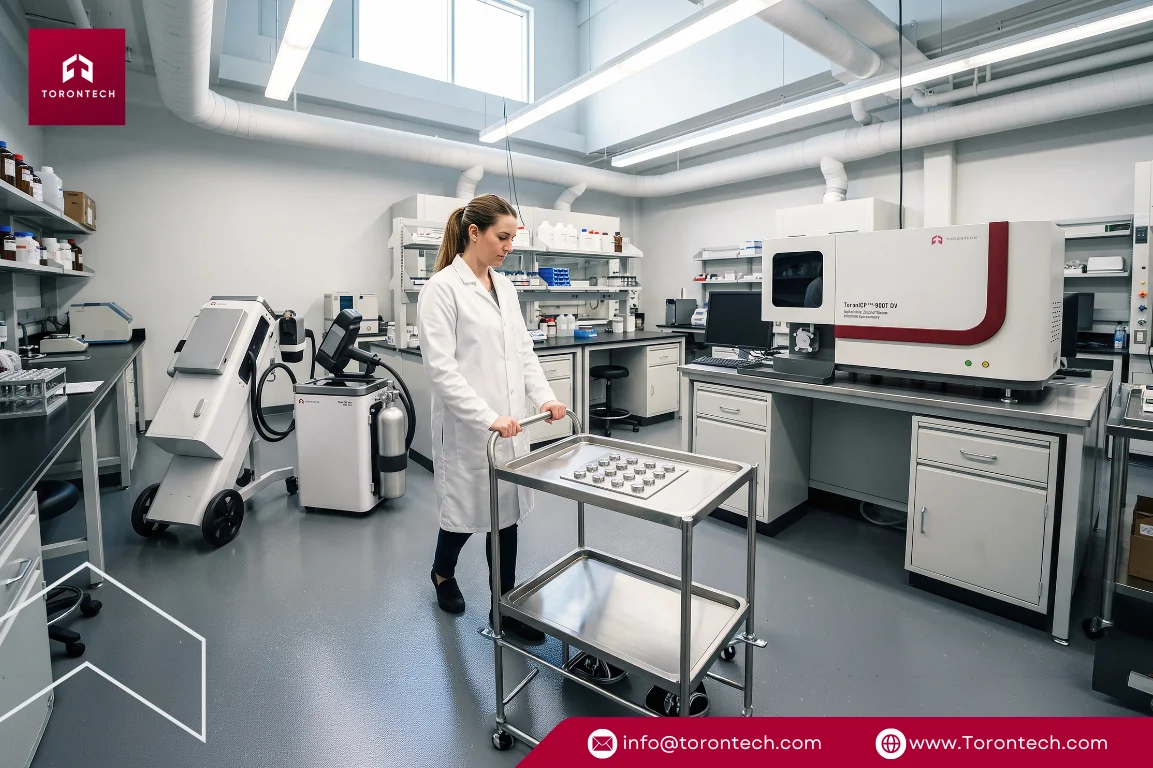
For massive operations requiring constant material verification, a mobile spark OES like the ToronOES™ M is engineered specifically for fast on-site metal testing directly on the scrap yard floor.
ICP-OES
Although the plasma measurement step itself is fast, the extensive sample preparation time required for solids creates a massive, frustrating logjam in your workflow.
However, if your lab strictly handles liquids, upgrading to a fully automated, high-throughput model like the ToronICP™ OES9000 PRO completely streamlines the process. These systems include automated ignition, precise gas control, and intelligent safety interlocks that permit safe, continuous, unattended operation.
4. Total Cost of Ownership and Upkeep
We repeatedly observe that the long-term operational expense is a critical metric often underestimated during the initial purchase phase.
Spark OES
We typically find that Spark OES is phenomenally more cost-effective over time. For example, our TT-OES9000 consumes a remarkably low 5L/min of argon strictly during active spark mode, and it idles on an impressively low standby power of just 100W.
ICP-OES
With ICP-OES, you must permanently budget for a constant, high-purity argon supply to keep the plasma torch running. You must also factor in the routine replacement of consumable glassware, the ongoing cost of laboratory-grade acids, and the regulatory overhead of managing chemical hazardous waste disposal.
Selecting the Right Technology for Your Industry
When to Choose Spark OES
We generally recommend Spark OES for facilities operating a busy foundry, a massive scrap yard, a fast-paced machining operation, or a heavy-duty steel mill.
This is highly apparent in the automotive manufacturing hubs across Ontario and Michigan, where verifying raw materials instantly is an absolute operational requirement. If you need to verify metal chemistry from the moment raw materials arrive to the exact second the finished product ships, a solid Spark OES instrument is your most practical operational asset.
When to Choose ICP-OES
We generally recommend ICP-OES if your workflow involves analyzing municipal wastewater, agricultural soils, petrochemicals, or specialized chemical solutions. This is the standard across the agricultural heartlands of the US Midwest and the Canadian Prairies for soil testing, as well as the intensely busy oil sands and petrochemical plants in Alberta and Texas.
For these highly specific matrices, a targeted solution like our ToronICP™ 700TP (Petrochemical Edition) allows for the direct injection of complex organic fuels. If your testing requirements demand the quantification of ultra-trace elements across liquid samples, then an ICP-OES system is the correct path forward.
Select Your Next Precision Spectrometer with Torontech
At Torontech, a leading US and Canada based supplier, we have spent over two decades helping industrial facilities acquire highly efficient, cost-effective technologies. We build tools that are meant to simplify your workday and protect your bottom line, ensuring you receive premium analytical performance for your hard-earned investment without unnecessary financial overhead.
Get in touch with our extremely knowledgeable Torontech specialists today to find the exact instrument configuration for your laboratory's needs.
References (Click to expand)
- Bengtson, A. (2017). Laser Induced Breakdown Spectroscopy compared with conventional plasma optical emission techniques for the analysis of metals – A review of applications and analytical performance. Spectrochimica Acta Part B: Atomic Spectroscopy, 134, 123-132.
- Doucet, F., Belliveau, T., Fortier, J., & Hubert, J. (2004). Comparative study of laser induced plasma spectroscopy and spark-optical emission spectroscopy for quantitative analysis of aluminium alloys. Journal of Analytical Atomic Spectrometry, 19, 499-501.
- Douvris, C., Trey, V., Bussan, D. D., Bartzas, G., & Thomas, R. (2023). How ICP-OES changed the face of trace element analysis: Review of the global application landscape. The Science of the total environment, 167242.
- Grünberger, S., Ehrentraut, V., Eschlböck-Fuchs, S., Hofstadler, J., Pissenberger, A., & Pedarnig, J. (2023). Overcoming the matrix effect in the element analysis of steel: Laser ablation-spark discharge-optical emission spectroscopy (LA-SD-OES) and Laser-induced breakdown spectroscopy (LIBS). Analytica chimica acta, 1251, 341005.
- Hou, X., Amais, R., Jones, B. T., & Donati, G. (2021). Inductively Coupled Plasma Optical Emission Spectrometry. Encyclopedia of Analytical Chemistry.
- Kakuk, M., Farkas, D., Kállai-Szabó, B., Pencz, K., Mészáros, L. A., Tonka-Nagy, P., Kállai-Szabó, N., & Antal, I. (2025). Inductively Coupled Plasma Optical Emission Spectroscopy (ICP-OES): Exploring Versatile Applications in Industrial and Analytical Fields. Periodica Polytechnica Chemical Engineering.
- Kehden, A., Flock, J., Vogel, W., & Broekaert, J. A. (2001). Direct Solids Atomic Emission Spectrometric Analysis of Metal Samples by “Laser-Induced Argon Spark Ablation” Coupled to ICP-OES. Applied Spectroscopy, 55, 1291 - 1296.
- Khan, S., Sharma, B., Chawla, P., & Bhatia, R. (2021). Inductively Coupled Plasma Optical Emission Spectrometry (ICP-OES): a Powerful Analytical Technique for Elemental Analysis. Food Analytical Methods, 15, 666 - 688.
- Michael, A., Mohamed, A., Abdelaziz, Y., & Fahmy, N. M. (2020). A Comparative Study Between Conventional ICP-OES and the Innovative PLS Model-Assisted ICP-OES for the Assay of Trace Elements. Journal of AOAC International, 103(6), 1548-1555.
- Weber, A., Keil, R., Tobler, L., & Baltensperger, U. (1992). Sensitivities of inductively coupled plasma optical emission spectrometry for dry and wet aerosols. Analytical Chemistry, 64, 672-677.
- Winge, R., DeKalb, E., & Fassel, V. (1985). Comparative Complexity of Emission Spectra from ICP, dc Arc, and Spark Excitation Sources. Applied Spectroscopy, 39, 673 - 676.
- Wu, X., Jiang, X., Chen, Q., Tian, Y., & Hou, X. (2014). Spark ablation–inductively coupled plasma optical emission for elemental depth profiling and imaging. Microchemical Journal, 116, 157-162.