Calorimeter: How Food Calories Are Measured
Is your facility risking regulatory compliance and brand trust on estimated calorie data? Outdated Atwater calculations and theoretical estimates frequently fail to capture the reality of modern, complex food formulations, exposing manufacturers to devastating labeling inaccuracies, product recalls, and severe penalties.
At Torontech, we advocate for direct, empirical measurement as the only definitive way to secure 100% label integrity, streamline R&D validation, and future-proof your quality assurance. Below, we break down how physical bomb calorimetry operates, why it has become critical for commercial food QA, and how to select the optimal testing system to protect your operational bottom line.
Key Takeaways
- Eliminate Compliance Risks: Theoretical calculations often misrepresent the energy of complex food matrices, exposing brands to costly labeling errors.
- Establish Empirical Baselines: Physical bomb calorimetry directly measures gross energy to provide the ultimate ground truth for nutritional assessments.
- Accelerate R&D Cycles: Bringing caloric testing in-house drastically cuts turnaround times and eliminates the recurring costs of third-party laboratories.
- Ensure Global Standardization: Modern automated systems comply with strict ISO and ASTM standards to guarantee your data stands up to regulatory scrutiny.
Fundamentals of Food Calorimetry
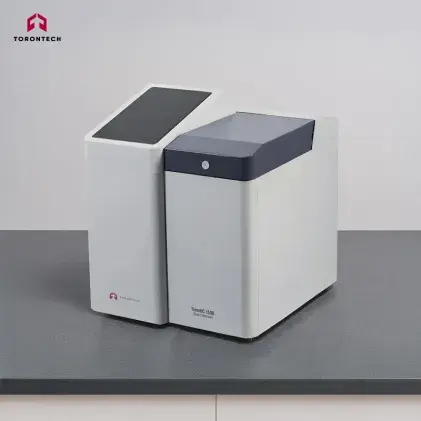
At its core, a bomb calorimeter is a device that measures the calories in food to determine its gross energy content. It achieves this by combusting a carefully prepared food sample in a controlled, high-pressure, oxygen-rich environment and precisely measuring the resulting thermal energy released.
We categorize this technology into four essential components designed to work in tandem:
- Combustion chamber (bomb): A heavy-duty, sealed stainless steel vessel engineered to withstand extreme pressures during complete sample combustion.
- Water jacket: An exceptionally insulated containment vessel surrounding the bomb, designed to capture 100% of the released thermal energy.
- High-pressure oxygen system: Pressure-regulated oxygen delivery that guarantees immediate, complete combustion of complex organic matrices.
- Thermometer and sensors: High-resolution digital temperature sensors calibrated to detect minute thermal fluctuations with exceptional precision.
The resulting increase in water temperature, calculated against the system's known heat capacity, determines the precise number of kilocalories (kcal) or kilojoules (kJ) contained within the tested food sample.
Operating Principles: From Sample to Measurement
When assessing how food calories are measured in a high-standard laboratory setting, we reference the foundational laws of thermodynamics. In our view, understanding exactly how calories in food are measured requires a highly disciplined, four-stage analytical process:
- Sample Preparation: The food sample undergoes rigorous drying, homogenization, and analytical weighing to the nearest milligram. Research indicates that preparation steps like homogenizing, freeze-drying, and pelletizing strongly affect overall accuracy but are frequently poorly standardized across facilities. We emphasize this step because eliminating moisture variability is vital to preventing combustion interference and ensuring instrument accuracy within ±3 to 10% margins.
- Combustion Process: The prepared sample is placed in a crucible, sealed inside the bomb chamber, pressurized with pure oxygen, and ignited via an electrical spark. Complete combustion occurs rapidly within seconds.
- Heat Transfer: The chemical energy released by the combustion process transfers as heat to the surrounding water jacket.
- Data Output: Compact and highly efficient instruments, such as the ToronBC™-1500, automatically calculate the gross energy content based on this temperature rise, providing highly accurate, repeatable results expressed in kcal/g or kJ/g without manual math.
We consider this direct physical measurement to be the industry gold standard, providing the empirical proof required to defend packaging claims, regulatory compliance, and novel product formulations.
Related article: A Comprehensive Guide to Bomb Calorimetry Testing
Calorimetry vs. Atwater Calculations
An ongoing point of discussion among food scientists is the necessity of physical testing when theoretical mathematical calculations are readily accessible.
Limitations of the Atwater System
The standard Atwater system, which multiplies protein and carbohydrate content by 4 kcal/g and fats by 9 kcal/g, remains a theoretical estimate. While highly convenient, we must note its inherent limitations:
- Assumes Uniform Human Digestibility: The calculations assume that every digestive system processes macronutrients with identical efficiency, which does not reflect biological reality.
- Overlooks Structural Complexity: It fails to account for the complex physical structures of modern, multi-ingredient formulations or novel plant-based alternatives where nutrients are bound differently.
The Synergy of Complementary Systems
From an analytical standpoint, we do not view these two methods as competing, but rather as complementary partners:
- Gross Energy Baseline: Bomb calorimetry measures the actual, physical Gross Energy of the food.
- Metabolizable Energy Calibration: Because the human digestive system is not 100% efficient (failing to extract energy from insoluble dietary fibers that a bomb calorimeter easily combusts), the physical reading establishes the absolute energy baseline. R&D teams then utilize this precise baseline to apply correct digestibility factors, resulting in the compliant Metabolizable Energy values required for consumer packaging.
Empirical Evidence of Atwater Discrepancies
Peer-reviewed studies consistently show that Atwater estimates can significantly overstate available energy:
- The Walnut Study: Research demonstrated that whole walnuts provided 21% less metabolizable energy than Atwater predicts when measured by full bomb calorimetry combined with physical fecal and urine energy balance trials.
- Weight Maintenance in Older Adults: Atwater-based estimates overstated the actual metabolizable energy intake needed to maintain weight in older adults by approximately 26% over a 96-day period.
- Refining Energy Standards: Researchers propose shifting toward Net Metabolisable Energy (NME) standards, or using amino-acid-specific corrected protein factors (~4.55 kcal/g compared to Atwater's 4 kcal/g) to reconcile these systematic gaps.
Consider a hypothetical scenario involving a high-fiber energy bar. An Atwater calculation might estimate the bar contains 200 calories based purely on the raw weight of its macronutrients.
However, when combusted in a bomb calorimeter, the instrument might reveal a true physical Gross Energy of 215 calories due to complex, insoluble fibers that the theoretical formula overlooked. By starting with this exact physical baseline and applying the proper digestibility coefficients, R&D teams avoid the risk of under-reporting or over-reporting calories on the final nutrition panel. We maintain that this integrated approach offers the highest tier of scientific accuracy.
Key Benefits for Food Quality Assurance
In our experience, market-leading food brands treat measurement precision not merely as a regulatory checkbox, but as a core pillar of quality assurance. We consider the bomb calorimeter to be an indispensable asset for both routine production quality control and advanced research applications.
We observe that leading global food manufacturers prioritize investment in this technology for several key reasons:
1. Analytical Precision
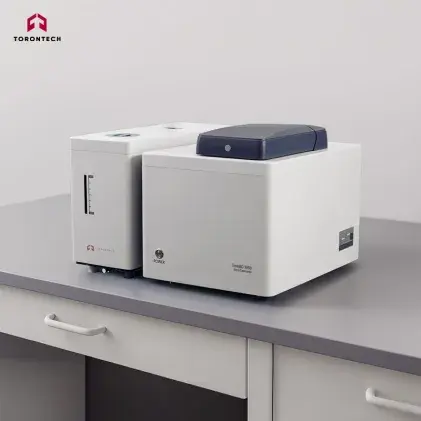
We have engineered our high-precision instruments, such as the ToronBC™-1000, to deliver exceptionally precise caloric readings for both solid and liquid samples. Utilizing sealed, adiabatic or isoperibolic testing environments, our systems ensure that external heat exchange is virtually non-existent. This level of repeatability is, in our opinion, an absolute necessity when preparing for strict regulatory audits or validating competitive product claims.
2. Full-Spectrum Energy Profiling
A bomb calorimeter captures the total chemical energy of a sample, accounting for contributions from proteins, fats, carbohydrates, and alcohol. We believe that this comprehensive profiling provides a significantly more reliable and legally defensible foundation for nutritional assessments than relying on additive, calculated estimates.
3. Matrix Versatility
Whether your facility processes powdered nutritional supplements, liquid dairy products, raw agricultural commodities, or processed snack foods, calorimetry remains highly effective. We have seen these systems successfully process a diverse range of complex food matrices, representing a highly versatile asset for laboratory environments.
4. Regulatory Compliance
With global food safety and labeling regulations steadily tightening, the margin for error has narrowed. A single mislabeled batch can result in expensive product recalls and long-term damage to brand reputation. Deploying laboratory equipment that conforms to strict international testing standards ensures your facility's data remains bulletproof under regulatory scrutiny.
5. Digestibility & Metabolic Studies
When paired with physiological waste analysis, calorimetry allows researchers to accurately quantify the metabolizable energy absorbed by the body. In our view, this capability is invaluable for laboratories developing functional foods, high-fiber dietary products, or specialized clinical nutrition.
6. Product Consistency & R&D
We frequently observe manufacturers using calorimetry to monitor batch-to-batch consistency. If your team reformulates a product, such as substituting ingredients to reduce costs or modify fat profiles, these instruments provide immediate, empirical feedback on how those changes impact the energy density of the finished product.
7. Operational Efficiency
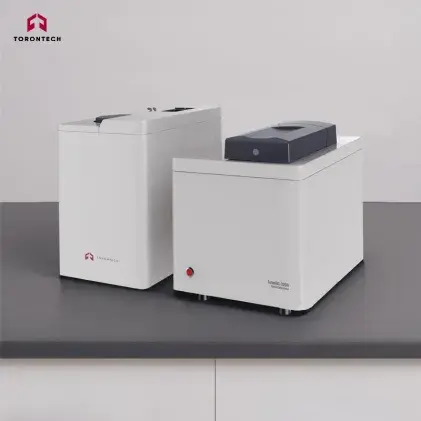
We understand that laboratory labor costs and operator bandwidth are major operational factors. Modern testing systems are highly automated, significantly reducing the required technical training time. For high-volume testing facilities, fully automated models like our ToronBC™-3200 minimize manual water handling and human error, allowing technicians to focus on data analysis rather than apparatus preparation.
8. Competitive Benchmarking
When evaluating raw material suppliers, validating alternative ingredients, or analyzing competitor products, we believe that having direct, quantifiable baseline data is the only reliable way to eliminate guesswork and make strategic, data-driven decisions.
Commercial Applications
Based on our observations of the global market, we see several key food sectors where physical calorimetry is rapidly becoming an operational standard:
Snack Foods & Dietary Brands
Validating low-calorie, keto, or reduced-energy marketing claims with empirical physical testing prior to commercial distribution. For example, when formulating a new baked potato chip designed to have 20% fewer calories than a standard fried chip, calorimetry provides the definitive empirical data required to legally support that marketing claim.
Alternative Proteins & Novel Ingredients
Establishing accurate physical baselines for novel, engineered ingredients where historical Atwater factors do not apply. For instance, when formulating a novel oat-and-pea-protein burger, standard calculations often fail to account for the unique binding agents. The calorimeter provides the exact gross energy baseline needed to begin formulation analysis.
Pet Food & Animal Feed
A heavily scrutinized industry where meeting guaranteed nutritional analyses (gross and digestible energy) is strictly regulated by international agricultural authorities. Using versatile systems like the ToronBC™-1200, which delivers precise testing for a wide variety of solid and liquid materials, feed manufacturers routinely test raw incoming grain shipments.
Recent studies in canine and feline diets show that standard Atwater equations can differ from in vivo metabolizable energy by up to 12% for certain wet foods. For the highest accuracy, researchers note that NRC 2006 equations combined with directly measured gross energy via calorimetry predict metabolizable energy best.
Functional & Clinical Nutrition
Engineering specialized medical diets containing high concentrations of fiber or non-digestible carbohydrates, where precise metabolizable energy calculation is directly linked to patient outcomes. Creating a meal replacement shake for diabetic patients, for example, requires knowing the absolute gross energy foundation before calculating the glycemic impact of the ingredients.
Key Standards & Compliance
While we champion the analytical power of calorimetry, we also emphasize that instrument performance is heavily dependent on proper laboratory protocols. We advise laboratory managers to prioritize two key factors:
- Standardization of Sample Prep: Drying and homogenization protocols must be highly standardized. In our opinion, even minor variations in moisture content or sample uniformity can alter the combustion profile and introduce data inaccuracies. Research highlights that preparation procedures are often poorly reported, making rigid internal standard operating procedures a necessity.
- Adherence to International Standards: To ensure data acceptance by global regulatory bodies, laboratory equipment must conform to recognized testing standards. We ensure that our instruments strictly comply with key standards, including ISO 1928, ASTM D5865, and DIN 51900.
The Business Case: ROI & Maintenance
For B2B buyers, executive teams, and laboratory directors, the decision to acquire a new analytical instrument rests on financial viability and operational efficiency.
In-House Testing vs. Outsourcing
We regularly consult with organizations that rely exclusively on third-party laboratories for caloric testing. While this avoids upfront capital expenditure, it introduces high recurring per-sample costs and, more critically, lengthy R&D bottlenecks.
We maintain that bringing testing in-house pays for itself rapidly. By reducing turnaround times from weeks to minutes, your facility can accelerate product launches, release production batches faster, and eliminate ongoing external testing fees.
Low Maintenance & Total Cost of Ownership (TCO)
We design our ToronBC™ systems with long-term industrial durability in mind. Routine calibration is highly straightforward, requiring standard, readily available benzoic acid pellets.
This operational simplicity ensures that internal staff can maintain peak instrument accuracy, eliminating the need for expensive, frequent service contracts with external technicians.
Upgrade Your Food Lab with Torontech Calorimeters
Ultimately, we view the bomb calorimeter as a vital capital investment for any food manufacturer that refuses to compromise on quality control, precision, or regulatory compliance. Whether your goal is verifying supplier quality, accelerating product development, or guaranteeing label accuracy, the data provided by these systems is irreplaceable.
We invite you to explore our full range of ToronBC™ Series Bomb Calorimeters to find the system that best matches your lab's goals. For detailed technical specifications, pricing, or a customized recommendation from our engineering team, please contact us today.
References (Click to expand)
- Baer, D., Gebauer, S., & Novotny, J. (2015). Walnuts Consumed by Healthy Adults Provide Less Available Energy than Predicted by the Atwater Factors. The Journal of Nutrition, 146(1), 9-13.
- Burova, Z., Gudzenko, M., Vorobiov, L., & Makeev, A. (2023). Methods and devices for researching the energy value of food products. Human and Nation's Health.
- Calvez, J., Weber, M., Ecochard, C., Kleim, L., Flanagan, J., Biourge, V., & German, A. (2019). Metabolisable energy content in canine and feline foods is best predicted by the NRC2006 equation. PLoS ONE, 14.
- Ferrer-Lorente, R., Fernández-López, J., & Alemany, M. (2007). Estimation of the metabolizable energy equivalence of dietary proteins. European Journal of Nutrition, 46, 1-11.
- Hopper, Z., Desbrow, B., Roberts, S., & Irwin, C. (2023). Preparation procedures of food and beverage samples for oxygen bomb calorimetry: A scoping review and reporting checklist. Journal of Food and Drug Analysis, 31, 232 - 243.
- Kruskall, L., Campbell, W., & Evans, W. (2003). The Atwater energy equivalents overestimate metabolizable energy intake in older humans: results from a 96-day strictly controlled feeding study. The Journal of Nutrition, 133(8), 2581-4.
- Livesey, G. (2001). A perspective on food energy standards for nutrition labelling. British Journal of Nutrition, 85, 271 - 287.
- Marchi, P., Amaral, A., Príncipe, L., Risolia, L., Rentas, M., Fasolai, A., Zafalon, R., Finardi, G., Jeremias, J., Pedreira, R., Balieiro, J., & Vendramini, T. (2025). Accuracy of Predictive Equations for Metabolizable Energy Compared to Energy Content of Foods for Dogs and Cats Estimated by In Vivo Methods in Brazil. Animals : an Open Access Journal from MDPI, 15.
- Tanprasertsuk, J., Perry, L., Tate, D., Honaker, R., & Shmalberg, J. (2021). Apparent total tract nutrient digestibility and metabolizable energy estimation in commercial fresh and extruded dry kibble dog foods. Translational Animal Science, 5.