Isoperibol vs Adiabatic: Complete Selection Guide
Do you want to secure perfect gross calorific value (GCV) measurements without blowing your laboratory capital budget?
In the analytical testing industry, achieving strict precision is an absolute requirement, especially when calculating the energy locked inside heavy fuels, biomass, or chemical products. We believe selecting the ideal thermal control design is the ultimate key to meeting strict regulatory standards while keeping your workflow highly efficient.
To help you make an informed choice, review our quick-reference breakdown directly below before we compare the mechanics of adiabatic vs isoperibol systems head-to-head.
At a Glance: Adiabatic vs Isoperibol Comparison
For laboratories seeking a quick reference, here is how both technologies stack up across key operational parameters:
| Parameter | Isoperibol Calorimeters | Adiabatic Calorimeters |
|---|---|---|
| Test Time & Throughput | Fast (ideal for high-volume routine testing) | Slower (requires time to match temperatures) |
| Accuracy | Very High (~0.01-0.03% precision via algorithmic correction) | Very High (favored for millikelvin-level stability) |
| Mechanical Complexity | Low (constant temperature jacket) | High (dynamic heating/cooling mechanisms) |
| Ideal Use Case | Commercial testing, QC labs, manufacturing | Thermodynamic research, metrology |
What is an Isoperibol Bomb Calorimeter?
The term "isoperibol" describes an environment with constant surroundings. A widely used classification groups calorimeters by their temperature control, establishing isoperibol devices as systems that operate in a strictly controlled, continuous-temperature environment. In this setup, the outer water jacket is maintained at a steady baseline temperature throughout the duration of the test.
When sample combustion is initiated via the ignition wire inside the bomb, the temperature of the inner bucket rises. Because the outer jacket remains at its baseline temperature to maintain water jacket equilibrium, a thermal gradient is created. This results in a minor, unavoidable heat leak from the inner bucket to the outer jacket. Think of it like pouring hot coffee into a standard mug: heat naturally leaks into your kitchen, and you have to calculate how fast it is cooling down.
Historically, this heat flow was a mathematical headache. Today, modern microprocessors apply a lumped heat-transfer model and Newton's law of cooling to automatically calculate thermodynamic corrections in real-time, removing the need for manual calculations.
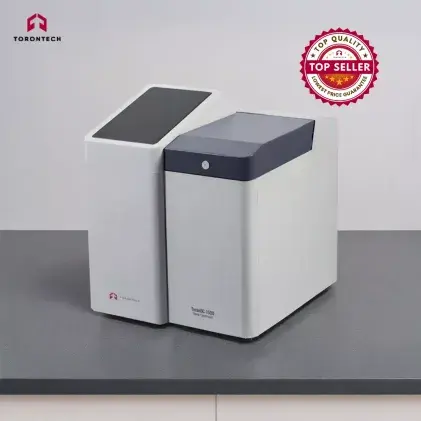
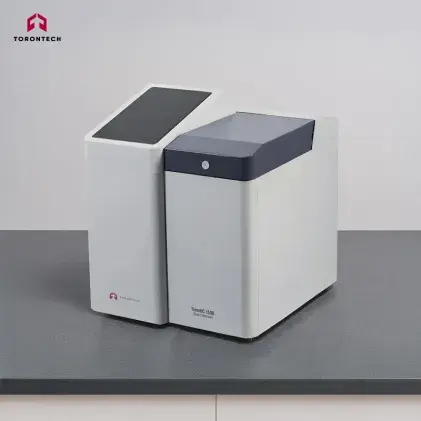
For example, fully automated instruments like our ToronBC™-3200 monitor these variables constantly. Research demonstrates that well-designed isoperibol units can achieve outstanding calibration uncertainties around 0.01% to 0.03%, making them incredibly dependable and practical for routine testing.
What is an Adiabatic Bomb Calorimeter?
An adiabatic system operates on the principle of minimizing heat exchange. In an adiabatic bomb calorimeter, the temperature of the outer water jacket is dynamically heated or cooled to continuously match the rising temperature of the inner bucket during the combustion process.
Because the inner bucket and the outer jacket are always at the exact same temperature, the temperature gradient is zero. Think of this like a high-tech smart thermos that actively heats up to match your coffee's temperature, stopping any heat from escaping. While automatic control aims to perfectly isolate the system from heat loss, literature notes there can sometimes be minor residual errors of around 0.2% resulting from lag during rapid temperature rises.
Because they actively prevent heat transfer, adiabatic systems generally require smaller heat-loss corrections. They provide highly accurate raw temperature data and are strongly favored for high-precision thermal metrology and fixed-point realizations requiring millikelvin-level stability. We view these machines as highly specialized instruments best suited for controlled research.
Isoperibol vs Adiabatic: Key Operational Differences
When evaluating adiabatic vs isoperibol systems for your lab, we consider the decision to hinge on four primary operational factors:
1. Test Speed and Throughput
Isoperibol systems generally offer much faster testing cycles. Because the outer jacket is simply maintained at a constant temperature, the system requires almost zero stabilization time between tests. Furthermore, the development of automated data acquisition systems in isoperibol models significantly accelerates processing times.
By utilizing a highly efficient model with automated oxygen handling, like our ToronBC™-1500, a lab crew can knock out a full analysis in an accelerated 7.5 minutes. Adiabatic systems must continuously adapt to match inner temperatures, which takes longer to reach equilibrium and creates an unwelcome bottleneck when you have a high volume of samples waiting.
2. Mechanical Complexity
Adiabatic systems require highly complicated, reactive internal heating and cooling mechanisms in the outer jacket to mirror the inner bucket's temperature exactly. Isoperibol systems are mechanically simpler, which we believe translates to higher long-term reliability and fewer mechanical failures.
3. Data Processing and Precision
Adiabatic calorimeters yield a true, uncorrected temperature rise curve. Isoperibol calorimeters rely on detailed cooling-correction formulae to compensate for heat loss. Fortunately, thermokinetic studies confirm that kinetic parameters derived from both isoperibolic and adiabatic measurements agree reasonably well, proving that both modes yield highly reliable reaction data when correctly analyzed.
4. Acquisition and Maintenance Cost
Because of the highly involved dynamic temperature control systems required in adiabatic models, they carry a higher initial price tag and require more intensive pampering. In our view, paying a premium for an adiabatic system is rarely justified unless your specific research applications demand absolutely minimal heat-loss modeling.
Related article: A Comprehensive Guide to Bomb Calorimetry Testing
Selection Guide: Matching Systems to Applications
In the comparison of adiabatic vs isoperibol, how do we identify the exact right fit for your facility? We suggest evaluating your daily objectives using the criteria below:
When to Choose an Isoperibol Calorimeter
- Ideal Facilities: High-volume commercial testing labs, quality checkpoints at major energy facilities, or food manufacturing centers.
- Primary Objective: Securing excellent accuracy, running numerous tests a day, and completely avoiding unexpected equipment downtime.
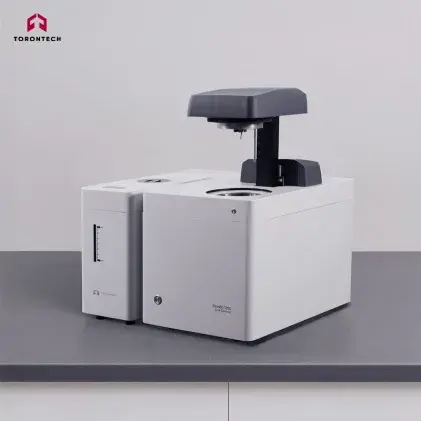
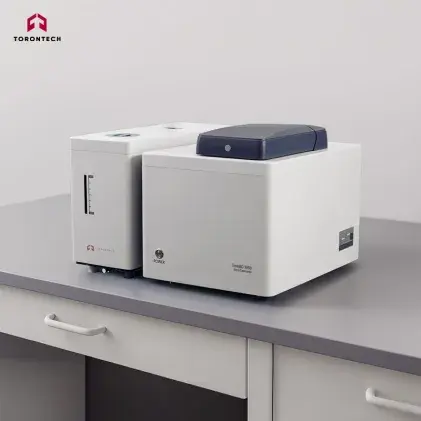
- Real-World Scenario: Consider a hypothetical quality control team at a commercial energy plant. They receive daily shipments of coal and need to process dozens of batches per shift to verify fuel grades. They absolutely cannot afford to sit around waiting for their equipment to stabilize between runs. By utilizing a heavy-duty, precision-focused instrument like the ToronBC™-1000 or ToronBC™-1200, they can continuously blast through their solid fuel testing quotas without skipping a single beat.
When to Choose an Adiabatic Calorimeter
- Ideal Facilities: Highly specialized thermodynamic research environments or advanced academic laboratories.
- Primary Objective: Obtaining absolute, uncorrected data where massive sample throughput speed is a completely secondary concern.
- Real-World Scenario: Consider a hypothetical university physics department publishing peer-reviewed papers on the thermal properties of a newly synthesized material. For these researchers, securing absolute baseline data with minimal software interference is the top priority, even if they only have the capacity to process a tiny handful of samples each week.
Choosing Torontech for Better Calorimetry
For most combustion and solution calorimetry, either mode can deliver high-quality results. The choice is ultimately driven by your desired precision, complexity of control, and convenience.
At Torontech, we have spent over two decades supplying global industries with highly cost-effective solutions and innovative technologies that easily compete with the most expensive brands on the market.
Explore the ToronBC™ Series Bomb Calorimeters Here and see exactly how our innovative technology can optimize your laboratory's daily operations.
References (Click to expand)
- Cleland, W., & Harding, R. (1957). Automatic Temperature Control for an Adiabatic Calorimeter. Review of Scientific Instruments, 28, 696-698.
- Flores, H., Mentado, J., Amador, P., Torres, L., Campos, M., & Rojas, A. (2006). Redesigning the rotating-bomb combustion calorimeter. The Journal of Chemical Thermodynamics, 38, 756-759.
- Gro̸nlund, F. (1990). Corrections in isoperibol calorimetry: a unified view of adiabatic and heat-flow calorimeters. The Journal of Chemical Thermodynamics, 22, 563-572.
- Lee, H., & Hart, R. (2004). The art of calorimetry. Thermochimica Acta, 417, 257-273.
- Leonhardt, J., & Hugo, P. (1997). Comparison of thermokinetic data obtained by isothermal, isoperibolic, adiabatic and temperature programmed measurements. Journal of thermal analysis, 49, 1535-1551.
- Li, X., Li, Q., Li, C., Duan, L., Jiang, J., Zeng, F., Li, X., & Gu, H. (2021). Construction and performance evaluation of a CSC-1 type horizontal rotating micro-bomb combustion-solution isoperibol multifunctional calorimeter. The Journal of Chemical Thermodynamics, 160, 106505.
- Luo, Y. (1983). Study on the cooling correction in bomb calorimetry. Fuel, 62, 845-848.
- Lyon, R. (2015). Thermal dynamics of bomb calorimeters. The Review of scientific instruments, 86 12, 125103.
- Matarawy, E., & El-Dien, E. (2021). Precise temperature controlling algorithm for metrological adiabatic calorimeters based on proportional-integration (α) thermal energy. Journal of Thermal Analysis and Calorimetry, 147, 3721 - 3730.
- Olofsson, G., Sunner, S., Efimov, M., & Laynez, J. (1973). A general-purpose reaction-solution rotating-bomb calorimeter for measurements up to about 400 K and 800 kPa. The Journal of Chemical Thermodynamics, 5, 199-206.
- Pößnecker, W. (1993). Heat losses which cannot be compensated for and their contribution to the temperature dependence of caloric measuring errors in dynamic differential calorimeters. Thermochimica Acta, 229, 97-109.
- Raymond, W., Canaway, R., & Harris, C. (1957). An automatic adiabatic bomb calorimeter. Journal of Scientific Instruments, 34, 501-503.
- Rojas, A., & Valdés, A. (2003). An isoperibol micro-bomb calorimeter for measurement of the enthalpy of combustion of organic compounds. Application to the study of succinic acid and acetanilide. The Journal of Chemical Thermodynamics, 35, 1309-1319.
- Rouquerol, J., & Zielenkiewicz, W. (1986). Suggested practice for classification of calorimeters. Thermochimica Acta, 109, 121-137.
- Shin, C., & Criss, C. (1975). Precision isoperibol calorimeter with automatic data acquisition and processing. Review of Scientific Instruments, 46, 1043-1046.
- Yermakov, S., Korzhenivskyi, O., Polozhii, H., Pukas, V., & Vusatyi, M. (2025). Development of automated data acquisition system for isoperibolic bomb calorimeter. Engineering for Rural Development.