A Comprehensive Guide to Bomb Calorimetry Testing
Ready to secure flawless thermodynamic data from your laboratory testing runs without the usual operational headaches?
Achieving highly reliable calorific results protects your product quality, satisfies demanding regulatory bodies, and keeps your commercial projects moving forward on schedule. This guide walks you through the essential phases of safety, sample preparation, and how to select an instrumentation setup that respects your capital budget.
Key Takeaways
- Sample processing dictates accuracy: Proper homogenization and moisture removal form the foundation of repeatable thermodynamic calculations.
- Safety protocols preserve investments: Strict visual inspections and precise oxygen management prevent catastrophic pressure failures and protect your laboratory hardware.
- Calibration maintains compliance: Burning certified benzoic acid establishes a totally reliable baseline to keep external auditors completely satisfied.
- Automation maximizes ROI: Modern automated systems dramatically increase daily sample throughput and drastically reduce highly paid technician labor hours.
High-Precision Data Applications
Industrial bomb calorimeters are critical assets across several major commercial sectors where critical business decisions rely on precise thermal calculations. The applications are incredibly varied:
The Fossil Fuel and Petrochemical Sectors
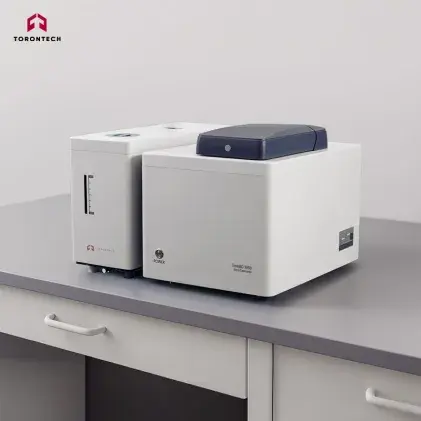
Verifying the precise thermal potential of coal consignments or heavy oil batches to assign grade quality and negotiate fair commercial pricing. For these routine laboratory workflows where consistency is paramount, instruments like the ToronBC™-1200 are engineered specifically to process coal, biomass, and petroleum products with unwavering reliability.
The Waste-to-Energy and Alternative Fuel Sector
Analyzing shredded municipal solid waste to confirm it holds sufficient thermal value to keep power generation boilers running efficiently. For instance, testing highly inconsistent bundles of Refuse-Derived Fuel (RDF) requires continuous, daily monitoring compared to standard, predictable coal.
We firmly believe this is the most dynamic high-growth sector in industrial testing today. Because waste streams are highly variable and unpredictable, continuous testing is the only way to avoid boiler damage and maintain stable energy outputs.
The Food and Feed Sectors
Confirming the exact caloric values for consumer nutritional goods and commercial animal feeds. Analyzing the highly concentrated caloric profile of commercial pet kibble, for example, demands the exact same rigorous precision as evaluating high-nutrition infant formula.
Read more: Calorimeter: How Food Calories Are Measured
The Materials and Safety Sectors
Combustion testing of novel polymers and construction materials to verify they will not easily transform into uncontrollable hazards when exposed to ignition sources.
Core Laboratory Safety Protocols
Because this analytical technique relies on highly pressurized oxygen and miniature controlled explosions, maintaining strict safety protocols is completely non-negotiable. We always emphasize to our clients that establishing an uncompromising safety culture does more than protect your laboratory technicians, it preserves your expensive instrumentation from catastrophic structural damage. Perform these checks prior to handling any materials or initiating a run:
Conducting Visual Inspections
Examine the heavy-duty metal bomb cylinder for microscopic fissures or wear. Verify that the elastomeric O-rings are pliable, resilient, and completely leak-free before attempting a test.
Managing Highly Pressurized Oxygen
Never exceed the pressure limits specified by the instrument manufacturer. Additionally, ensure that all connections and fittings are entirely free of lubricants or grease. Hydrocarbons combined with pure, high-pressure oxygen create a severe explosion hazard, a situation you definitely want to avoid.
Enforcing Sample Weight Limits
Keep your sample mass strictly within the recommended boundaries (typically around 1 gram). To illustrate the severity of this rule, overloading the metallic crucible with a highly combustible industrial polymer does not just invalidate the data. The resulting internal thermal shock can physically warp the stainless steel bomb or severely scorch the internal electrodes, leading to an entirely avoidable, highly expensive replacement purchase.
Step One: Bomb Calorimeter Sample Preparation
Even the most sophisticated, automated analytical equipment cannot salvage your data if your sample treatment is deficient. Different substances present entirely distinct handling challenges. Prepping dry, brittle anthracite coal is a completely different physical challenge than dealing with fibrous, high-moisture agricultural biomass.
In our experience, sample processing is the single most critical variable. Get this wrong, and you will find yourself dealing with erratic, unstable figures that will exhaust your patience. To prepare your samples like an experienced laboratory technician, follow these steps:
Ensuring Complete Homogeneity
Your small test portion must truly represent the bulk consignment. Grind or pulverize solid samples into a highly uniform, ultra-fine dust. For complex beverages or high-fat samples, initial agitation and thorough post-dehydration mixing are absolutely vital.
Removing Residual Moisture
Moisture content severely distorts thermal readings. Utilize a laboratory drying oven to extract water weight before placing your sample on the balance. For sensitive biological slums or fecal waste samples, research shows that freeze-drying before lyophilization can shorten processing times from 48 hours to just 16 hours while eliminating unpleasant odors and the need for grinding. For solid biomass, oven drying at 105°C to a stable mass and correcting the calorific value to a dry basis is standard practice.
Compressing the Material into a Pellet
For light, powdery materials, compacting the sample into a solid pellet prevents it from scattering when the high-pressure gas is introduced. While processed coal might easily press into a neat shape, raw biomass often requires an added combustion aid to compress properly. We frequently observe facilities skipping this step entirely. Doing so allows the sample to disperse inside the bomb, resulting in incomplete combustion and erratic calculations.
High-Precision Mass Measurement
Use an extremely sensitive analytical balance to measure the sample mass (aiming for approximately 1 gram to match your calibration range). Record this value with absolute precision, it is the foundational variable for your thermodynamic calculations.
Positioning the Sample
Gently place your compressed pellet into the metallic crucible, preparing it for the combustion chamber.
Establishing Your Baseline: Benzoic Acid Calibration
Before testing unknown substances, your instrument must establish its heat capacity baseline (frequently referred to as the water equivalent of the system). To achieve this successfully, keep these core rules in mind:
- Utilize certified benzoic acid: This standardized material combusts with a highly predictable, globally verified thermal output, providing a totally reliable reference point.
- Lock in your parameters: Ensure all operational and environmental conditions remain completely identical between calibration and sample runs to prevent measurement drift.
- Maintain a strict routine: We firmly believe that skipping calibration runs is a false economy. Routine testing is the absolute best method to maintain accuracy and keep your external auditors completely satisfied.
The Core Procedure: Executing the Combustion Run
With your instrument calibrated and your sample correctly positioned, you are ready to initiate the test. While the specific sequence varies depending on your instrument model and the regulatory standards you follow (such as ASTM D5865, ISO 1928, or DIN 51900), the fundamental process remains identical.
Here is the general sequence of how to perform bomb calorimetry test procedures:
Connecting the Firing Wire
Secure the thin ignition wire (along with a loop of cotton thread, if specified by your standard) to the internal electrodes. Ensure the wire rests firmly against your pellet while remaining completely clear of the metallic crucible walls to prevent an electrical short.
Sealing and Pressurizing the Bomb
Carefully lower the bomb head assembly into the heavy stainless steel vessel and secure the locking mechanism. Pressurize the vessel with high-purity oxygen until you reach the target pressure, which is typically around 30 bar or 400 lb/in².
Submerging the Vessel
Lower the sealed bomb into the water-filled bucket. Check carefully to ensure not a single bubble escapes, bubbles indicate a pressure leak, which immediately invalidates your data.
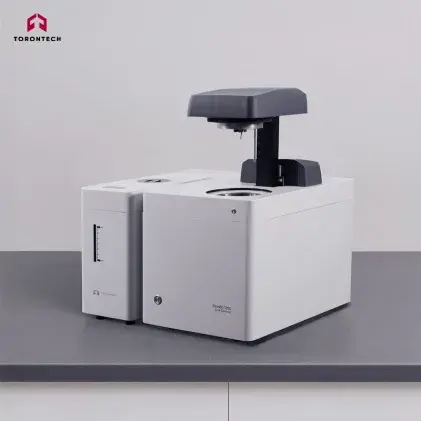
Note: If you operate a fully automated unit like the ToronBC™-3200, this step is entirely hands-free, as the system manages automatic bucket filling and temperature regulation directly from its large-capacity water tank.
Allowing Thermal Equilibration
Let the water stir continuously until the temperature stabilizes under fixed jacket conditions. The software will begin plotting the initial baseline temperature.
Isoperibol systems keep the jacket at a fixed temperature, while adiabatic systems actively control the jacket to match the bath temperature, reducing heat loss. We highly recommend tracking this phase closely; a perfectly stable pre-fire baseline is the foundation of accurate calculations.
Read more: Isoperibol vs Adiabatic: Complete Selection Guide
Initiating Ignition
Send the electric current through the firing wire to ignite the sample. The pellet will combust instantly, releasing its thermal energy through the steel walls into the surrounding water.
Recording Temperature Rise and Final Calculation
Highly sensitive thermal sensors will record the exact temperature increase of the water. Relying on premium units provides several distinct advantages for data collection:
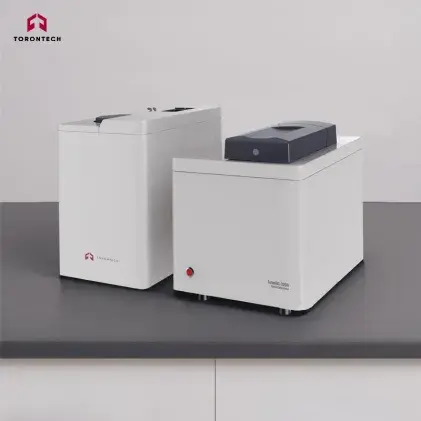
- Extreme thermal resolution: Systems like the ToronBC™-1000 utilize advanced semiconductor temperature control to capture readings with a phenomenal 0.0001°C resolution.
- Rapid analysis times: You obtain the exact gross calorific value in 14 minutes or less, assisted by highly accurate tools like the PT1000 platinum resistance thermometer in the ToronBC™-3200.
- Post-run corrections: Once the combustion run ends, the bomb is rinsed, and chemical titration analyses are performed to correct for nitric or sulfuric acid formation, which is crucial for fuel testing.
Finally, calculate your calorific value using the heat capacity established during calibration.
Equipment Selection: Automated vs Manual Bomb Calorimeter
For a quick overview of how these two configurations compare, review the breakdown below:
| Feature | Automated Systems | Manual Systems |
|---|---|---|
| Initial Investment | Higher upfront capital required | Lower initial purchase price |
| Daily Throughput | Extremely high (continuous processing) | Low (restricted by manual physical tasks) |
| Staff Requirements | Minimal intervention | Constant hands-on technician supervision |
| Measurement Precision | Exceptional consistency | Vulnerable to physical operator errors |
| Data Management | Automatic network transmission (RS232) | Physical recording and spreadsheet calculation |
When establishing a new facility or upgrading obsolete equipment, procurement managers always encounter the same core dilemma: should you opt for a manual setup or invest in automated systems? Making the correct decision is critical for your daily productivity and operational costs.
The Manual Route
In a traditional manual configuration, your laboratory technicians perform every phase of the process. They fill the oxygen manually, measure the bucket water, track temperature changes with a thermometer, and perform the final thermodynamic equations on a spreadsheet.
The Advantages: These systems require a lower initial purchase price, making them attractive for academic settings where students benefit from learning the physical steps.
The Disadvantages: They are highly vulnerable to human error. They also demand substantial staff time, which severely limits your daily testing throughput.
The Automated Route
When comparing an automated vs manual bomb calorimeter, modern automated aneroid or isoperibol systems automatically handle water preparation, oxygen charging, temperature tracking, and calculations. Removing this manual burden from your staff delivers serious operational benefits:
- Unwavering accuracy: Exceptional measurement precision and highly repeatable results by removing operator-dependent variability.
- High-speed processing: A massive increase in daily sample throughput. Operators simply load the sample, press a button, and are completely free to focus on other analytical tasks.
- Seamless data transfer: Modern systems utilize standard RS232 interfaces for real-time network data transmission.
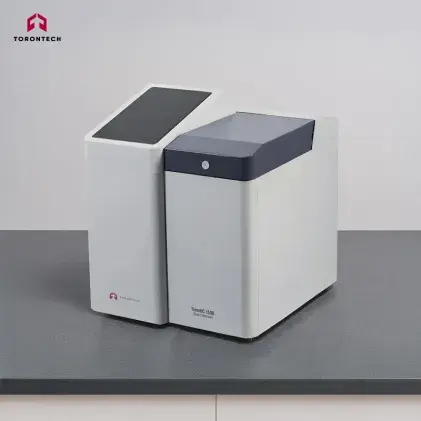
- Space-saving efficiency: If laboratory bench space is heavily restricted, options like the ToronBC™-1500 offer a highly efficient, compact footprint without sacrificing analytical performance.
In our view, the belief that manual systems are more cost-effective is an illusion. Run a quick theoretical calculation for a commercial testing facility processing forty samples every single day.
If an automated unit saves a technician just ten minutes of manual labor per run compared to older manual systems, that facility recovers over six hours of highly paid staff time daily. When you calculate those numbers across an entire fiscal year, an automated system delivers a far stronger return on investment.
Note: Low-cost upgrades using Arduino or LabVIEW-based systems can automate temperature acquisition on existing isoperibolic calorimeters, improving accuracy versus fully manual reading. However, core sample-preparation and calibration requirements remain totally unchanged regardless of your automation level.
Streamline Your Calorimetry Testing with Torontech
Acquiring high-specification testing equipment should not require exhausting your capital budget.
Based in North America, Torontech specializes in delivering exceptional performance with cost-effective, innovative technologies. Our complete lineup of testing equipment complies fully with strict international standards (ASTM, ISO, DIN), ensuring your data holds up under rigorous commercial and regulatory scrutiny.
Explore our full catalog of high-precision Bomb Calorimeter today and reach out to our team of experts for a personalized quote.
References (Click to expand)
- Albert, H. (1998). New concepts in bomb calorimeter design and operation 1 Presented at the Twelfth Ulm-Freiberg Confer. Thermochimica Acta.
- Burova, Z., Gudzenko, M., Vorobiov, L., & Makeev, A. (2023). Methods and devices for researching the energy value of food products. Human and nation's health.
- Challoner, A., Gundry, H., & Meetham, A. (1955). An electrically calibrated bomb calorimeter. Philosophical Transactions of the Royal Society of London. Series A, Mathematical and Physical Sciences, 247, 553 - 582.
- Cleland, W., & Harding, R. (1957). Automatic Temperature Control for an Adiabatic Calorimeter. Review of Scientific Instruments, 28, 696-698.
- Hopper, Z., Desbrow, B., Roberts, S., & Irwin, C. (2023). Preparation procedures of food and beverage samples for oxygen bomb calorimetry: A scoping review and reporting checklist. Journal of Food Conditioning and Analysis, 31, 232 - 243.
- Hopper, Z., Desbrow, B., Roberts, S., & Irwin, C. (2024). Beverage sample preparation and procedures for bomb calorimetry: Establishing equivalency in methods. Journal of Food Composition and Analysis.
- Lovelady, H., & Stork, E. (1970). An improved method for preparation of feces for bomb calorimetry. Clinical chemistry, 16 3, 253-4.
- Månsson, M. (1973). A 4.5 cm3 bomb combustion calorimeter and an ampoule technique for 5 to 10 mg samples with vapour pressures below approximately 3 kPa (20 Torr). The Journal of Chemical Thermodynamics, 5, 721-732.
- Mcewan, W., & Anderson, C. (1955). Miniature Bomb Calorimeter for the Determination of Heats of Combustion of Samples of the Order of 50 mg Mass. Review of Scientific Instruments, 26, 280-284.
- Meetham, A. (1961). Design and use of aneroid bomb calorimeters. Pure and Applied Chemistry, 2, 179 - 182.
- Miller, D., & Payne, P. (1959). A ballistic bomb calorimeter. British Journal of Nutrition, 13, 501 - 508.
- Shah, R., Vaghela, H., & Parmar, K. (2016). Digital Bomb Calorimeter.
- Shehab, M., Stratulat, C., Ozcan, K., Boztepe, A., Isleyen, A., Zondervan, E., & Moshammer, K. (2022). A Comprehensive Analysis of the Risks Associated with the Determination of Biofuels’ Calorific Value by Bomb Calorimetry. Energies.
- Sibbald, I., & Morse, P. (1982). Variation Among Gross Energy Values Measured by Two Modes of Adiabatic Oxygen Bomb Calorimetry. Poultry Science, 61, 994-997.
- Xu-Wu, A., & Jun, H. (2000). Mini-bomb combustion calorimeter. Thermochimica Acta, 352, 273-277.
- Yermakov, S., Korzhenivskyi, O., Polozhii, H., Pukas, V., & Vusatyi, M. (2025). Development of automated data acquisition system for isoperibolic bomb calorimeter. Engineering for Rural Development.
- Воробьев, Л., Декуша, Л., Назаренко, О., & Грищенко, Т. (2016). Improvement of measurement techniques in the heat flux bomb calorimeters. 55-58.