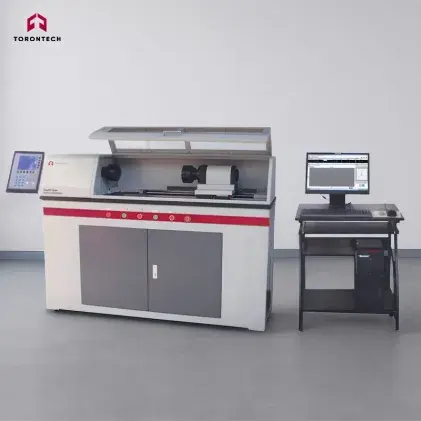
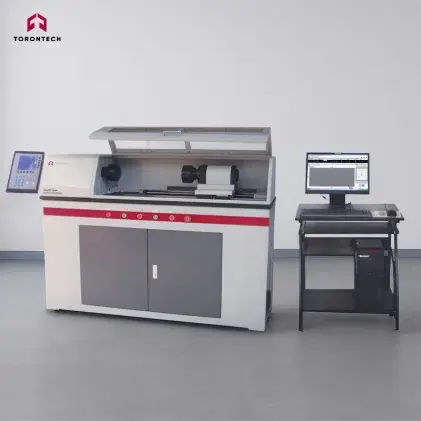
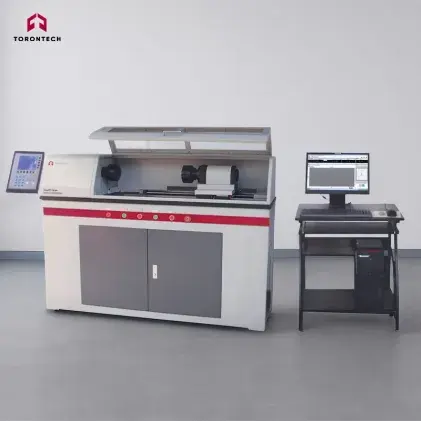
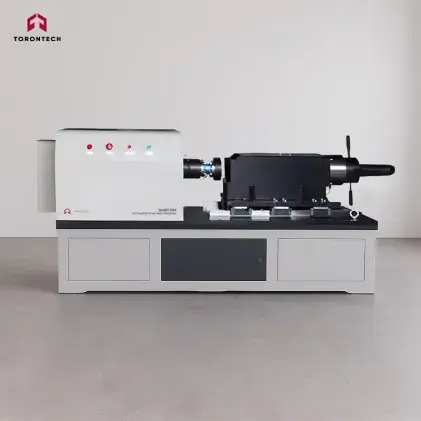
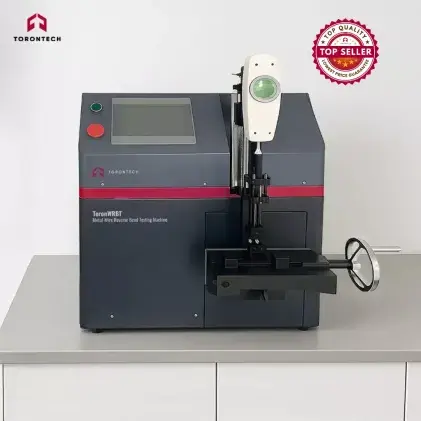
Torsion Testing Machine
Torsion Testing Machines – Reliable Torsion Testers for Metal, Wire, and Fasteners
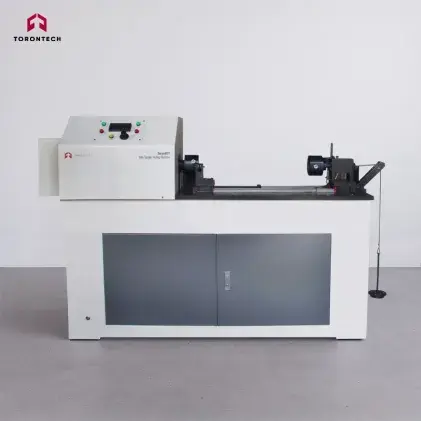
Torontech offers a comprehensive range of torsion testing machines designed to evaluate the mechanical properties of materials subjected to torsional stress. Our torsion testers are widely used in industries such as metal manufacturing, wire production, and fastener testing, providing accurate and repeatable results for quality control and research applications.
Applications of Torsion Testing Machines
Torsion testing is an essential mechanical test used to determine a material's behavior under rotational forces. Industries that rely on torsion testing include:
- Metal Industry - Assessing the torsional strength and ductility of metal rods, bars, and tubes to ensure compliance with quality standards.
- Wire and Cable Industry - Measuring the torsional durability of metallic wires in accordance with ASTM A938, the standard test method for torsion testing of wire.
- Fastener Industry - Evaluating the torque strength and failure resistance of screws, bolts, and other fasteners to ensure durability in real-world applications.
- Automotive and Aerospace - Testing the torsional characteristics of critical components such as shafts, axles, and drive systems for enhanced safety and performance.
- Medical Devices - Verifying the mechanical integrity of medical implants and surgical instruments that experience rotational forces.
- Screws, Bolts, and Nuts - Conducting torsion and torque testing to determine the mechanical strength, durability, and failure resistance of threaded fasteners used in various applications.
Features and Benefits of Torontech Torsion Testers
Torontech's torsion testing machines are engineered for precision, reliability, and ease of use. Our models range from low-capacity systems for fine wire testing to high-capacity testers for industrial applications. Key features include:
- Wide Capacity Range - Machines available for testing from small wires to large industrial components.
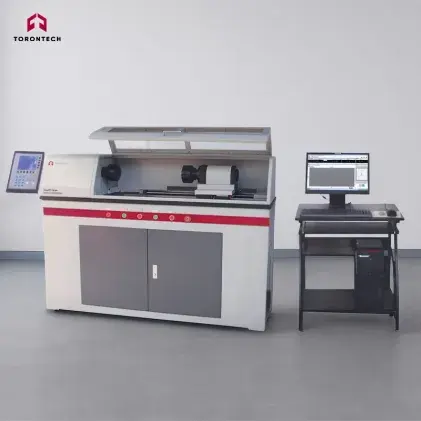
- Customizable Solutions - Tailored designs to meet specific testing requirements, including advanced software integration.
- High Accuracy and Repeatability - Ensuring compliance with industry standards such as ASTM A938.
- User-Friendly Interface - Intuitive controls with automated testing options for enhanced efficiency.
- Robust Construction - Built with high-quality materials for long-term reliability and consistent performance.
Torontech is a trusted provider of torsion testers, delivering advanced solutions that meet the demanding requirements of modern testing laboratories and manufacturing facilities. Our commitment to quality, innovation, and customer satisfaction ensures that our torsion testing machines provide superior performance for a wide range of applications.
A torsion testing machine evaluates materials and finished parts that must resist twisting in service. It is widely used in research, quality control, and product development.
Shafts, Axles, and Drive Components
Measure the torsional strength and stiffness of drive shafts, axles, and rotating parts to confirm they meet design requirements.
Wire and Spring Manufacturing
Test how many twists a wire withstands before failure and qualify spring materials, in line with methods such as ASTM A938.
Medical Devices and Fasteners
Verify the torsional performance of bone screws, drill bits, catheters, and threaded fasteners, where twisting failure can have serious consequences.
Materials Research and Education
Determine the shear modulus and torsional behavior of metals, polymers, and composites for material studies and teaching laboratories.
1. Controlled Torque Application
A motorized drive applies torque at a steady, adjustable rate, which gives smooth loading and repeatable test conditions.
2. Accurate Torque and Angle Measurement
A torque sensor and an angular encoder record the applied moment and the resulting twist precisely, the two values needed to characterize torsional behavior.
3. Shear Modulus Determination
The system builds the torque-angle curve and calculates the shear modulus to ASTM E143, supporting design and quality control.
4. Fixed and Rotating Grips
Self-aligning grips hold cylindrical, tubular, and wire specimens securely to prevent slippage during testing.
5. Test-to-Failure Capability
The machine can twist a specimen all the way to fracture, which reveals torsional strength and ductility, more than elastic stiffness.
6. Data Acquisition and Reporting
Integrated software captures the full test curve and exports results for documentation and traceability.
A torsion testing machine measures how a material behaves when it is twisted. Many components, such as shafts, axles, springs, and wire, carry twisting loads in service, so understanding torsional strength and stiffness is necessary to safe design.
Applying a Controlled Twist
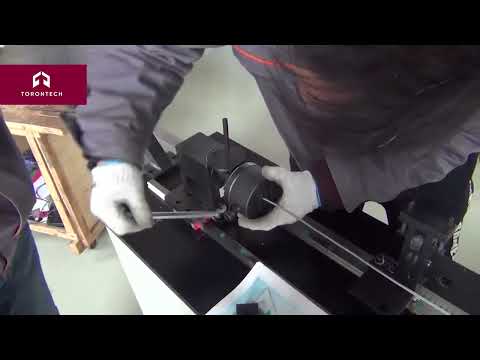
The machine grips a cylindrical or tubular specimen at both ends. One grip is fixed, while the other rotates to apply a steadily increasing torque, which twists the specimen about its axis. A torque sensor measures the rotational force, while an angular sensor or torsiometer measures the angle of twist along the gauge length.
From Torque to Material Properties
The machine plots torque against angle of twist to build a shear stress-strain curve. The slope of the elastic region gives the shear modulus, also called the modulus of rigidity, while continuing to failure reveals torsional strength and ductility. Methods such as ASTM E143 for shear modulus and ASTM A938 for wire define the procedure so results stay consistent across laboratories.