Portable vs Benchtop Haze Meters: Which is Best?
Let’s talk about the real winner in manufacturing: that perfect, glass-like finish that makes customers sit up and take notice. Whether you are crafting car components or simple plastic wrap, hitting that sweet spot of total clarity is how you win the day.
To get those results, you need the right gear. That usually means picking between a rock-solid benchtop unit that occupies your workstation or a handy little gadget you can take directly to the factory floor.
We have put together this quick breakdown of benchtop vs portable haze meters to help you choose the best haze meters for the job.
Key Takeaways
- Standards drive quality: Following global rules like ASTM D1003 and ISO 14782 is the only way to ensure your optical data is legally sound and industry compliant.
- Benchtop units offer ultimate precision: These stationary tools are your best bet for laboratory work, research, and passing strict quality audits where every decimal point counts.
- Portable meters provide floor-level agility: Handheld devices like the ToronHaze TTH-Series let you catch production errors in real time without stopping the assembly line.
- Hybrid setups are often the smartest choice: Many top-tier manufacturers use a mix of both gear types to balance deep lab analysis with quick on-site spot checks.
- Wallet-friendly tech is within reach: Our lineup of innovative testing equipment helps you hit the highest quality levels without blowing your entire yearly budget.
Adhering to International Haze Standards
Before you start shopping for gear, you have got to get a grip on the rules of the road. We are convinced that if you want your business to be taken seriously across the globe, you cannot just buy any old machine. You have got to stick to the official haze standards that everyone in the industry agrees on.
The two big names you will see everywhere are:
- ASTM D1003: The main rulebook for checking how much light gets through and how cloudy transparent plastics are.
- ISO 14782: The international set of instructions for figuring out the blurriness of clear or see-through materials.
Technically, these methods define haze as the specific percentage of light that is scattered more than 2.5° from the incident beam. The way we see it, following these standards is way more than just a boring chore: it is the best way to make sure your stuff looks amazing and works right.
Consider a situation where a supplier loses a huge contract because their clear plastics failed a check by just a tiny fraction. That is the kind of headache we want to help you avoid. To hit those numbers every single time, we are all about using gear that is dead-on accurate so you can stop guessing and start knowing.
Benchtop vs Portable: Analyzing Performance Differences
When it is time to pick your new tool, you have got to know what makes these two styles tick.
Stationary Benchtop Meters: The Precision Standard
These are the big, steady units that live on your workbench. Since they stay in one spot, they give you readings that are remarkably steady and look exactly the same every time you test. These instruments often use 90° scatter setups or integrating spheres to get those deep measurements.
Why they are great:
- Spot-On Accuracy: These are the gold standard for when you need your numbers to be perfect.
- Pro-Level Calibration: These units are often tuned using official standards like Formazin or styrene divinylbenzene beads to keep things exact .
- Handles Anything: You can put almost anything in there: thick glass slabs, thin films, or even jars of liquid.
- Deep Details: These usually have large screens and smart software that does all the math for you.
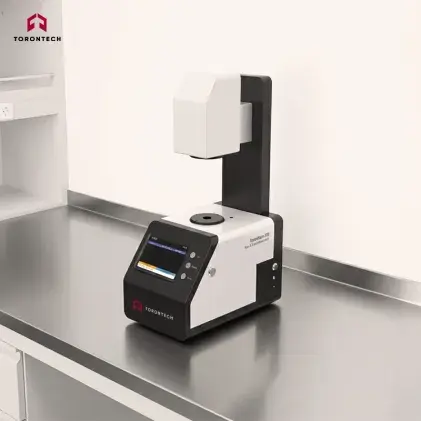
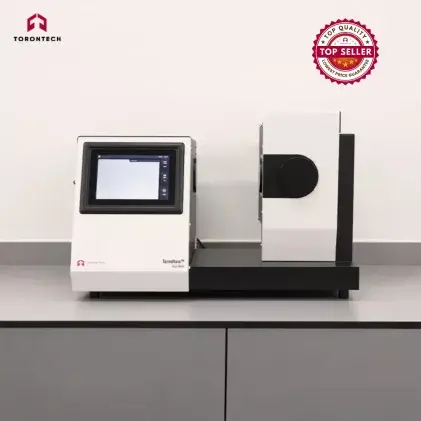
Our Pick: Our ToronHaze™ Haze & Transmittance Meter is built to be a lab superstar, giving you fast, honest numbers while sticking 100% to the official rules.
Portable Haze Meters: On-Site Inspection Efficiency
These bring the lab right to the factory floor. They are small, run on batteries, and are made for checking things on the fly so you do not have to hack your product into bits and carry it across the building.
Why they are great:
- Super Handy: They are light enough to hold in one hand and you can use them right where the work is happening.
- High-Tech Flexibility: Some newer portable tools even use computer-vision tech to check thick glass panels without needing an exposed edge.
- Fix Problems Fast: You can do a quick check while the machines are still running. However, we have noticed that while these are great for in-situ checks, they can sometimes be less sensitive when you are trying to measure extremely low levels of haze.
- Fits Anywhere: Perfect for smaller shops where every inch of table space is precious.
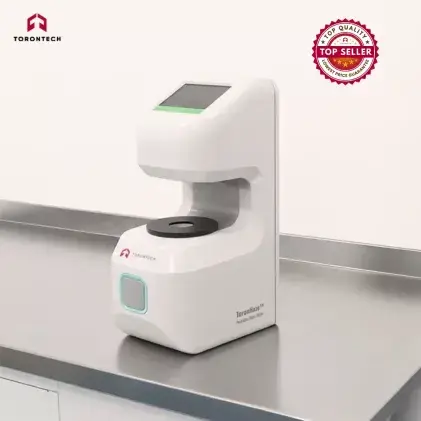
Our Pick: The Portable Haze Meter ToronHaze™ TTH-Series is built for folks who need to move fast but still want their numbers to be right. It has a dead-simple screen for quick testing wherever you are.
Strategic Industrial Applications
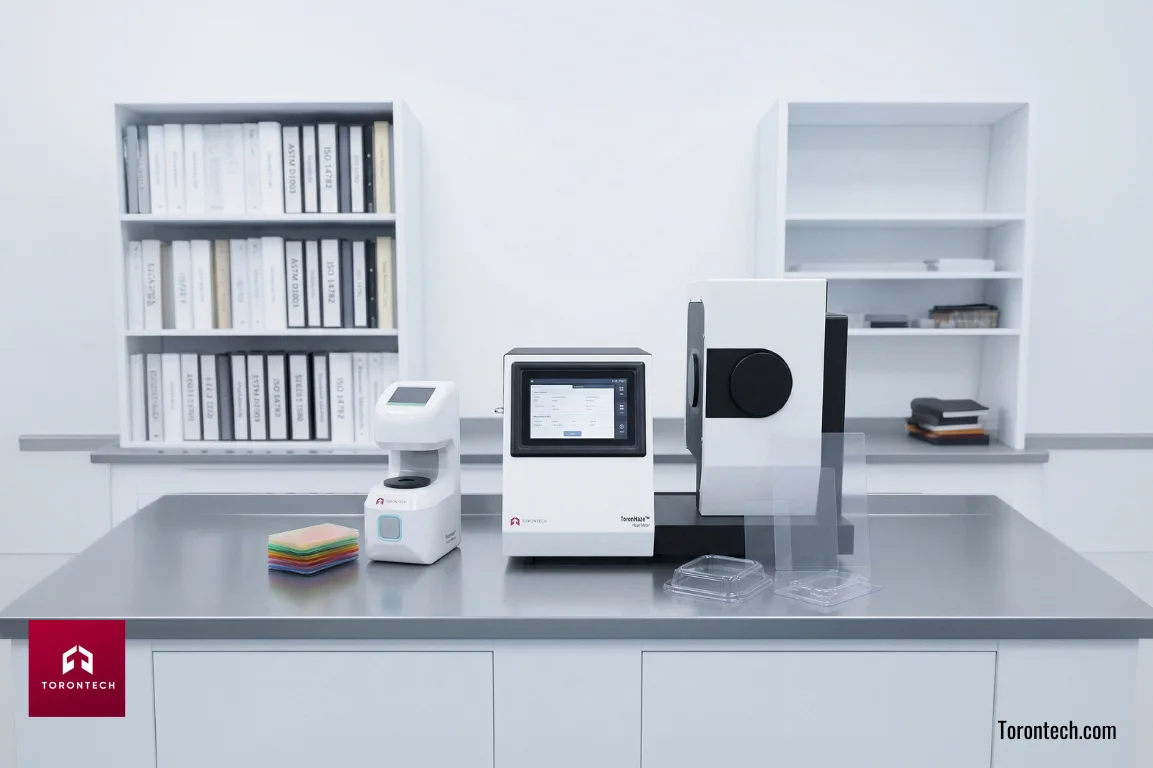
Every shop has its own way of doing things. Based on what is happening in the industry right now, here is how we see these tools being used in the real world:
Wraps and Plastic Films
If you are making food wrap or farm plastics, we usually suggest going with portable haze meters. Think about a plant manager catching a blurry roll of film right as it comes off the line: being able to spot that instantly saves a fortune in wasted material.
Car and Plane Glass
The folks making windshields or cockpit windows almost always stick with benchtop haze meters. We think the life-and-death safety rules in those jobs mean you need the kind of rock-solid precision you only get when testing a sample in a quiet lab environment.
Consumer Electronics
People making phone screens or tablet covers often find that having both is the way to go. We often suggest using imaging-based metrics alongside traditional meters here: these look at things like contrast reduction to get a better handle on how the human eye actually sees the screen.
Solar Panels and Green Tech
When you are building the glass covers for solar cells, we think the big benchtop haze meter is your best friend. Since even a tiny bit of cloudiness can stop the sun from doing its thing, you need that level of precision to make sure every panel is working at its absolute peak.
Bottling and Liquid Storage
For the teams making clear water bottles or see-through jars, we often suggest having a portable haze meter within reach. It’s a great way to do a fast check right by the machines to make sure the plastic looks sheer perfection and hasn't developed any ugly cloudiness during the cooling phase.
Key Technical Criteria for Procurement Selection
When you are weighing portable vs benchtop haze meters, we would tell you to look at more than just the size. To make sure your new kit actually works with your rules, we think you should focus on these bits:
- The Light Bulbs: Make sure the device uses the specific types of light your industry’s haze standards ask for: usually called D65, A, or C.
- The Inside Shape: Different rules need the light to bounce in specific ways. We would tell you to double-check that the machine’s "insides" match exactly what the ASTM or ISO books say.
- The Test Hole: The size of the hole where the light comes out needs to match your samples. Lab units often let you swap these out, while the hand-held ones usually have one size that is great for flat things.
- Saving Your Data: You should not be writing things down with a pencil anymore. In our opinion, you want a screen that is easy to use and ways to send your numbers to your computer so you can keep your records clean.
Portable vs Benchtop Haze Meters: What’s the Verdict?
The whole portable vs benchtop haze meters argument really comes down to where you are working and what you are trying to prove. If you are doing serious science or need to get a stamp of approval from the authorities, we think a benchtop haze meter is the only way to go. It has that "do-not-budge" accuracy that keeps you safe from mistakes.
On the flip side, if you just need to make sure things look good while you are moving fast on the floor, a portable haze meter gives you the freedom and speed you are looking for. Honestly, we have noticed that the smartest companies usually do a bit of both: keeping a big unit in the lab for the final word and handing out portable ones to the crew on the floor for everyday checks.
Trust Torontech for Your Next Haze Meter Setup
Getting your haze numbers right is what keeps your brand's name solid. As a team based right here in North America, we at Torontech are all about giving you smart, wallet-friendly tech that gets the job done without a fuss. By using our gear, you can stop squinting at your products and start using real data that follows the global rules.
Ready to see things a bit more clearly? We would love for you to take a look at our full lineup of Color, Paint, and Coating Test Equipment, including our ToronHaze™ gear. Give our friendly team a shout today and let’s find the right fit for your shop.
References:
- Buckee, G., Morris, T., & Bailey, T. (1986). Calibration and evaluation of haze meters. Journal of The Institute of Brewing, 92, 475-482.
- Billmeyer, F., & Chen, Y. (1985). On the measurement of haze. Color Research and Application, 10, 219-224.
- Hwang, J., & Baek, Y. (2025). Spectrophotometer-employed method for measuring luminous transmittance and haze. Metrologia, 62.
- Luna-Navarro, A., Brembilla, E., De La Barra, P., Moreau, L., & Overend, M. (2024). Luminance-based methodology for assessment of low level haze in glazing. Glass Structures & Engineering, 9, 671 - 683.
- Busato, S., & Perevedentsev, A. (2018). A simple imaging-based technique for quantifying haze and transmittance of materials. Polymer Engineering and Science, 58, 345-352.
- Busato, S., Kremer, D., & Perevedentsev, A. (2021). Imaging‐Based Metrics Drawn from Visual Perception of Haze and Clarity of Materials. I. Method, Analysis, and Distance‐Dependent Transparency. Macromolecular Materials and Engineering.
- Casas, G., Marcipar, J., & Betanzos, A. (2024). A Portable Technology for Measuring Haze Levels in Thick Laminated Glass Panels. Challenging Glass Conference Proceedings.