Grinder Polisher Guide: Central vs Individual Force
If your sample preparation isn't right, the quality of your entire analysis is at risk. It’s the foundational step in metallography that many labs rush, but a poor finish can easily obscure the true story of your material.
Getting it right comes down to a choice between two primary methods for the job: central force and individual force.
Key Takeaways
- Central force polishing delivers superior flatness and edge retention which makes it the standard for failure analysis and exacting R&D work.
- Individual force polishing prioritizes speed and flexibility by allowing operators to remove and inspect single samples without stopping the machine.
- Setup times differ significantly as central force requires leveling a sample holder while individual force uses a faster loading mechanism.
- Long-term costs are often lower with central force because the fixed sample motion promotes even wear on grinding paper and polishing cloths.
- Selecting the right equipment depends on your specific workflow needs, and Torontech offers specialized models like the GP-2CT and GP-2A to match those requirements.
Why Flaws in Polishing Can Undermine Your Results
We've seen countless metallographic analyses skewed simply because these two details were overlooked.
- Flatness Is a Non-Negotiable: If a sample isn't perfectly flat, getting a consistently clear image under the microscope is nearly impossible. This can lead to unreliable readings in automated hardness testing or image analysis, creating problems with data you need to trust.
Edge Retention Is Critical: For many applications, the most important information is found at the very edge of the sample. When a polishing method creates a rounded edge—and experienced lab technicians know this issue all too well—you can lose the most critical evidence. For example, trying to measure the hardened case depth on a gear with a rounded edge can lead to an inaccurate reading, potentially causing a critical component to fail in the field.
Related article: Key Differences Between Grinding & Polishing (Metallography)
Central Force: The Standard for High-Precision Work
When your application demands the highest degree of flatness and edge retention, central force is the go-to method. This approach applies a single, consistent pressure across the entire sample holder, securing all the specimens in place to prevent any tilting and ensuring they are all ground and polished on the exact same plane.
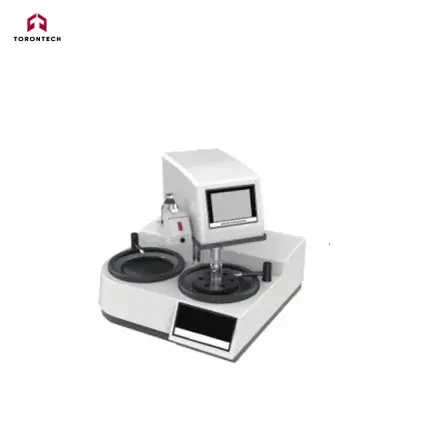
We often recommend the ToronPol GP-2CT Series for these exacting standards. Its specialized central loading system locks samples in for an exceptional finish—you get a surface that is truly flat and an edge with maximum retention, making the entire surface clean and usable, right to the very edge.
Best Used For:
- Failure Analysis: Where seeing the material's structure at the point of origin is essential, such as examining a crack initiation site on a failed bolt.
- Coating and Weld Inspection: For accurate measurements of layers and interfaces, like verifying the thickness of a thermal spray coating on a turbine blade.
- Harder Materials: An excellent choice for preparing challenging materials like ceramics, tool steels, and composites that require a pristine, deformation-free surface.
- SEM Preparation: When surface topography needs to be as close to perfect as possible for high-magnification imaging.
Individual Force: The Choice for Speed and Flexibility
For labs where high throughput and operational flexibility are top priorities, individual force is a highly effective solution. With this method, each sample is held by its own piston, which applies pressure independently.
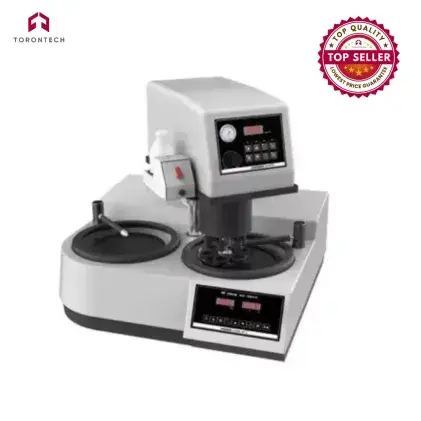
This is where the ToronPol GP-2A Series really shines. Its main benefit is the ability to remove a single sample for inspection without interrupting the entire polishing cycle. For busy labs, this flexibility can be a significant workflow improvement, saving valuable time.
Best Used For:
- High-Volume Quality Control: Ideal for quickly processing large batches of standardized samples, like performing daily grain size checks on dozens of aluminum pucks.
- Softer Materials: Works very well for materials like copper alloys and low-carbon steels that are less demanding to prepare.
- Processing Samples of Varied Heights: It more easily accommodates a batch of samples that aren't uniform, which is useful when dealing with raw or unevenly cut specimens.
The Hidden Workflow Difference: Fixturing and Setup
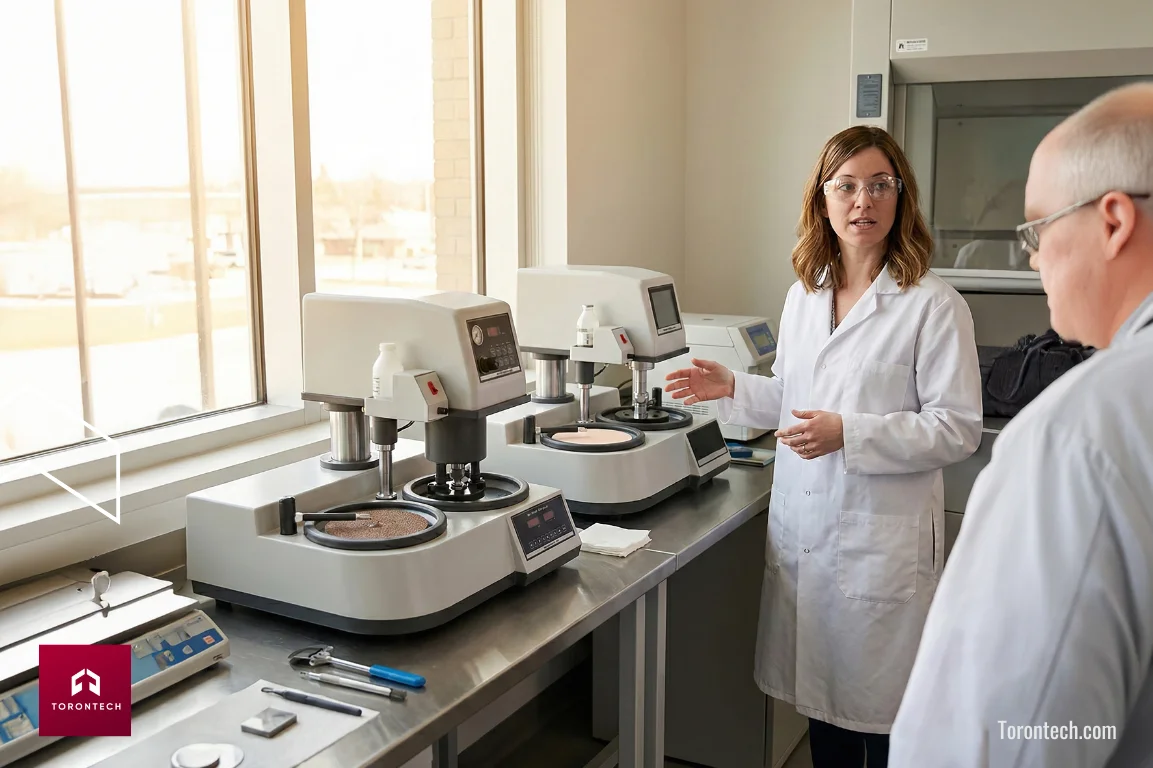
Beyond just the results, we have to talk about how these methods change your daily routine. The setup process is a major differentiator that often gets ignored until the machine actually lands in your lab.
- Central Force Requires Discipline: Because you are locking multiple samples into a single plane, you generally need to load them into a specific holder and, in many cases, use a leveling device before you even touch the grinder. It adds a step to the process.
- Individual Force is "Drop and Go": This is the user-friendly option. You don't need to balance a holder or worry about leveling. You simply place the sample in the slot and hit start.
Consumable Longevity: Where Your Budget Goes
Since we pride ourselves on cost-effective solutions, we should mention how these methods affect your ongoing costs—specifically, your grinding paper and polishing cloths.
Central force is generally more economical with consumables. Because the fixed holder sweeps the samples across the entire radius of the wheel in a controlled pattern, you get very even wear on your grinding surfaces. Individual force, if not set up correctly, can sometimes cause "tracking" or uneven wear on the pads, which might mean you’re throwing away polishing cloths a little faster.
Related article: Polisher Grinder Guide: Manual, Semi, or Auto
Quick Comparison: Which Fit is Right for You?
| Feature | Central Force | Individual Force |
|---|---|---|
| Pressure Application | Applied to the entire sample holder | Applied to each sample independently |
| Flatness & Edge Retention | Superior (The "Gold Standard") | Good (Sufficient for routine QC) |
| Flexibility | Lower (Must process full batch) | High (Inspect/remove single samples) |
| Setup Time | Slower (Requires leveling) | Fast ("Drop and go" simplicity) |
| Consumable Efficiency | High (Even wear patterns) | Moderate (Risk of uneven tracking) |
| Recommended Torontech Model | ToronPol GP-2CT Series | ToronPol GP-2A Series |
Making the Right Choice With Torontech
The choice between these two methods isn't about a clear winner, but about using the right tool for the job in front of you.
Don't let sample preparation be a point of weakness in your analytical process. We invite you to explore our full collection of Metallography Grinding and Polishing Equipment.
Contact our technical team today to discuss your specific needs and find the perfect solution for your lab.
References
- Li, B., Dai, C., Ding, W., Yang, C., Li, C., Kulik, O., & Shumyacher, V. (2020). Prediction on grinding force during grinding powder metallurgy nickel-based superalloy FGH96 with electroplated CBN abrasive wheel. Chinese Journal of Aeronautics.
- Jamshidi, H., & Budak, E. (2020). An analytical grinding force model based on individual grit interaction. Journal of Materials Processing Technology, 283, 116700.