Benchtop vs Portable Spectrophotometer: How to Choose?
Getting color wrong is a remarkably expensive mistake, routinely leading to entirely rejected batches and incredibly frustrating production delays.
The obvious solution is securing a dependable spectrophotometer, but the genuinely critical choice is deciding which specific kind you actually need: a heavy, stationary unit for the testing laboratory, or a highly flexible handheld model for the noisy factory floor?
This guide completely cuts through the overwhelming technical jargon, specifically focusing on the highly practical, real-world differences between a portable vs benchtop spectrophotometer to help you make an exceptionally smart financial investment for your facility.
Key Takeaways
- Laboratory units set the ultimate standard: Stationary spectrophotometers provide the absolute highest level of reading consistency, making them the definitively correct choice for creating master color targets in a controlled, quiet testing room.
- Handheld devices offer exceptional mobility: Portable color readers bring the entire testing process directly to the active factory floor, allowing your shift workers to inspect massive, heavy, or fully assembled items without taking a single thing apart.
- Both options deliver incredible dependability: While stationary laboratory machines still hold the top spot for pure spectral quality, modern portable models easily produce highly dependable results that completely satisfy strict daily inspection requirements.
- Your daily work routine dictates the final choice: Picking the correct piece of testing gear relies entirely on where your team physically works, the actual shape of the materials you manufacture, and the specific financial budget you have available to spend.
The Laboratory Standard: Benchtop Spectrophotometers
Think of the benchtop spectrophotometer as the definitive, unquestionable authority on accurate color within a highly controlled setting. It’s the fixed, remarkably stable piece of equipment in the testing room that constantly serves as the final word on what a specific color specification truly is.
If your team is aggressively developing a brand new color formulation from the ground up, this is the exact instrument you absolutely must rely on for absolute, unvarnished truth.
Delivers Reference-Grade Accuracy
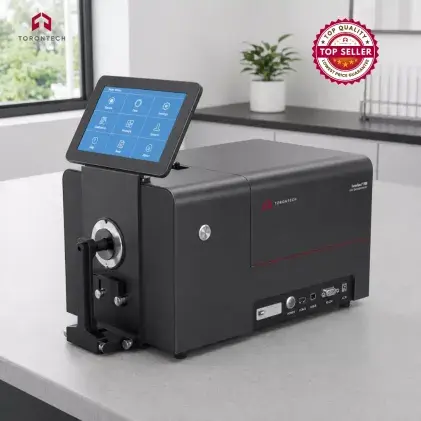
These heavy-duty machines feature highly superior internal optics and larger components, meaning they consistently provide the most accurate readings possible. While some portable units have become highly advanced, benchtop systems remain the gold standard for highest precision and spectral quality.
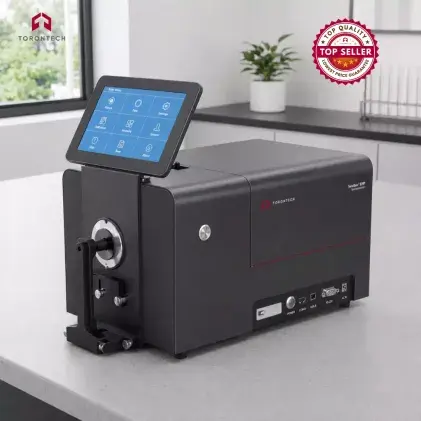
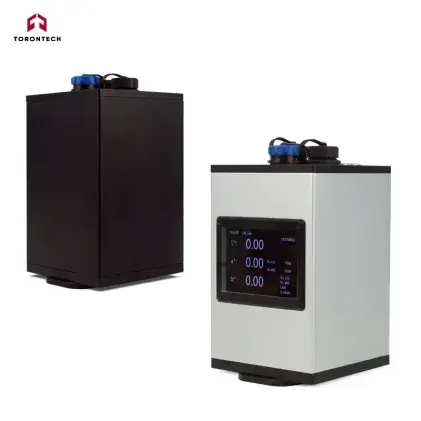
Models like our High Precision Benchtop Color Spectrophotometer, the ToronSpec™ 800 Series, are the correct tools for creating the master "golden sample" that all future production lines must follow.
Handles a Wide Range of Sample Types
Benchtops are built for incredible, everyday versatility. Loose powders, runny liquids, extremely thick pastes, transparent films, and fully opaque solids are all things a stationary benchtop can handle.
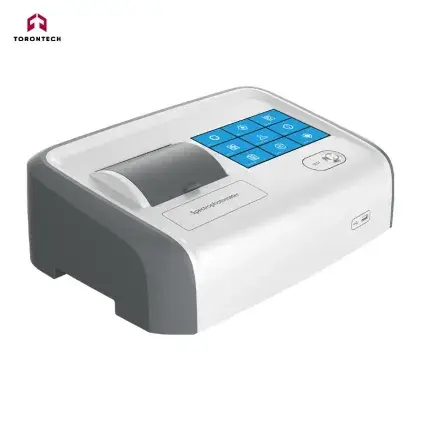
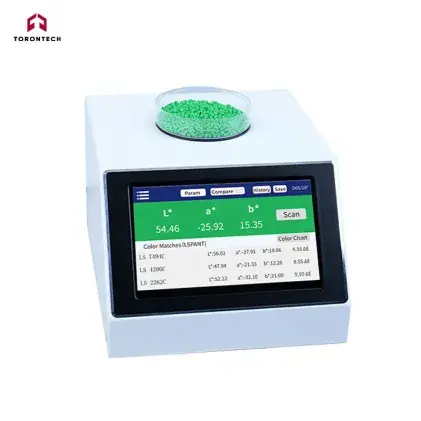
Our Benchtop Spectrophotometer ToronSpec™ 820P, for instance, is specially manufactured to measure both transmissive and reflective materials with exceptionally high precision.
Operates in a Controlled Space
Because it securely remains stationed in a clean, quiet lab, its highly sensitive readings aren't thrown off by frustrating production floor variables like floating dust particles, sudden temperature shifts, or heavy machinery vibrations. This effortlessly ensures maximum consistency day in and day out.
Ideal for: Dedicated research facilities, primary quality assurance hubs, and any brightly lit workspace tasked with establishing fresh color benchmarks. Think of a commercial beverage maker needing to aggressively lock down the exact, vibrant shade of a newly formulated sports drink.
A benchtop handles that liquid sample completely effortlessly. For notoriously tricky industries like Food & Beverage or Cosmetics, dedicated units like our Liquid Color Spectrophotometer, the ToronSpec™ TT-LC2, or the highly specialized Coffee Spectrophotometer & Colorimeter, CafféSpectra™, remove the agonizing guesswork from evaluating daily samples.
The On-the-Floor Solution: Portable Spectrophotometers
A portable spectrophotometer effectively takes the remarkably precise measurement capabilities of the quiet lab and places them directly at the loud, bustling point of production. The powerful ability to decentralize testing procedures and get instant, reliable feedback right on the factory floor has been a massive improvement in modern quality control.
Brings the Measurement to the Sample
For bulky, incredibly heavy, or already-installed items like massive steel automotive panels or fully assembled office furniture, you simply cannot take a physical piece to the lab. A portable unit easily allows you to grab a highly accurate reading absolutely anywhere you happen to be standing.
Built for Speed and Efficiency
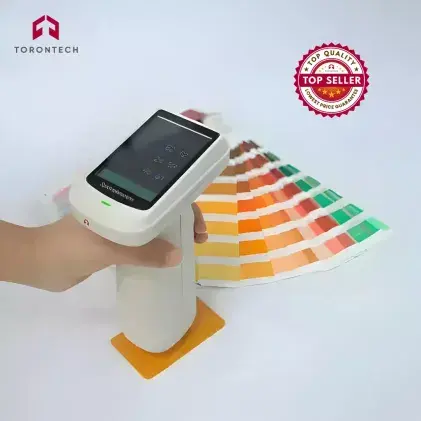
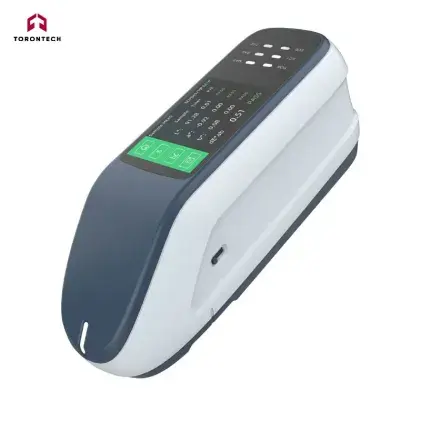
With incredibly simple, straightforward interfaces (like the one on our Portable Color Spectrophotometer, the ToronSpec™ 700D) these capable devices allow busy factory operators to perform fast pass/fail checks in real time.
Recent studies confirm that portable spectrometers can achieve accuracy comparable to benchtop devices for many on-site applications, such as the rapid quality assessment of food products.
Requires No Dedicated Space
In a busy, highly crowded facility where open floor and counter space is at an absolute premium, a portable unit offers a genuinely massive advantage. It gets tucked securely into a padded protective case the very moment you are finished using it.
Ideal for: Actively checking raw materials as they hit the busy loading dock, doing quick visual verifications directly on the moving assembly belt, and confidently signing off on finalized, completed merchandise. It’s the standard-issue gear for the Automotive, Furniture, and Architectural sectors.
For these exact situations, the Portable Spectrophotometer Colorimeter, the High Precision ToronSpec™ 23/25/26D Series, does a genuinely phenomenal job of grabbing highly dependable readings on the fly.
A Direct Comparison: How They Stack Up
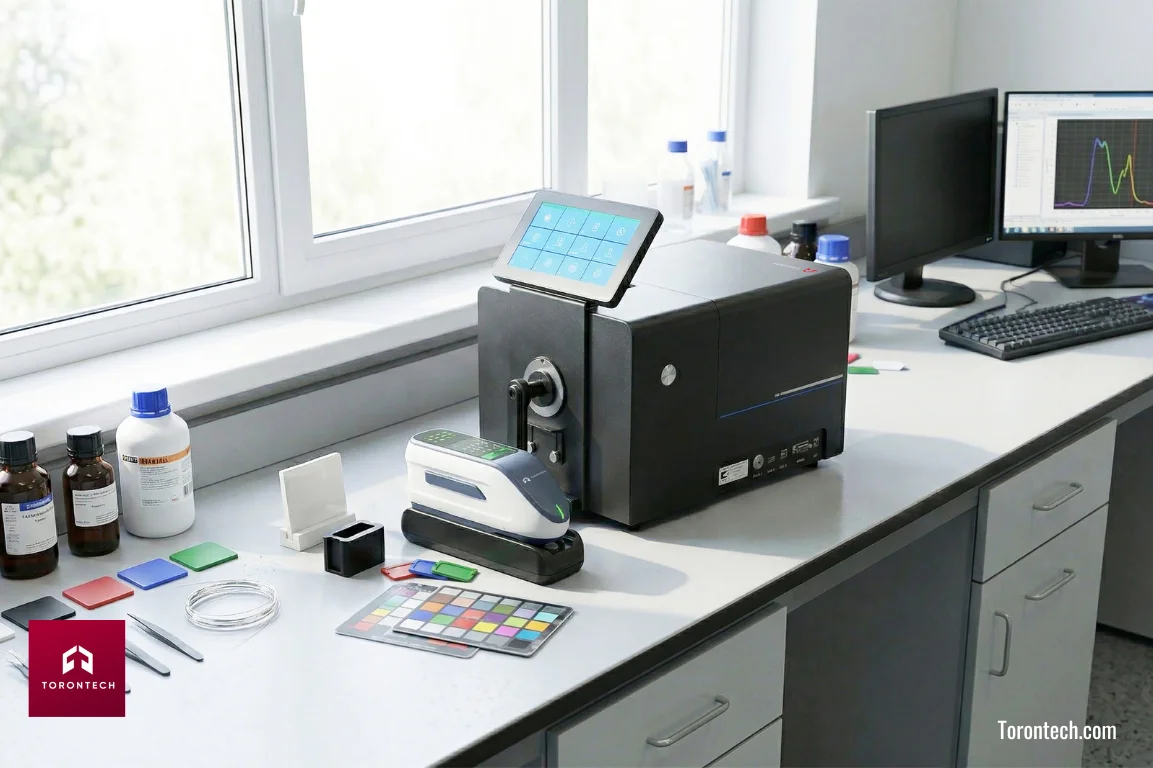
Here is a straightforward, highly logical look at how the two distinct types of testing instruments directly compare across the specific areas that matter most to commercial buyers.
| Attribute | Benchtop Spectrophotometer | Portable Spectrophotometer |
|---|---|---|
| Precision Level | The highest possible; the definitive reference standard. | Very high; strictly built for daily quality control and fast verification. |
| Sample Handling | Liquids, powders, thick gels, transparent & opaque solids. | Opaque solids, exceptionally large items, and oddly curved surfaces. |
| Work Environment | Stationary; absolutely requires a clean lab and a permanent power outlet. | Mobile and highly flexible; battery-powered for immediate use anywhere. |
| Best Suited For | A highly controlled, completely quiet laboratory or research center. | The loud factory floor, a incredibly dusty warehouse, or out in the active field. |
| Typical Investment | A significantly higher capital equipment expenditure. | A considerably lower upfront cost and far easier to budget for multiple units. |
A Note on Budgeting: The choice between models often depends on the specific application requirements and the necessary trade-offs between convenience and analytical rigor.
While benchtops represent a larger initial investment, the financial return from preventing a single rejected manufacturing batch often justifies the cost. Conversely, a highly accessible price point of handheld portables allows businesses to deploy multiple units, creating a comprehensive safety net of quality coverage.
Key Technologies and Specifications
Beyond the external physical shape of the testing device, the highly advanced technology securely hidden inside is what actually drives the daily performance. While wireless data connectivity is a genuinely fantastic convenience, we consistently find that the absolute most critical technical choice is perfectly matching the instrument's measurement setup to your highly specific manufactured products.
How the Machine Observes Color (d/8° vs. 45°/0°)
Most heavy benchtops feature a d/8° setup, which does a genuinely brilliant job of properly capturing the true, underlying color data, regardless of how noticeably bumpy or aggressively rough the surface actually feels. Handheld models might use d/8° or a 45°/0° optical arrangement.
To put this vividly into perspective: if you are critically evaluating a highly glossy promotional brochure placed directly next to a deeply textured plastic car dashboard, a 45°/0° portable frequently does a significantly better job of seeing the color exactly as a highly critical human customer would naturally perceive it under normal, everyday store lighting.
Data Management
Any truly professional-grade spectrophotometer will easily and reliably connect to a desktop computer. This is absolutely essential for securely logging massive amounts of data, accurately tracking color trends over incredibly long periods, and automatically generating highly official Certificates of Analysis.
Compliance with Standards
Your chosen instrument must thoroughly and completely conform to incredibly strict international standards like CIE, ISO, ASTM, and DIN. This reliably serves as your ironclad, indisputable assurance that its daily measurements are genuinely accurate and will be readily accepted by your paying clients.
How to Choose the Right Spectrophotometer
To make the absolute smartest financial decision, you genuinely need to look directly past the incredibly dense technical spec sheets and carefully consider these five highly practical, daily operational questions:
Where will the testing actually happen?
If measurements absolutely need to be taken continuously on a highly active production line, a handheld portable or even a fully automated Non-Contact Color Spectrophotometer (Online Color Sensor) is the incredibly obvious, highly practical choice.
If all of your critical testing is conducted in a highly dedicated, remarkably quiet QA lab, a stationary benchtop is clearly the vastly superior instrument.
What kind of materials are you actually testing?
If your daily work routine consistently involves inspecting massive aluminum extrusions or heavily textured commercial flooring, you absolutely need the sheer mobility of a portable device. For highly textured or patterned items, something specifically engineered like the Large Aperture Colorimeter, the ToronSpec™ LA, works absolute wonders.
On the flip side, if you are actively running a cosmetics laboratory frantically trying to nail down the exact, perfect shade of a thick liquid foundation paste, you will absolutely require the highly specialized holding fixtures that only a heavy benchtop provides.
Who will be the primary operator?
In our professional, day-to-day experience, daily user usability is a remarkably massive operational factor. Benchtops are typically operated by highly trained, exceptionally educated lab technicians.
Modern portables, featuring incredibly intuitive, brightly lit touch interfaces, easily allow average production floor staff to successfully perform precise, accurate checks with incredibly little training.
What are your volume and speed requirements?
If your incredibly busy manufacturing process forcefully demands dozens or hundreds of incredibly quick, rapid-fire visual checks per shift, the incredible speed and total mobility of a handheld portable are absolutely essential.
Is a hybrid approach the best solution?
For many incredibly serious, remarkably high-volume manufacturing operations, the absolute final answer is often not choosing one or the other, but actively using both.
The most highly effective quality programs frequently use a benchtop in the laboratory to permanently set the official, entirely undisputed color standard, while portables are routinely handed out on the factory floor to firmly guarantee that daily, ongoing production consistently meets that exact standard.
Find the Right Spectrophotometer at Torontech
Choosing the right spectrophotometer for your workflow is a direct investment in your product quality, waste reduction, and bottom line.
At Torontech, we believe world-class equipment should be accessible. As a leading North American supplier, we provide cost-effective solutions powered by innovative technologies, bridging the gap between high-end lab gear and realistic budgets. Our ToronSpec™ Series meets strict ISO, CIE, and ASTM standards, ensuring you get a fantastic return on your investment.
Ready to completely improve your color measurement process? Explore our comprehensively full line of remarkably accurate spectrophotometers today, or simply contact our highly dedicated team of industry experts for a highly personalized consultation.
References:
- González-Martín, M., Escuredo, O., Hernández-Jiménez, M., Revilla, I., Vivar-Quintana, A., Martínez-Martín, I., & Hernández-Ramos, P. (2020). Prediction of stable isotopes and fatty acids in subcutaneous fat of Iberian pigs by means of NIR: A comparison between benchtop and portable systems. Talanta, 224, 121817.
- Hernández-Jiménez, M., Revilla, I., Vivar-Quintana, A., Grabska, J., Beć, K., & Huck, C. (2024). Performance of benchtop and portable spectroscopy equipment for discriminating Iberian ham according to breed. Current Research in Food Science, 8.
- Hutengs, C., Ludwig, B., Jung, A., Eisele, A., & Vohland, M. (2018). Comparison of Portable and Bench-Top Spectrometers for Mid-Infrared Diffuse Reflectance Measurements of Soils. Sensors (Basel, Switzerland), 18.
- Kaur, H., Künnemeyer, R., & McGlone, A. (2017). Comparison of hand-held near infrared spectrophotometers for fruit dry matter assessment. Journal of Near Infrared Spectroscopy, 25, 267 - 277.
- Khongkaew, P., Cruz, J., Bertotto, J., Cárdenas, V., Alcalà, M., Nuchtavorn, N., & Phechkrajang, C. (2022). A Comparative Study of Benchtop and Portable NIR and Raman Spectroscopic Methods for the Quantitative Determination of Curcuminoids in Turmeric Powder. Foods, 11.
- Kirchler, C., Pezzei, C., Beć, K., Mayr, S., Ishigaki, M., Ozaki, Y., & Huck, C. (2017). Critical evaluation of spectral information of benchtop vs. portable near-infrared spectrometers: quantum chemistry and two-dimensional correlation spectroscopy for a better understanding of PLS regression models of the rosmarinic acid content in Rosmarini folium. The Analyst, 142(3), 455-464.
- Mokere, R., Ghassan, M., & Barra, I. (2024). Soil Spectroscopy Evolution: A Review of Homemade Sensors, Benchtop Systems, and Mobile Instruments Coupled with Machine Learning Algorithms in Soil Diagnosis for Precision Agriculture. Critical Reviews in Analytical Chemistry, 55, 1304 - 1323.
- Soares, J., Abich, J., Da Silva, I., Santos, R., Ferrão, M., Helfer, G., & Costa, A. (2025). Sustainable Analytical Process for Direct Determination of Soil Texture and Organic Matter Using NIR Spectroscopy and Multivariate Calibration. Processes.