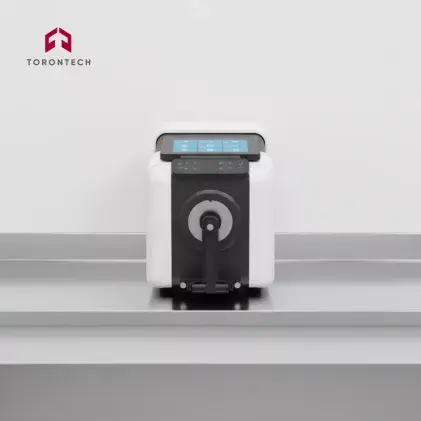
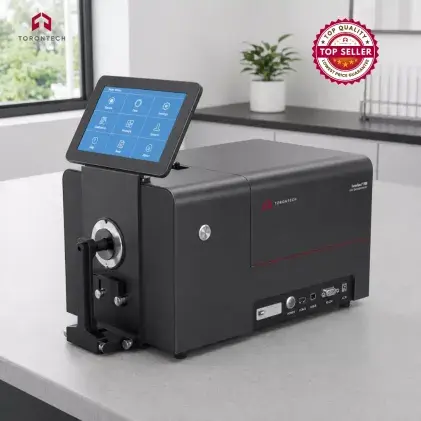
Benchtop Spectrophotometer: Get Sheer Color Perfection
Who wouldn't want to be 100% certain that every single item rolling off the production line looks exactly the way it's supposed to?
At Torontech, we’re just going to say it: these sturdy, lab-stationed color measuring gadgets give you that level of pinpoint accuracy that turns a "maybe" into a "definitely" for your brand’s biggest wins. By grabbing some top-tier Color, Paint & Coating Test Equipment, we know you’ll feel totally relaxed about your quality checks, making your whole operation run like a dream with zero mistakes.
Key Takeaways
- Mind-Blowing Accuracy: These heavy-duty workstations give you those nubbly bits of data that are totally objective, seeing things your own eyes would miss by a mile.
- The Big Anchors: These stay-put lab units act as the main boss machines that make sure every other gadget in your global factories is singing the same tune.
- Tools for Every Job: They are absolutely vital for keeping things consistent in spots where "close enough" just won't cut it, like car paint, fancy fabrics, or even the food on your plate.
- Smart Tech Inside: The high-end models use clever twin light paths and 1nm grating bits to stay perfectly in line with those strict international rules like ISO and ASTM.
Fundamentals of Color Science
Down at the very heart of getting your colors spot on is the science of how light behaves. In our view, getting the most out of these stationary machines means getting a handle on the basic ways light and matter play together.
Spectrophotometry vs. Colorimetry
Spectrophotometry is a super smart scientific way of seeing exactly how a liquid or solid sucks up or lets through light at very specific points in the rainbow. While basic color checking is mostly about how humans see things through simple filters, we think checking the full light spectrum is the way to go because it looks at every single wavelength to get a perfectly precise map of a sample.
To explain it simply, we often say a basic color checker is like a standard phone camera that just sees red, green, and blue. A spectrophotometer is more like a high-end prism: it measures the exact strength of every single tiny bit of light bouncing off a surface.
Related article: Colorimeter vs Spectrophotometer: Key Technical Insight
In our professional opinion, having this much data is a total necessity for spotting those weird moments where two reds look identical in the sun but look completely off under the buzzing lights of a grocery store.
Principles of Color Measurement
One of these machines works by hitting a sample with a perfectly tuned beam of light and catching exactly how much of it bounces back or travels through. We’re huge fans of this method because it’s way more sensitive and fair than just having a human look at it, which helps lab teams spot tiny shifts much earlier and with way better precision.
By slicing that light up into individual bits, the machine figures out the exact math coordinates that tell you what that color really looks like.
Interpreting Color Analysis Data
Grabbing the data is only the first bit: we’re convinced that actually knowing what those numbers mean is where the real magic happens for the teams checking your quality.
Understanding Metrics and Specifications
The data you get from these machines usually shows up as a bunch of math points like CIELAB (L*, a*, b*) or a difference score called ΔE. These little numbers tell you exactly how much a color has shifted, which is a massive help for things like matching the shade of a new tooth crown or seeing if a material is staying stable over time.
We think that knowing these numbers helps the pros judge a color without any of that "well, it looks okay to me" guesswork getting in the way.
Analyzing Color Strength and Variance
A massive part of the job is figuring out the gap or Delta E (ΔE) between what you have and what you want. A tiny gap means you’re spot on, but a big gap means something has gone sideways in your process.
Just to give you a real-world idea, a ΔE of 1.0 is pretty much the smallest shift a human could ever notice. In a high-stakes world like making cars, we think a ΔE of 2.0 on a car door would be a total disaster, possibly leading to a whole batch of paint being tossed in the bin.
But for something like a cardboard box for cereal, a ΔE of 3.0 might be perfectly fine and nobody would ever notice.
Data-Driven Decision Making
By setting really tight rules for what’s allowed and keeping a close eye on the machine's data, we’re certain that companies can make smart, fast choices about their products. This lets makers catch bad materials before they even start the machines, saving a mountain of cash and keeping the final product looking sheer perfection.
Benchtop vs. Portable: Selecting the Right Configuration
When you’re setting up a quality lab, we see folks constantly weighing the big stationary units against the handy little click-and-go gizmos. Here’s the short version:
- Portable Spectrophotometers: These are the way to go for checking things on the fly or doing quick spot-checks on the factory floor. Machines like our ToronSpec™ 700D or the ToronSpec™ 23/25/26D Series give you great data right where the action is happening.
- Benchtop Spectrophotometers: These are the preferred choice because they are built to last and give you those perfectly repeatable results in a controlled lab spot. We see these as the "Main Boss" units that keep everyone else's data in line across the whole globe.
Want to see a much deeper look at which one fits your specific vibe? Check out our full, in-depth guide: Benchtop vs Portable Spectrophotometer: How to Choose?
Advantages of Benchtop Instrumentation
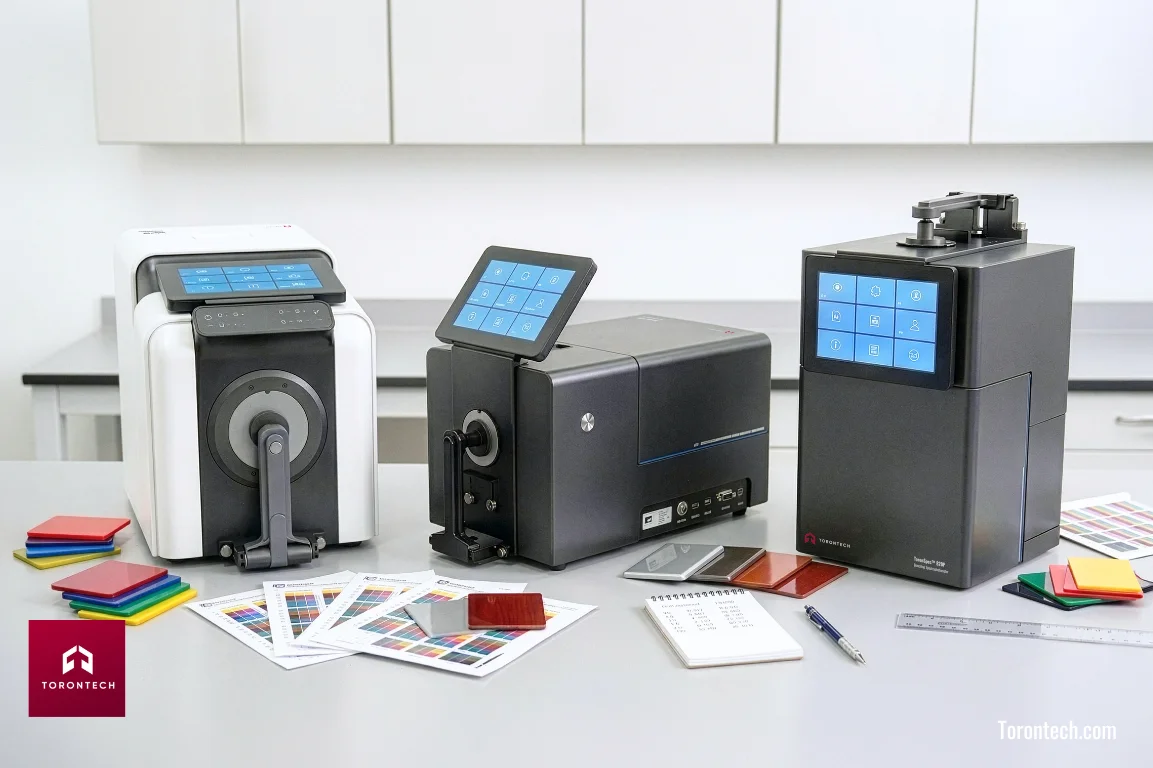
We’re convinced that these lab-based machines have some massive edges over simpler tools because they do a way better job of picking out single colors and handling a mountain of work without breaking a sweat.
Precision in Laboratory Environments
These machines give you results that stay the same every single time you hit the button. Plus, we’ve found that these big models don't really care who is pushing the button or what the room lighting looks like, which keeps your data super trustworthy for your research.
Key Industrial Applications
In our view, these gadgets are absolute must-haves for all sorts of different businesses:
- Paint and Coatings: Totally essential for getting your paint recipes exactly right. For a lab that’s got everything it needs, we suggest pairing these with our Gloss Meters and that Light Booth / Color Matching Cabinet TT-M60 you'll find in our full color and paint testing portfolio.
- Textiles and Apparel: Helps fashion brands make sure their dyes are matching up perfectly across thousands of shirts.
- Plastics and Polymers: Vital for checking the color of little plastic beads or finished parts. We think this is a huge deal for making sure the "appliance white" on a thermostat matches the wall paint without looking cheap or yellowed.
- Food and Beverage Quality Control: These units can check the color and cloudiness of things like juice or cooking oil. A classic example would be using something like the ToronSpec™ TT-LC2 Liquid Color Spectrophotometer to see the exact golden glow of a beer, or using the CafféSpectra™ to get that coffee roast satisfyingly spot on.
International Standard Compliance (ISO/ASTM)
For companies selling all over the world, we think playing by the rules is a total necessity. Our industrial-grade machines are built to satisfy those big international standards like CIE No.15, ISO 7724/1, ASTM E1164, and DIN 5033 Teil7, so you can be sure your data will be accepted by anyone, anywhere.
Torontech’s Laboratory Solutions
Our top-tier models, like the ToronSpec™ 800 Series and the ToronSpec™ 820P, are the real deal for a modern lab. We’ve built these machines to give you that level of accuracy and consistency that just doesn't quit.
Twin Light Paths and Balancing Technology
Our setups use some very clever twin light paths and our own special balancing engines to watch both the sample and the light bulb at the same time, making sure everything stays rock solid even if you're testing all day long.
1nm Grating Performance
We think our 1nm grating tech is a massive deal because it catches the tiniest bits of light data, spotting color shifts that cheaper machines would completely miss.
Automated Calibration Features
We’ve put in automatic calibration bits that stop people from making mistakes and get the machine ready to go in no time, so you know it’s always hitting the mark.
Read more: How to Calibrate Spectrophotometer for Pinpoint Accuracy
Versatile Sample Handling
Machines like the ToronSpec™ 820P are built to check light bouncing off or shining through. With big chambers and special models like the ToronSpec™ LA (Large Aperture Colorimeter) for bumpy materials, our lineup handles everything from solid blocks to messy liquids.
In our view, being able to jump from checking how clear a medicine is to checking the shine on a ceramic tile is a huge win for any busy lab.
Data Management and Reporting
Coupled with easy-to-use screens and some seriously good data saving, our machines make the whole process a breeze and spit out reports in a flash.
Achieving Color Success with Torontech
We’re totally convinced that getting your colors sheer perfection is a huge part of protecting your brand’s name and stopping wasteful mistakes. By putting a high-accuracy lab machine into your daily routine, you can be sure that every single thing leaving your shop is exactly what the customer wanted.
Ready to make your lab's quality checks much better? Besides the big stationary models, we’d love for you to take a look at our full Color, Paint & Coating Test Equipment lineup, or just chat with our experts to find the perfect fit for your needs.
References:
- Aleixandré-Tudo, J., Buica, A., Nieuwoudt, H., Aleixandre, J., & Du Toit, W. (2017). Spectrophotometric Analysis of Phenolic Compounds in Grapes and Wines. Journal of Agricultural and Food Chemistry, 65(20), 4009–4026.
- Compendium of Biomedical Instrumentation. (2019). Spectrophotometer (UV–Visible).
- Ishikawa-Nagai, S., Yoshida, A., Da Silva, J., & Miller, L. (2010). Spectrophotometric analysis of tooth color reproduction on anterior all-ceramic crowns: Part 1: analysis and interpretation of tooth color. Journal of Esthetic and Restorative Dentistry, 22(1), 42–52.
- Odaira, C., Itoh, S., & Ishibashi, K. (2011). Clinical evaluation of a dental color analysis system: the Crystaleye Spectrophotometer®. Journal of Prosthodontic Research, 55(4), 199–205.
- Pungor, E. (2020). Spectrophotometry. A Practical Guide to Instrumental Analysis.
- Sakiroff, L., Chennell, P., Yessaad, M., Pereira, B., Bouattour, Y., & Sautou, V. (2022). Evaluation of color changes during stability studies using spectrophotometric chromaticity measurements versus visual examination. Scientific Reports, 12.
- Tarasov, D., & Milder, O. (2020). Evaluation of color measurement accuracy and its dependence on time for hand‐held print‐art spectrophotometers. Mathematical Methods in the Applied Sciences, 43, 9735–9744.