Colorimeter vs Spectrophotometer: Key Technical Insight
What if your facility could achieve perfect color consistency on the very first attempt? We’re convinced that reaching that level of precision in your finish is one of the most effective ways to maintain a competitive edge.
Choosing between a colorimeter and a spectrophotometer is a strategic decision that ensures your output remains accurate. We’re breaking down the technical grit of these instruments to help you identify the exact gear your shop requires.
Key Takeaways
- Colorimeters are built for speed: These devices act as a quick translator for human vision. They are fast, budget-friendly, and perfect for routine pass/fail checks on the factory floor.
- Spectrophotometers are built for detail: These provide the ultimate "DNA fingerprint" of a color across the full light spectrum. They are required for catching tricky lighting changes (metamerism) and building new color recipes.
- The math matters: No matter which tool you select, setting a strict Delta E (ΔE) limit is the only way to lock in perfect batch consistency and eliminate human error.
- Surface finish changes everything: True visual perfection requires more than just color data. Pairing your primary gear with gloss and haze meters guarantees the physical texture matches the pigment.
The Role of the Colorimeter
A colorimeter is essentially a high-tech translator that sits between human perception and hard science. While they provide essential data, they typically analyze light through a limited number of broad spectral bands to generate tristimulus values, making them simpler and more cost-effective but with certain limits on specificity.
In our book, the greatest value of these instruments lies in their ability to remove human guesswork. It copies how our eyes perceive color by using three primary filters (red, green, and blue) to analyze the light it catches.
Primary Components
To effectively mimic human vision, a colorimeter relies on three main parts:
- The Light Source: Provides a steady, standardized glow (such as simulated daylight).
- The Eyeball Simulator: Mimics a 2-degree view, which we’ve noticed is an ideal match for how humans observe small material samples.
- The Filter Trio: Isolates specific parts of the light to split data into red, green, and blue components.
Common Configurations
Depending on your specific workflow, you will typically find these in four setups:
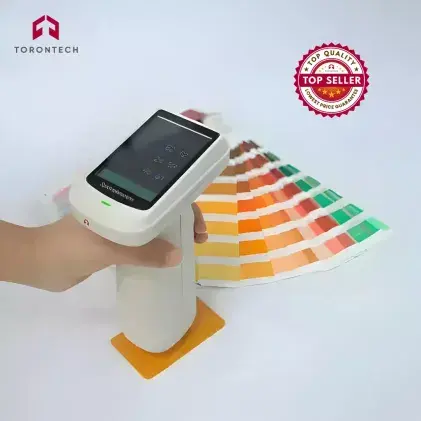
- Portable Units: These mobile gadgets, such as the ToronSpec™ 23/25/26D Series, are ideal for rapid checks on the factory floor when immediate data is required.
- Benchtop Systems: Sturdy units for laboratory use. If you are working with chunky, non-transparent materials, a Large Aperture Colorimeter - ToronSpec™ LA ensures your data remains perfectly repeatable.
- ASTM Compliant Gear: Instruments that adhere to strict ASTM rulebooks. We believe that utilizing reliable color testing instruments is the only way to ensure consistency.
- Smartphone Alternatives: We have also observed recent studies exploring smartphone apps as accessible alternatives for tasks like skin color measurement, though these currently do not match the precision of professional instruments.
Related article: Choosing a Handheld vs Benchtop Colorimeter
Principles of Operation
A colorimeter operates by directing a steady beam of light through or against a sample and measuring the absorption or reflectance. For testing liquids, a task the Liquid Color Spectrophotometer ToronSpec™ TT-LC2 handles with ease, it converts that light absorption into a concentration value.
Operation is straightforward: a technician resets the unit against a blank slate, inserts the sample, and initiates the measurement. While colorimeters have been improved with modern sensors and calibration methods to enhance accuracy, they remain best for routine tasks.
Operational Advantages and Limitations
The Wins:
- Rapid data acquisition and user-friendly operation.
- Highly portable and generally fits within tighter equipment budgets.
- Ideal for assessing basic color differences and dye fastness. We see these as the ultimate "first line of defense" for your color, paint, and coating test equipment inventory.
The Letdowns:
- Limited to basic RGB data rather than full spectral analysis.
- Incapable of detecting metamerism (when colors match under one light source but differ under another).
- Not suitable for complex colorant formulation.
The Role of the Spectrophotometer
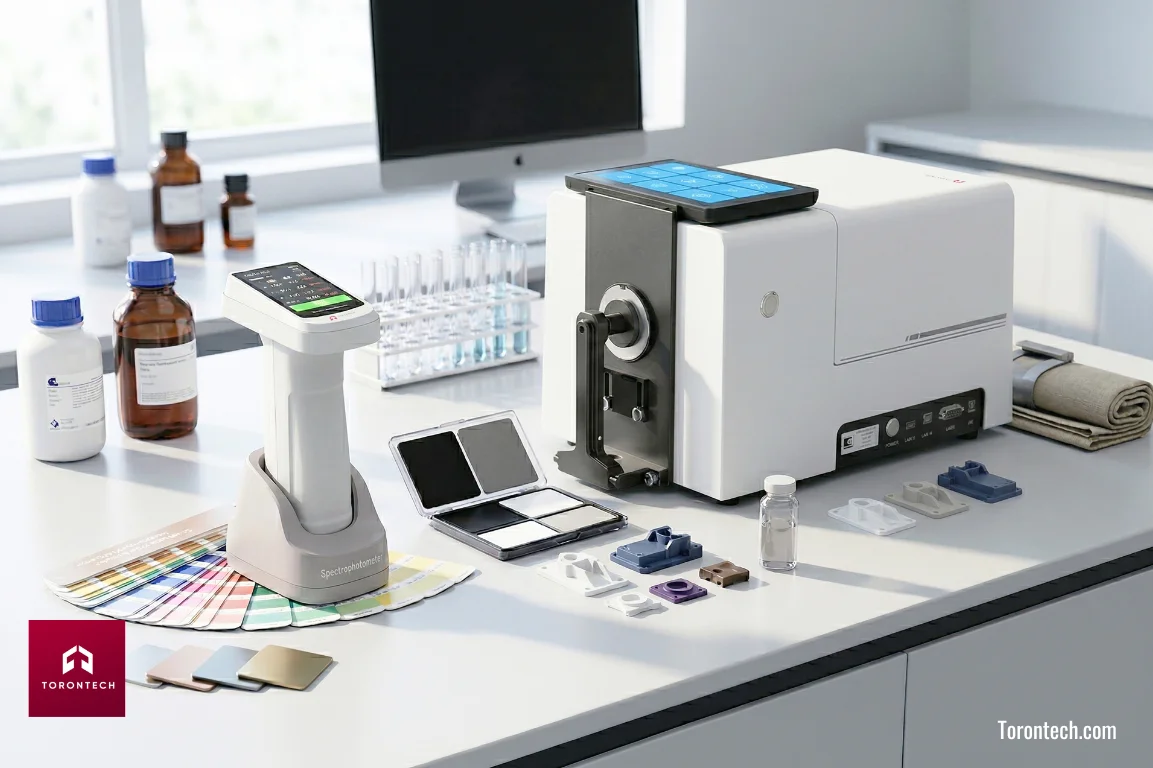
While a colorimeter is effective for rapid inspections, we consider the spectrophotometer the premier choice for detailed color profiling. These instruments measure the intensity of light across a continuous spectrum or many narrow bands, allowing for more precise and objective color measurements that are less influenced by external factors such as lighting or observer variability.
Technical Components
- Adjustable Illuminants: Capable of simulating various tricky lighting environments. We think this flexibility is a must-have for knowing how your product will appear under dull fluorescent store lights or bright afternoon sun.
- 10-Degree Standard Observer: Provides a wider analytical view, which we’re convinced is far better for the tight color matching required in serious manufacturing.
- Monochromator System: Uses a prism or grating to split light into tiny, individual slices for a truly granular look at the sample.
Industry-Specific Variants
These instruments are considered advanced versions of colorimeters and are widely used in fields requiring high accuracy, such as clinical diagnostics, biochemistry, and quality control in manufacturing.
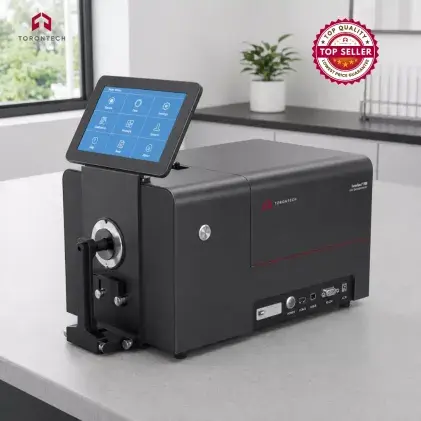
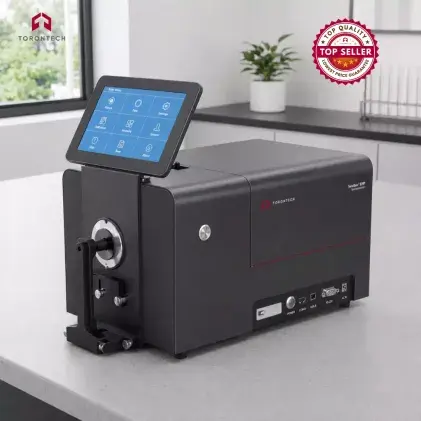
- Standard UV-VIS Models: The foundation of light and color science. Systems like the Benchtop Spectrophotometer ToronSpec™ 820P for Reflectance and Transmittance are absolute workhorses.
- Analytical Models: Infrared and fluorescence models used for identifying specific chemical substances.
- Continuous Online Sensors: If your production line never stops, a Non-Contact Color Spectrophotometer - Online Color Sensor allows for constant readings without ever touching the product.
Principles of Operation
A light source fires a beam that is sliced into individual wavelengths by a diffraction grating. Every tiny slice of light hits the sample, and a sensitive sensor tracks exactly how much is absorbed or reflected at every point. The internal processor then generates a full spectral curve, which is the "DNA fingerprint" of that specific color.
Operational Advantages and Limitations
The Wins:
- Provides exhaustive data across the full light spectrum.
- Identifies metamerism, ensuring colors match under any lighting environment.
- Generally provides superior sensitivity to subtle color differences and better consistency.
- We think these are non-negotiable for creating new paint recipes and keeping quality checks airtight.
The Letdowns:
- Requires a more significant initial investment.
- Setup involves more steps and technicians will require specialized training.
Comparative Overview: Colorimeter vs. Spectrophotometer
To help sort through the options, we’ve summarized the main differences here:
| Feature | Colorimeter | Spectrophotometer |
|---|---|---|
| Data Output | Tristimulus (RGB) | Spectral (Full Rainbow) |
| Spectral Range | Fixed/Limited | Visible (plus UV/IR) |
| Complexity | Simple / Rapid | Technical / Detailed |
| Primary Use | Pass/Fail Inspections | Formulation & Metamerism Check |
| Price Point | Budget-friendly | Significant Investment |
Case Study: Identifying Metamerism Issues
Let’s look at a hypothetical situation to show why tool selection matters. Picture a plastics factory tasked with printing a massive corporate logo. They check the first batch using a basic colorimeter under standard factory bulbs, and it receives a green light.
However, when those products reach retail shelves under fluorescent store lights, the logos appear off-brand. The colorimeter failed to detect the metamerism effect.
If they had utilized a high-end spectrophotometer, the spectral data would have caught the lighting flaw before the product ever shipped.
Quantifying Differences with Delta E (ΔE)
No matter which instrument we suggest for your facility, success boils down to a metric called Delta E (ΔE). Think of Delta E as the "closeness score" between two colors.
A score of 1.0 is roughly the smallest difference a human eye can spot. Think about a run of white smartphone cases. If you hit a ΔE of 0.8, those cases look identical to buyers. But picture a batch of red car bumpers with a ΔE of 4.0 compared to the metal panels.
That is a glaring mismatch customers will spot from across the dealership lot. In our opinion, locking in tight ΔE limits is the only way for your crew to ensure every batch is a perfect clone of the last one.
Core Applications and Use Cases
When to Utilize a Colorimeter
We usually suggest a colorimeter when you have high-volume testing and need to know it is "close enough" fast. Common uses include:
- Pass/fail checks on high-speed factory lines (such as testing the redness of tomato paste).
- Analyzing gunk levels in local water supplies.
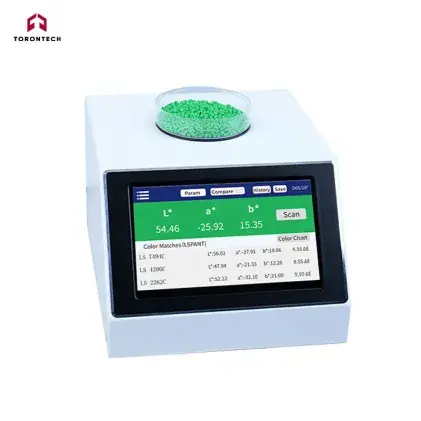
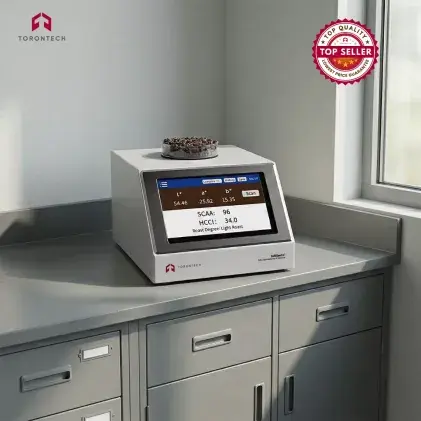
- Ensuring food and beverage consistency (like a roaster using the Coffee Spectrophotometer & Colorimeter - CafféSpectra™ for bean consistency).
- Verifying color matches in textile rolls.
Related article: Selecting the Best Colorimeter for Coating & Paint Analysis
When to Utilize a Spectrophotometer
We’re convinced a spectrophotometer is required when "close enough" is not an option. We recommend them for:
- Matching paint between different materials (like a metallic silver metal door and a plastic bumper). Techs often utilize the Portable Color Spectrophotometer – Colorimeter ToronSpec™ 700D for quick floor checks.
- Precise chemical mixing in pharmacy labs.
- Developing new polymers (we are fans of the High Precision Benchtop Color Spectrophotometer - ToronSpec™ 800 Series for this).
- Assembling multi-material products that must match under any light source.
Compliance and Regulatory Standards
In our line of work, we know that getting color right is about following the rules. When an auditor walks through your doors, having equipment that meets strict compliance benchmarks is your best defense.
Here are the heavyweight standards we always tell managers to look for:
- CIE Guidelines: These are the leading authorities on color spaces (like CIELAB). Gear that follows CIE ensures your baseline math is globally recognized.
- ISO 7724: If you are dealing with paints and varnishes, this is the absolute standard for colorimetry.
- ASTM E1164: This is the critical rulebook for pulling spectrophotometric data on object colors. Sticking to this ensures your readouts are perfectly traceable.
Data Management and LIMS Integration
We’ve noticed that modern shops need more than just a number on a screen; they need a paper trail. The better gadgets (especially our high-end spectrophotometers) come with smart software that allows your crew to save those color "fingerprints" and send them straight to your main lab computer (the LIMS).
We think having a smart data setup is a requirement for being ready for audits and ensuring consistency across global manufacturing sites.
Maintenance and Total Cost of Ownership (TCO)
When evaluating the price tag, we always tell managers to look at the "Total Cost of Ownership." Both tools need care to stay accurate, usually involving black and white calibration tiles to ensure sensors remain precise. Because spectrophotometers have more complex internal parts and prisms, their check-up schedule can be more intense. We’re firm believers that picking a supplier who provides reliable support is the smartest way to keep your line moving.
Comprehensive Surface Analysis: Haze and Gloss
Even if you get the pigment spot on, we’re constantly reminding our clients that visual appearance depends on more than just color. A perfect color match can still appear "off" to a customer if the surface finish varies.
Consider a car interior: you might have the same black pigment data for a soft, matte plastic dashboard and a glossy trim piece. Side-by-side, the surface finish ruins the visual match. To reach that "sheer perfection" finish, we suggest pairing color checks with surface tools.
Using Gloss Meters and Haze Meters (like the Portable Haze Meter ToronHaze™ TTH-Series) ensures your product has the right visual clarity. To eliminate lighting variables entirely, we also tell managers to utilize a Light Booth / Color Matching Cabinet TT-M60 in the testing room.
Selecting Your Optimal Solution with Torontech
In our professional view, there isn't a single "right" answer. If your facility is all about fast, routine checks, we think a colorimeter gives you the best ROI. But if you are trying to develop new materials and need to catch every tiny detail, we’re convinced a spectrophotometer is the only way to go.
Whether you’re hunting for a portable colorimeter for the factory floor or an advanced ToronSpec™ Benchtop Spectrophotometer for your R&D lab, we have the goods. Browse our complete range of Color, Paint & Coating Test Equipment to find the exact piece of gear your facility requires.
References:
- (2019). Spectrophotometer (UV–Visible). Compendium of Biomedical Instrumentation.
- Batinić, B., Bajić, J., Dedijer, S., Kulundzic, N., Joža, A., Laković, N., & Rajs, V. (2020). Colorimetric fiber-optic sensor based on reflectance spectrum estimation for determining color of printed samples. Optical and Quantum Electronics, 52, 1-11.
- Betancourt, A., Saldaña, J., & Grandinetti, J. (2024). Comparison of tooth shade determination using two methods: visual and spectrophotometric. Odontologia (Montevideo).
- Kirchner, E., Koeckhoven, P., & Sivakumar, K. (2018). Improving Color Accuracy of Colorimetric Sensors. Sensors (Basel, Switzerland), 18.
- Korifi, R., Dréau, L., Antinelli, J., Valls, R., & Dupuy, N. (2013). CIELab* color space predictive models for colorimetry devices--analysis of perfume quality.. Talanta, 104, 58-66.
- Matias, A., Ferreira, M., Costa, P., & Neto, P. (2015). Skin colour, skin redness and melanin biometric measurements: comparison study between Antera® 3D, Mexameter® and Colorimeter®. Skin Research and Technology, 21.
- Niakan, S., Safi, M., Younespour, S., & Khoshtarkib, S. (2024). Comparative analysis of smartphone colorimeter apps and spectrophotometry for measuring forehead skin color in maxillofacial prosthesis fabrication.. Journal of prosthodontics : official journal of the American College of Prosthodontists.
- Samec, J., Struc, E., Berzina, I., Naglič, P., & Cugmas, B. (2024). Comparative Analysis of Low-Cost Portable Spectrophotometers for Colorimetric Accuracy on the RAL Design System Plus Color Calibration Target. Sensors (Basel, Switzerland), 24.